After dark, off the lava coast of Kona, a few dozen people float face-down in the black Pacific, holding onto a glowing board. Below them, light pours into the water, and out of the darkness come the mantas: giant rays with wings wider than a car, gliding up to feed, somersaulting inches beneath the snorkelers' masks. It is one of the most extraordinary wildlife encounters in the world, and it happens almost every night.
How it works
Mantas feed on plankton, tiny animals that are attracted to light. In the 1970s, lights from a hotel at Keauhou Bay drew plankton, and the mantas followed. Today, tour operators shine lights from boards and from divers on the sea floor; the plankton gathers in the beams, and the mantas arrive to feed, looping and somersaulting through the light. Snorkelers float at the surface, divers kneel on the bottom, and the mantas feed between them.
The two sites
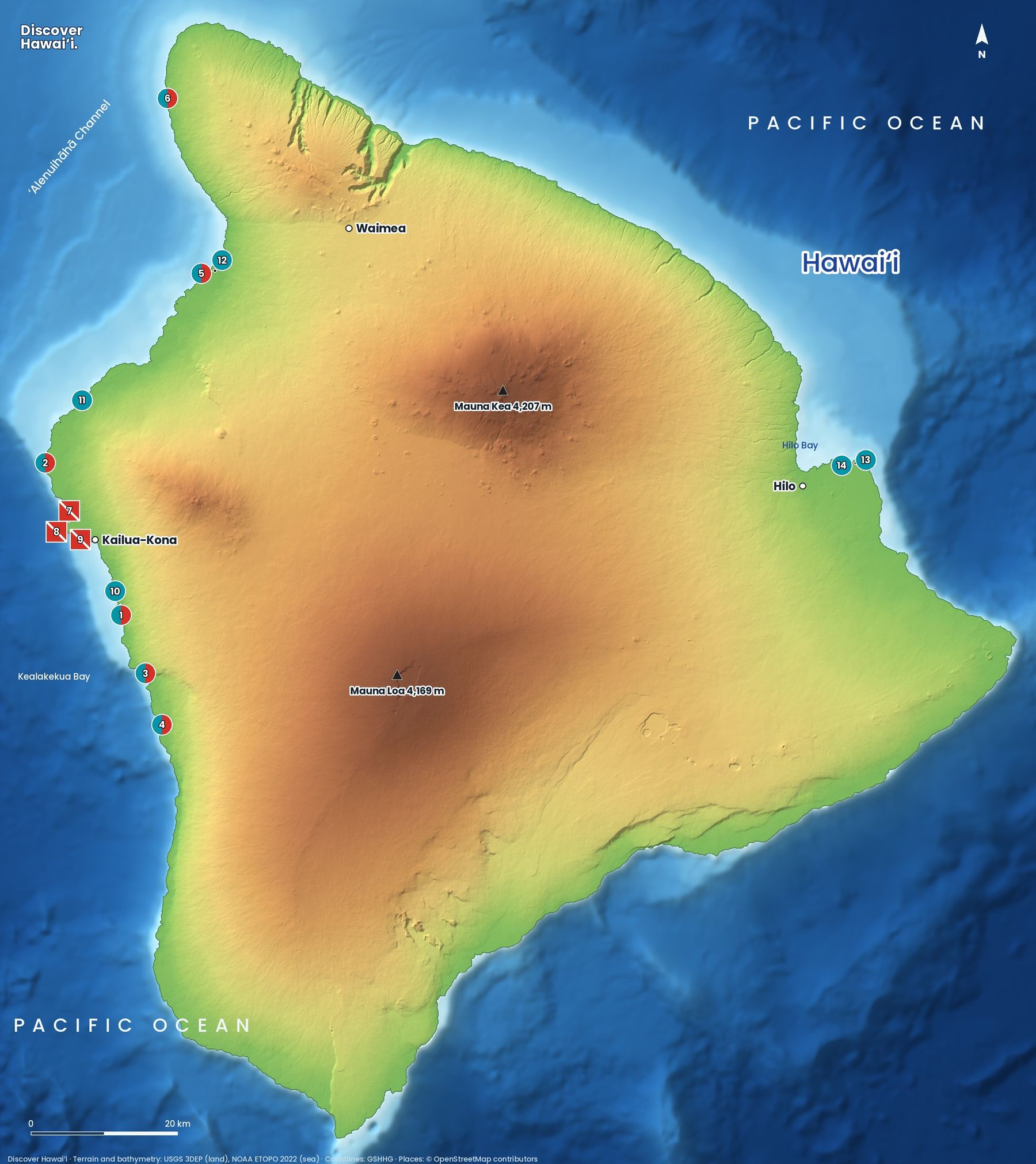
Keauhou Bay ("Manta Village")
South of Kailua-Kona, close to the Keauhou resorts; a short boat ride from Keauhou Harbor.
Garden Eel Cove ("Manta Heaven")
North of Kona, near the airport, reached by boat from Honokōhau Harbor.
Operators choose the site each night depending on conditions and where mantas have been seen.
About the mantas
Kona's mantas are reef manta rays, with wingspans that can exceed 10 feet. Each has a unique pattern of spots on its belly, and researchers have identified hundreds of individuals off the Kona coast, some returning for decades. Mantas have no sting or teeth, and are completely harmless to people. Like all wildlife, they are vulnerable: touching them removes the protective mucus on their skin.
What to expect
- A sunset or evening departure and a short boat ride.
- A wetsuit or rash guard, mask, snorkel and a flotation noodle or board; you do not need to be a strong swimmer, but you must be comfortable in deep water.
- Around 30–45 minutes in the water, holding onto a lit board.
- Encounters are common but not guaranteed; many operators offer a free return trip if no mantas appear.
- Typical prices of about $130–200 per person for snorkelers, more for divers.
Choosing a responsible operator
- Follow the manta viewing guidelines: no touching, no chasing, stay at the surface (snorkelers) or on the sea floor (divers).
- Small groups and a briefing on behaviour and safety.
- Operators that support manta research and conservation.
- Good safety record and clear seasickness advice.
Who can do it
Most operators set a minimum age (often around 6–8 for snorkelers) and require that you can float comfortably. Winter swells can cancel some nights, so book early in your trip to leave time for a second try. Prone to seasickness? Take remedies before you board. Pair the experience with a luau on another night; see the best Big Island luaus and things to do on the Big Island.
What it feels like
You slide off the boat into warm, black water and swim to the light board, a floating frame with lights shining downwards. At first there is only plankton swirling in the beams like snow. Then a shadow appears at the edge of the light, and a manta glides in, its mouth open wide, white belly gleaming. It rises towards you, banks a few inches beneath your mask and somersaults backwards to sweep through the plankton again. Then another arrives, and another. Most people come out of the water speechless.
It helps to stay calm and still. Float flat, keep your legs at the surface so the mantas have room to pass beneath you, and simply watch.
Quick answers
Is the manta ray night snorkel safe?
Yes, with a reputable operator. Mantas are harmless, and you float at the surface holding a board with flotation.
Do you need to be a strong swimmer?
No, but you must be comfortable floating in deep, dark water with a mask and snorkel. Flotation is provided.
Are you guaranteed to see mantas?
No, but sightings are frequent; many operators offer a free return trip if none appear.
Can you touch the mantas?
No. Touching removes their protective mucus. Keep still and let them come to you.
Facts checked October 2026. Prices, schedules and rules change, so confirm with the operator or official source before you book.