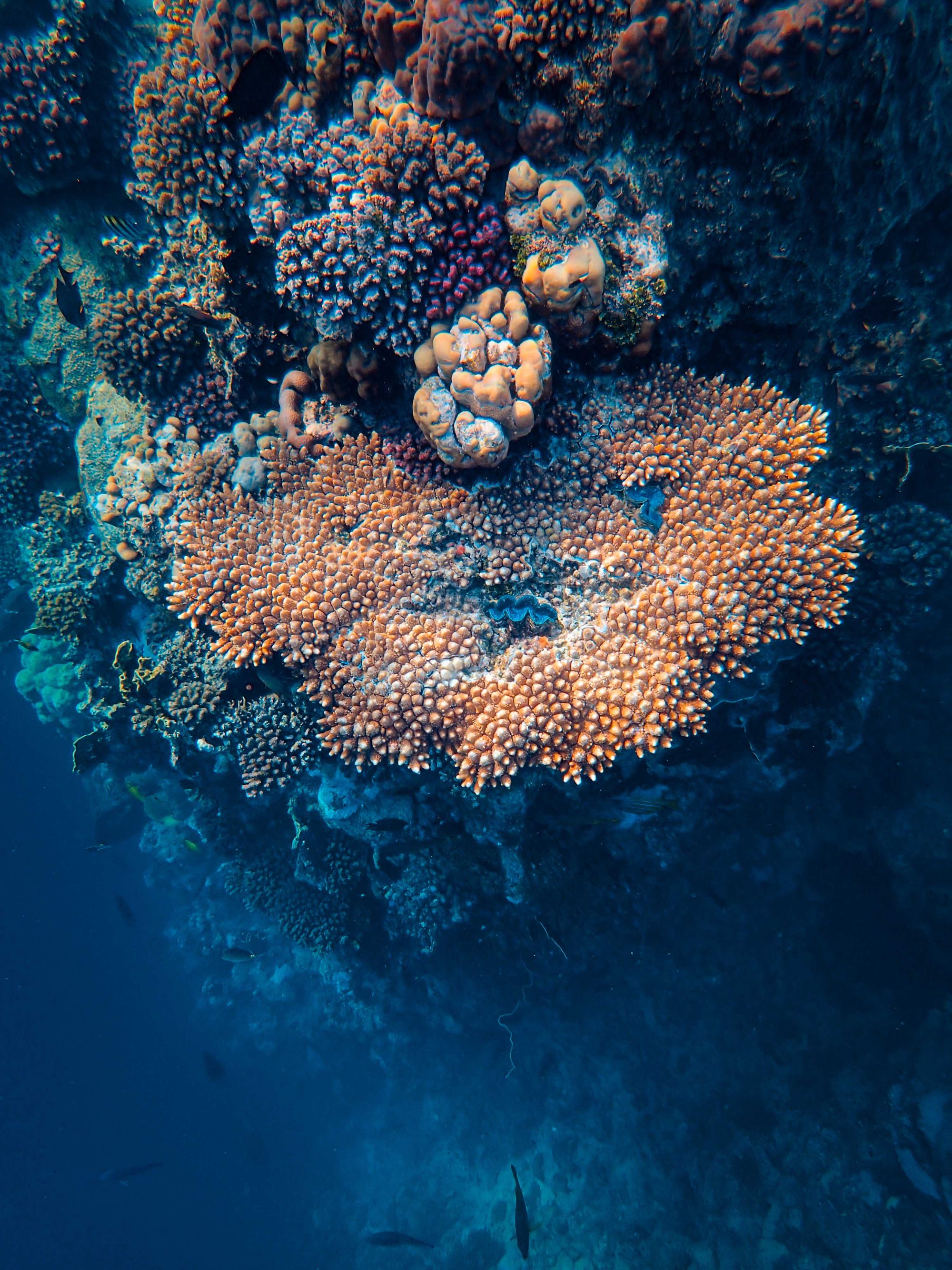
Born is the coral polyp
The Kumulipo, the great Hawaiian chant of creation, begins in the deep darkness of the first night. The first living thing to appear is the coral polyp, the koʻa, and from it, line by line, come the creatures of the sea, then of the land, and eventually people. Long before scientists described reefs as the foundation of the islands' marine life, Hawaiians had already put coral at the very beginning of everything.
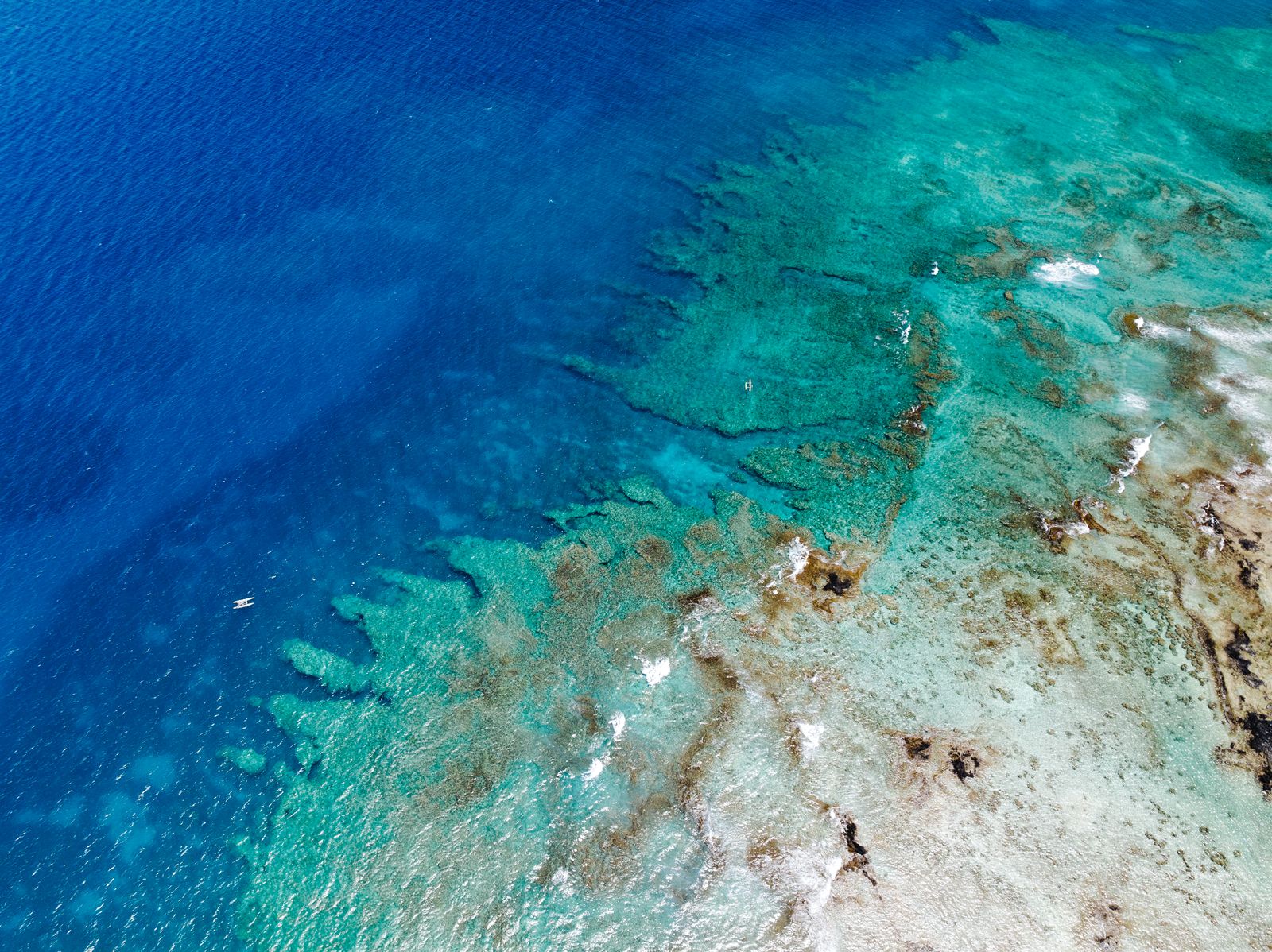
They were right. Hawaii's reefs build the white-sand beaches, break the force of the surf before it reaches the shore, feed generations of fishing families and shelter a burst of life found nowhere else on Earth. There are about 410,000 acres of living reef around the main islands alone, and far more in the remote atolls to the northwest.
Inside Hawaii's reefs
What corals are, which ones build Hawaii's reefs, who lives among them, where they are protected and what threatens them.
What a coral really isTiny animals, ancient cities
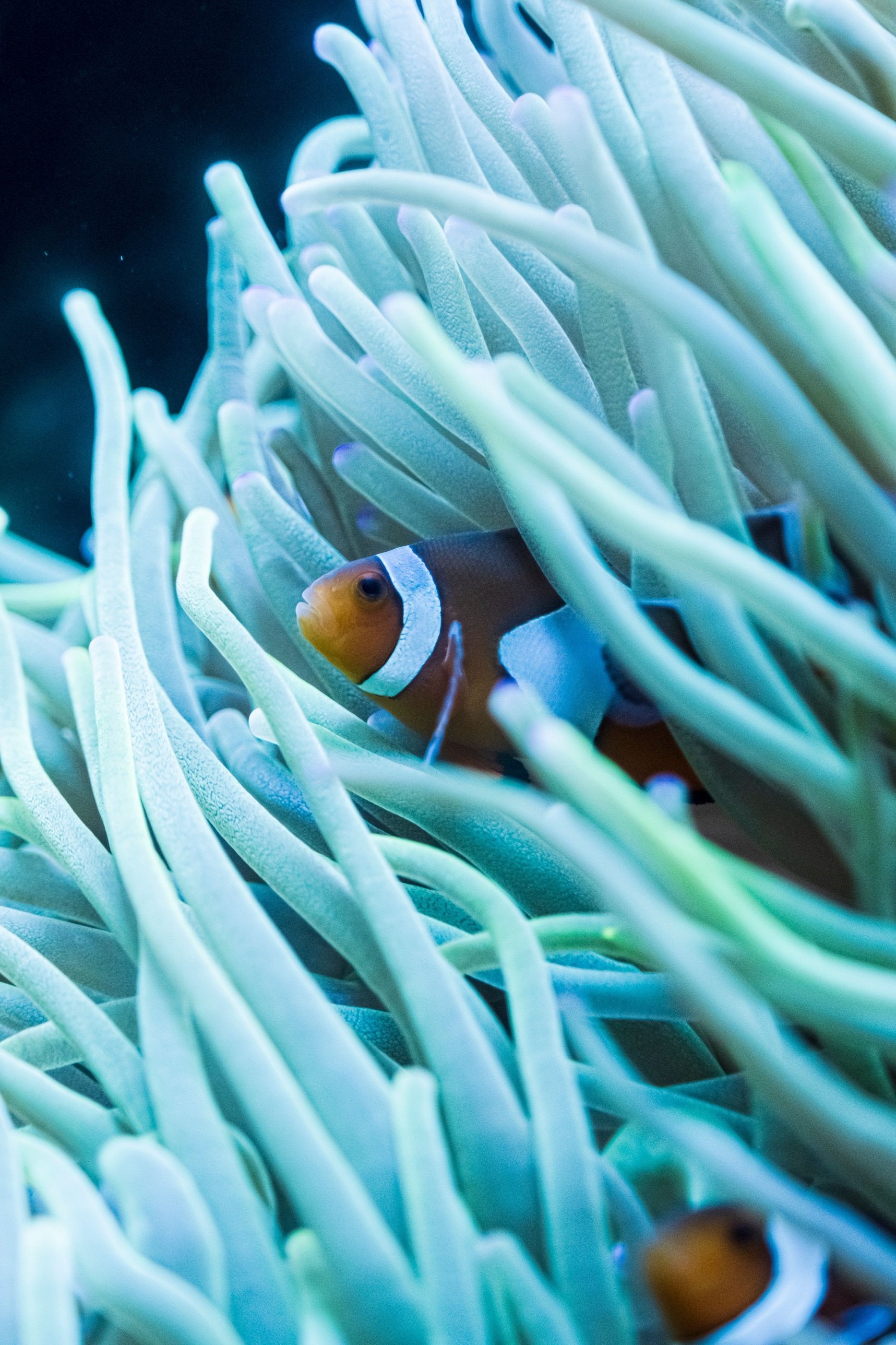
A coral looks like a rock, behaves a little like a plant and is, in fact, an animal. Each coral head is a colony of thousands of tiny polyps, soft tube-shaped creatures with a ring of tentacles, closely related to sea anemones and jellyfish. Every polyp builds a cup of limestone beneath itself, and over generations those cups stack into the boulders, branches and plates that form a reef.
The secret partner is inside the polyp. Microscopic algae called zooxanthellae live in coral tissue, turning sunlight into food and giving corals most of their colour. That is why reef-building corals need clear, shallow, sunlit water. In exchange, the coral gives the algae shelter and nutrients. When that partnership breaks down, the coral turns white. That is bleaching.
Reefs grow slowly. Most Hawaiian corals add only about half an inch a year, and a large head of lobe coral the size of a car can be centuries old. A careless kick from a fin can undo decades of growth in a second.

The corals of HawaiiBuilt for the surf
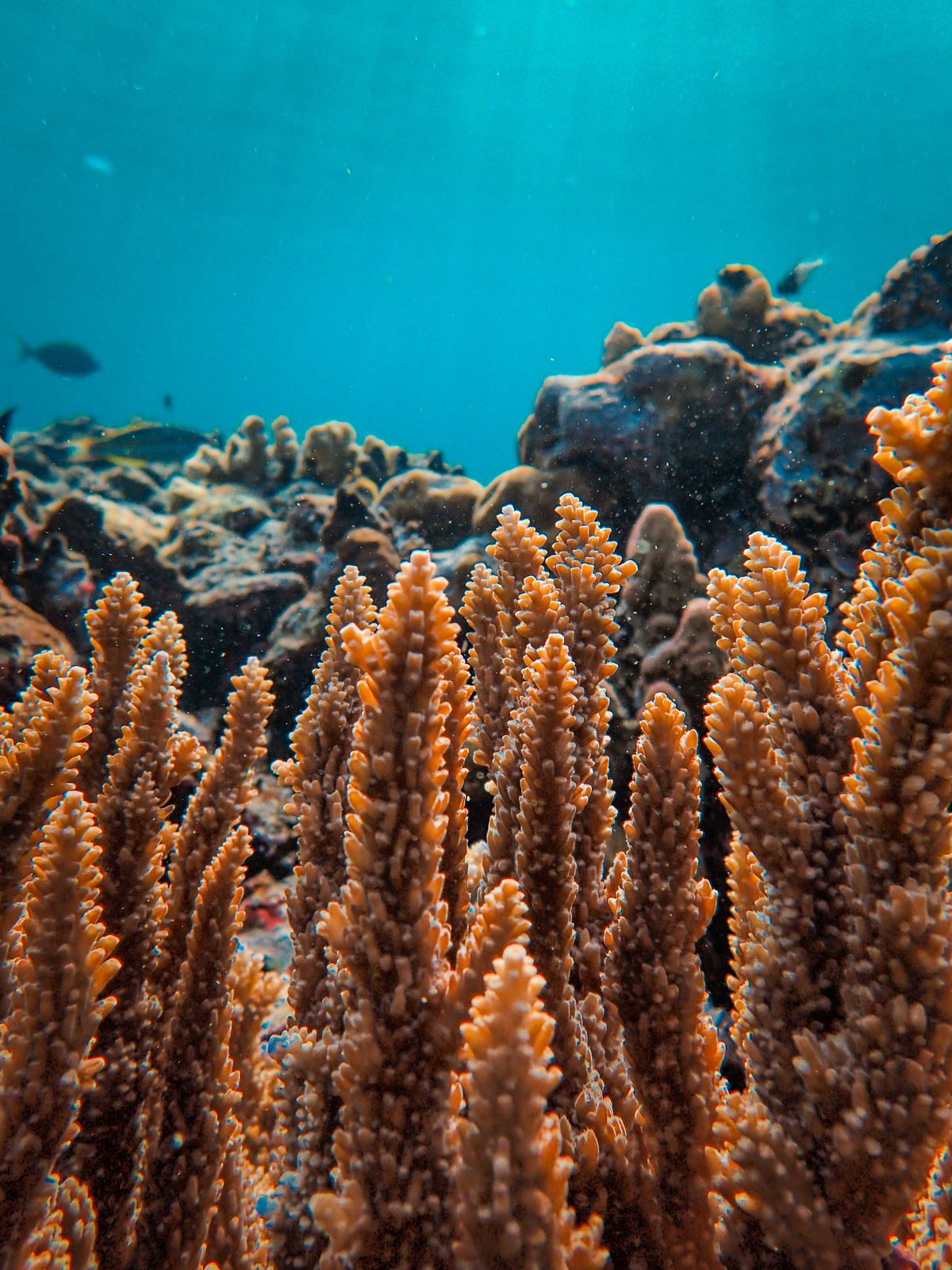
Hawaiian reefs are not the candy-coloured gardens of aquarium photos. They are built for life in the middle of the Pacific, pounded by open-ocean swell, and their palette runs to gold, brown, green and violet. On wave-swept shores the tough, rounded lobe coral and the knobbly cauliflower coral dominate. In calmer, deeper water you find delicate thickets of finger coral and the plates and crusts of rice coral, one of the main reef builders around Oʻahu.
Because the islands are so isolated, around a quarter of Hawaii's corals and inshore fish species live nowhere else. And the reefs go deeper than anyone used to think. In 2016 NOAA-supported scientists mapped the most extensive deep coral reefs on record in Hawaii. In Maui's ʻAuʻau Channel, between Maui and Lānaʻi, a single unbroken reef covers more than three square miles at 160 to 300 feet deep, with patches of 100 percent coral cover. Down there, 43 percent of the fish species are endemic, more than twice the share on shallow reefs.
A reef full of localsFish, turtles and the sand makers
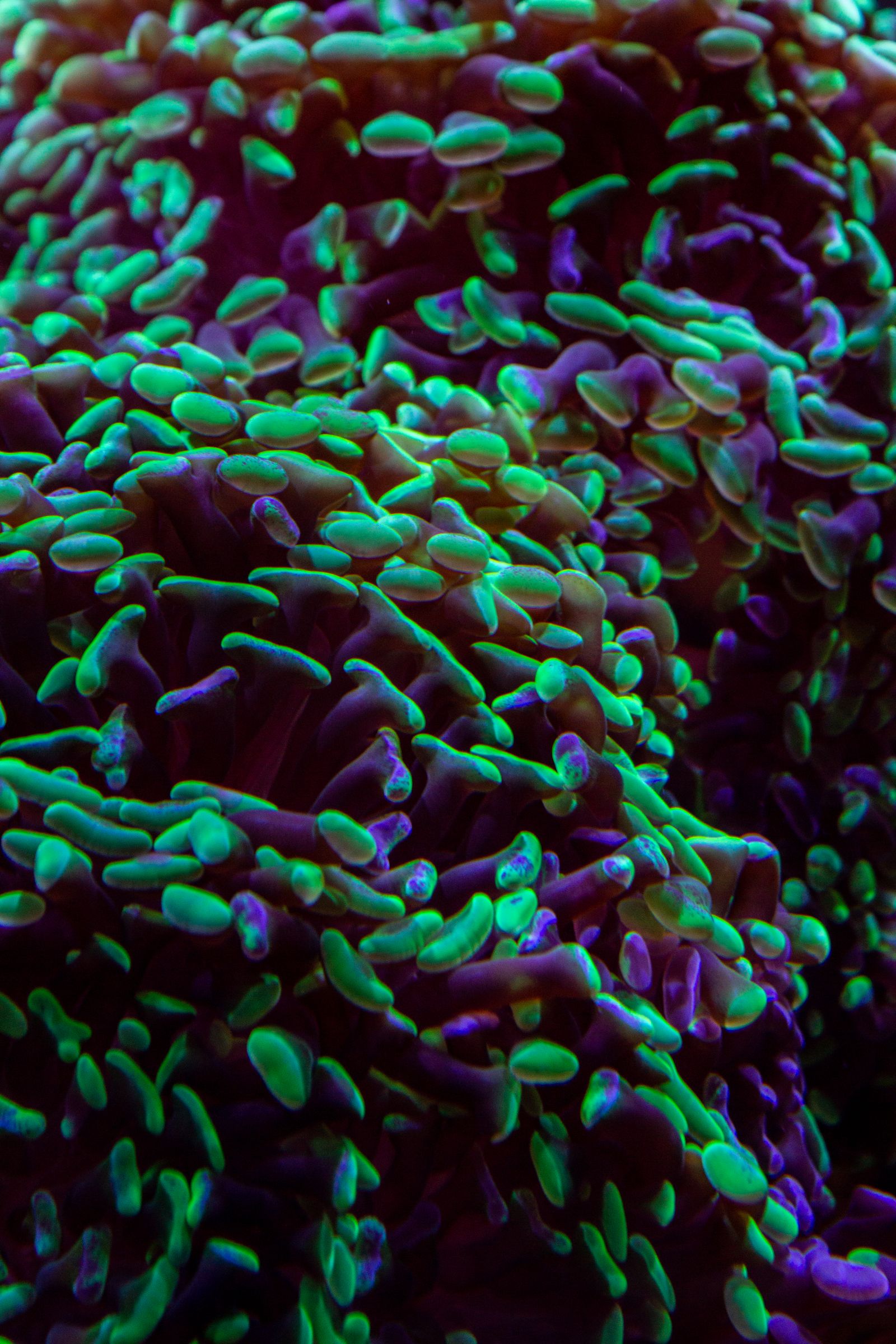
Float over any healthy Hawaiian reef and the cast appears quickly. Bright yellow tangs, the lauʻīpala, graze the algae in loose schools. Moorish idols, the kihikihi, trail long white streamers. Butterflyfish move in pairs. Wrasses, triggerfish and the state fish, the humuhumunukunukuāpuaʻa, patrol the reef flat, and green sea turtles, the honu, drift in to have their shells cleaned by surgeonfish at "cleaning stations".
Some of the most important reef animals are the least glamorous. Parrotfish, the uhu, scrape algae off dead coral with beak-like teeth, keeping space clear for young corals to settle. They grind up limestone as they feed and pass it out as fine white sand, so a good share of the sand on Hawaii's beaches has been through a parrotfish. Herbivores like uhu and surgeonfish are why healthy fish populations matter so much to the reef itself.
In the cracks and caves live the night shift: moray eels, the puhi, spiny lobsters, octopus, the heʻe, and countless shrimps and crabs. Above the reef, on the black lava at the shoreline, scarlet ʻaʻama crabs scuttle between the waves.
Hanauma Bay and the reservesWhere to see a reef at its best
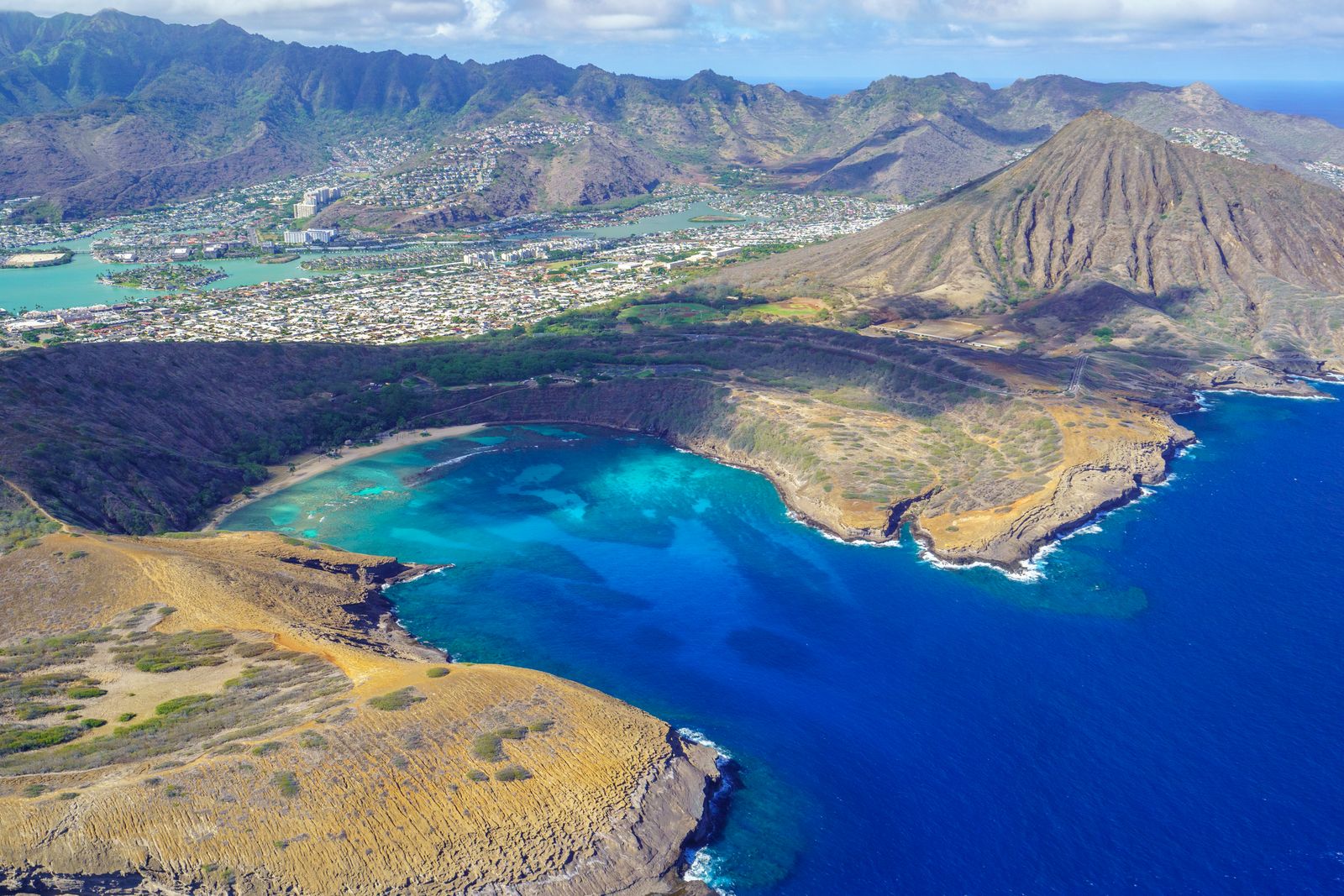
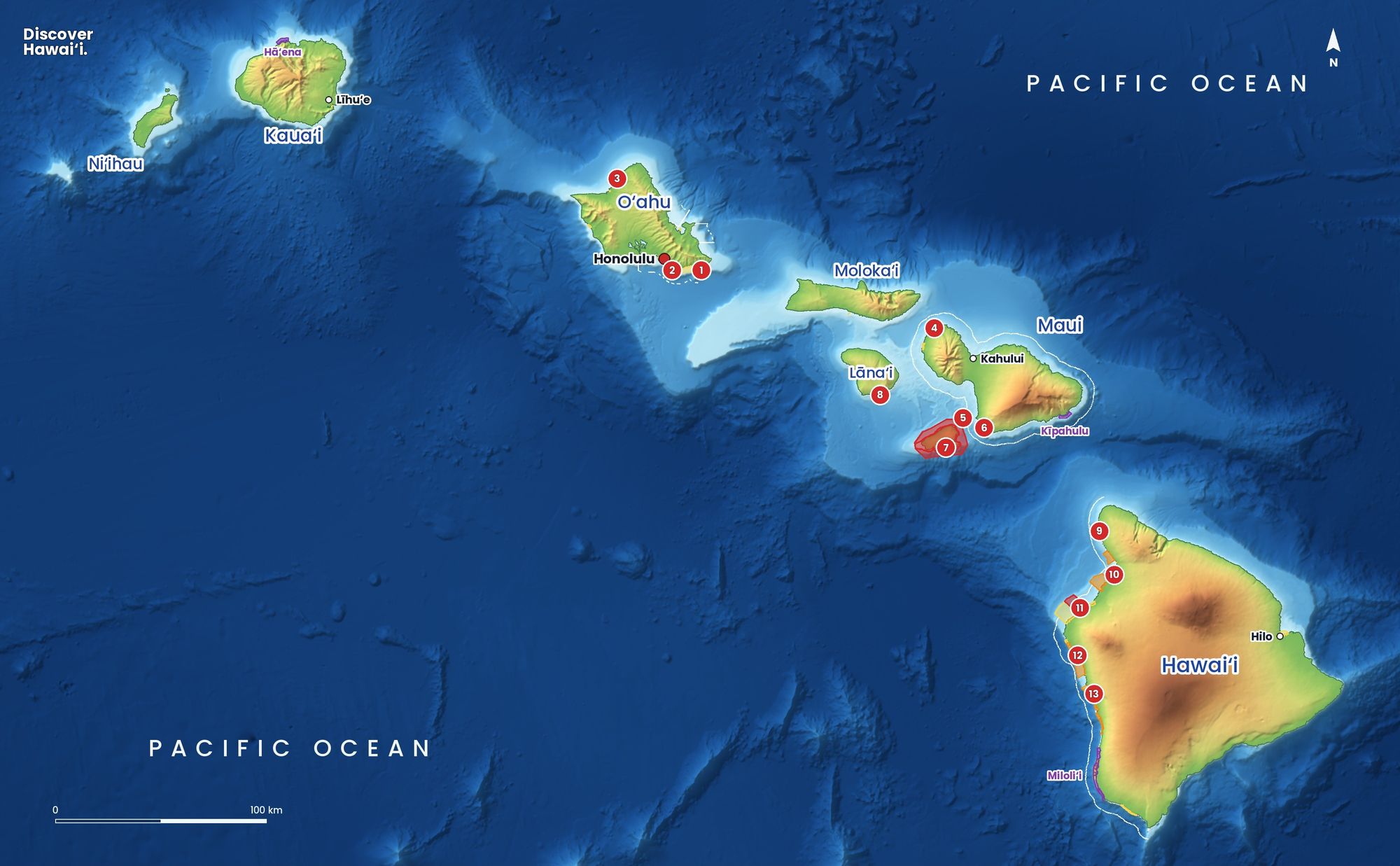
Hawaii protects its finest reefs as Marine Life Conservation Districts, where fishing and collecting are banned or tightly limited. There are eleven of them: Hanauma Bay, Pūpūkea and Waikīkī on Oʻahu; Honolua–Mokulēʻia and Molokini Shoal off Maui; Mānele–Hulopoʻe on Lānaʻi; and Kealakekua Bay, Lapakahi, Old Kona Airport, Waialea Bay and the Waiʻōpae tidepools on the Big Island.
Hanauma Bay, a flooded volcanic crater on Oʻahu's southeast shore, became the first in 1967, and the difference protection makes is easy to see: fish biomass there is several times higher than on most Oʻahu reefs. Today Hanauma Bay limits daily visitors and requires an online reservation, and every visitor watches a short reef-safety film before entering the water. On the Big Island, Kealakekua Bay and the reef at Hōnaunau, known as Two Step, offer some of the clearest water and healthiest coral in the state.
Heat, bleaching and the lesson of 2015When the ocean runs a fever
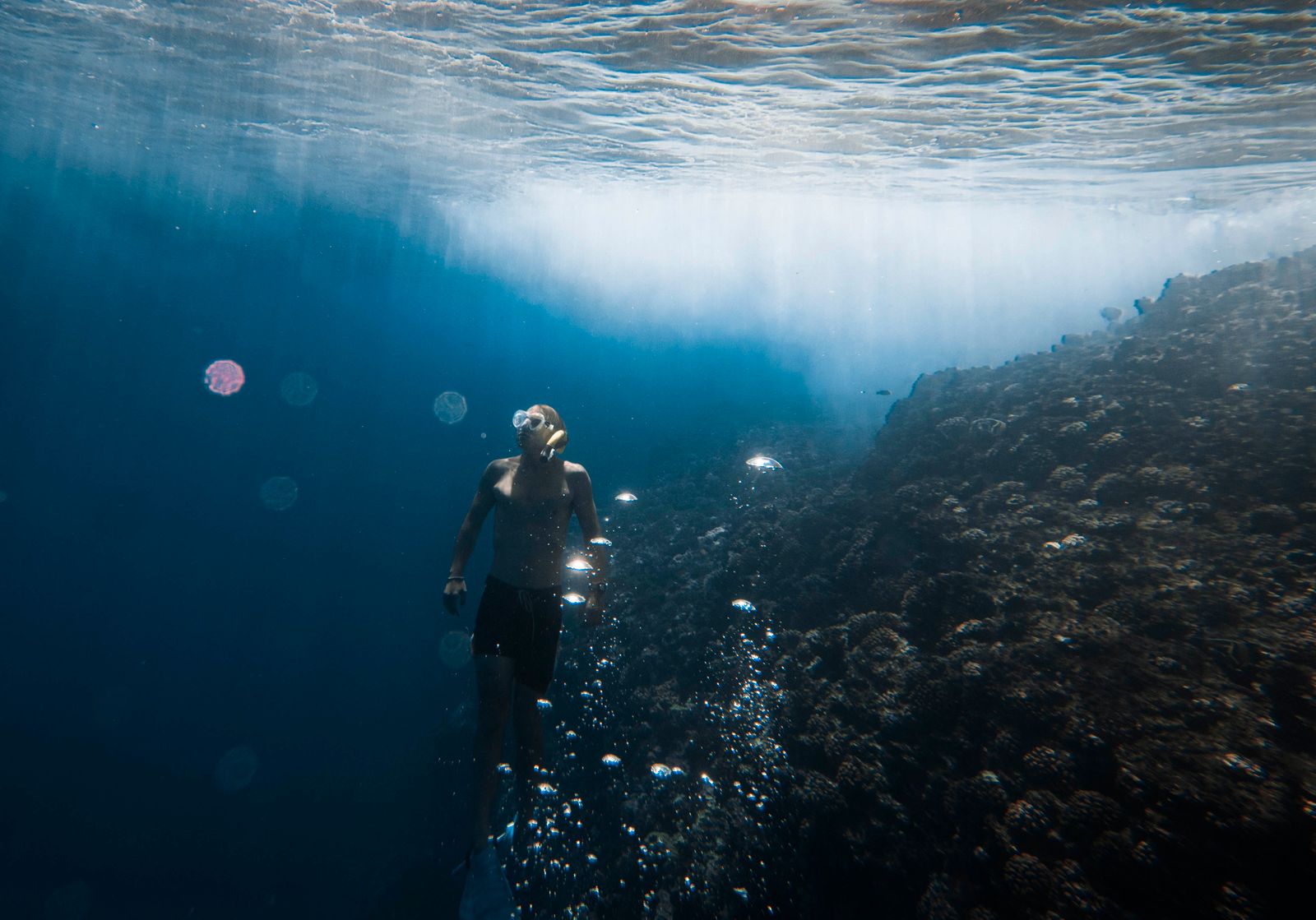
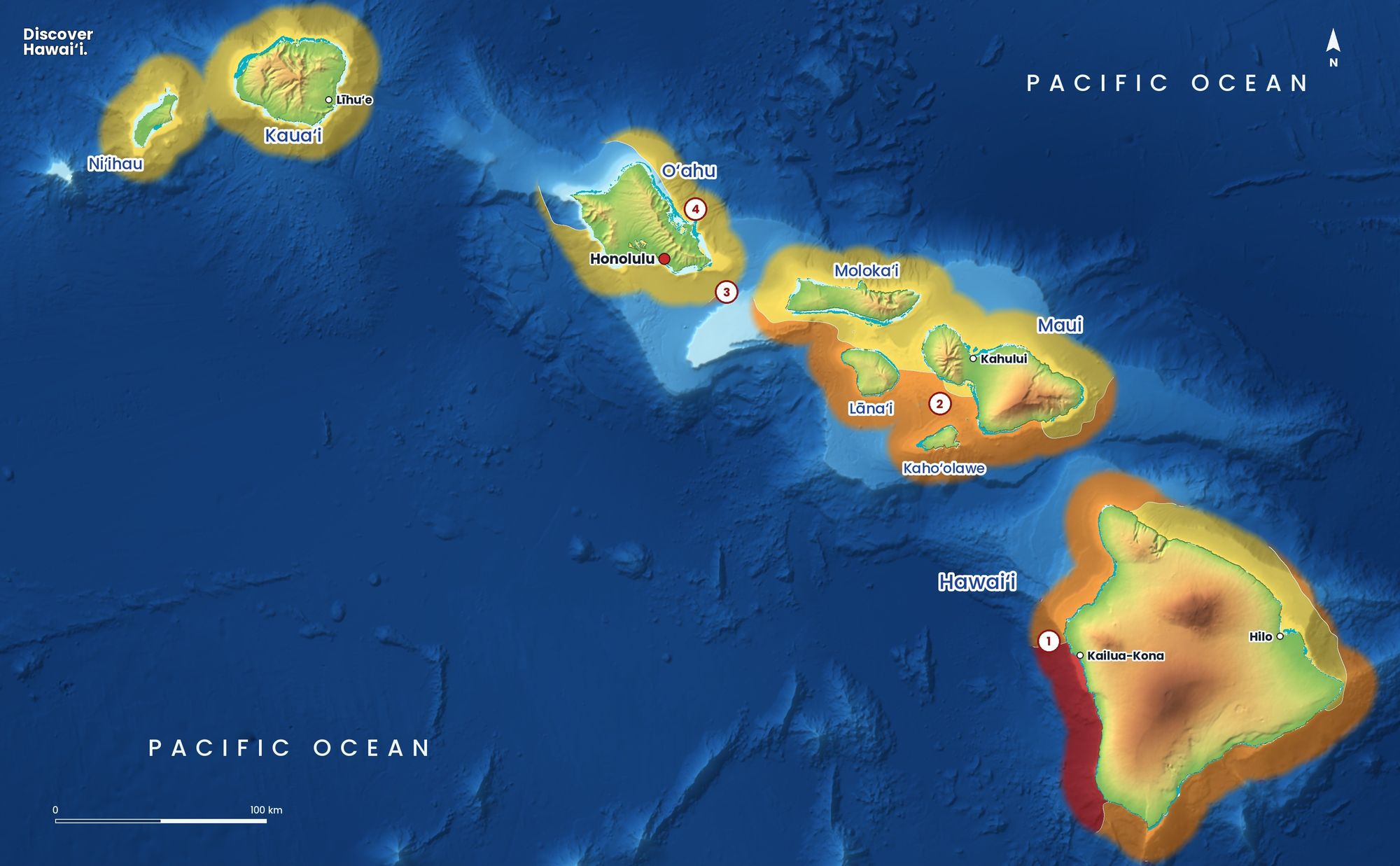
When the ocean stays too warm for too long, corals expel the algae that feed them and turn ghostly white. A bleached coral is not yet dead, but it is starving, and if the heat lasts it dies and is overgrown by seaweed. Hawaii recorded its first major bleaching in Kāneʻohe Bay on Oʻahu in 1996. In 2014 a marine heatwave bleached most of the coral in the same bay.
Then came 2015, the worst year on record. Water off West Hawaiʻi ran about 2.5°C (4.5°F) above normal summer temperatures, between 30 and 90 percent of corals bleached depending on the site, and roughly half of the coral cover along the Kona coast was lost. A third major event followed in 2019, shorter and less severe in the main islands.
Heat is the global threat. Local ones make it worse: polluted runoff and sewage, invasive algae that smother coral, sediment after heavy rain, overfishing of the grazers that keep algae in check, and simple physical damage from anchors, feet and fins. The good news is that reefs with clean water and plenty of herbivorous fish recover far better, and those are things Hawaii can control.
PapahānaumokuākeaThe reefs at the end of the chain
Northwest of Kauaʻi, the Hawaiian chain runs on for more than a thousand miles as a string of tiny islets, atolls and submerged banks. This is Papahānaumokuākea, one of the largest marine conservation areas on Earth: 582,570 square miles of ocean, about twice the size of Texas. It became a marine national monument in 2006, a UNESCO World Heritage Site in 2010 and a National Marine Sanctuary in 2025.
Its reefs hold the highest concentrations of endemic species found anywhere on the planet, alongside nesting green sea turtles, most of the world's remaining Hawaiian monk seals and huge seabird colonies. Access is strictly limited, so most of us will only ever see it in photographs. Knowing it exists, intact and protected, is part of what makes Hawaii's ocean so special.
How to be reef-safe
Millions of people swim over Hawaii's reefs every year. These simple habits make the difference between leaving a reef as you found it and wearing it away one visit at a time.
- Wear mineral sunscreen.Hawaii was the first US state to ban sunscreens containing oxybenzone and octinoxate, from 2021. Choose zinc oxide or titanium dioxide, or simply cover up with a rash guard.
- Never stand on coral.Standing, kneeling or resting a fin on coral crushes living polyps. Learn to float, and stay over sand when you need to adjust your mask.
- Look, but don't touch.Not the coral, not the fish, not the turtles. Give honu at least 10 feet (3 metres) of space, in the water and on the beach.
- Don't feed the fish.Feeding changes natural behaviour and favours a few aggressive species over the grazers the reef needs.
- Take nothing, leave nothing.Shells, coral and lava rock stay where they are. Pack out every bit of rubbish, especially plastic.
- Choose operators who care.Good snorkel and dive boats tie up to permanent moorings instead of dropping anchor on the reef, and brief you on reef etiquette before you get in.
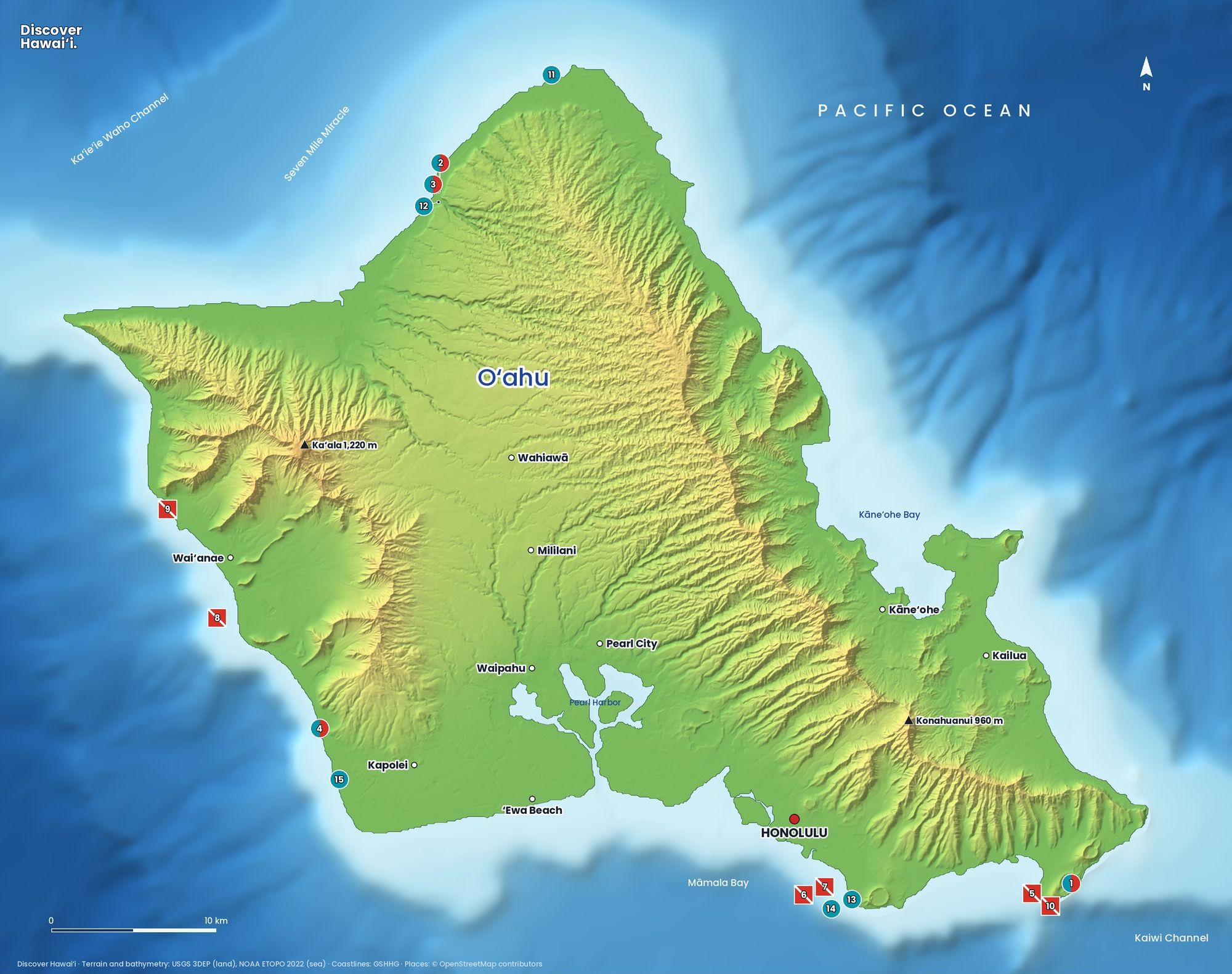
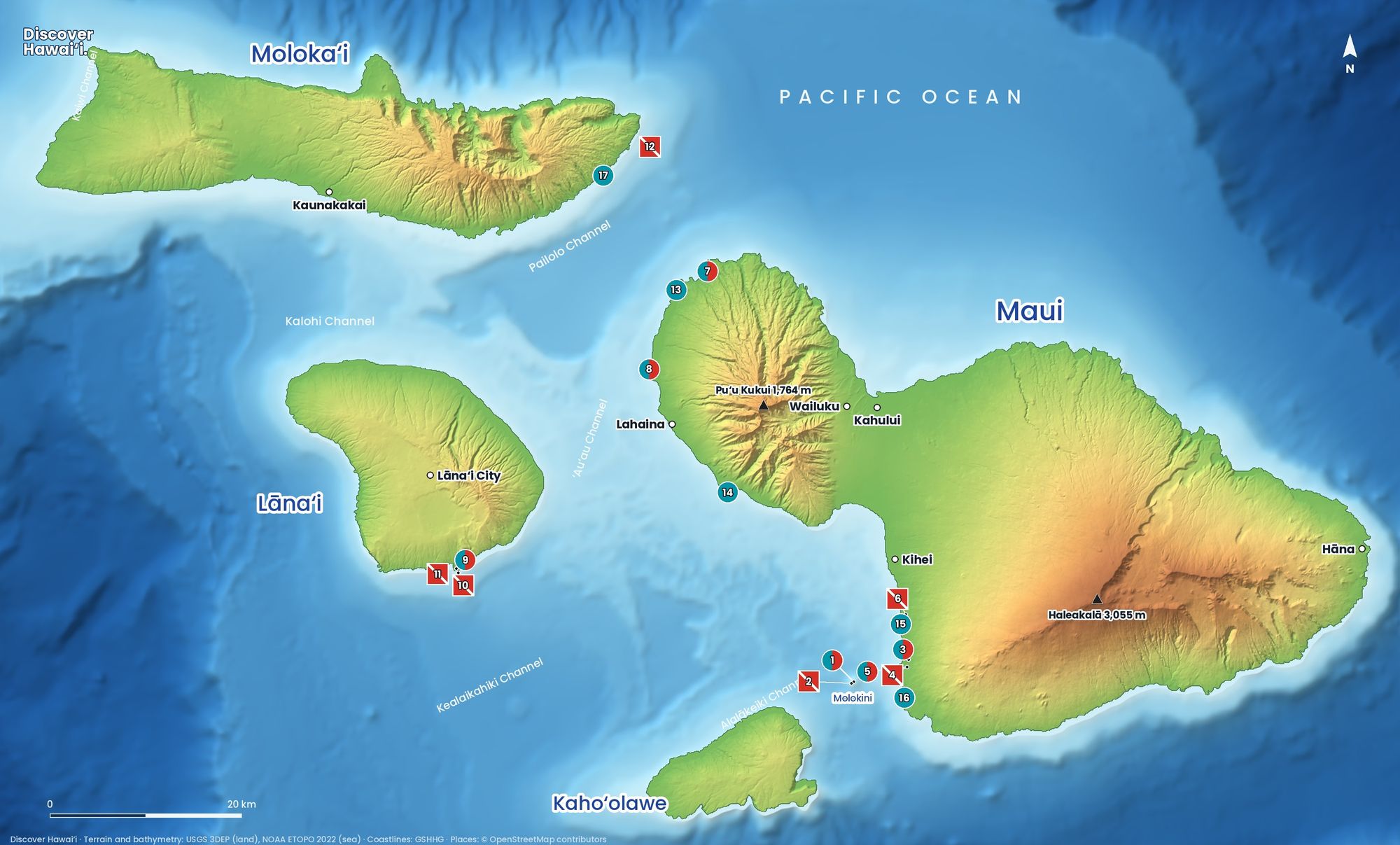
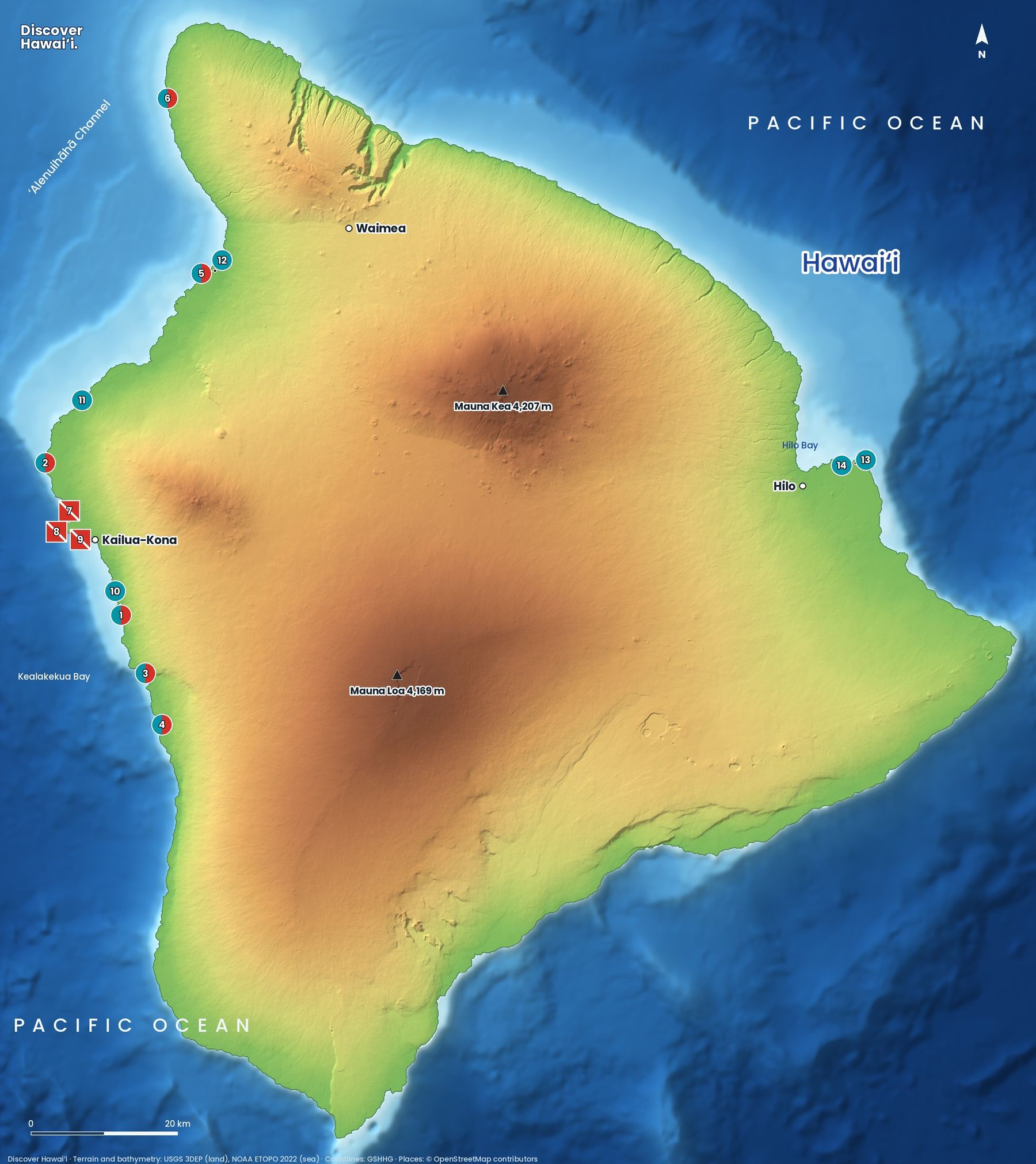
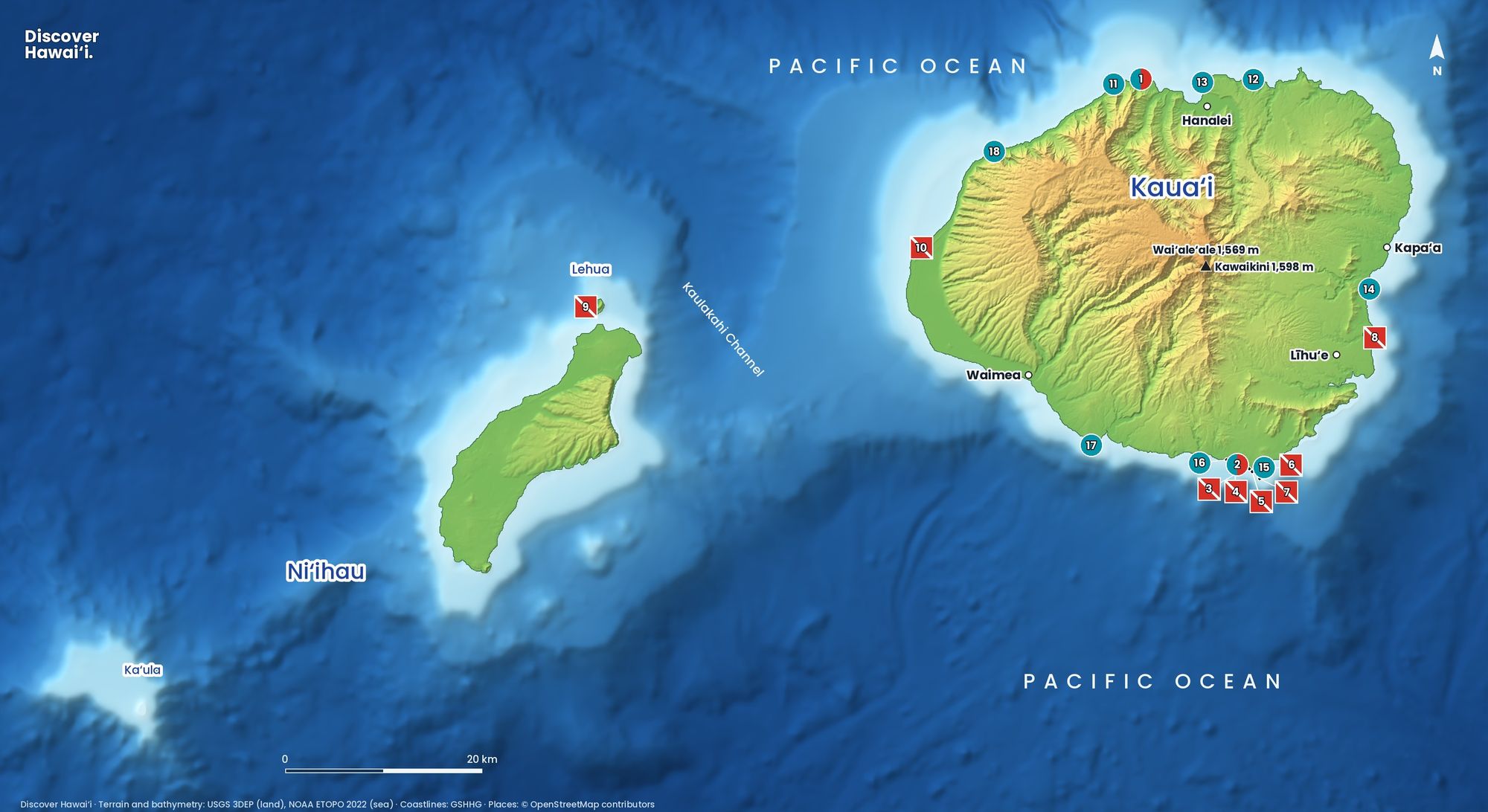
Dive & snorkel maps
Our free island-by-island maps show the best reefs to snorkel and dive, with conditions, seasons and access for every site.