How the islands were born
The hotspot
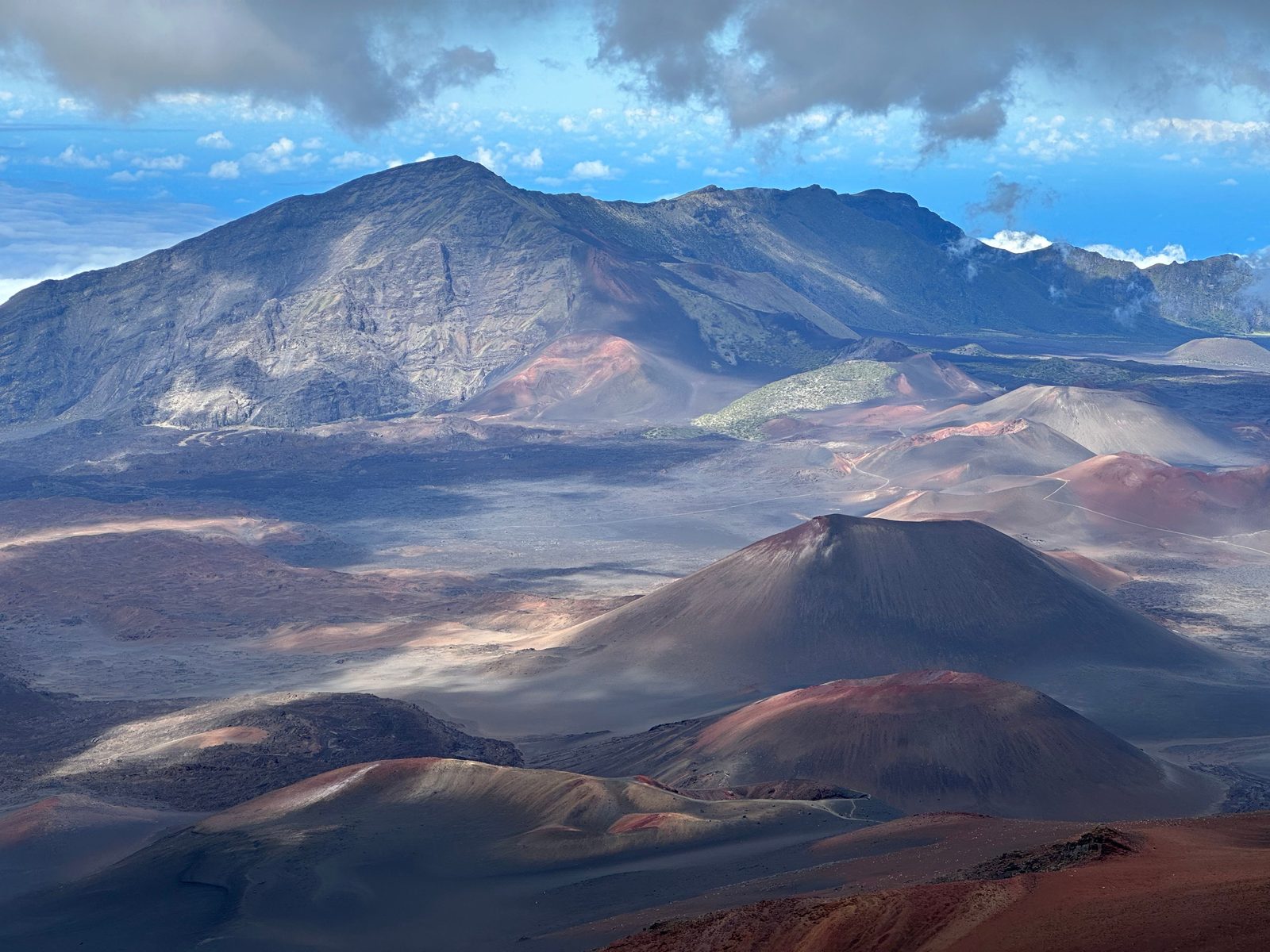
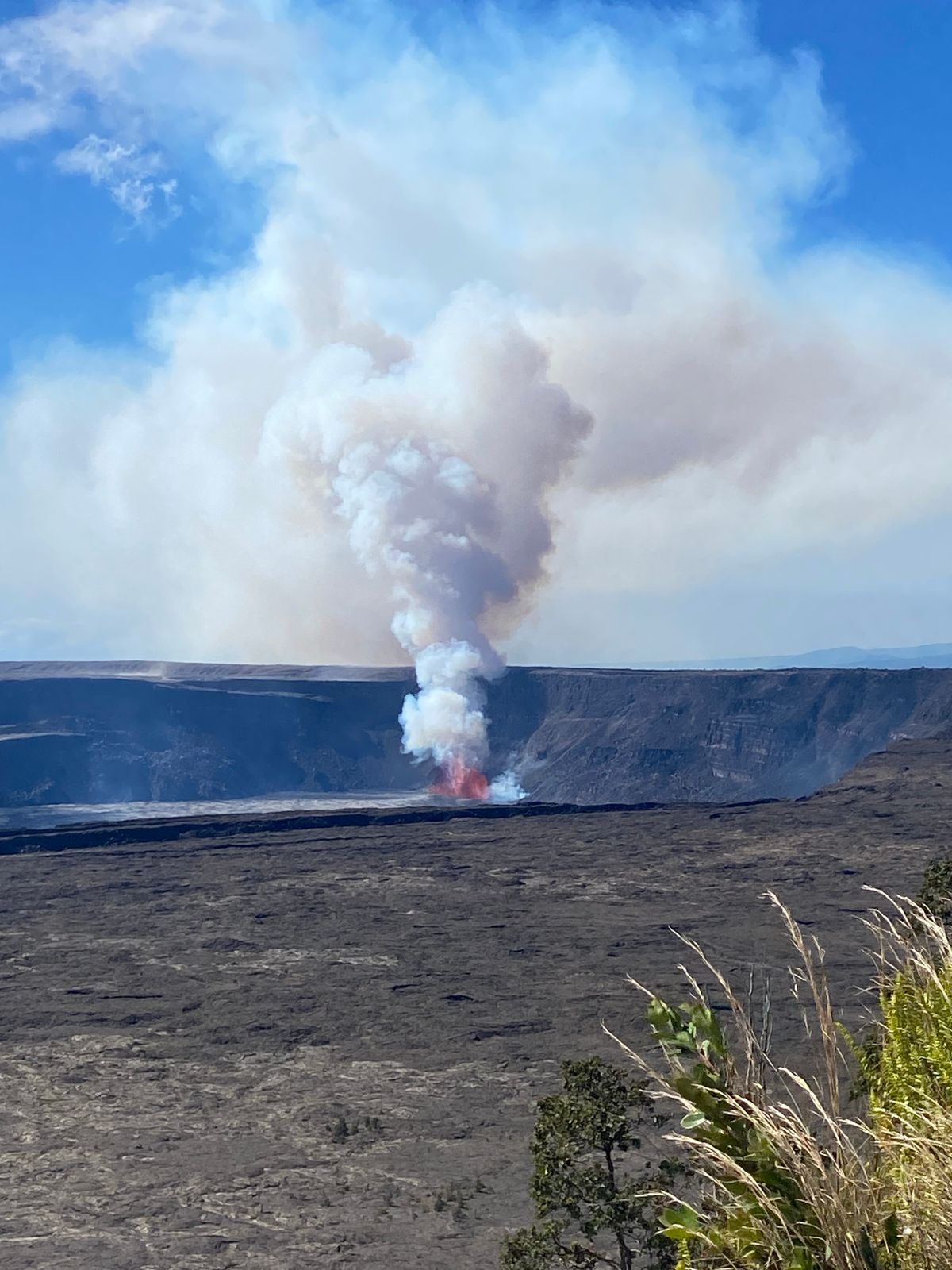
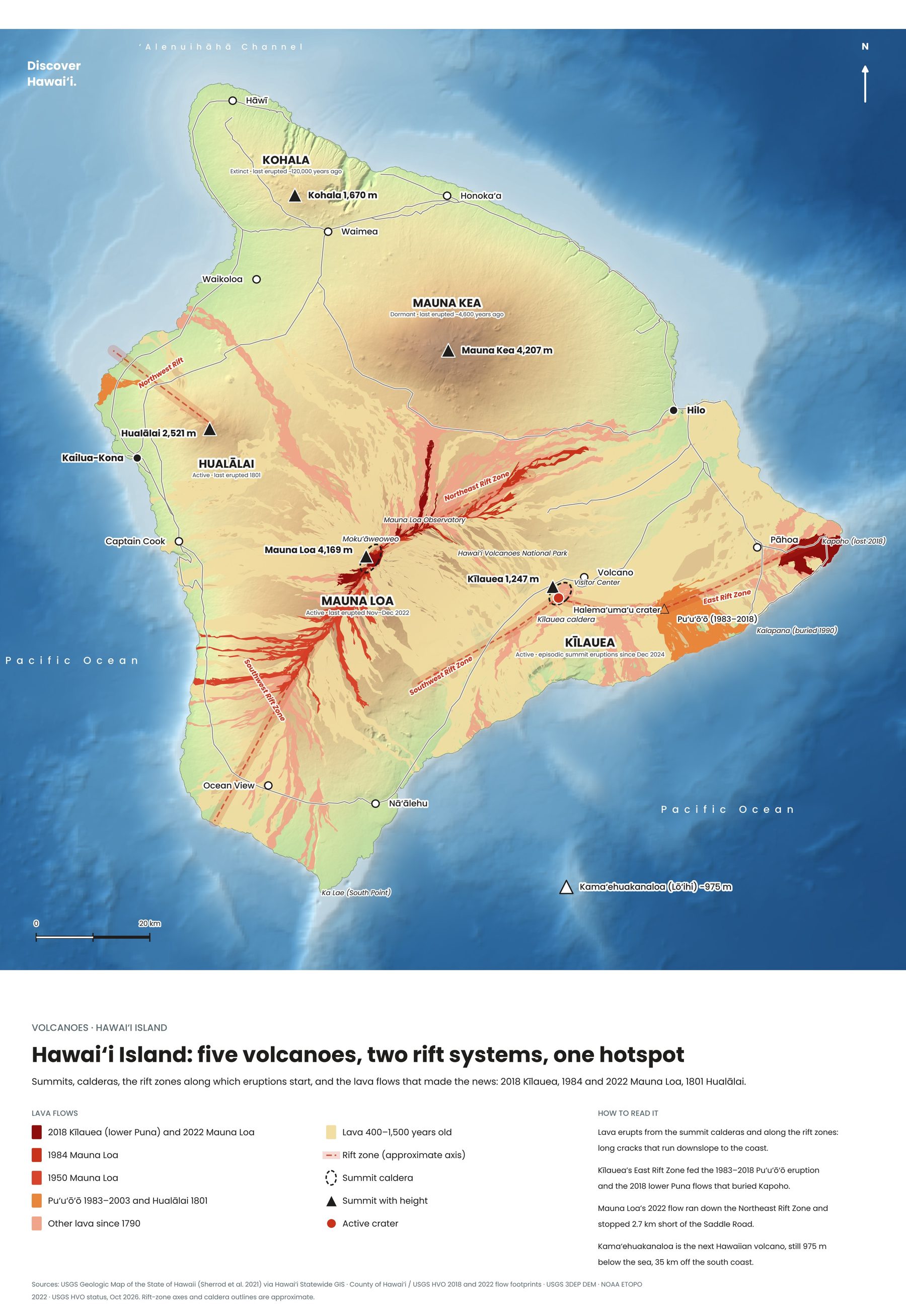
Deep beneath the Pacific, a plume of unusually hot rock rises from the Earth's mantle. Where it reaches the base of the crust it melts into magma, and that magma punches up through the sea floor to build a volcano. Over hundreds of thousands of years, eruption after eruption piles lava higher until a mountain breaks the surface and becomes an island.
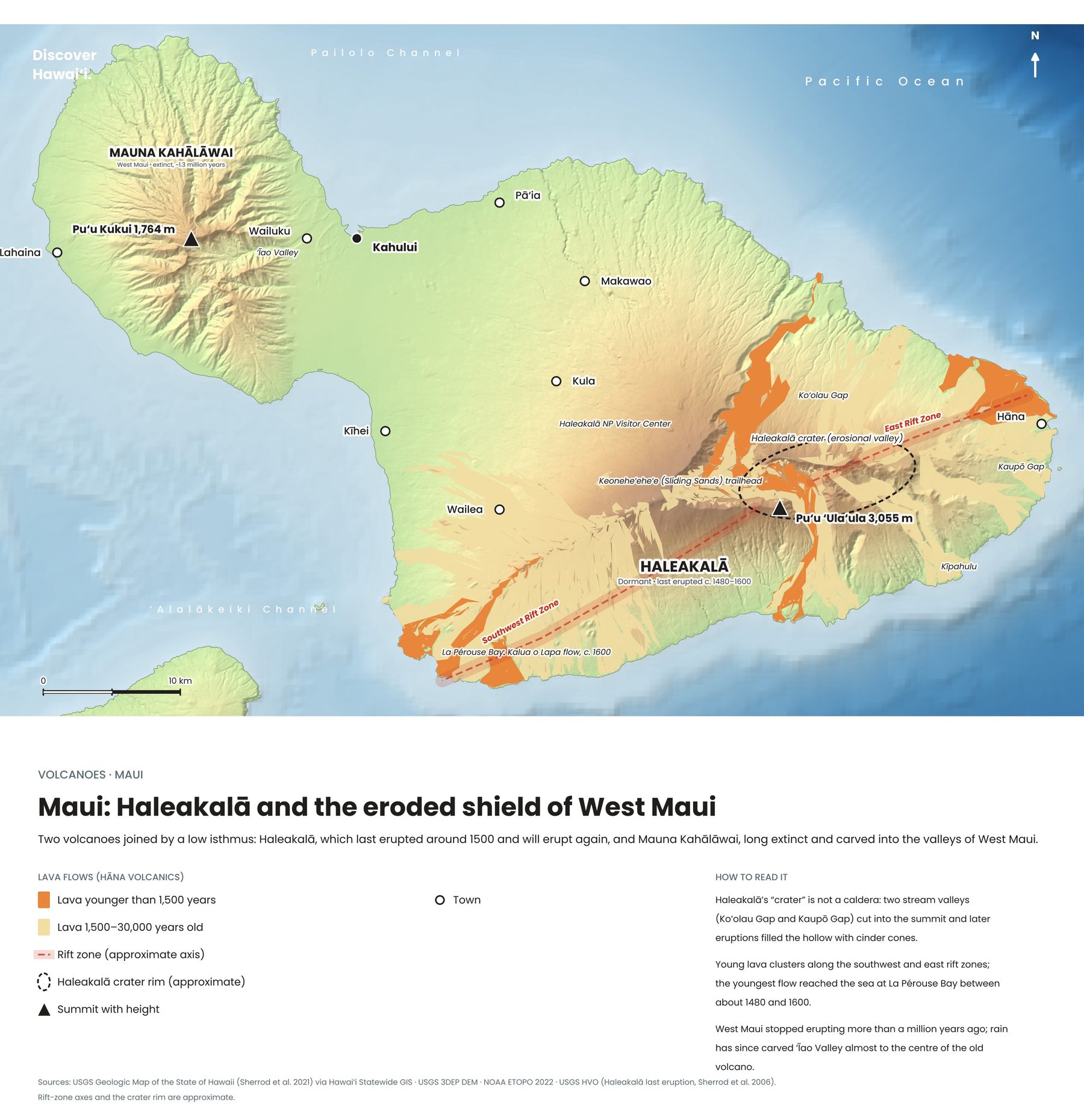
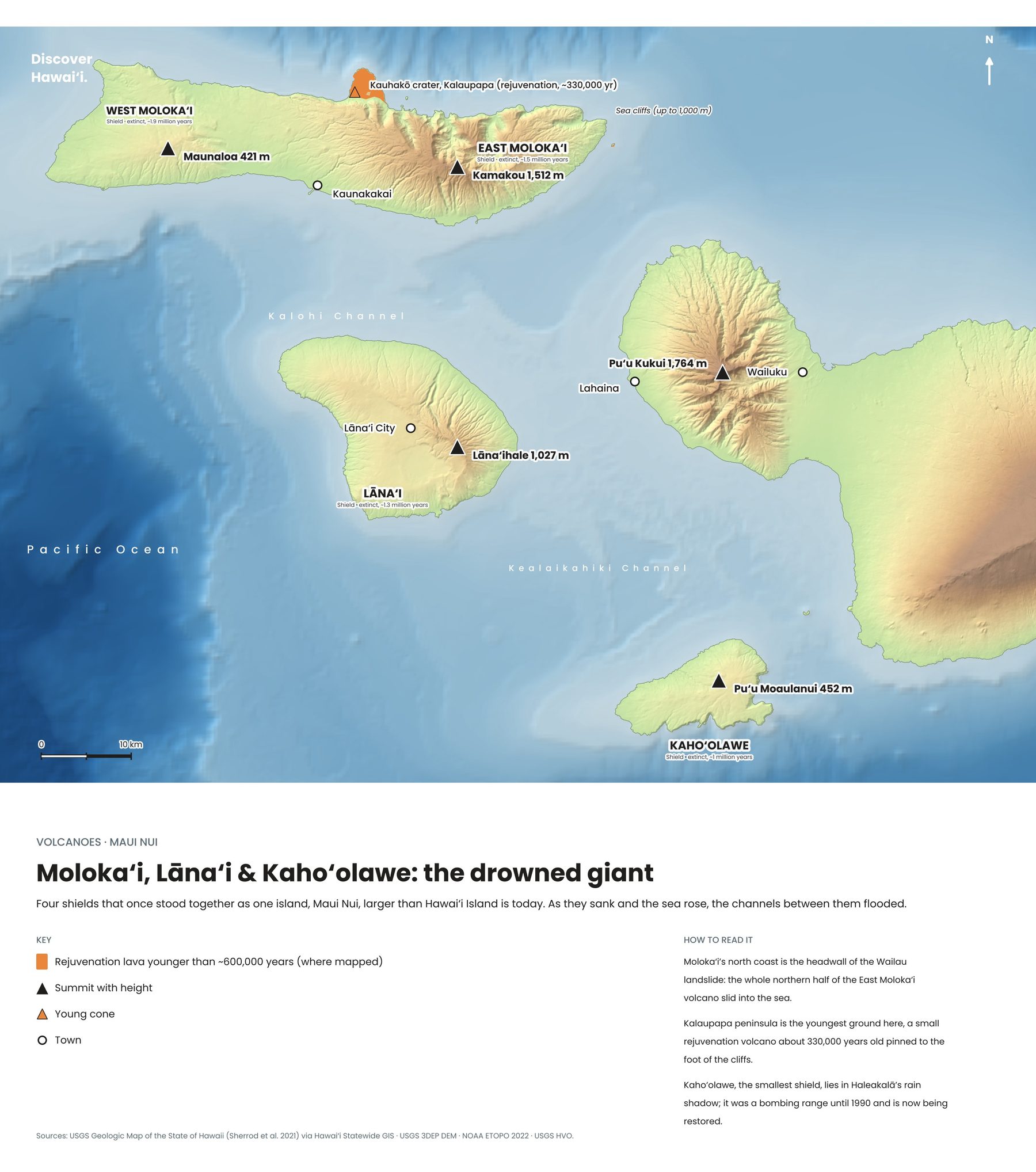
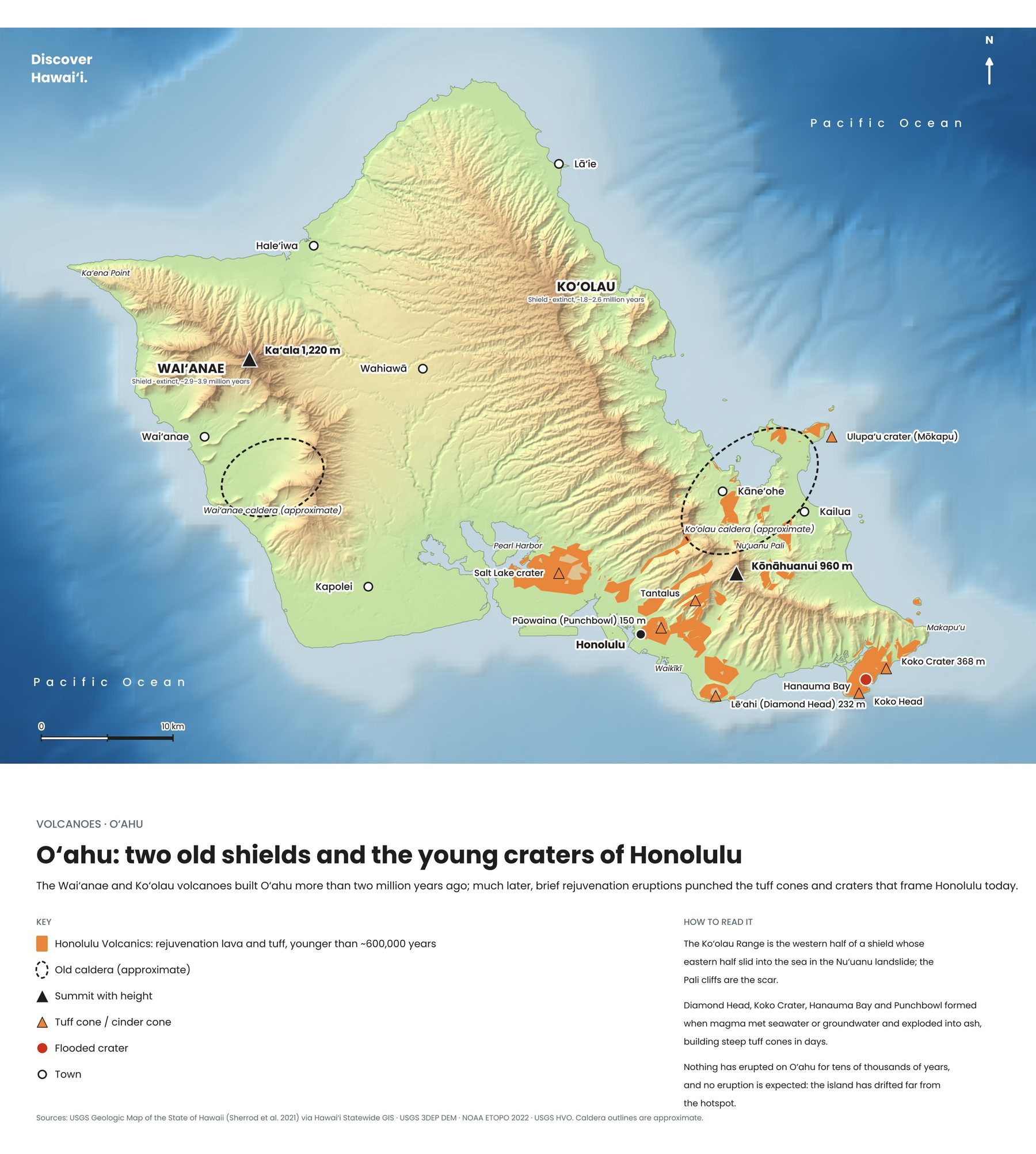
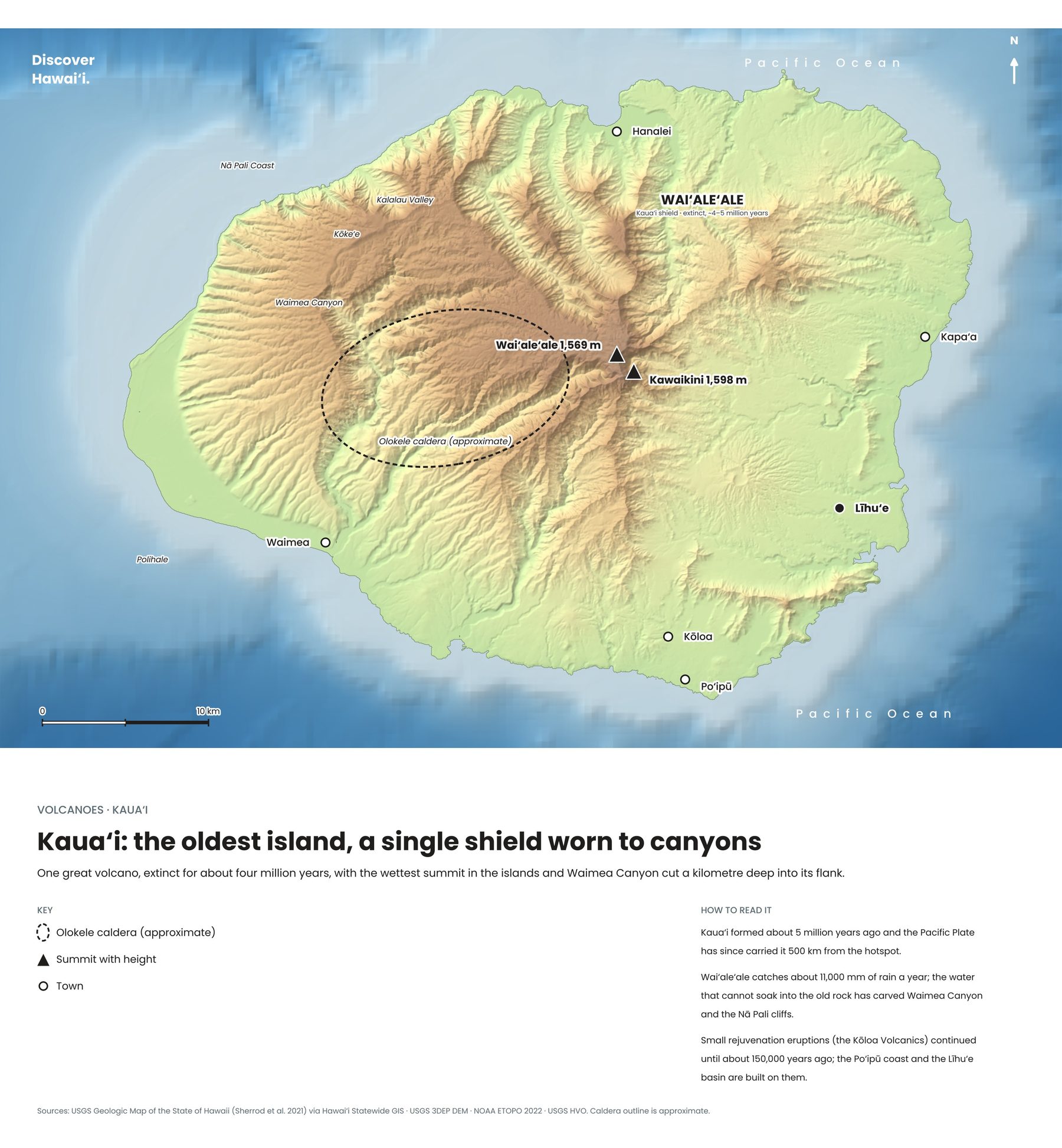
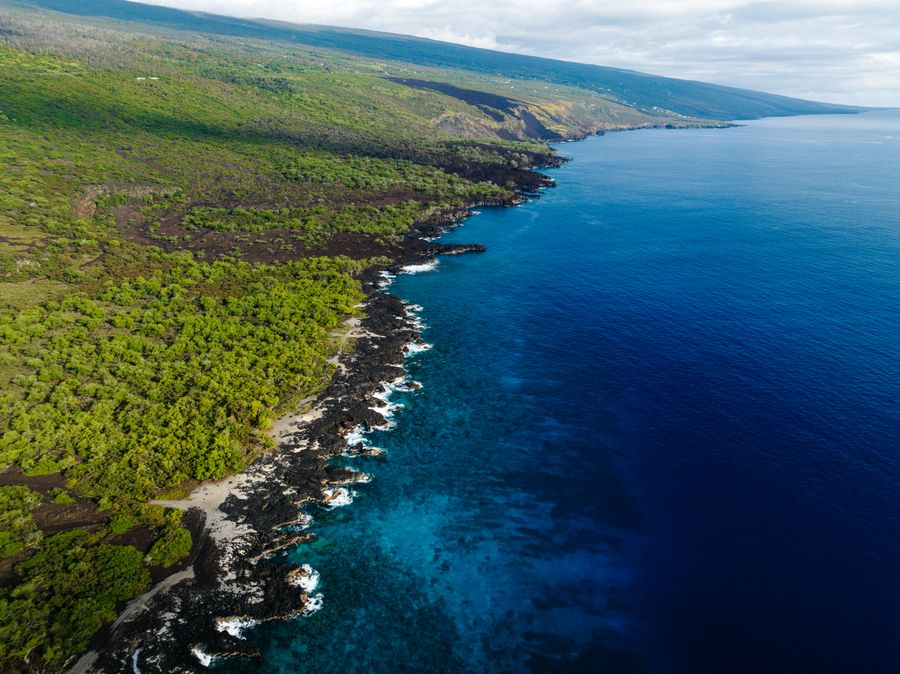
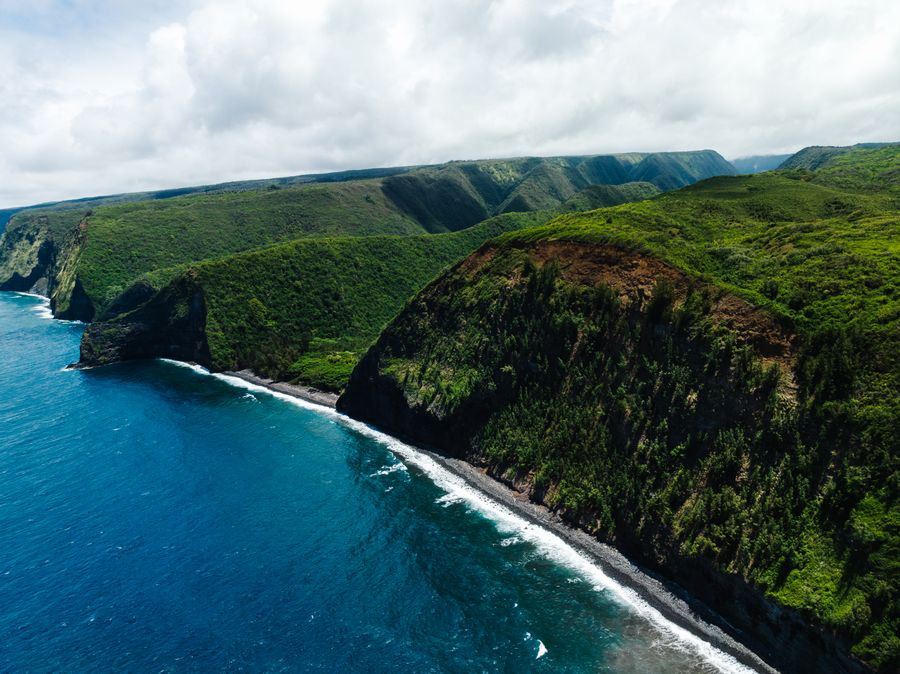
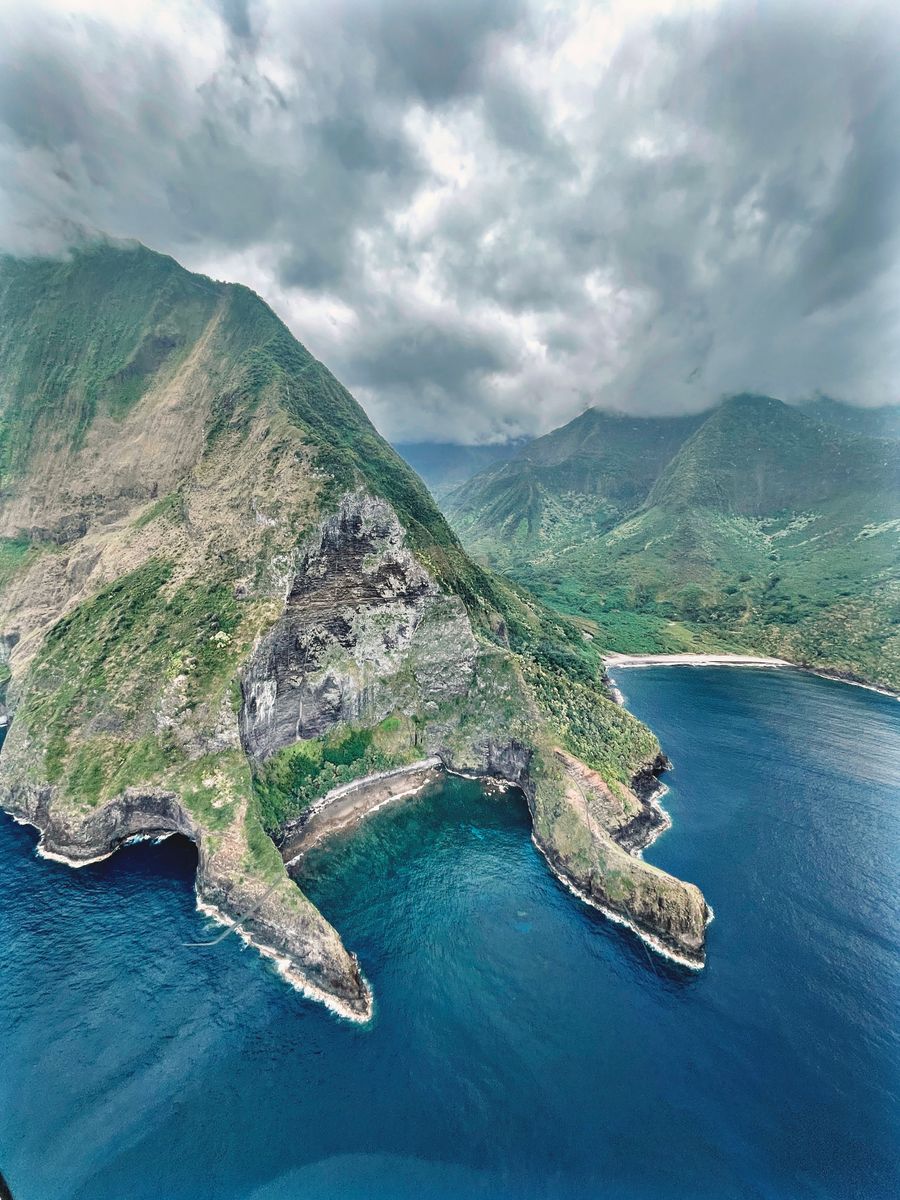
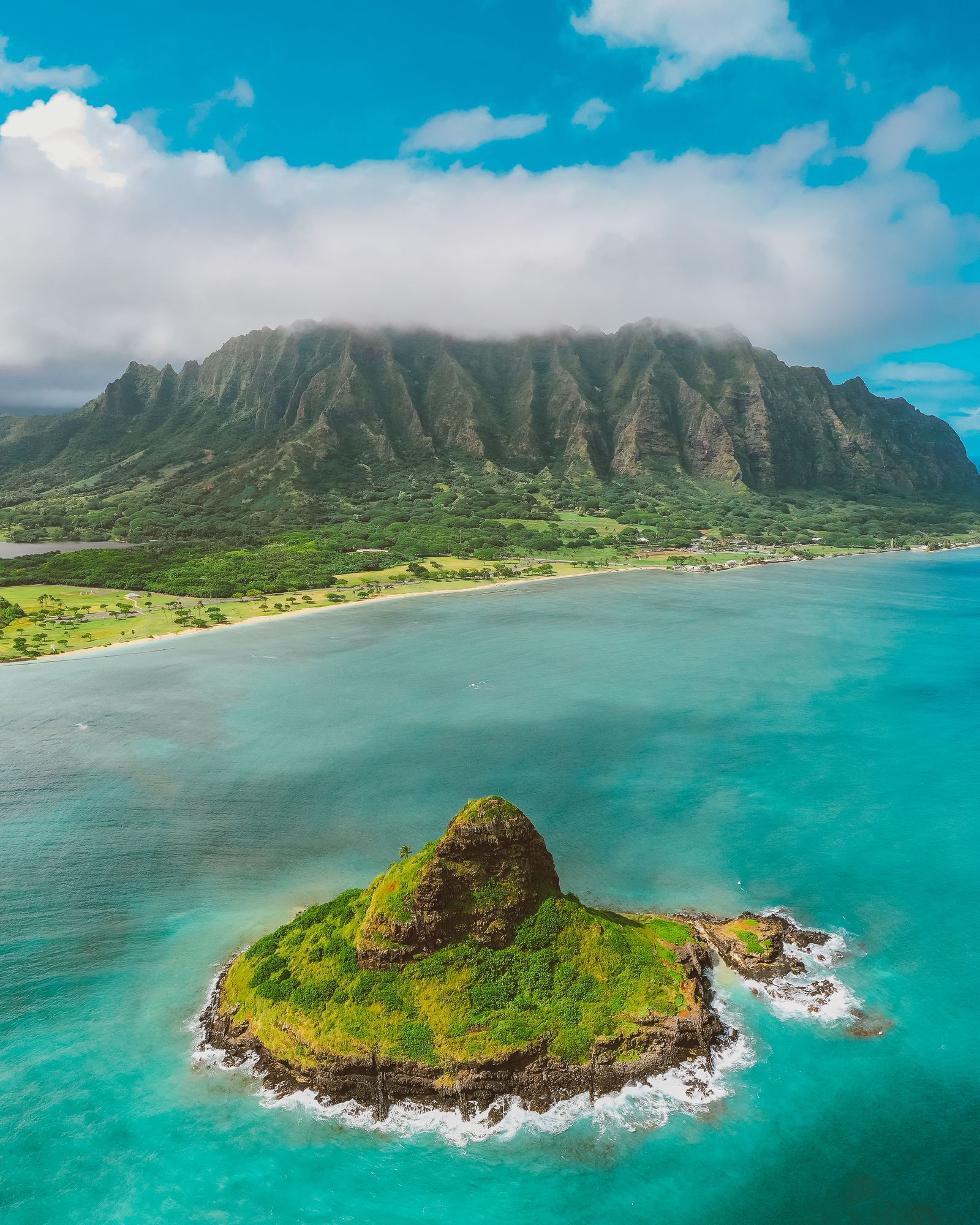
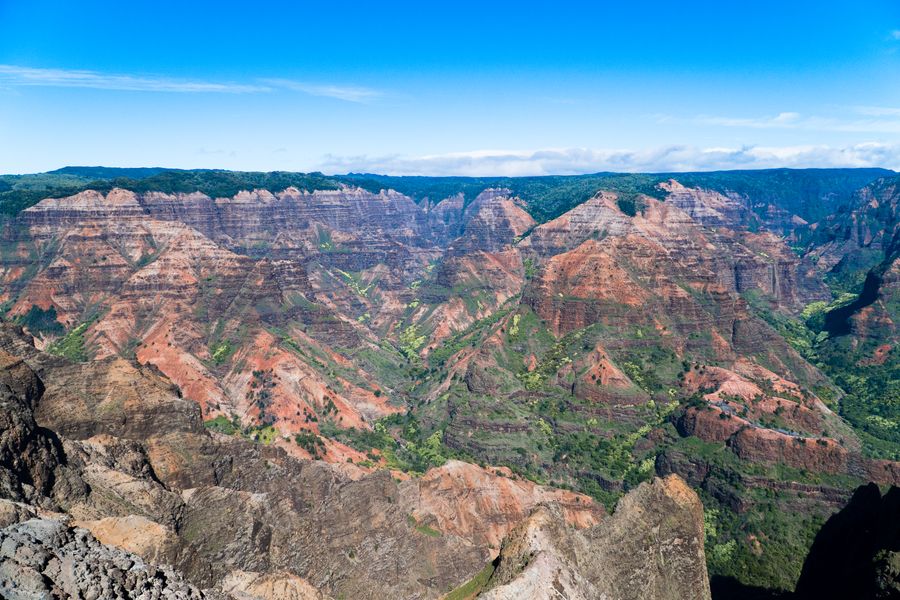
The hotspot stays roughly where it is, but the Pacific Plate above it creeps northwest by several centimetres a year. Each volcano is slowly carried away from its source, goes quiet and begins to erode, while a new one grows behind it. That is why the islands get older as you travel northwest: Kauaʻi is around five million years old, the Big Island less than one million.
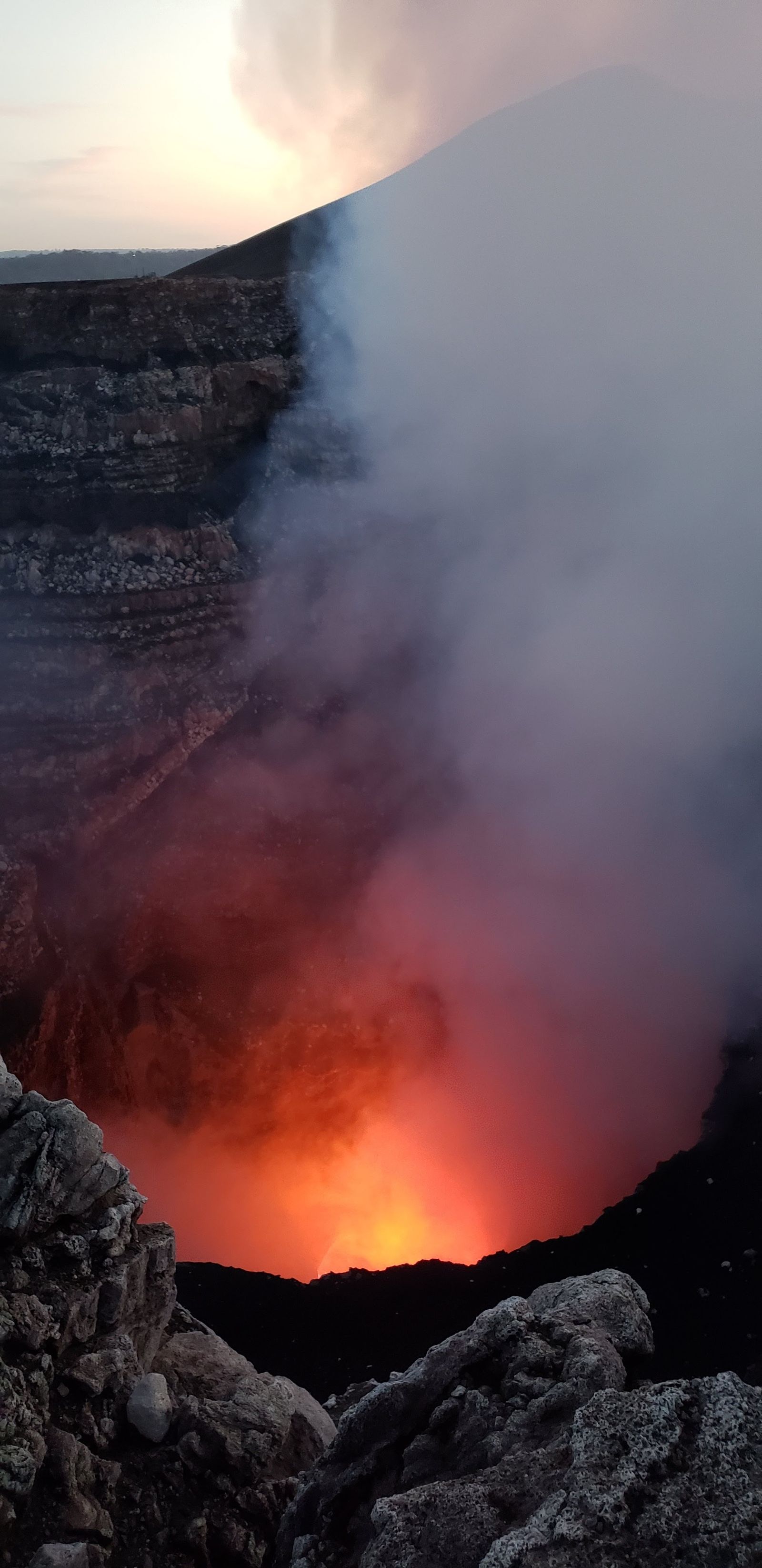
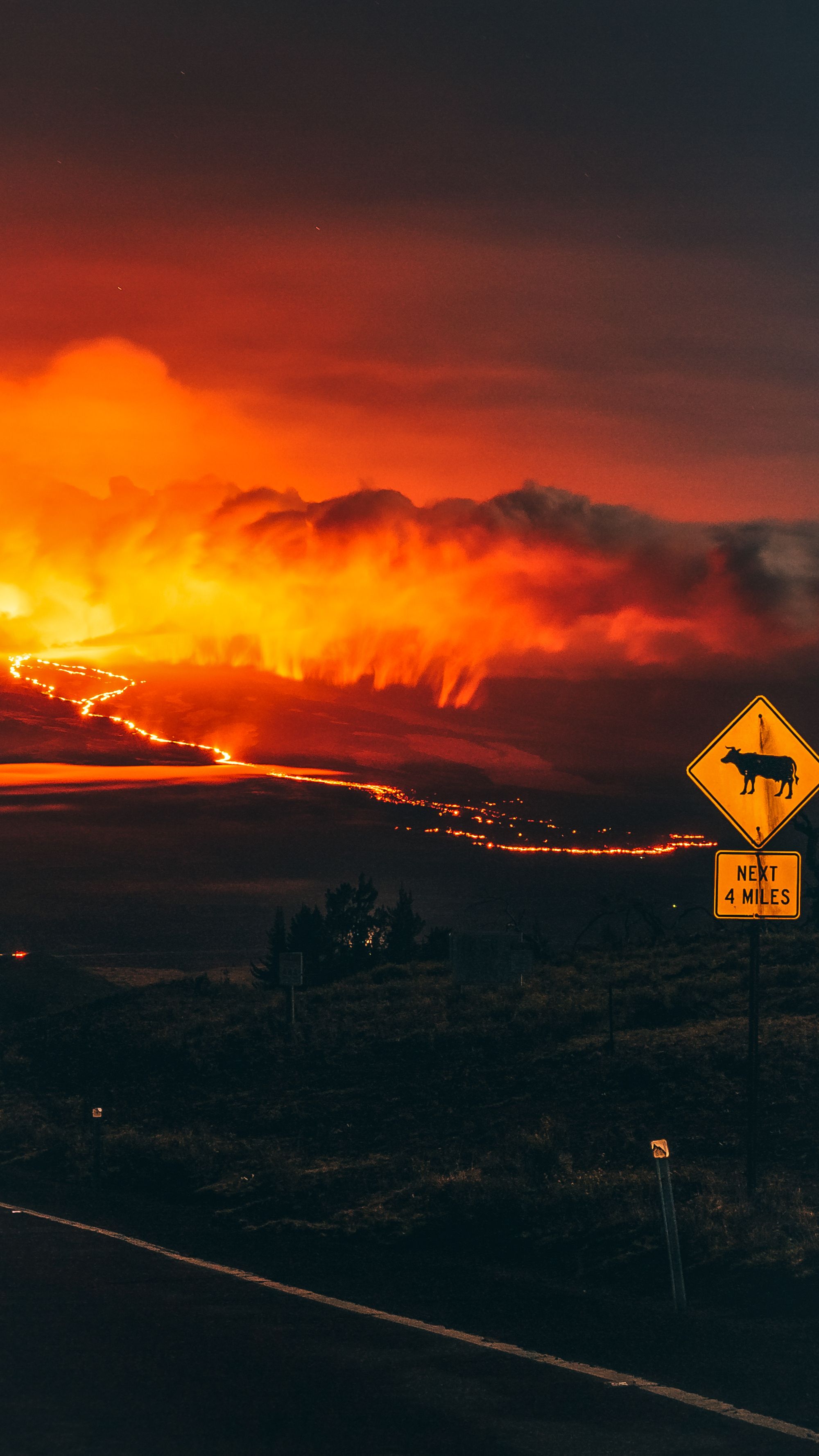
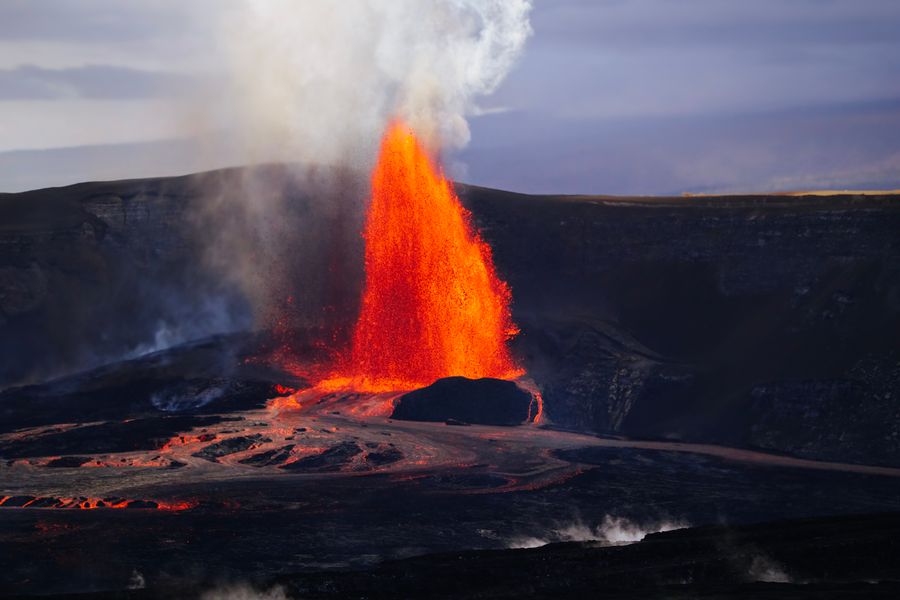
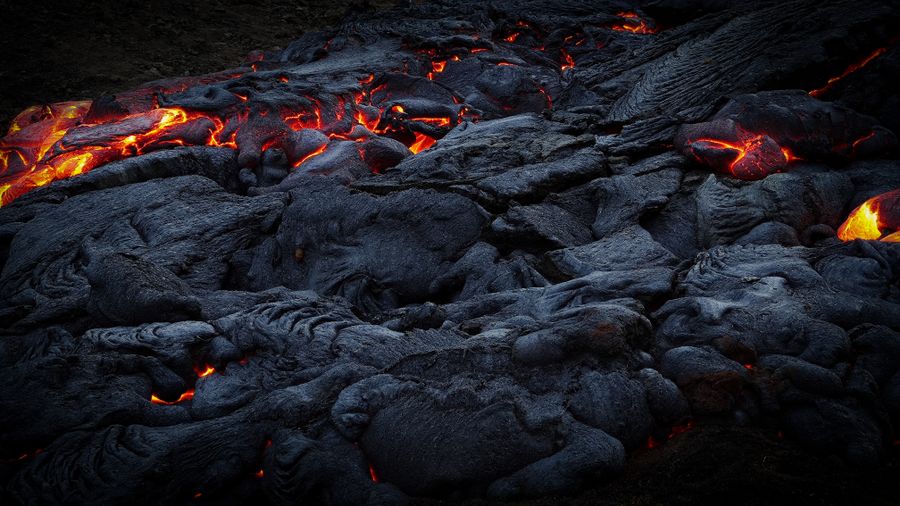
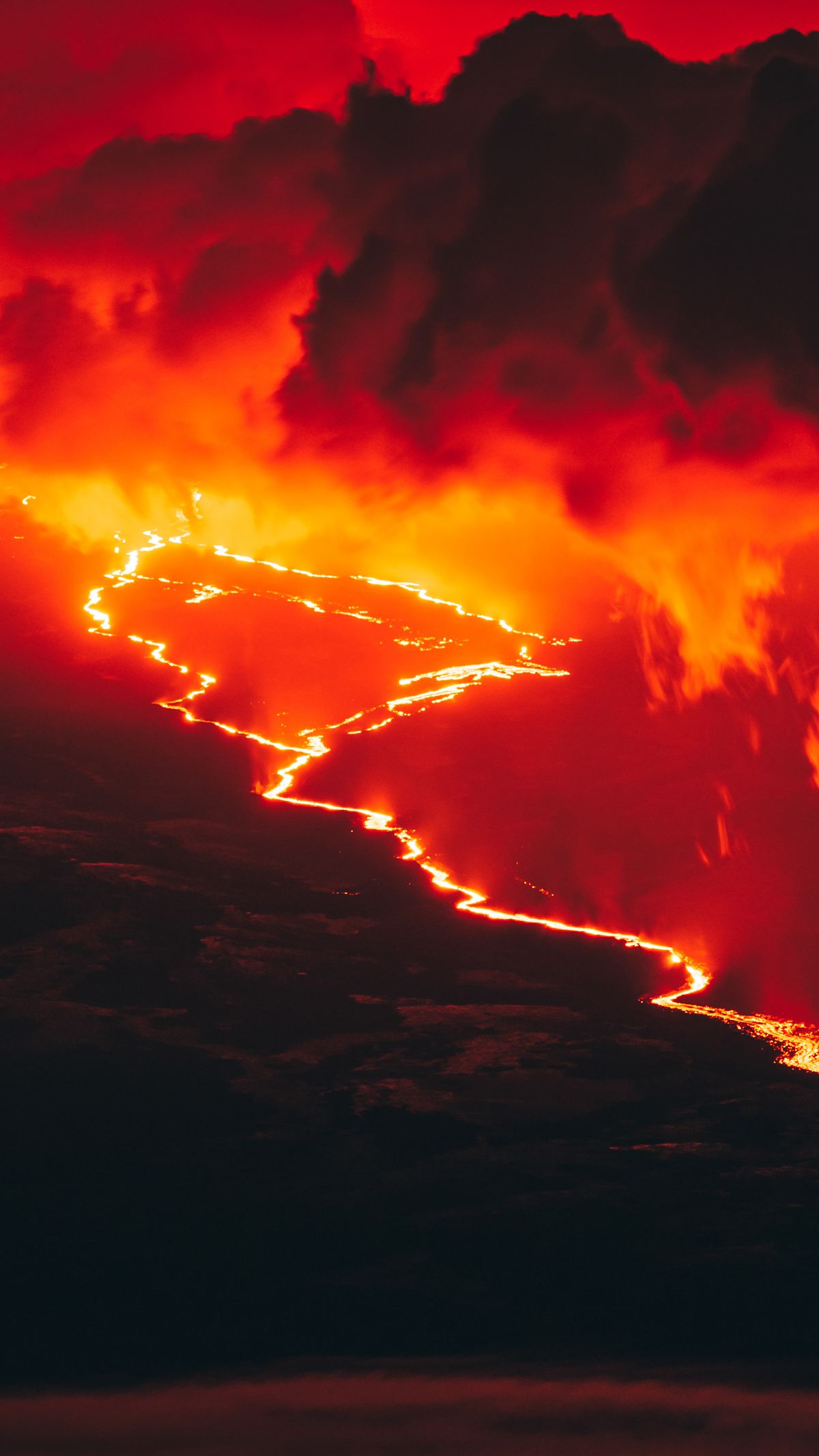
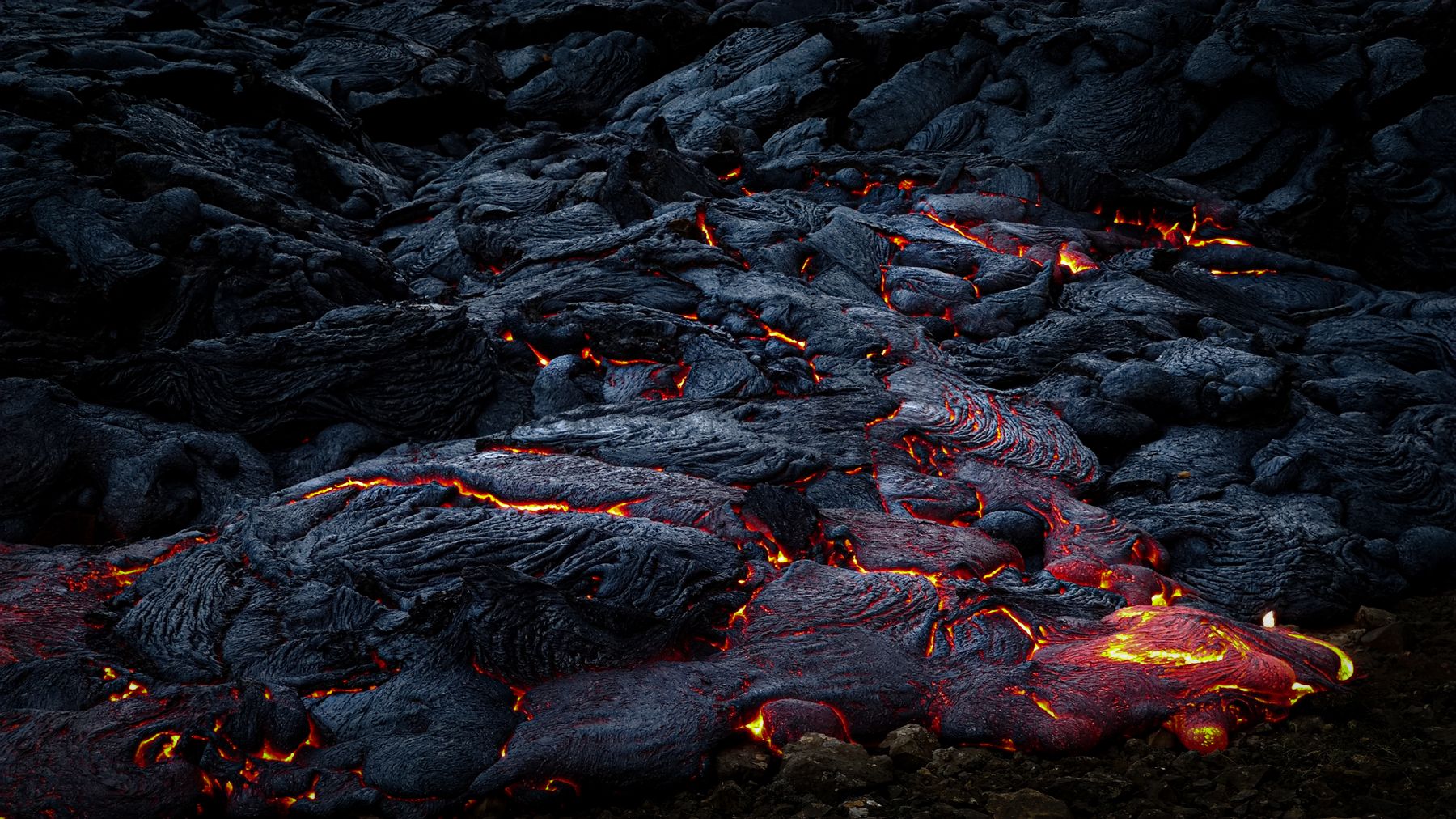
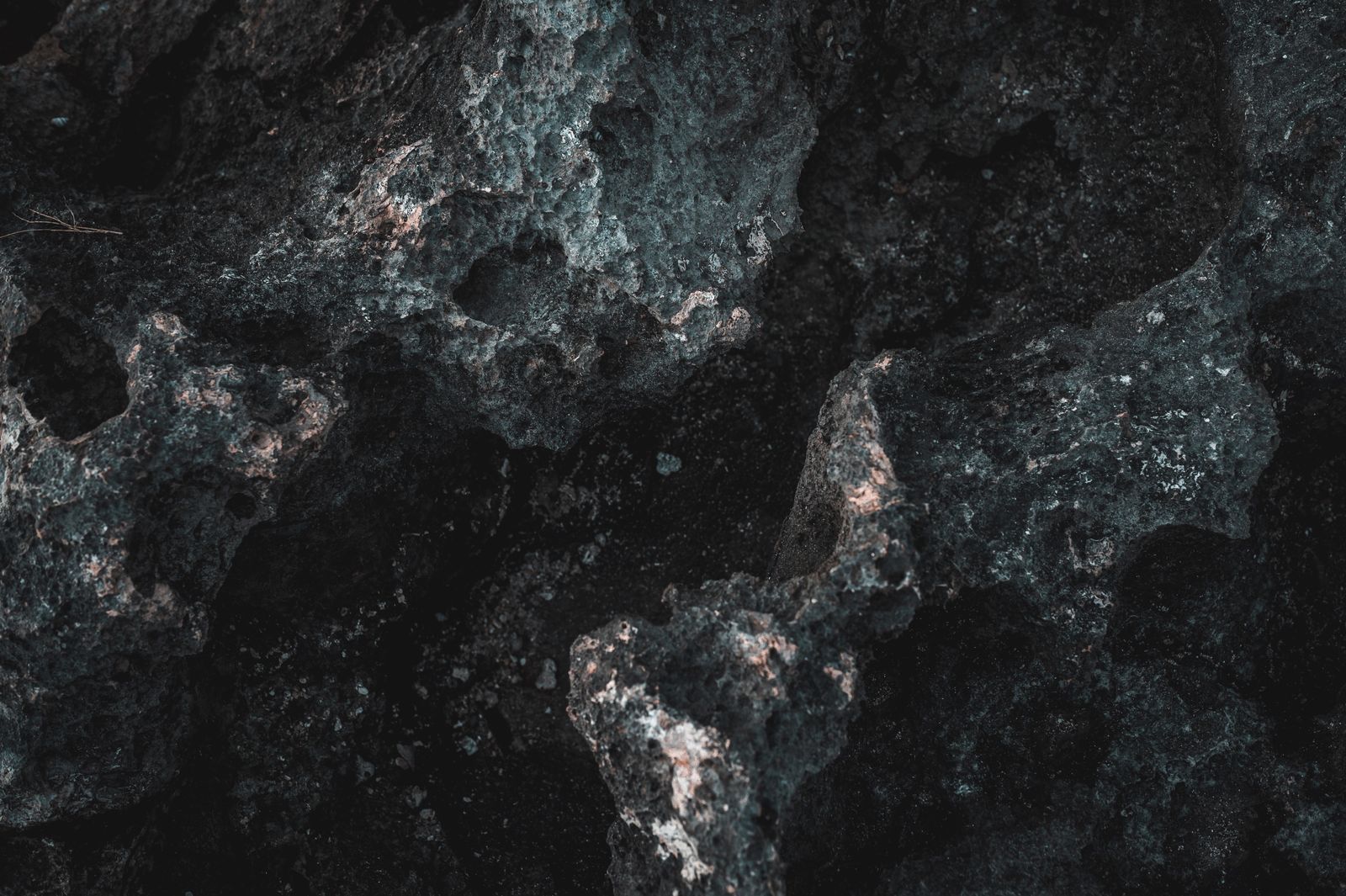
Hawaiian eruptions are mostly gentle by volcano standards. The runny basalt lava pours out as fountains and rivers rather than exploding, and the world borrowed two Hawaiian words for it: smooth, ropy pāhoehoe and rough, clinkery ʻaʻā.