The striped shadowOne of the ocean's great hunters
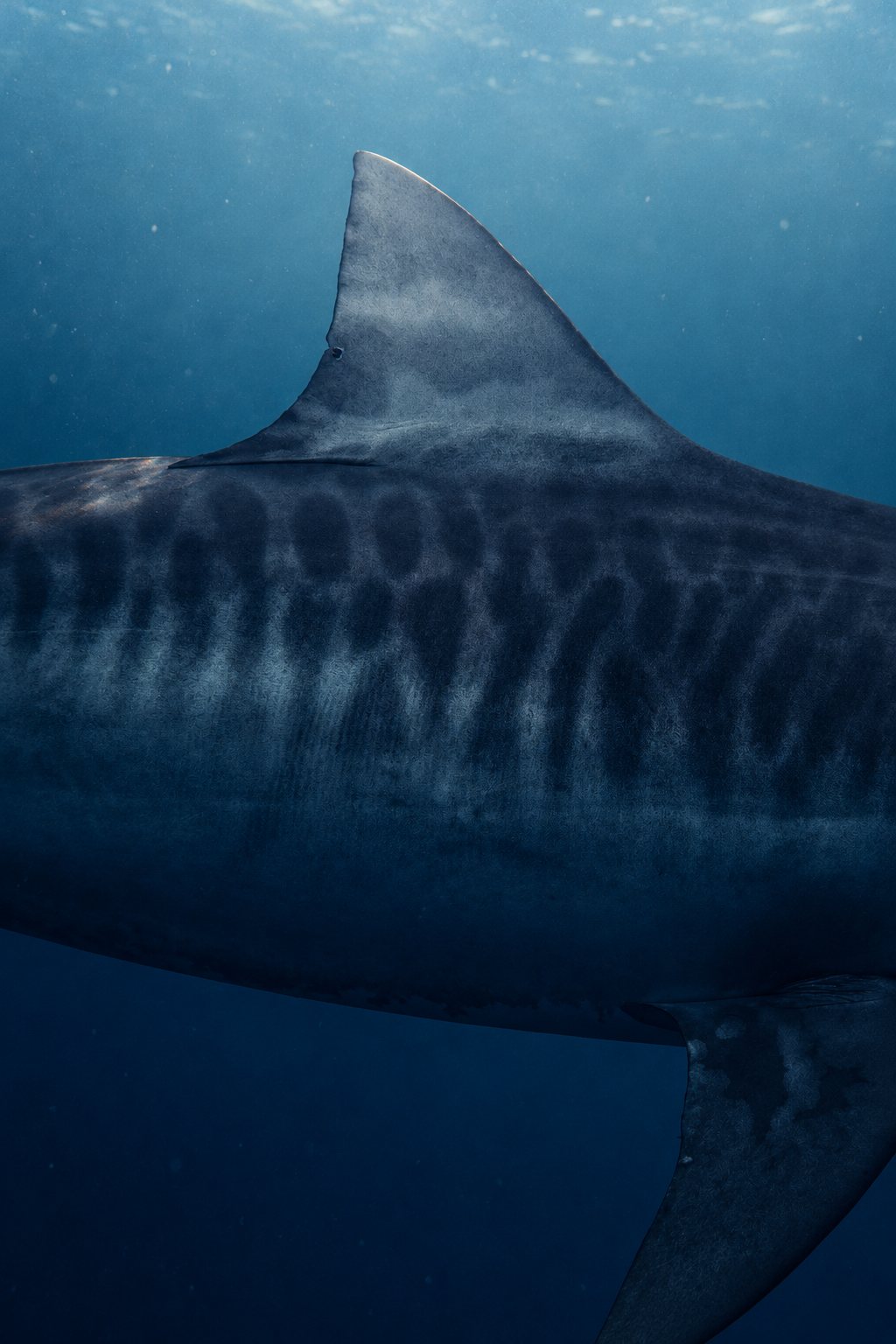
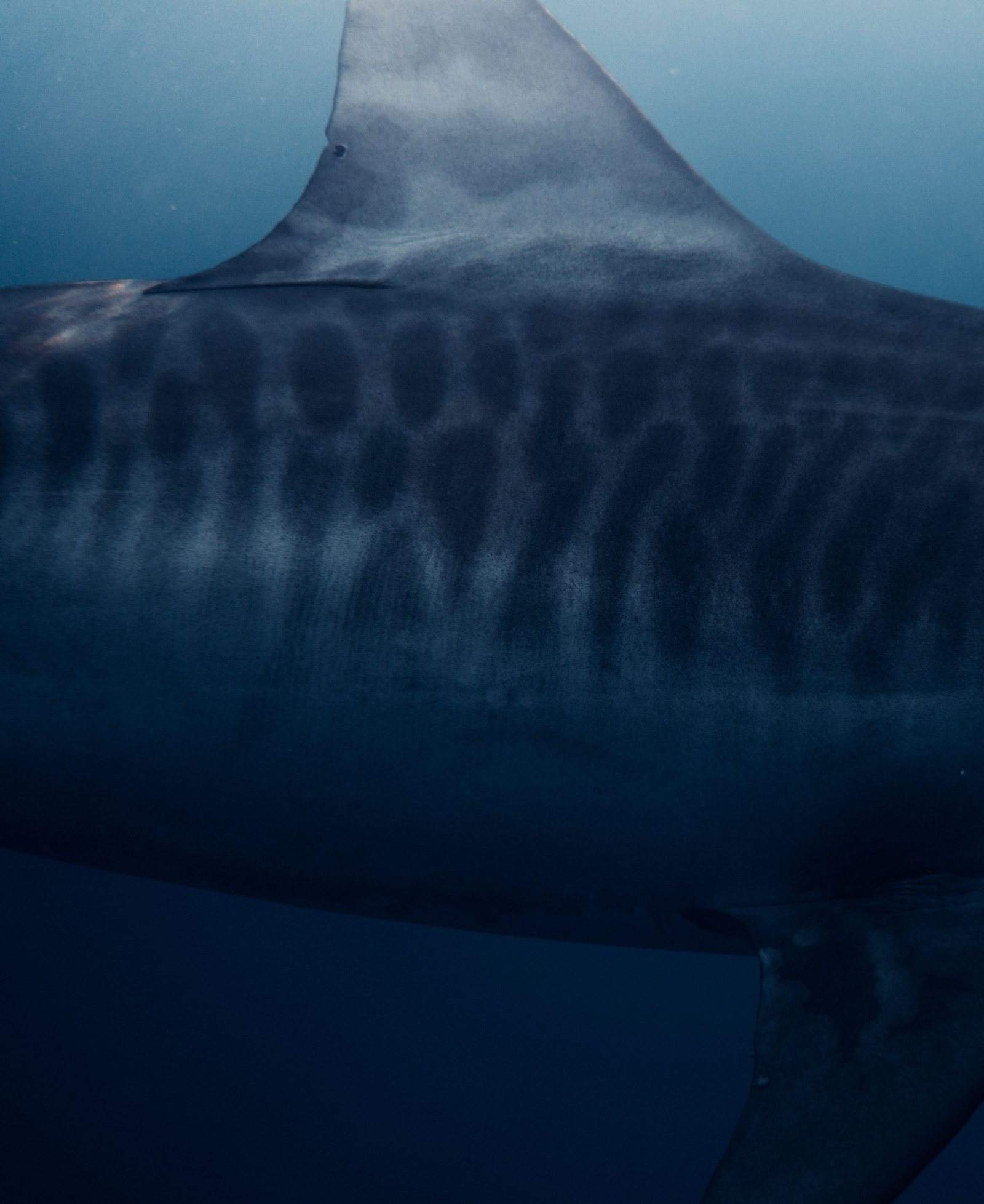
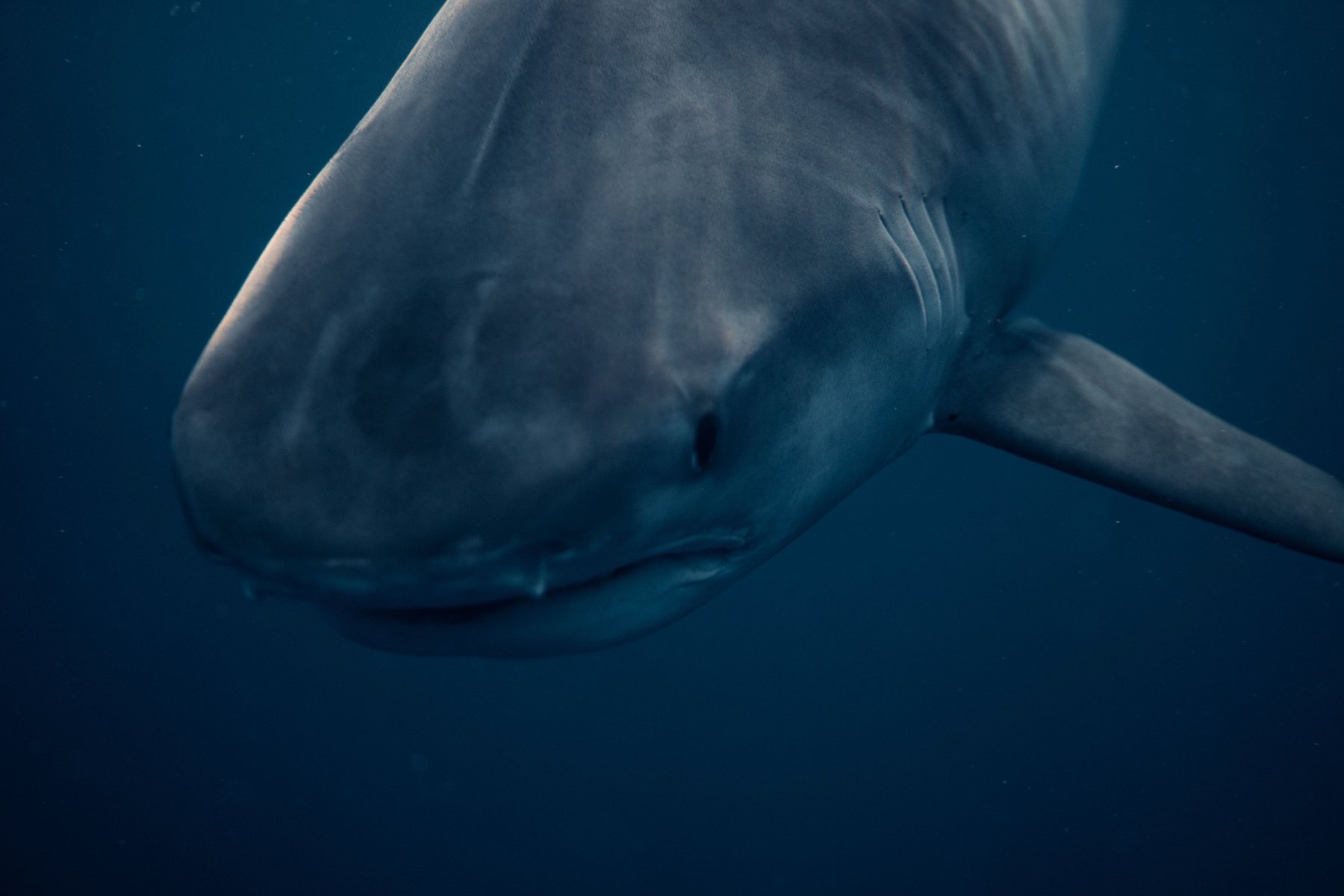
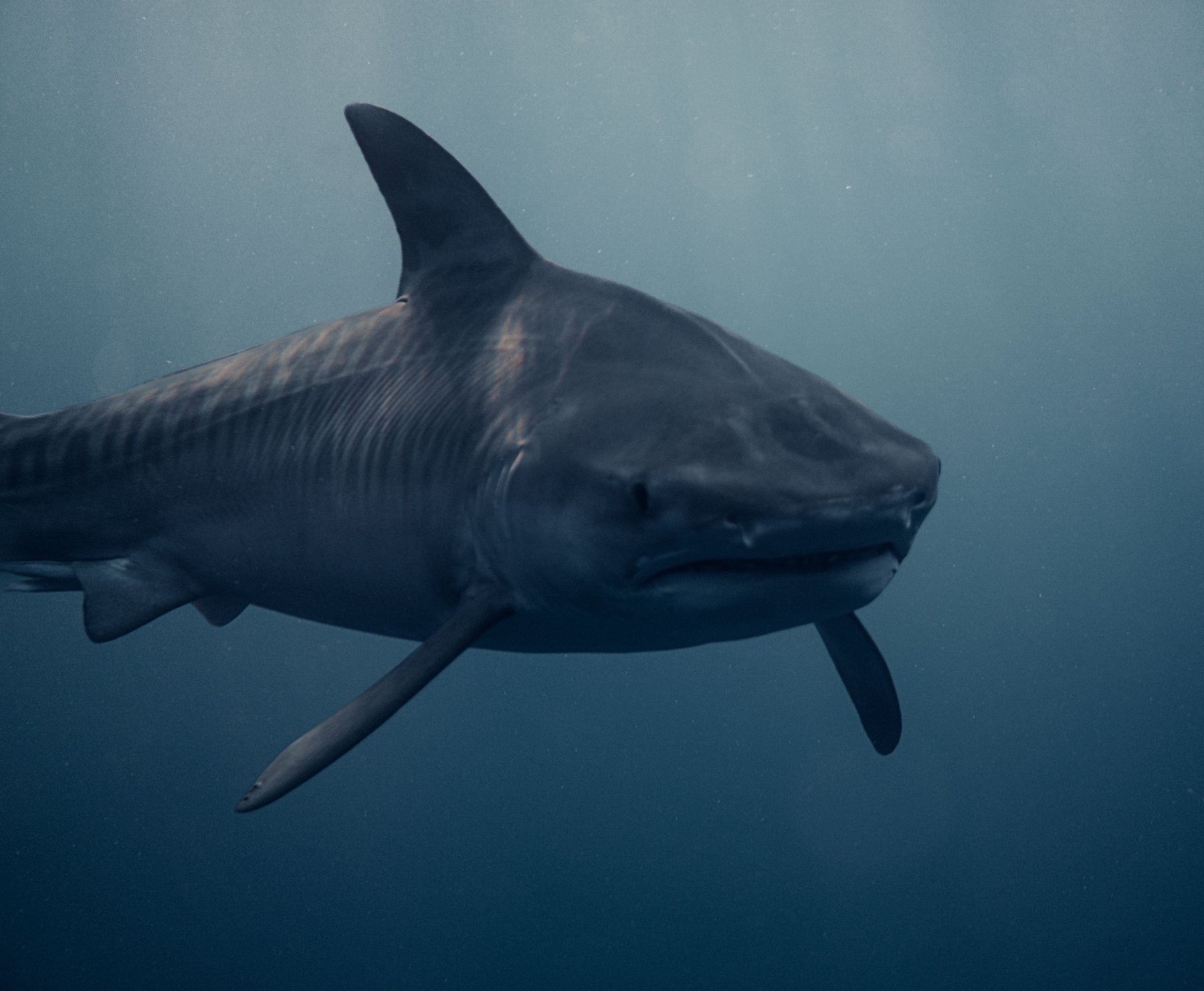
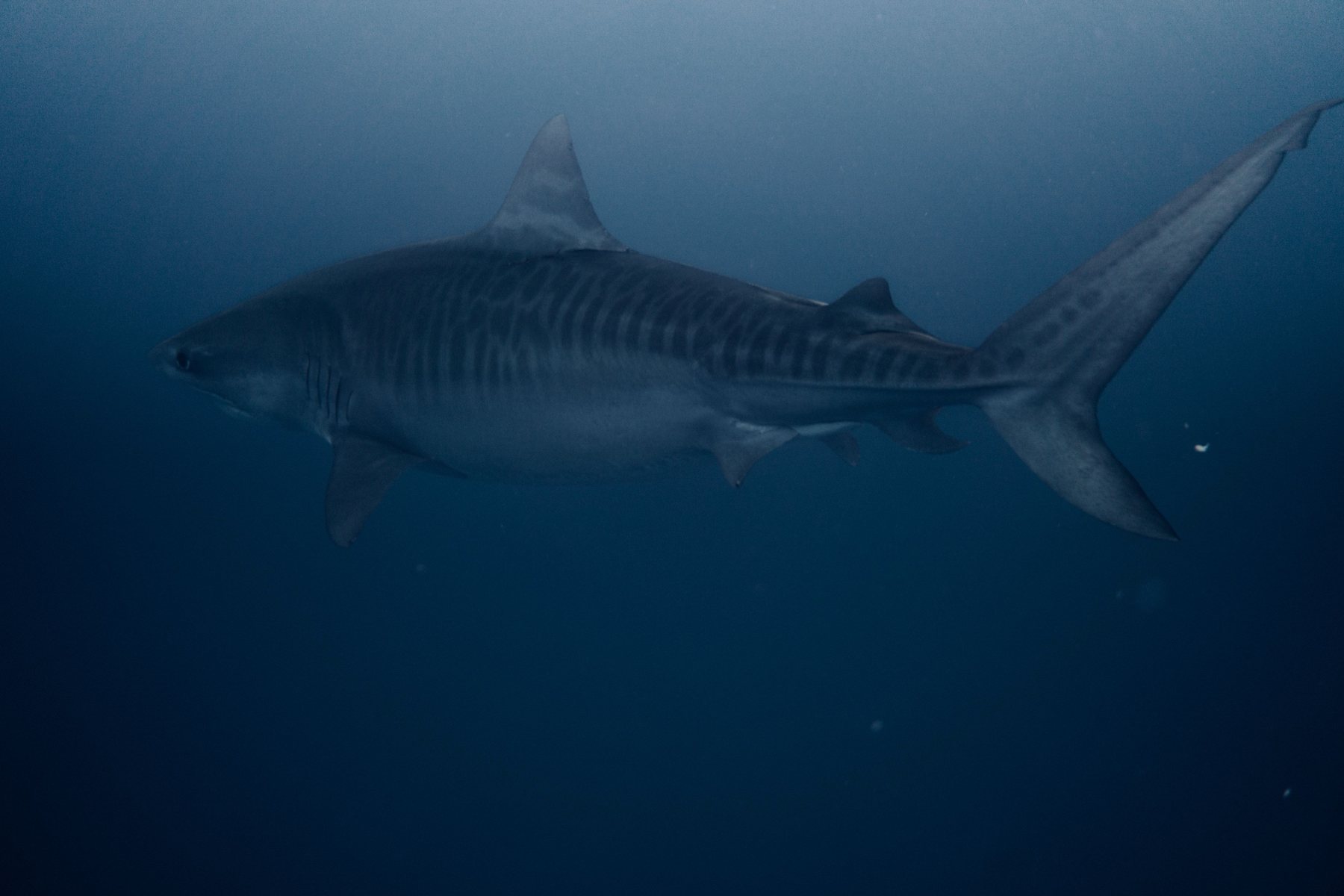
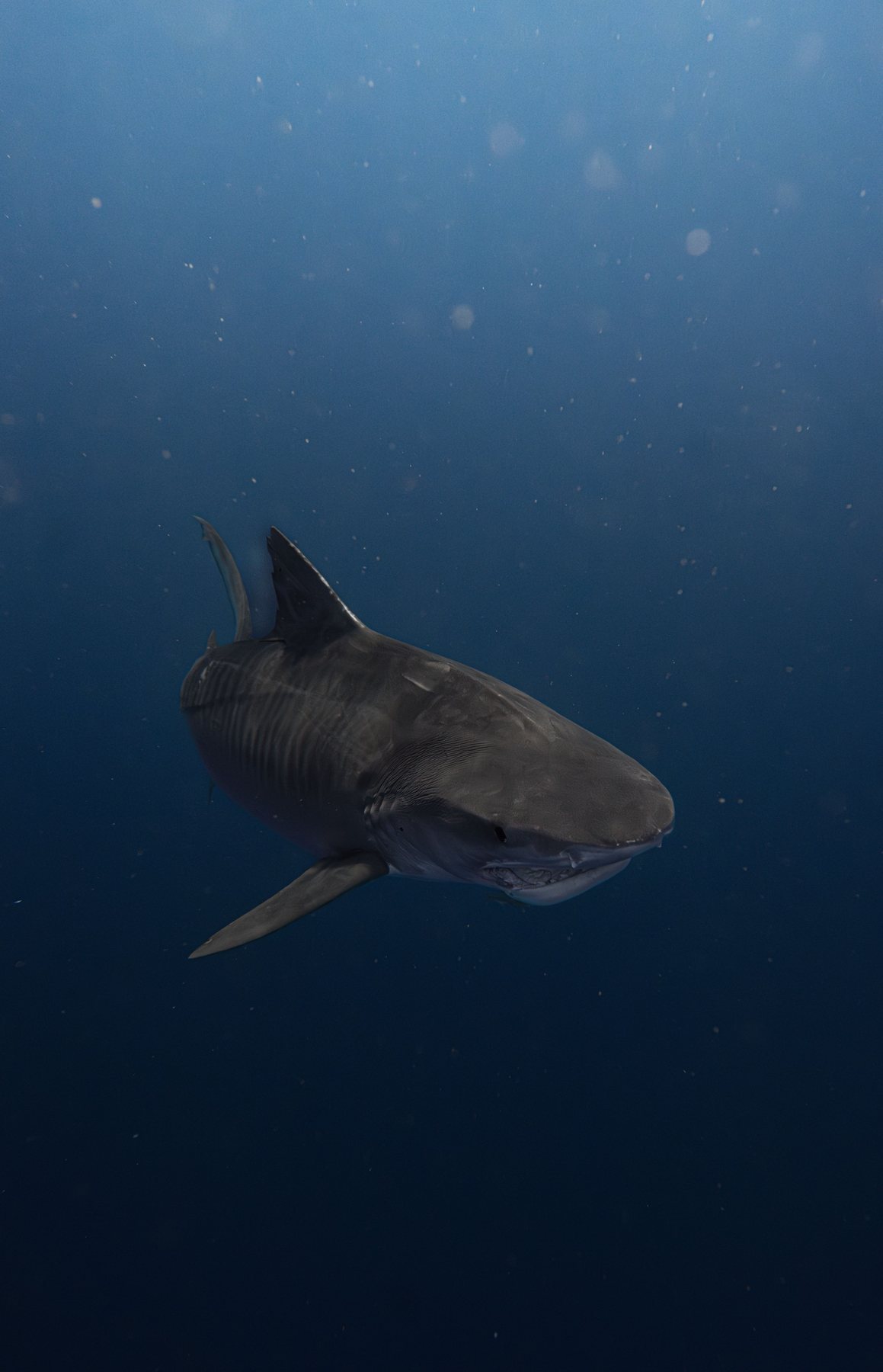
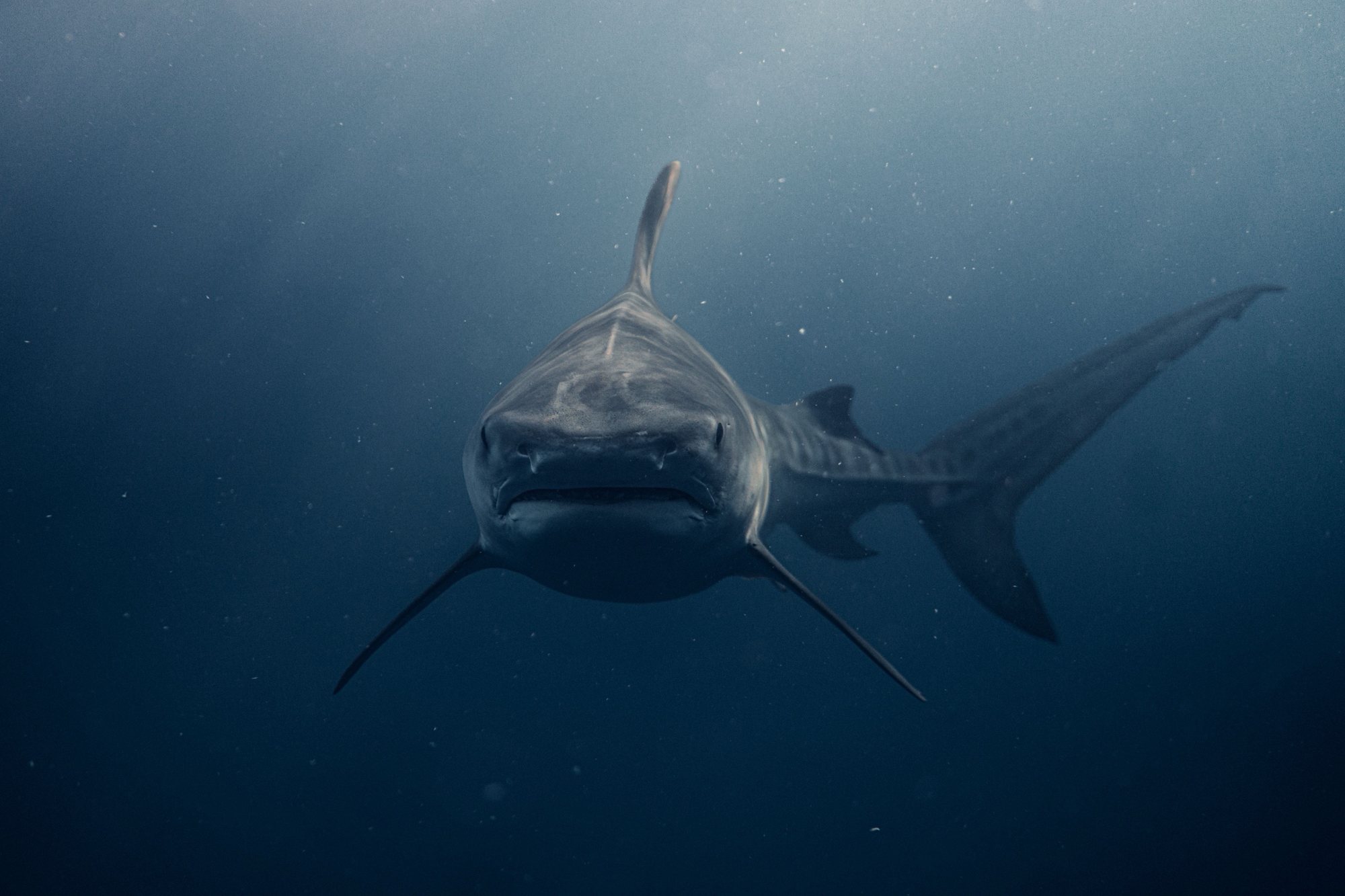
The tiger shark is named for the dark bars and spots along its back. They are boldest on young sharks and slowly fade as the animal grows, so the biggest adults can look almost plain grey. Together with the great white and the bull shark, it is one of the large predatory sharks that people most often meet in coastal water.
What sets it apart is its range of habits. The UN Food and Agriculture Organization describes it as a "common, wide-ranging coastal-pelagic" shark of tropical and warm-temperate seas, found over continental and island shelves, in river estuaries, close inshore off wharves and jetties, and in coral atolls and lagoons. It moves inshore at night and is capable of long voyages across open ocean between islands.
Its reputation as a shark that eats anything is only half true. It does take an unusually wide range of prey, from fish and rays to sea turtles, seabirds and dugongs, and it is a keen scavenger: at Raine Island on the northern Great Barrier Reef, tiger sharks prefer to feed on dead and dying turtles at the world's largest green turtle rookery.
Where they liveEvery warm sea on Earth
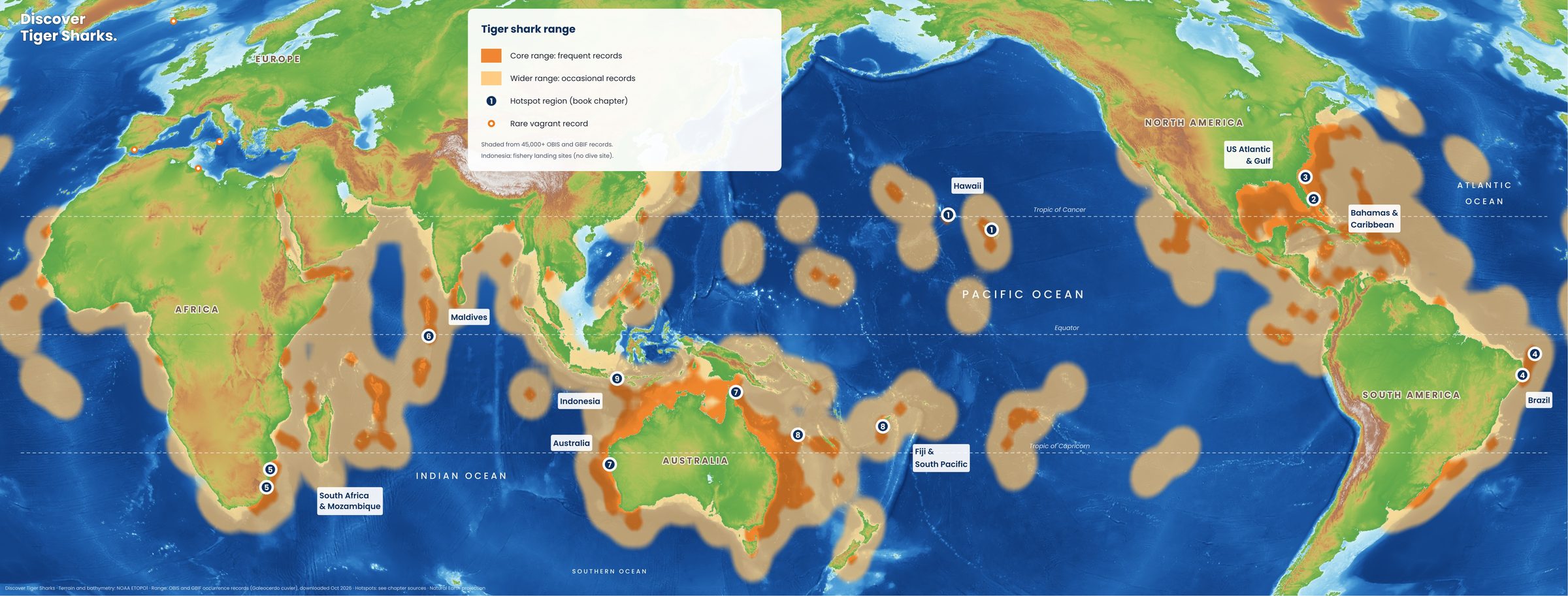
Tiger sharks are found right around the world in tropical and warm-temperate seas: in the western Atlantic from Massachusetts to Uruguay, in the eastern Atlantic from Morocco to Angola, across the Indian Ocean from South Africa to the Red Sea, and in the Pacific from Japan and New Zealand to southern California and Peru. Rare wanderers have been confirmed as far north as Iceland and the United Kingdom.
Most of their life is spent in the upper 140 metres, but satellite tags tell a bigger story. Sharks tagged in the Coral Sea dived to 1,136 metres, and juveniles off north-east Brazil went below 1,100 metres into water as cold as 4 °C. Longline records also suggest their open-ocean range is far larger than older maps showed.
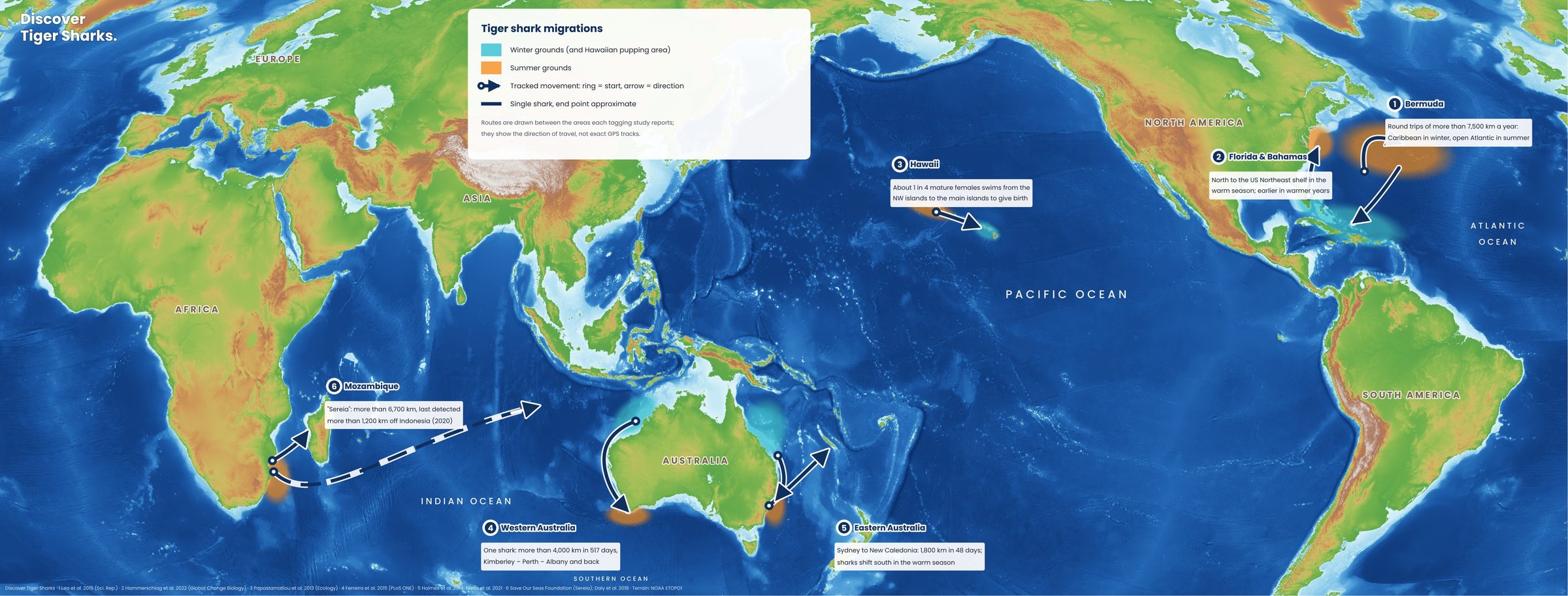
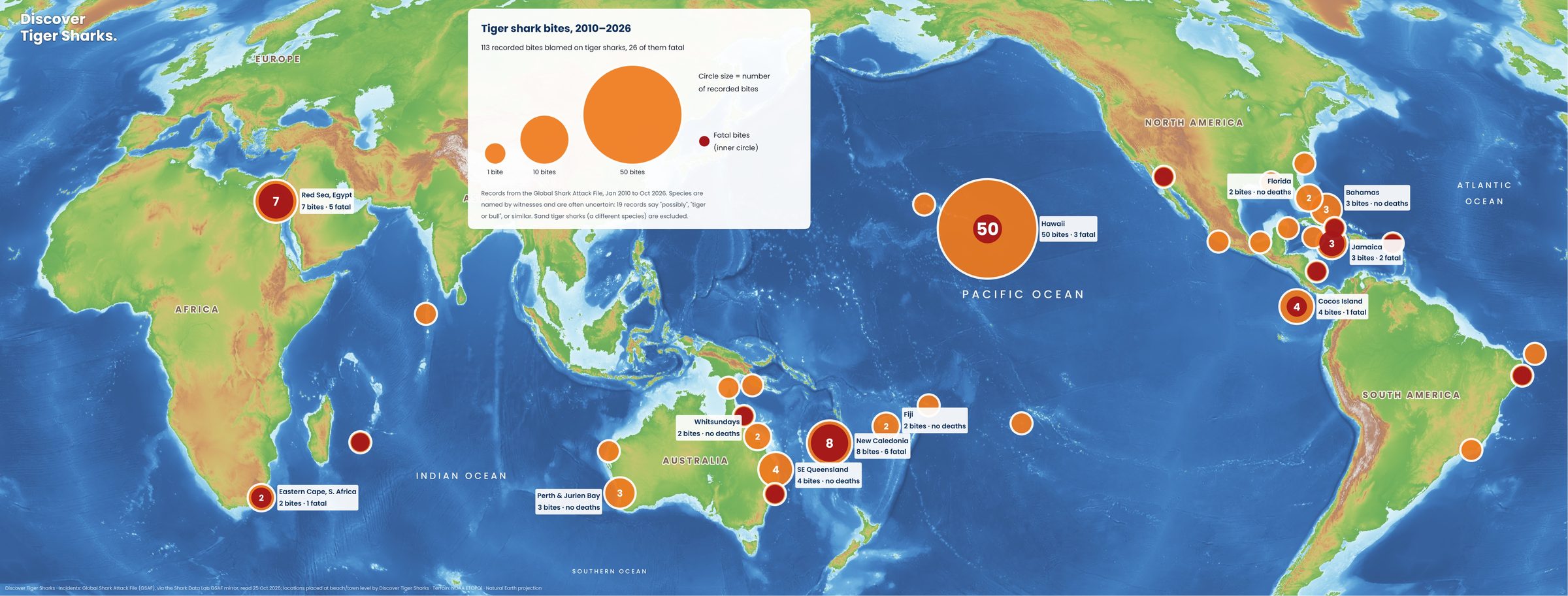
The map marks the hotspots covered in our book, from Tiger Beach in the Bahamas and Fuvahmulah in the Maldives, home to the largest known gathering of tiger sharks in one small area, to Shark Bay in Western Australia and the islands of Hawaii.
Following the warm waterThe 22 °C rule
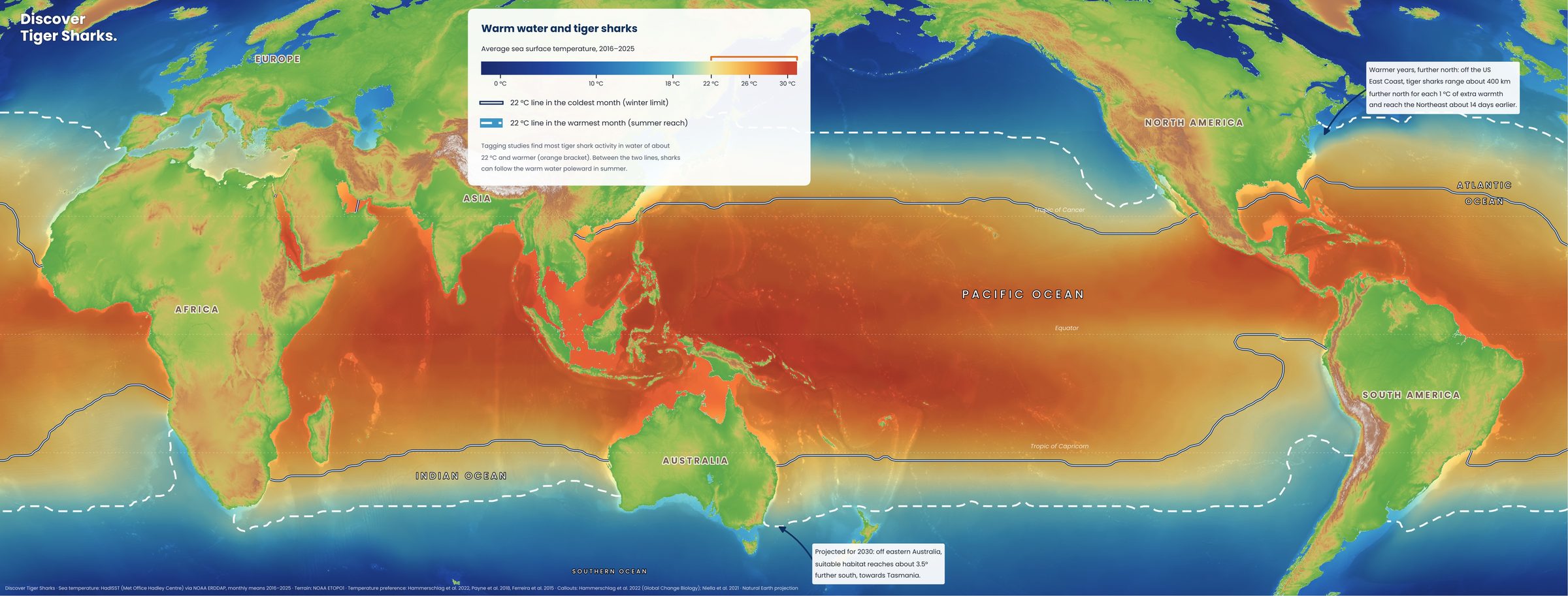
Water temperature shapes where tiger sharks go. Off New South Wales, decades of catch data, and accelerometers on sharks in Hawaii, both point to the same sweet spot: coastal abundance and swimming performance peak at about 22 °C. In the western North Atlantic, 47 satellite-tracked sharks were most likely to be found in water of 25 to 31 °C and only pushed north of about 35°N when the sea was at least 22 °C.
That makes them sensitive to a warming ocean. The same Atlantic study found that for every 1 °C of extra warmth, the sharks' mean position moved nearly four degrees of latitude further north, and they reached the cooler waters off the US Northeast about two weeks earlier. Off eastern Australia, suitable habitat is projected to spread several degrees south towards Tasmania by 2030.
Ocean wanderersThousands of kilometres a year
Tags have revealed some of the longest journeys of any shark. Tiger sharks tagged in Bermuda wintered in the Caribbean and spent their summers far out in the mid-North Atlantic, with adult males making round trips of more than 7,500 km a year. One of them, a shark named Harry Lindo, covered more than 44,000 km while he was tracked.
Off Western Australia, one shark travelled more than 4,000 km in 517 days, cycling between the tropical Kimberley and the cool south coast at Albany. Another swam from offshore Sydney to New Caledonia, about 1,800 km, in 48 days. And Sereia, a 3.1 m female tagged off Mozambique, was last detected more than 6,700 km away, over 1,200 km off the coast of Indonesia.
Tiger sharks in HawaiiHome islands and a summer feast
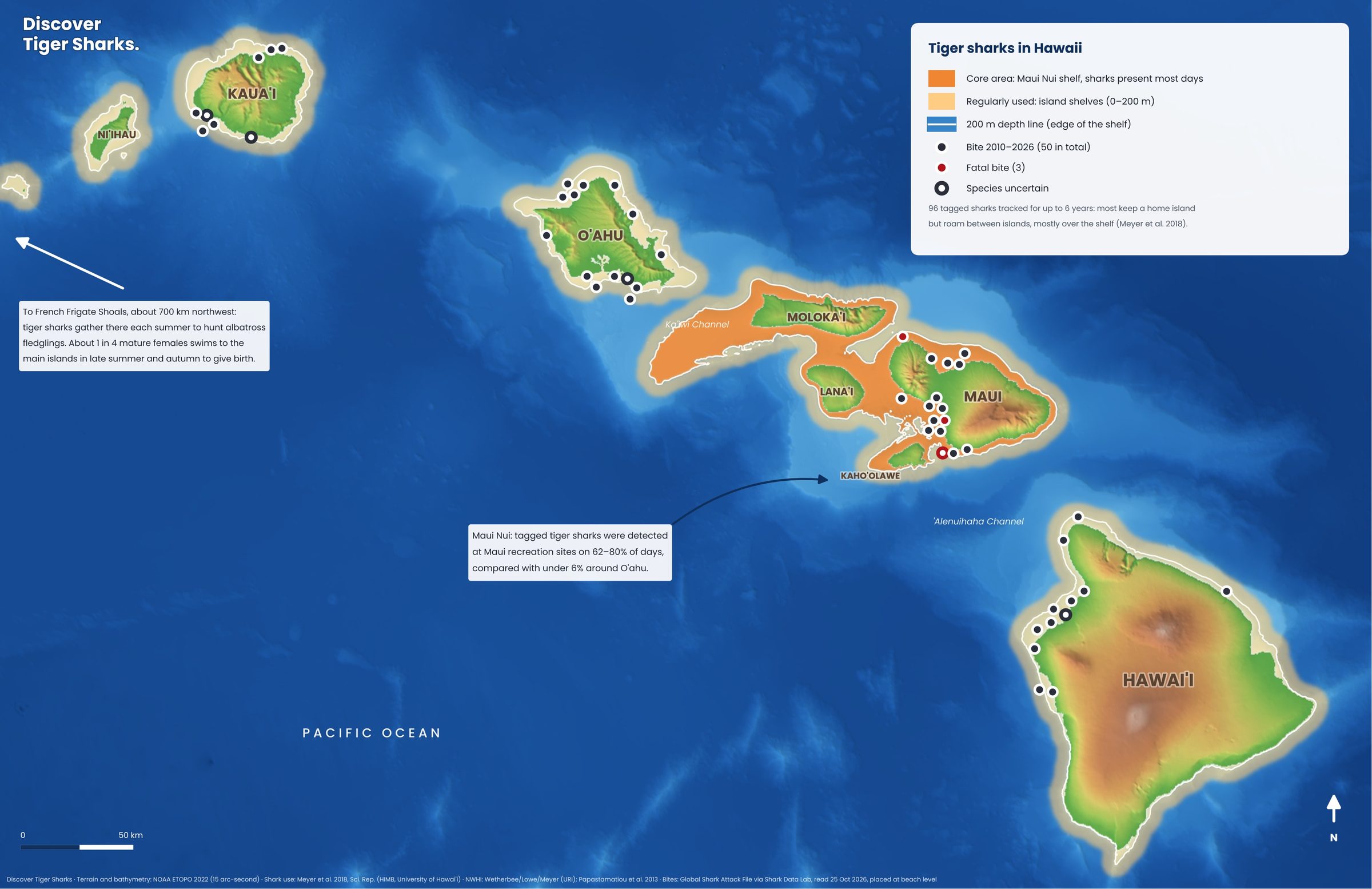
Hawaii is one of the best-studied tiger shark populations on Earth. Researchers tracked 96 tagged sharks for up to six years: most kept a home island but moved between islands, and some swam up to 1,400 km offshore, mostly using the shelf down to 200 metres. At recreation sites off Maui they were detected on 62 to 80 per cent of days, compared with under 6 per cent around Oʻahu.
Far to the northwest, at French Frigate Shoals, tiger sharks gather each summer to hunt albatross fledglings on their first clumsy flights. About one in four mature females later swims as far as 2,500 km to the main islands in late summer and autumn, the pupping season. In Hawaiian tradition sharks can be ʻaumākua, family guardians, and the big tiger shark has its own name: niuhi.

The real riskRare, and mostly avoidable
Between January 2010 and October 2026 the Global Shark Attack File lists 113 bites blamed on tiger sharks worldwide, 26 of them fatal: fewer than seven a year across every warm sea on the planet. Hawaii accounts for 50 of them, three fatal. Species are named by witnesses and are often uncertain, so the real figure for tiger sharks may be lower.
In Hawaii the odds stay low if you follow a few habits: avoid murky water, river mouths and harbour entrances, skip swimming at dawn and dusk, stay out of the water near fishing or a dead animal, and swim where lifeguards are on duty. Autumn, when pregnant females visit the main islands, calls for a little extra care.
A species in declineNear Threatened
For all its fearsome reputation, the tiger shark is the one in trouble. The IUCN Red List classes it as Near Threatened, with a decreasing population, mainly because of fishing: it is caught in longline and coastal fisheries and landed at shark markets, and in Indonesia it made up nearly a fifth of the sharks recorded at the Tanjung Luar landing site in Lombok in 2025.
As a top predator it helps keep whole ecosystems in balance. Where tiger sharks patrol, turtles and dugongs graze seagrass meadows more carefully, which keeps the meadows healthy. Protecting the places they return to, and understanding where they travel, is what the tracking studies on this page are for.