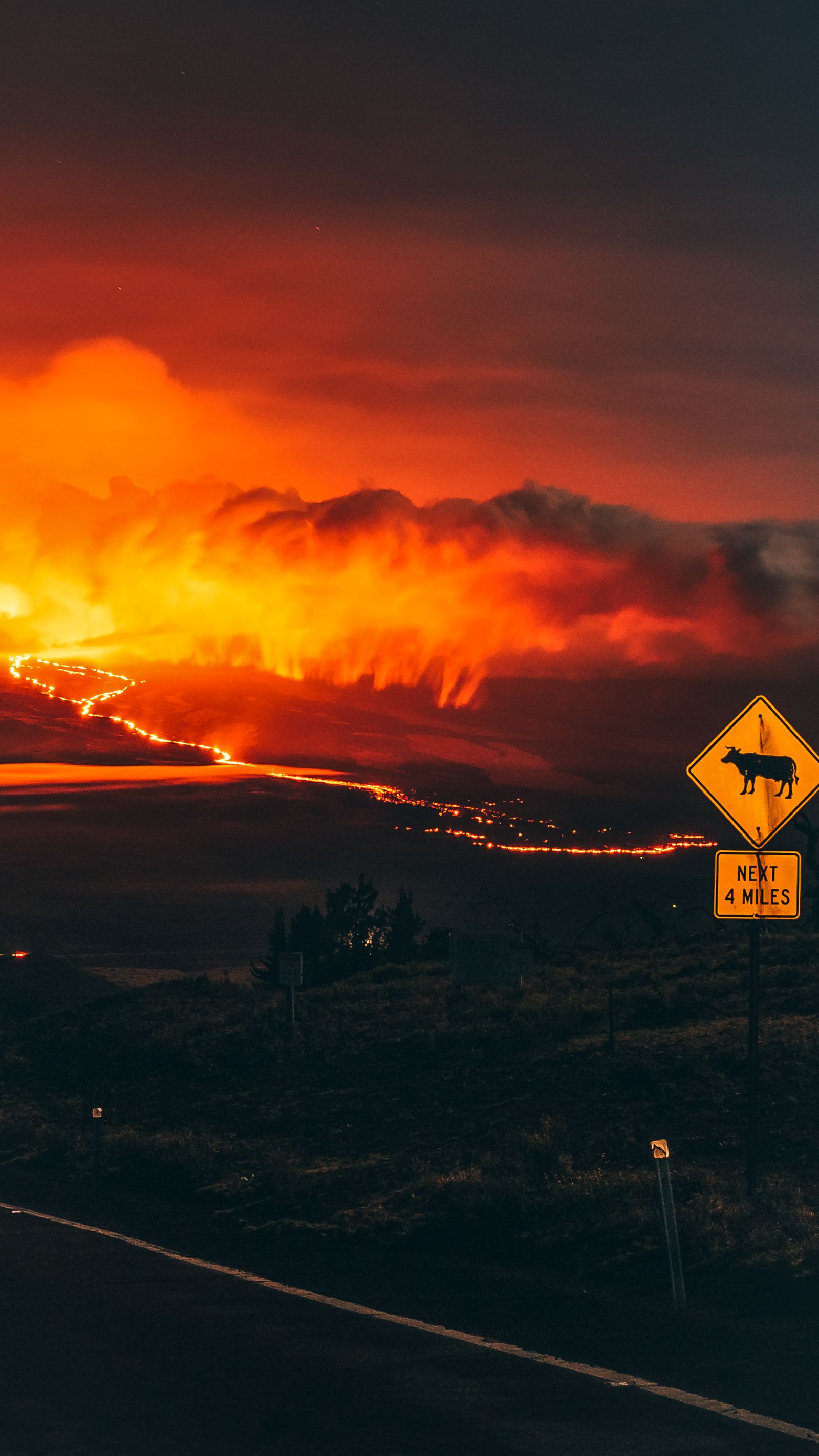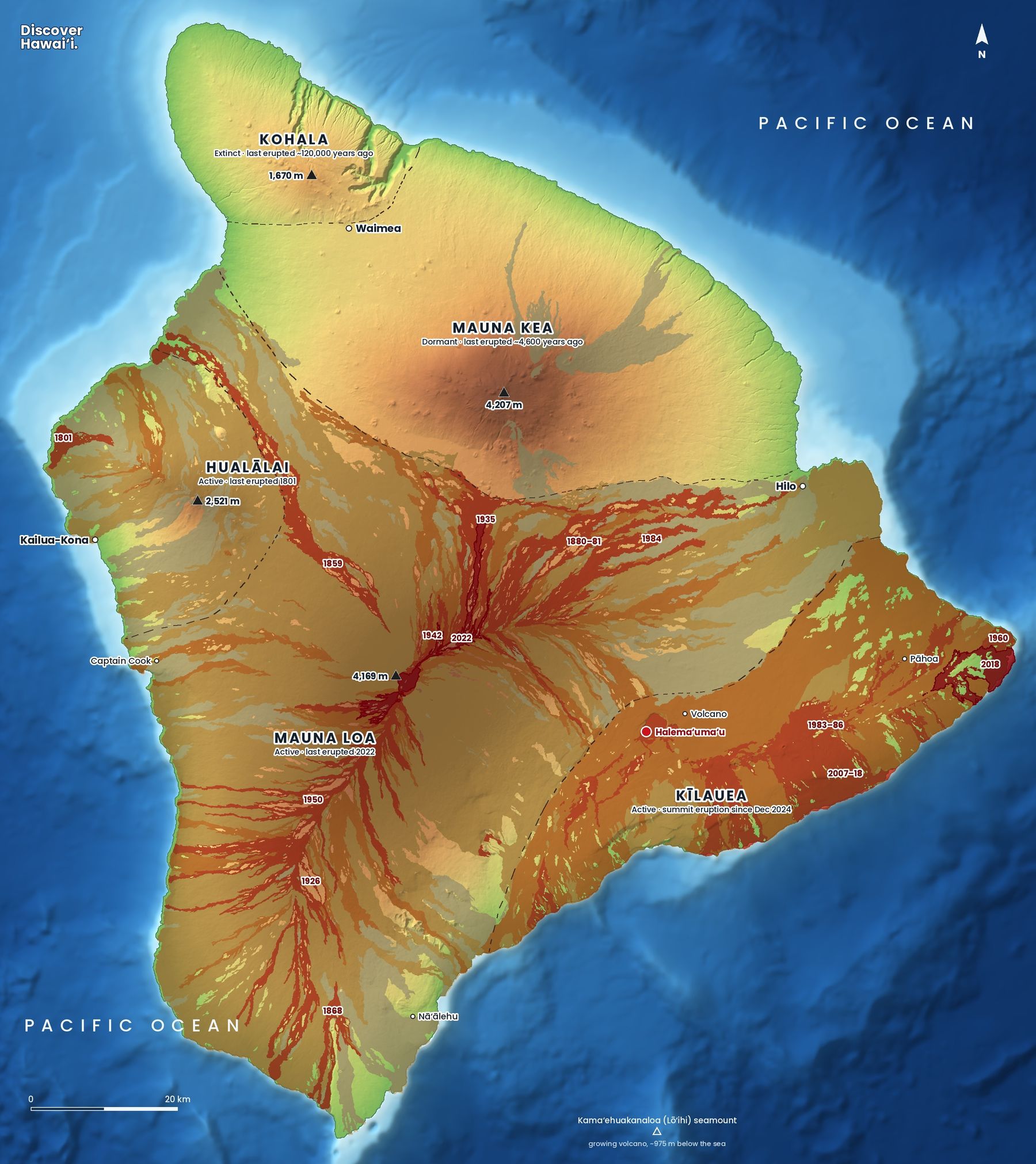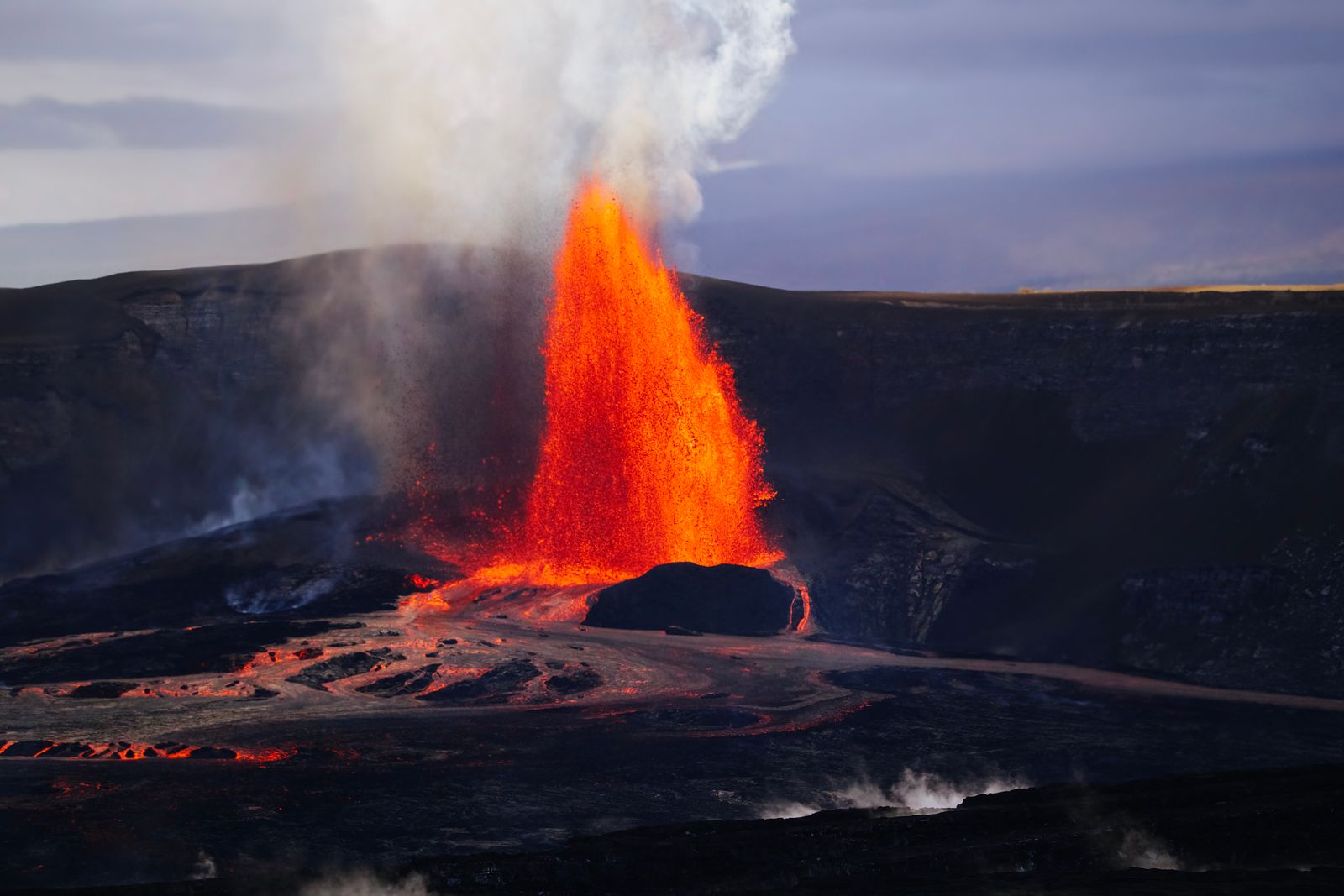
Hawaiʻi Volcanoes National Park is the one place in Hawaii where you can stand at the edge of an active volcano. Kīlauea has been erupting in spectacular episodes since December 2024, and even on quiet days the park is extraordinary: steaming craters, a walk across a lava lake, lava tubes and a road that runs down to the sea through decades of lava flows.
Is Kīlauea erupting right now?
Kīlauea's current summit eruption began on 23 December 2024 and has unfolded in episodes: bursts of lava fountaining that last hours to days, separated by pauses of days to weeks. By late October 2026 there had been 55 episodes; episode 55 ended on 17 October, and the USGS was forecasting the next one for late October or early November. Lava can only be seen during an episode, so check the USGS Hawaiian Volcano Observatory and the park's alerts before you drive up.
In October 2026 the Keanakākoʻi side of the summit (old Crater Rim Drive and nearby overlooks) and parts of the Halemaʻumaʻu and Byron Ledge trails were temporarily closed because of volcanic unrest and rockfall risk. The rest of the park, including the Kīlauea Iki loop, remained open.
Where to see the lava
During an episode the best views of the fountains and glow are from the overlooks on the caldera rim, such as Uēkahuna, the highest point of the rim, and the Kīlauea Overlook. Which ones are open changes with the eruption. Go at dusk or after dark, when the glow is strongest, bring a torch and warm layers, and expect crowds when fountains are high. If the summit is closed or quiet, a helicopter flight from Hilo is the other way to see the crater.
The best things to do
- Kīlauea Iki Trail. A 3.3-mile loop down through rainforest and across the cracked, steaming floor of a lava lake that formed in 1959. Allow two to three hours.
- Nāhuku (Thurston Lava Tube). A short, lit walk through a lava tube about 500 years old, surrounded by tree ferns.
- Steam Vents and Sulphur Banks. Easy stops where volcanic steam and gas rise through the ground.
- Chain of Craters Road. An 18.8-mile drive from the summit down to the coast, past craters and lava flows, to the Hōlei Sea Arch. There is no food, water or fuel along the way.
- Puʻu Loa Petroglyphs. A boardwalk off Chain of Craters Road to thousands of ancient rock carvings.
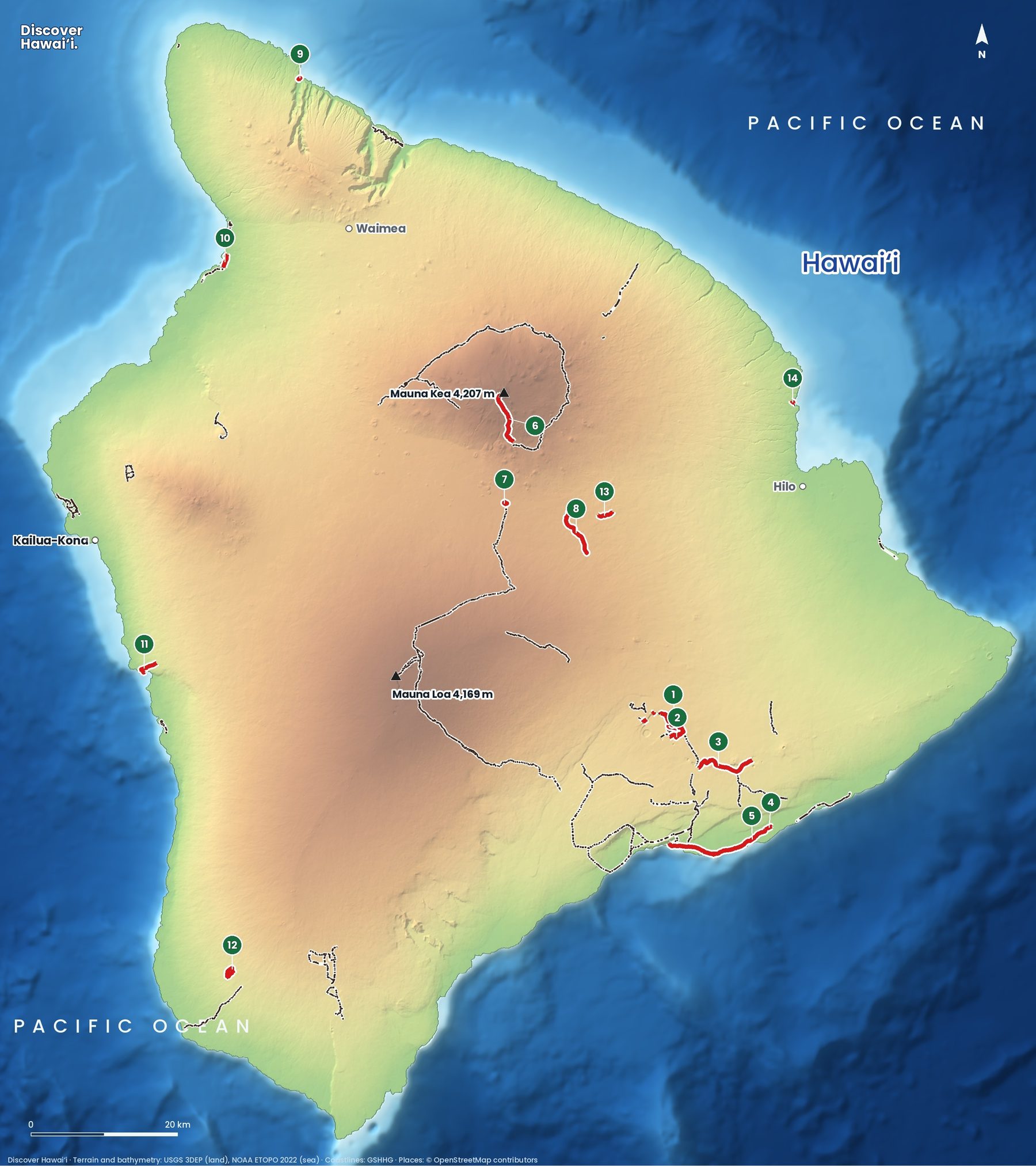
Fees, hours and getting there
The park is open 24 hours a day. Entry costs $30 per private vehicle. The main entrance is about 40 minutes' drive from Hilo and a little over two hours from Kailua-Kona, so if you stay in Kona, consider a night in Volcano village. The Kīlauea Visitor Center closed for renovation in 2025; rangers and the park store operate from a welcome centre at Kīlauea Military Camp.
A one-day plan
Arrive in the morning and start with the Kīlauea Iki Trail and Nāhuku before the crowds. In the afternoon, drive Chain of Craters Road to the sea arch and the petroglyphs. Come back up to the summit for sunset and, if an episode is under way, stay for the glow after dark. Pack lunch, water and layers: the summit is at about 1,200 metres and can be cool, wet and misty, while the coast is hot and dry.
Safety
- Stay behind barriers and out of closed areas: crater rims collapse without warning.
- Volcanic gas and vog can affect people with asthma, heart conditions, babies and pregnant visitors.
- Wind can carry volcanic glass and ash (Pele's hair) during fountaining; protect your eyes.
- Do not take lava rock: it is against park rules and culturally disrespectful.
More background on Kīlauea and the Big Island's five volcanoes.
Quick answers
Can you see lava at Hawaiʻi Volcanoes National Park?
Only during an eruptive episode at Kīlauea's summit. Check the USGS and park alerts on the day; between episodes there is no visible lava.
How much does it cost to enter Hawaiʻi Volcanoes National Park?
$30 per private vehicle. The park is open 24 hours.
How long do you need at Hawaiʻi Volcanoes National Park?
A full day covers the highlights; stay overnight in Volcano to see the summit at night.
Is Hawaiʻi Volcanoes National Park open now?
Yes, though parts of the summit near Keanakākoʻi and some trails were closed in October 2026 because of volcanic unrest.
Facts checked October 2026. Fees, reservations, closures and eruption activity change, so confirm with the official source before you go.