The restless oneHalemaʻumaʻu and the caldera
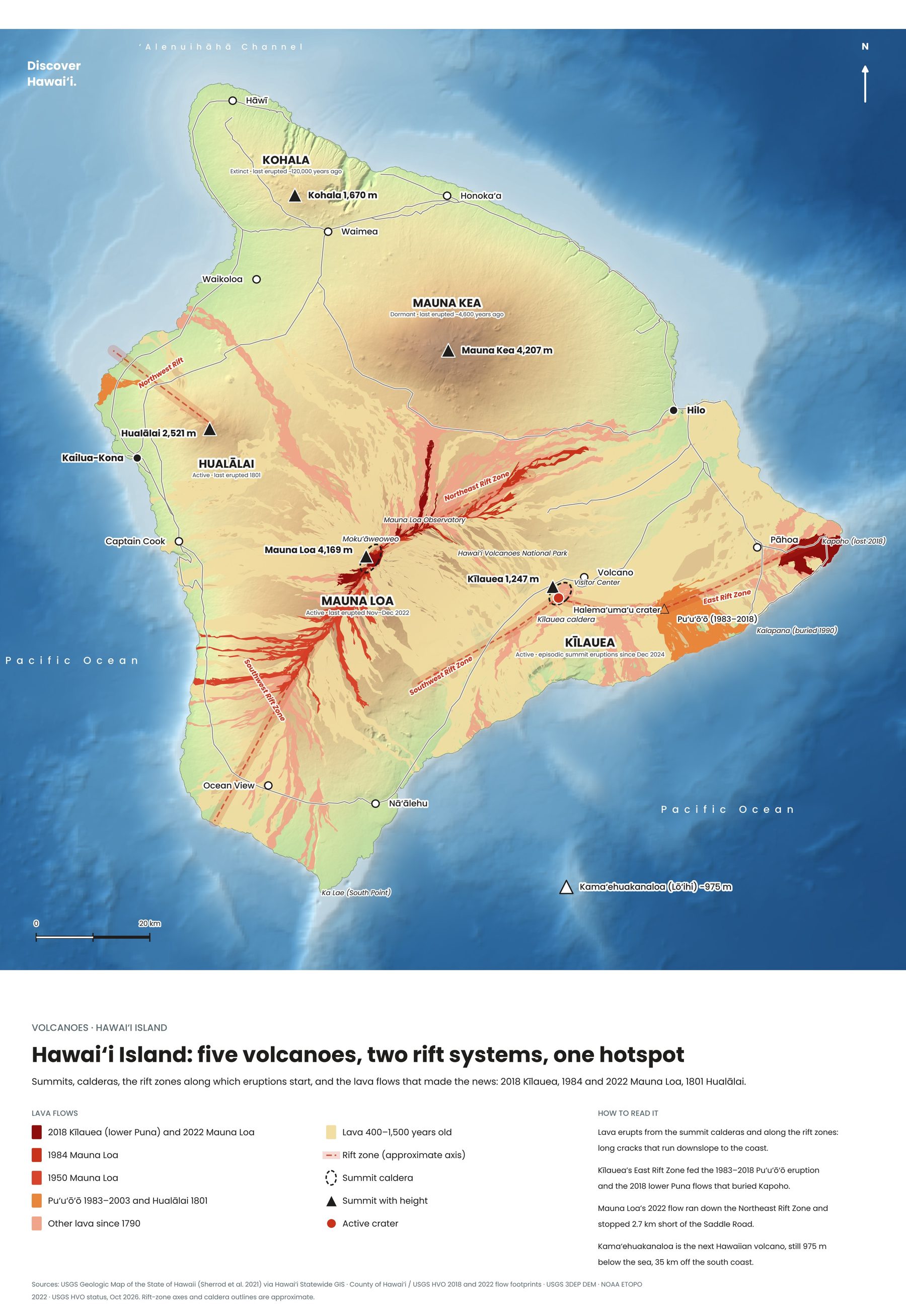
Kīlauea is the youngest and most active of the Big Island's five volcanoes, and the heart of Hawaiʻi Volcanoes National Park. Its summit caldera holds Halemaʻumaʻu, the crater Hawaiians know as the home of Pele, goddess of volcanoes and fire. Hula, chant and offerings at the crater rim are living traditions here, not museum pieces.
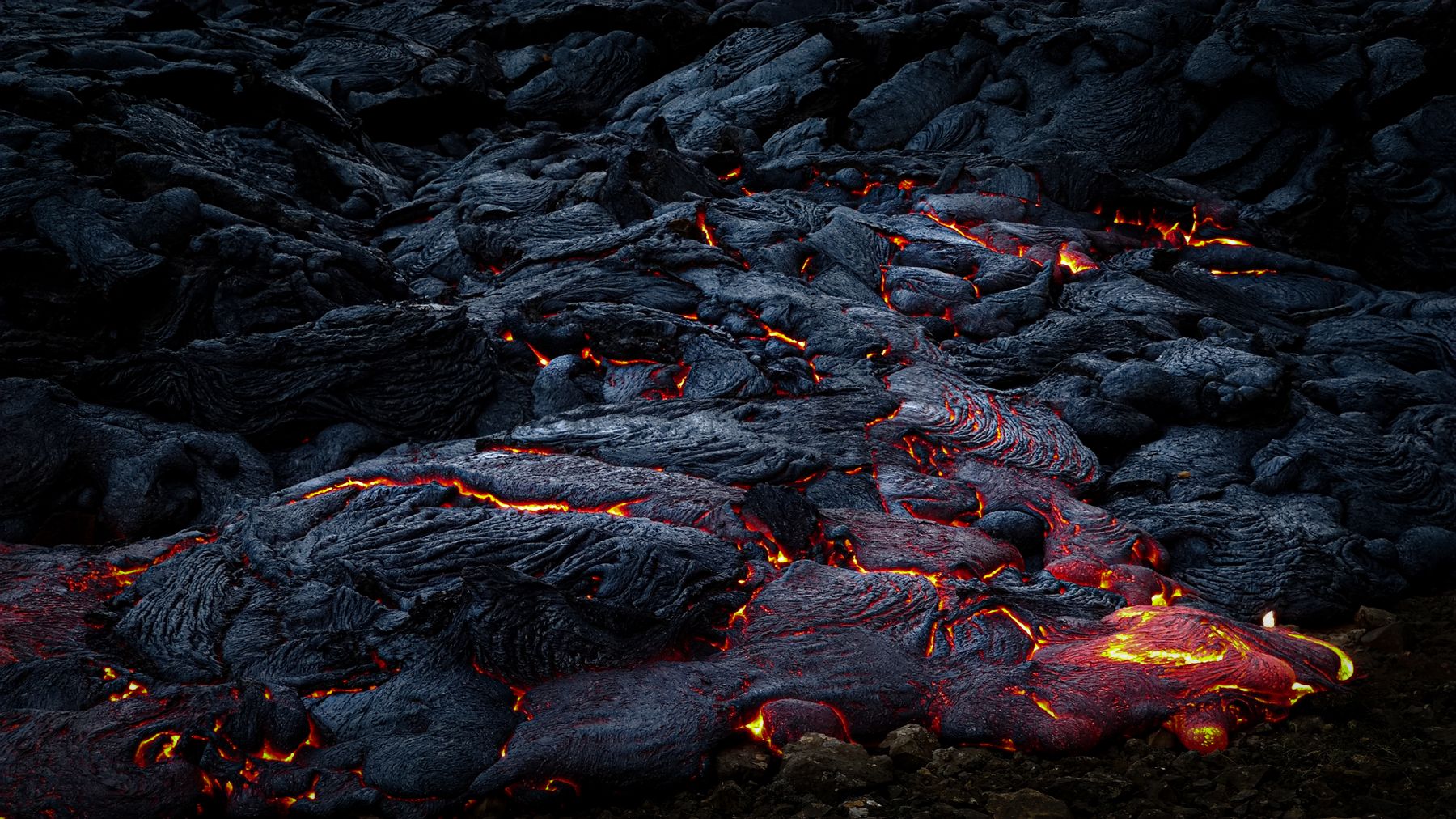
From 1983 to 2018 the Puʻuʻōʻō vent on the volcano's East Rift Zone erupted almost without pause, sending lava down to the sea and burying the village of Kalapana. It was one of the longest eruptions of its kind ever recorded.

Kīlauea in 2018Lower Puna and the collapse
In 2018 the volcano changed shape dramatically. Lava broke out in the lower Puna district and destroyed more than 700 homes over three months, while the summit collapsed and Halemaʻumaʻu deepened by hundreds of metres. When it ended, the lava lake that had glowed in the crater for a decade was gone.
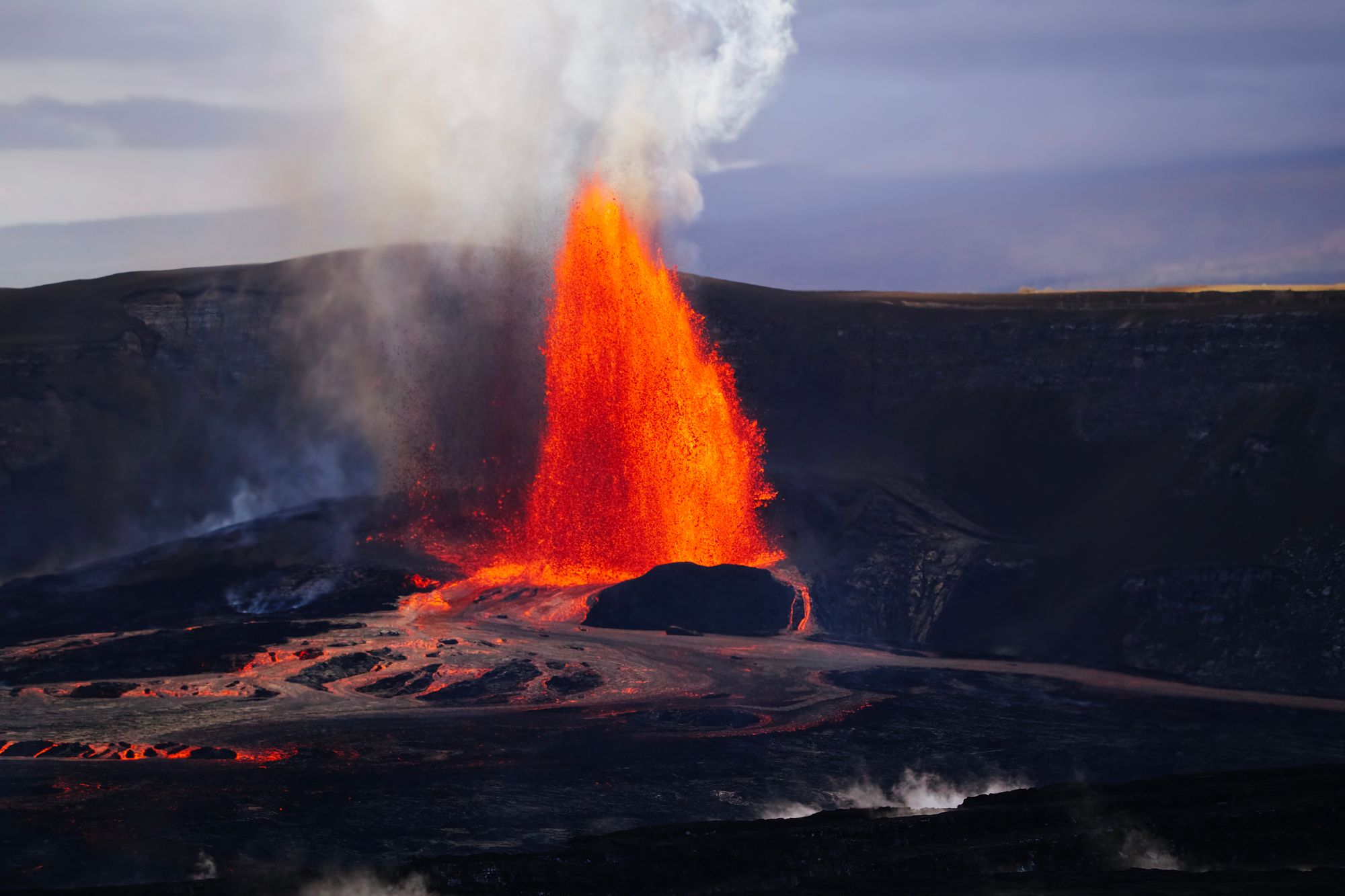
Since then eruptions have returned to the summit. The current eruption began on 23 December 2024 and has unfolded in episodes: bursts of lava fountaining that last hours to days, separated by quiet pauses. Some fountains have climbed hundreds of metres into the air, and by October 2026 there had been 55 episodes, a record for any single Kīlauea eruption.
Seeing KīlaueaOverlooks, trails and timing
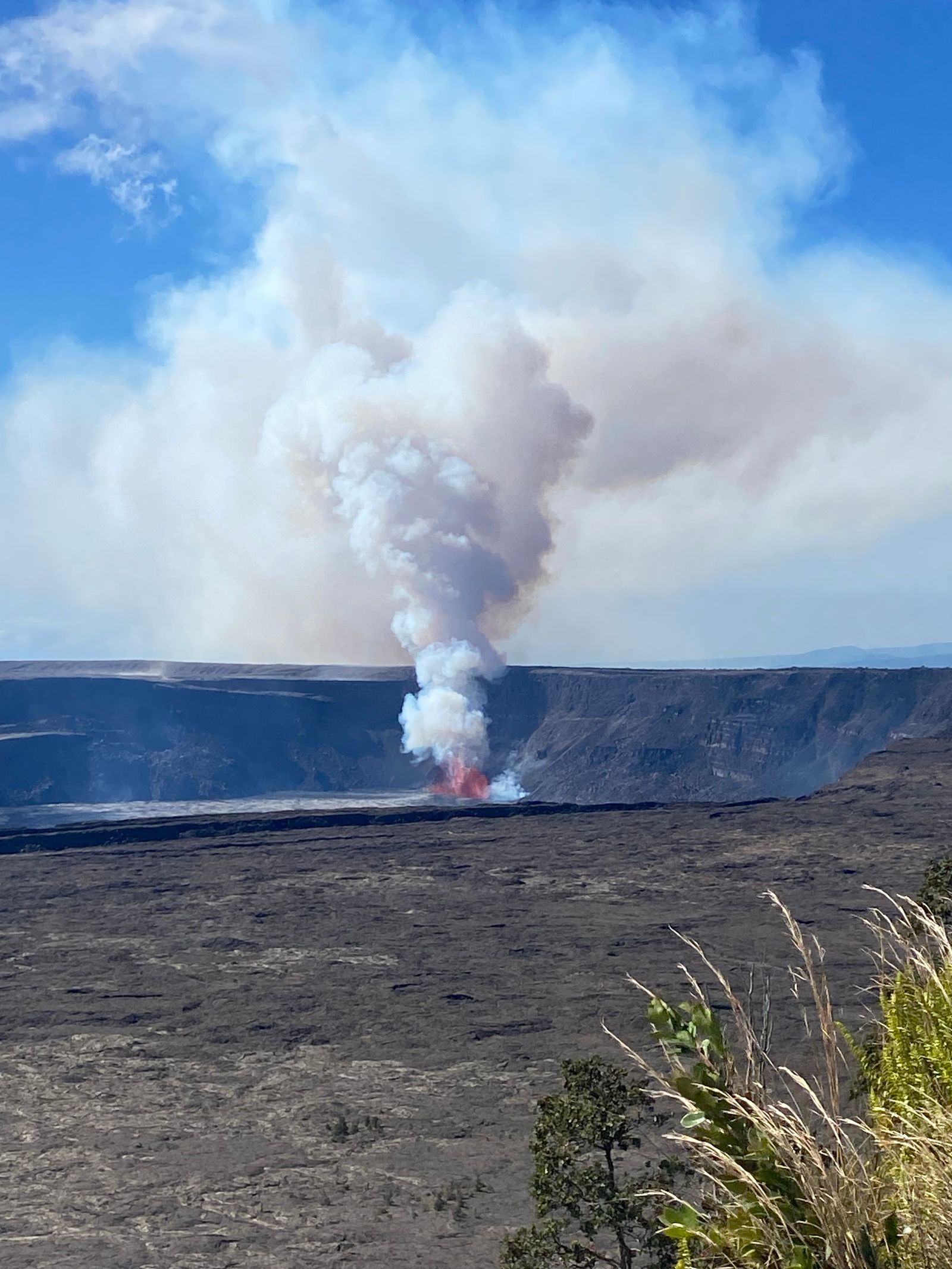
When the summit is erupting, overlooks along Crater Rim Drive offer some of the most accessible views of live lava anywhere on Earth. Activity can start and stop within hours, so check the USGS Hawaiian Volcano Observatory and the park's updates before you drive up, and go at dusk, when the glow is at its most dramatic.
Even between episodes there is plenty to see: steam vents and sulphur banks along the rim, the Kīlauea Iki crater trail across a lava lake that erupted in 1959, and the Chain of Craters Road down to the sea. Bring layers, as the summit sits at over 1,200 metres and nights are cool, and watch for vog on days with heavy gas.