Long before aquaculture had a name, Hawaiians were raising mullet and milkfish behind curving walls of lava rock and coral. Some of those walls are 700 years old, and people are rebuilding them stone by stone.
A wall across Kāneʻohe Bay
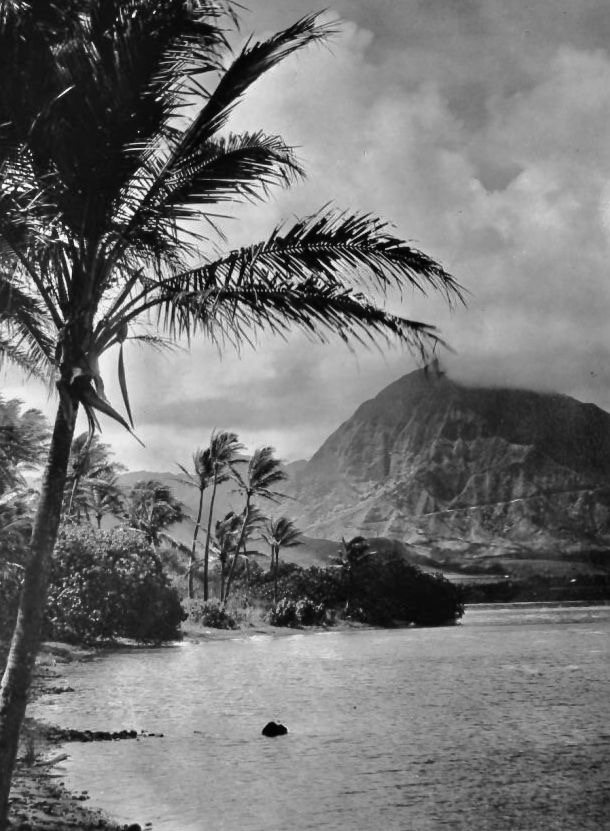
On the second Saturday of the month, at half past eight in the morning, a line of volunteers in old shoes wades out along a wall in Kāneʻohe Bay. They pass rocks from hand to hand, pull invasive mangrove from the shallows and reset stones that the tide has loosened. The wall they are mending curves for about 2.1 km (1.3 mi) around 36 ha (88 acres) of water.
This is Heʻeia Fishpond, and its wall was laid sometime between the early 1200s and the early 1400s. Seven working sluice gates still let the bay and Heʻeia Stream flow through it. One estimate holds that in its prime the pond could help feed some 6,000 people.
Heʻeia is one of the finest survivors of a system that once ringed the islands: the loko iʻa, or fishpond. Nowhere else in Polynesia did people farm fish on this scale, and the story of the ponds runs from chiefly feasts to bulldozers, and back to community workdays like this one.
How a loko iʻa works
The genius of a Hawaiian fishpond is the mākāhā, a sluice gate made of lashed wooden stakes set in a channel through the wall. Young fish swim in through the gaps on the rising tide, drawn by the rich water inside. They feed, they grow, and soon they are too fat to slip back out. The keepers simply wait, then harvest at the gate.
The walls themselves are not watertight. Water filters through the stacked stones, so the pond stays fresh and well oxygenated, while the outgoing tide carries silt away. Where a stream flows in, fresh water mixes with salt to create the brackish conditions that the favourite fish, ʻamaʻama (mullet) and awa (milkfish), love.
Building a pond took enormous labour. Chiefs called up whole communities to pass stones down from the uplands, and a specialist, the kuhikuhipuʻuone, decided where each should sit. Land managers called konohiki organised the yearly clean-outs. A well-run pond might yield roughly 340 to 560 kg of fish per hectare (300 to 500 lb per acre) each year.
Six kinds of fishpond
Hawaiians did not build just one kind of pond. Each type suited a different stretch of coast or valley, and together they show how closely farmers read their land, from mountain stream to reef flat.
- Loko kuapā: the classic walled pond, enclosing part of a reef flat behind a seawall of lava rock or coral. Researchers count about 127 known examples, and the type is unique to Hawaiʻi.
- Loko puʻuone: a brackish pond behind a beach or sand bar, linked to the sea by a channel. Some covered well over 100 ha.
- Loko wai: an inland freshwater pond, often a natural pool fed by a stream through an ʻauwai (ditch).
- Loko iʻa kalo: a taro patch that doubled as a fishpond, with fish and shrimp living between the mounds of growing kalo.
- Loko kāheka: a natural anchialine pool in the lava of West Hawaiʻi, inland but linked to the tides underground.
- Loko ʻume iki: a fish trap on the reef with no gate, whose funnel-shaped lanes guided fish towards fishermen.
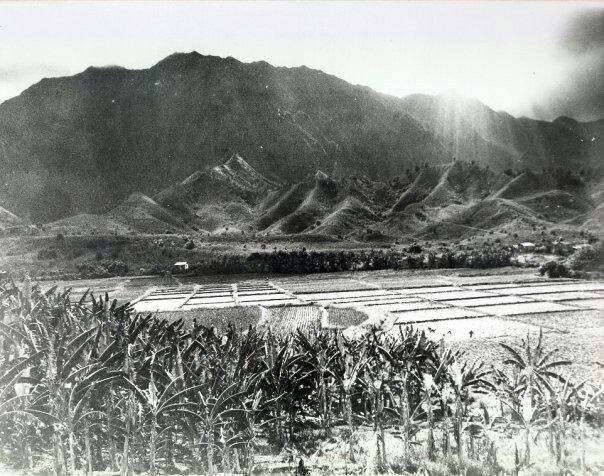
The ponds fitted inside the ahupuaʻa, the mountain-to-sea land division described in our guide to daily life in ancient Hawaiʻi. Water that had irrigated taro upstream carried nutrients down to feed the fish below.
Larders of the chiefs
Fishponds were wealth, and wealth belonged to the aliʻi. In early times the fish of the great walled ponds were kapu to all but chiefs, and by the late 1700s high chiefs controlled more than 300 ponds across the islands. Puʻuloa, the lagoon we now call Pearl Harbor, alone held more than forty.
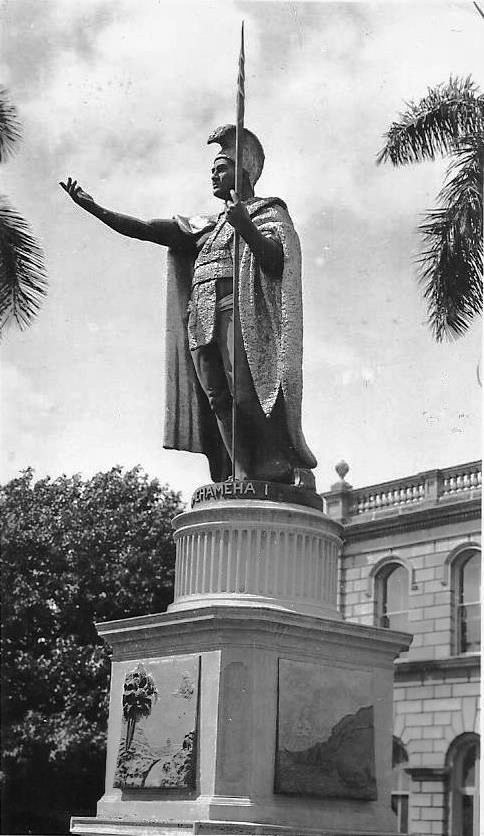
Some ponds carry royal names and stories. On Hawaiʻi Island, Kaloko was a favourite of Kamehameha the Great; the National Park Service describes its dry-stacked seawall, about 230 m (250 yd) long and 9 to 12 m (30 to 40 ft) wide, as the largest retaining fishpond wall in the state. At Kailua on Oʻahu, the marsh of Kawai Nui was once a pond of some 160 ha (400 acres).
On Kauaʻi, the ʻAlekoko or Menehune Fishpond is held by a wall about 820 m (900 yd) long beside the Hulēʻia River. Legend credits the menehune, a people of master builders, with raising it, a story that hints at how ancient the pond already seemed.
Molokaʻi: walls in the sea
No island had more ponds than Molokaʻi. More than sixty once lined some 32 km (20 mi) of its south and south-east shore, many of them built 700 to 800 years ago. Seen from the hills, their grey arcs still stand out against the turquoise reef.
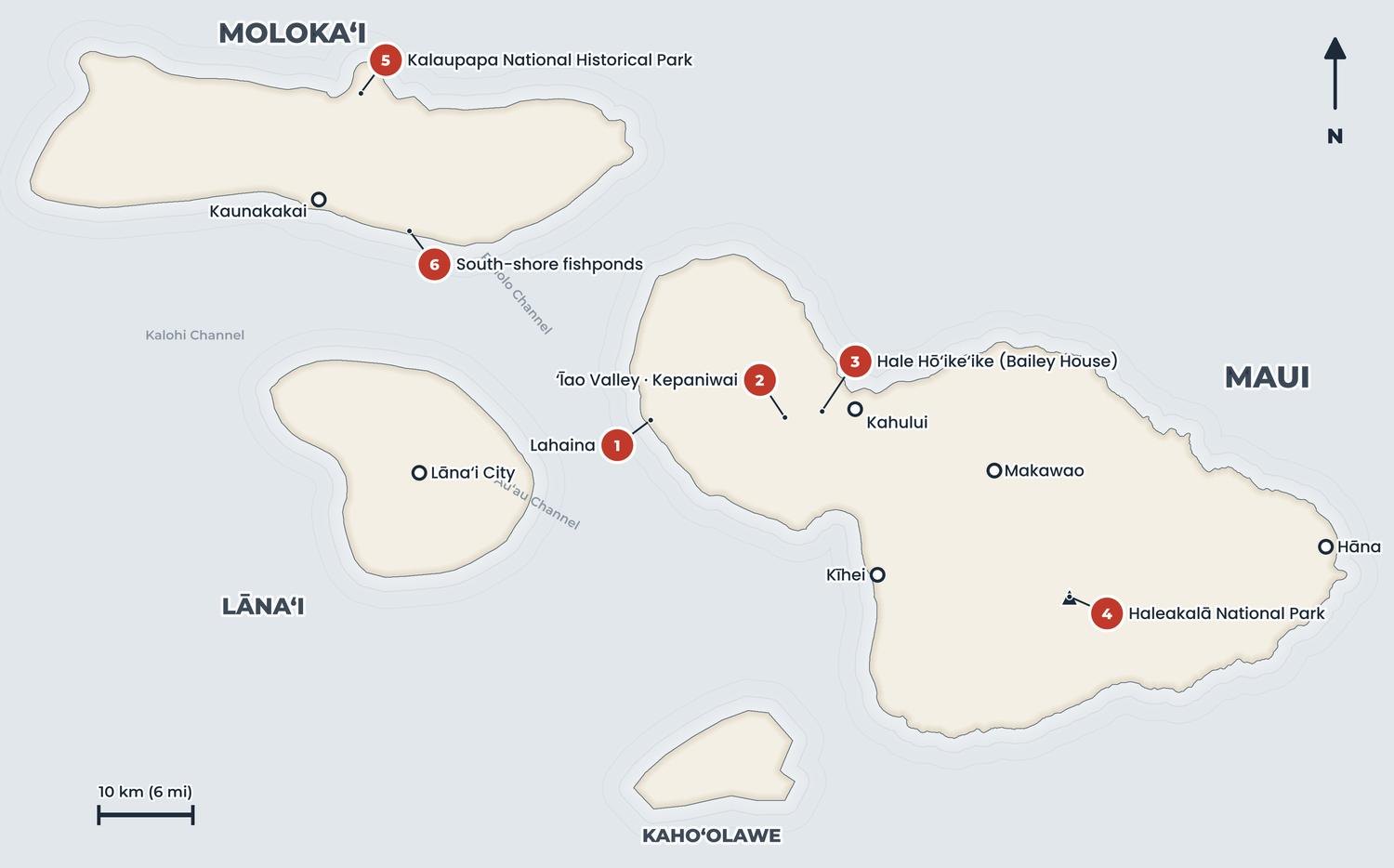
Two of the greatest are protected as a National Historic Landmark. Keawanui, likely the largest and oldest surviving pond on the island, once covered about 30 ha (73 acres); the National Park Service credits its building to the chief Lohelohe around 1575. It worked until the early 1960s and has since been restored as an outdoor classroom.
Nearby ʻUalapuʻe, about 9 ha (22 acres), was famous for especially fat mullet. It stayed in use until the 1960 tsunami broke its wall and destroyed both its mākāhā. Molokaʻi's quiet, uncommercial character, which you will also meet in our history of Kalaupapa, is one reason so many walls survive.
Why the ponds fell silent
The decline began with the changes of the nineteenth century. As the population collapsed from disease, there were fewer hands to clean and repair the walls. The Māhele of 1848 turned ponds into private property (see sandalwood, whaling and the Māhele). Heʻeia, for example, passed to High Chief Abner Pākī, then to his daughter Bernice Pauahi Bishop, whose estate, now Kamehameha Schools, still owns it.
Nature and development did the rest. Lava flows in 1801 and 1859 buried ponds on the Kona coast. Upland grazing and plantations washed silt into the water, introduced mangrove choked the channels, and harbours, airports and housing were built over whole complexes, most dramatically at Pearl Harbor. In May 1965 the Keapuka flood smashed through more than 300 m (1,000 ft) of Heʻeia's wall, and the pond lay neglected for twenty years.
When the state surveyed the islands in 1990, it identified 488 fishpond sites. Many were degraded, and some were unrecognisable.
Rebuilding, stone by stone
The revival grew out of the Hawaiian Renaissance. At Heʻeia, the non-profit Paepae o Heʻeia was founded in 2001 and became the pond's official steward in 2003. Its staff raise fish, rebuild wall and teach a steady stream of students and volunteers. Across the islands, a practitioners' network called Hui Mālama Loko Iʻa links more than 38 ponds and pond complexes.
Red tape was the next obstacle. Restoring a pond could need up to 17 permits from federal, state and county agencies, take years and cost as much as $80,000. In 2015 the state streamlined the process: a law signed that July waived one water-quality certification for projects in the new Hoʻāla Loko Iʻa programme, a single master permit run by the Department of Land and Natural Resources.
The National Park Service is restoring Kaloko's wall and the ʻAiʻōpio fish trap, and resorts on the Kohala coast care for royal ponds at Kalāhuipuaʻa. For many Hawaiians, a working loko iʻa is about more than fish. It is food security, ancestral knowledge and aloha ʻāina, love of the land, made solid in stone.
Where to see Hawaiian fishponds today
- Heʻeia Fishpond, Oʻahu: Paepae o Heʻeia holds community workdays on the second and fourth Saturdays of most months, 8.30 am to noon, for ages 12 and up, plus weekday mornings. RSVP through paepaeoheeia.org well ahead, as Saturdays fill months in advance. Covered shoes or tabis are compulsory; bring reef-friendly sunscreen and a water bottle.
- Kaloko-Honokōhau National Historical Park, Hawaiʻi Island: free entry, just north of Kailua-Kona, with Kaloko and ʻAimakapā ponds and the ʻAiʻōpio fish trap. Pair it with Puʻuhonua o Hōnaunau, whose royal grounds also hold ponds.
- Molokaʻi south shore: ponds line the Kamehameha V Highway east of Kaunakakai. Aliʻi Fishpond, just past Hotel Molokaʻi, is the easiest to see; ask the Molokaʻi Visitors Association for directions before seeking out Keawanui or ʻUalapuʻe, which are unmarked.
- ʻAlekoko (Menehune) Fishpond, Kauaʻi: visible above the Hulēʻia River near Līhuʻe.
Treat every wall as a cultural site: do not climb on it or move stones unless you are working with the people who care for it. More ideas for a respectful visit are in our guide to visiting Hawaiʻi respectfully, and the wider world of chiefs, kapu and land that the ponds belonged to is told in The History of Hawaii.
Quick answers
How old are Hawaiian fishponds?
The oldest surviving walls date back roughly 700 to 800 years. Heʻeia Fishpond on Oʻahu was built between the early 1200s and early 1400s, and many of Molokaʻi's ponds date from about the 13th century onward.
What fish were raised in Hawaiian fishponds?
Mainly ʻamaʻama (mullet) and awa (milkfish), which tolerate brackish water. Ponds also produced āholehole (silver perch), ʻoʻopu (gobies), shrimp and eels.
What is a mākāhā?
A mākāhā is the sluice gate in a fishpond wall, a grate of wooden stakes that lets small fish swim in with the tide but stops them leaving once they have grown. It is what separates a true fishpond from a simple fish trap.
Can you visit Heʻeia Fishpond?
Yes, mainly by volunteering. Paepae o Heʻeia runs community workdays on the second and fourth Saturdays of most months and weekday volunteer mornings. Booking is required, and Saturdays fill up fast.
How many fishponds were there in Hawaii?
A 1990 statewide survey identified 488 fishpond sites. By the late 1700s high chiefs controlled more than 300 ponds, and Molokaʻi alone once had more than sixty along its south shore.
Facts checked October 2026 against the sources below and the research for our book The History of Hawaii. Dates and figures for early Hawaiian history are estimates and scholars still debate some of them.
- Heʻeia Fishpond (Wikipedia)
- Volunteer, Paepae o Heʻeia
- Kaloko Fishpond (National Park Service)
- Hōkūkano-ʻUalapuʻe Complex (National Park Service)
- Loko Iʻa (Kumukahi)
- Fishponds in Hawaiʻi (Ke Ola Magazine)
- Guiding Restoration of Hawaiian Fishponds (DLNR)
- Hawaiian Fishponds of Molokaʻi (Hawaiʻi Tourism Authority)