Within a generation of Kamehameha's death, Hawaiʻi was shipping fragrant wood to China, supplying hundreds of whaleships a year and rewriting the rules of land. Money and ships poured in. So did measles and smallpox.
Logs by torchlight
In the early 1820s the English missionary William Ellis watched an extraordinary procession on Hawaiʻi Island: two to three thousand men carrying freshly cut logs down from the mountains to the coast. The timber was ʻiliahi, sandalwood, and every log was destined for Canton, where its fragrant heartwood was burned as incense.
Those men were makaʻāinana, commoners, sent into the uplands to cut by day and by torchlight to pay the debts of their chiefs. Their fields went untended while they worked. It was an early sign of how quickly the young kingdom was being drawn into a global economy, and of who would pay the price. This article follows that story from the sandalwood boom, through the whaling years and a terrible population collapse, to the 1848 Māhele, the land division whose consequences are still debated today.
The fragrant wood
From about 1790, foreign traders discovered that China would pay well for Hawaiian sandalwood. Kamehameha I came to control the trade (see Kamehameha the Great). After his death in 1819 his son Liholiho let the chiefs share in it, and the trade peaked. Between 1821 and 1823 American ships sold an average of 21,000 piculs a year in Canton, a picul being one man's load of about 60 kg (133 lb), at around $8 each.
The aliʻi (chiefs) bought ships, silks and fine goods on credit, promising wood not yet cut, and fell deep into debt. In 1826 the kingdom passed a sandalwood tax to pay what was owed, one of its first written laws: each man owed half a picul of wood or four Spanish dollars, and each woman a fine mat or a length of kapa (bark cloth). By 1840 the accessible forests were stripped and the trade was finished.
Whaleships at Lahaina and Honolulu
In September 1819, just months after Kamehameha's death, the American whaleships Balena and Equator called at Hawaiʻi and took a sperm whale off the Kona coast. They were the first of thousands. The islands sat in the middle of the Pacific whaling grounds, and ships came to refit, take on food and water, and give their crews shore leave. In the record year, 1846, close to 600 whaleships called, most of them at Honolulu and Lahaina.
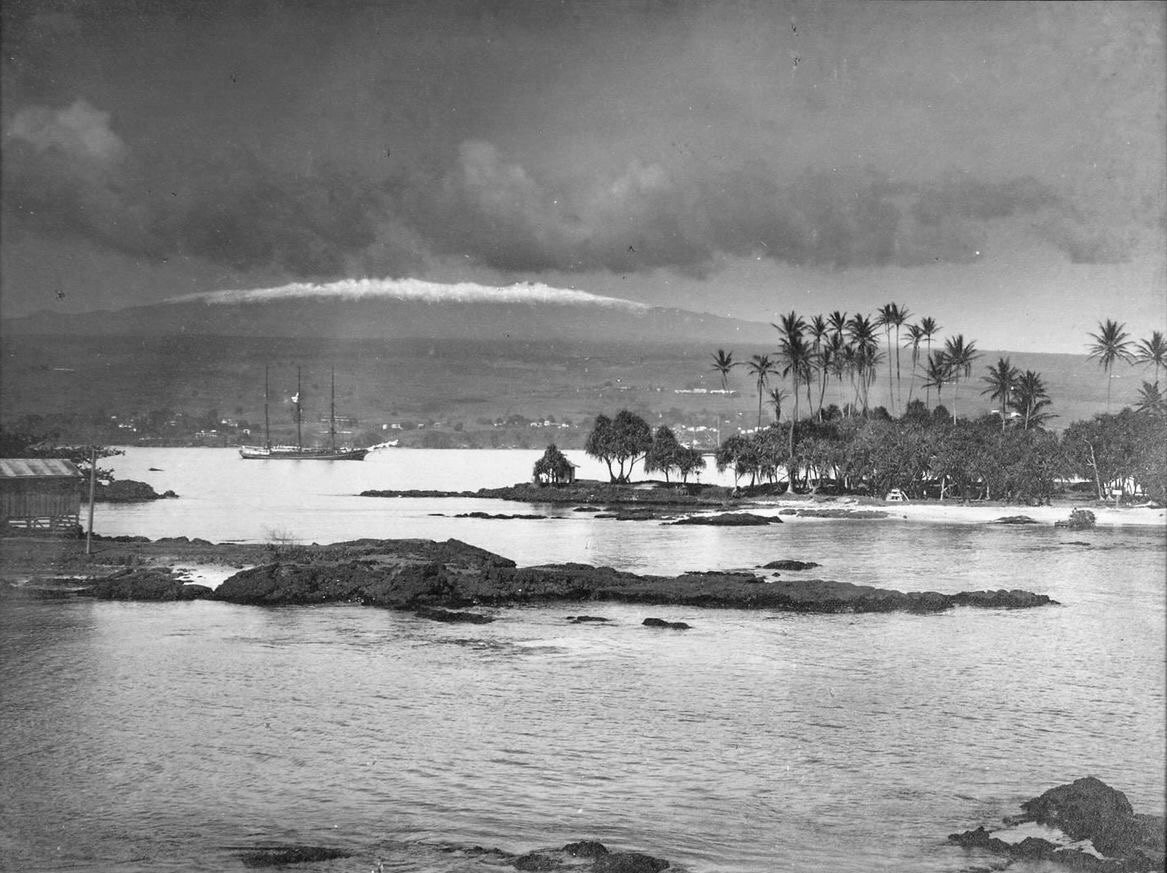
Lahaina on Maui, the royal capital until 1845, became the front line between sailors and missionaries. In 1825 a whaling crew tried to tear down the Reverend William Richards' house over his campaign to stop women swimming out to the ships, and in 1830 the crew of the John Palmer fired cannonballs into town over the same issue.
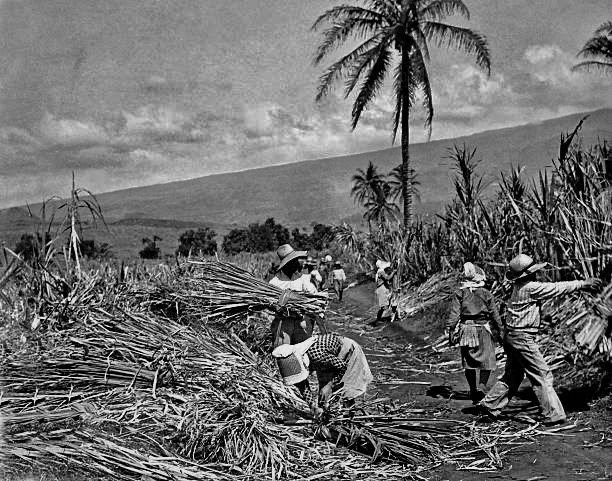
Hawaiians went to sea as well. By the mid-1800s more than a third of the crews on Pacific whalers were Hawaiian, some of them skilled harpooners paid the same as their shipmates. Many never came home. Petroleum, steam power and the American Civil War brought the boom to an end in the 1860s, and sugar took its place (see the history of sugar plantations).
A nation in mourning
Behind the trade figures lay a catastrophe. How many people lived in the islands when Captain Cook arrived is debated, with estimates from about 100,000 to as many as a million (see Captain Cook in Hawaiʻi). The fall that followed is certain. A missionary census of 1831 to 1832 counted around 130,000 people. The government census of 1853 found 73,138.
- 1832 to 1836: whooping cough and measles killed about 22,000 people.
- 1848 to 1849: measles, whooping cough, dysentery and influenza killed an estimated 10,000, more than a tenth of the population.
- 1853: smallpox, which arrived by ship in Honolulu, killed more than 5,000 Hawaiians.
By 1890 Native Hawaiians numbered about 40,600. Every law, treaty and land reform of these decades was made against the backdrop of a people in mourning.
Five months under the Union Jack
Kamehameha III, Kauikeaouli, became king in 1825 at about 11 years old and reigned for 29 years, the longest reign in the kingdom's history. He granted the constitution of 1840 and moved the capital from Lahaina to Honolulu in 1845.
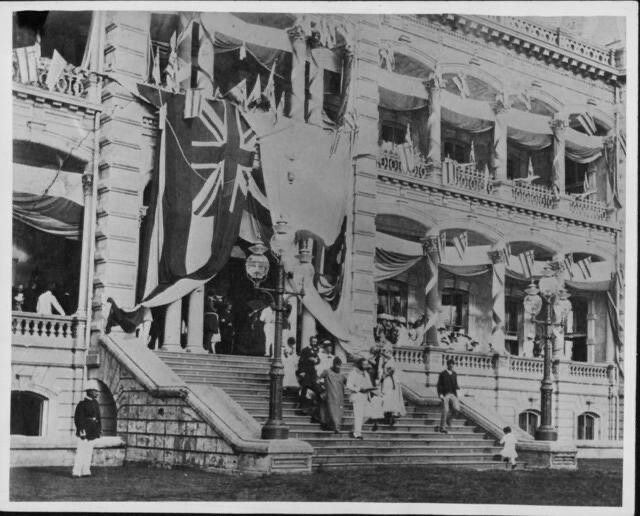
In February 1843 a British naval captain, Lord George Paulet, acting without authority from London, forced the king to cede the kingdom under protest and raised the Union Jack over Honolulu. Five months later Rear Admiral Richard Thomas arrived, and on 31 July 1843 he restored Hawaiian sovereignty at a ceremony on the plain now called Thomas Square. That day Kamehameha III spoke the words that became the kingdom's and later the state's motto: Ua mau ke ea o ka ʻāina i ka pono, usually translated as "the life of the land is perpetuated in righteousness". The anniversary, Lā Hoʻihoʻi Ea (Sovereignty Restoration Day), is still celebrated in Honolulu, and in November 1843 Britain and France jointly recognised the kingdom's independence.
The Māhele of 1848
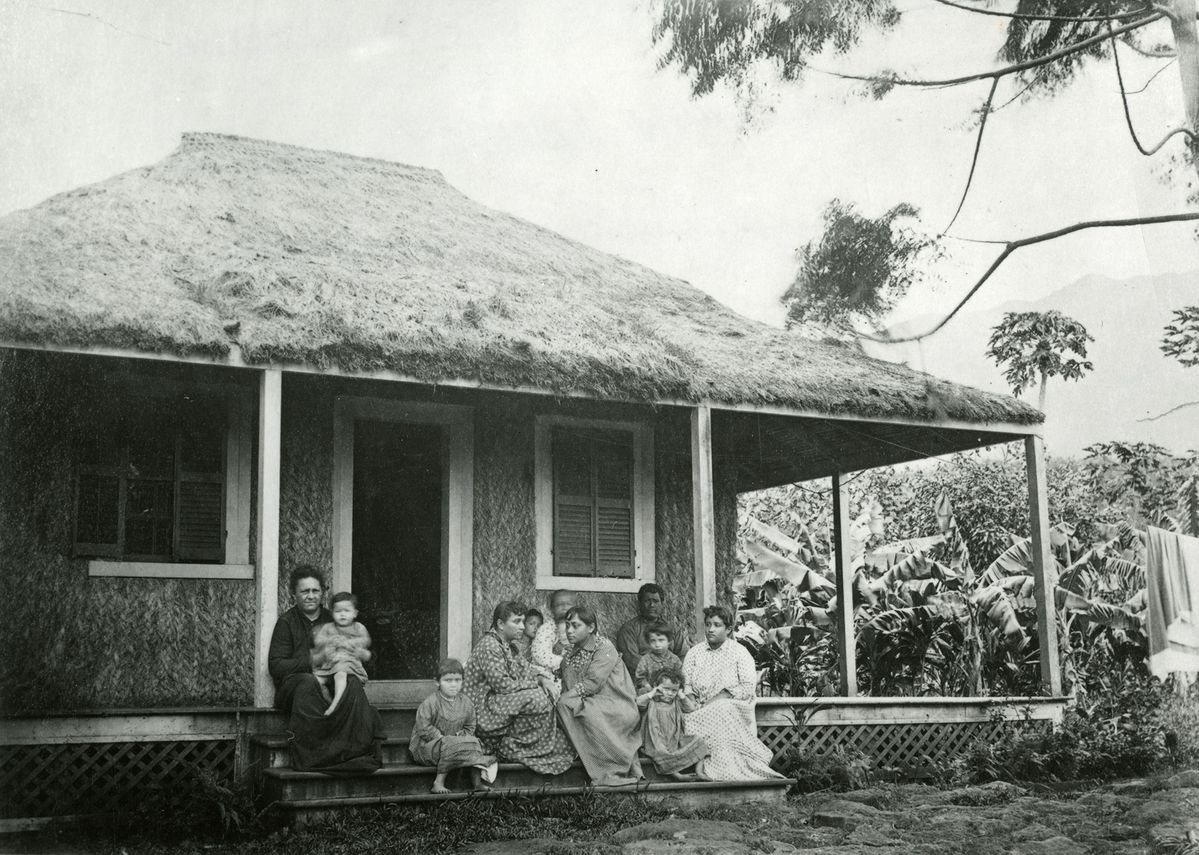
In old Hawaiʻi, land was not bought or sold. The king held it in trust, konohiki (land managers) ran each ahupuaʻa, a land division stretching from mountain to sea, and commoners farmed it in return for labour and tribute. Foreign residents pressed for secure private title. Some Hawaiian leaders hoped that clear ownership would protect the land against seizure by a foreign power.
Between January and March 1848, Kamehameha III and more than 240 chiefs and konohiki signed the Māhele, or division. Roughly, the land was split into three parts: Crown lands kept by the king, Government lands, and lands for the chiefs and konohiki. Commoners had to claim their share separately.
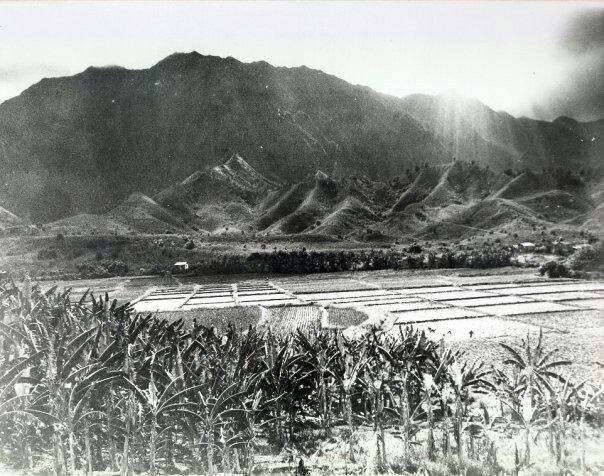
The Kuleana Act of 1850 let makaʻāinana claim title to the plots they lived on and farmed, their kuleana, a word that means both right and responsibility. Claims needed surveys, witnesses and paperwork, and many people never filed. The awards came to about 11,600 ha (28,658 acres), less than one per cent of the kingdom's land. In the same year, a law of 10 July 1850 allowed foreigners to buy land outright, and by 1890 they held most of the islands' private land.
Interpretations differ. Many Native Hawaiian scholars see the Māhele as the moment land began to slip from Hawaiian hands, opening the way for the sugar estates. Newer research, notably by Kamanamaikalani Beamer and N. Wahineʻaipohaku Tong, shows that commoners also bought substantial land after 1850 and that the Māhele preserved important native rights, including gathering rights that Hawaiʻi's courts still recognise.
The last Kamehamehas
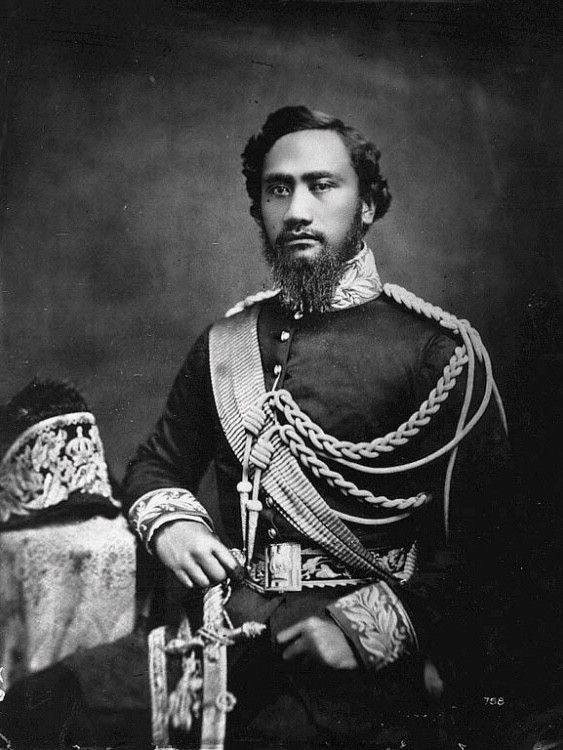
Kauikeaouli died in December 1854. His nephew Alexander Liholiho, the king pictured at the top of this page, reigned as Kamehameha IV from 1855 to 1863. Shaken by the epidemics, he and Queen Emma went door to door in 1859 raising money for a hospital for Native Hawaiians; today's Queen's Medical Center grew from that effort. He died in 1863, aged only 29.
His brother Lot Kapuāiwa ruled as Kamehameha V, strengthened royal power with the constitution of 1864 and proclaimed Kamehameha Day in honour of his grandfather. When he died on 11 December 1872 without naming an heir, the Kamehameha dynasty ended, and the kingdom turned to elected kings (see Kalākaua, the Merrie Monarch).
Where to see this era today
- Thomas Square, Honolulu. The park on South King Street where sovereignty was restored on 31 July 1843, and where Lā Hoʻihoʻi Ea gatherings take place.
- Queen Emma Summer Palace (Hānaiakamalama), Nuʻuanu. The cool upland retreat of Kamehameha IV and Queen Emma, now a museum with limited opening days.
- Mauna ʻAla, the Royal Mausoleum, Nuʻuanu. Resting place of Kamehameha III, Kamehameha IV and Kamehameha V among other royals.
- Lahaina, Maui. The old whaling port and royal capital is rebuilding after the August 2023 wildfire. Front Street reopened to traffic in August 2026, but historic buildings and museums are still closed, and residents ask visitors to stay out of fenced lots and not to photograph homes.
Plan a respectful visit with our guides to Honolulu and visiting Hawaiʻi respectfully. The complete story of these decades, including the Māhele's land figures in detail, is told in The History of Hawaii.
Quick answers
What was the Great Māhele in Hawaii?
The Māhele of 1848 was the division of the Hawaiian Kingdom's lands between the king (Crown lands), the government and the chiefs and konohiki. It introduced private land ownership. Commoners could claim their farm plots under the Kuleana Act of 1850, and foreigners were allowed to buy land from July 1850.
How much land did commoners get in the Māhele?
Kuleana awards to commoners totalled about 11,600 ha (28,658 acres), less than one per cent of the land. Research by Kamanamaikalani Beamer and N. Wahineʻaipohaku Tong shows that commoners also bought considerably more land after 1850, but most Hawaiians still lost access to land over the following decades.
Why did the sandalwood trade end in Hawaii?
Over-harvesting. Chiefs ran up large debts buying foreign goods on credit and sent commoners to cut sandalwood to repay them. By around 1840 the accessible forests were stripped and the Chinese market had collapsed.
When was the whaling era in Hawaii?
From 1819, when the first American whaleships called, until the 1860s. The peak year was 1846, with close to 600 whaleships arriving, mainly at Lahaina and Honolulu. Petroleum, steam and the American Civil War ended the boom.
What is Lā Hoʻihoʻi Ea?
Sovereignty Restoration Day, 31 July. It marks the day in 1843 when Rear Admiral Richard Thomas restored the Hawaiian Kingdom's sovereignty after a five-month British occupation. Kamehameha III's words that day became the state motto.
Facts checked October 2026 against the sources below and the research for our book The History of Hawaii. Dates and figures for early Hawaiian history are estimates and scholars still debate some of them.
- January 1823: Sandalwood Trade Peaks (Punahou Bulletin)
- Then and Now: Whaling Ships on Hawaiʻi Island (Ke Ola Magazine)
- Troubled Times: Scenes of Death and Carnage (Punahou Bulletin)
- Estimated Population of the Hawaiian Islands, 1778–1896 (Office of Hawaiian Affairs)
- 1853 smallpox epidemic (US National Library of Medicine, Native Voices)
- Lā Hoʻihoʻi Ea celebrates the return of sovereignty (Kamehameha Schools)
- Great Māhele (Wikipedia)
- The Māhele Did What? Native Interest Remains, Hūlili vol. 10 (Beamer and Tong)