For centuries Hawaiians kept their history in chant and dance. Pushed from public life, hula survived in families, returned at a king's coronation and now fills a stadium in Hilo.
A coronation and a comeback
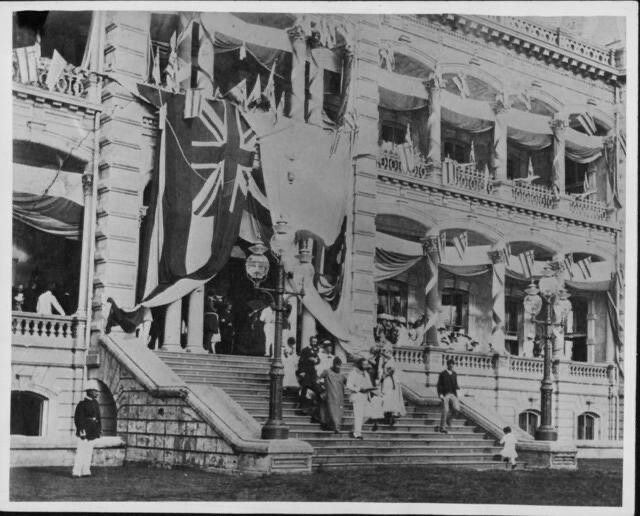
On 12 February 1883 King Kalākaua was crowned at the new ʻIolani Palace in Honolulu. The ceremony itself borrowed from European courts, but the celebrations that followed were unmistakably Hawaiian. Night after night, chanters and dancers performed hula on the palace grounds, some of it ancient and some of it new.
For many in the audience it was a startling sight. For half a century Christian chiefs and missionaries had pushed hula out of public life. Now the king himself was putting it at the centre of the kingdom's most important ceremony.
That moment sums up the history of hula: an art that carried the memory of a people, came close to vanishing from public view, and returned each time through the determination of Hawaiians who refused to let it go.
Words that move: mele, oli and hula
Before writing arrived in the 1820s, Hawaiians kept a vast unwritten library. Genealogies, histories, prayers, praise of chiefs and love songs lived in mele, the general word for poetry, song and chant. Oli is the chanted delivery of mele, often unaccompanied and reserved for formal moments such as greeting guests or asking permission to enter a place.
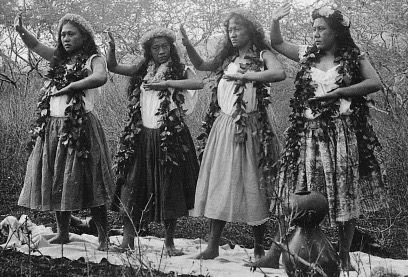
Hula gives mele a body. Every movement of the hands, hips and feet illustrates or comments on the words, so a dancer is telling a story as much as performing steps. That is why hula was never simply entertainment: it was a way of keeping history, honouring chiefs and gods, and teaching each new generation.
Tradition offers more than one origin for the dance. In one account Hiʻiaka, sister of the volcano goddess Pele, danced to please her on the shore of Puna. In another, Laka gave birth to hula on Molokaʻi. Laka remains the goddess of hula, and many hālau (hula schools) keep a small altar to her.
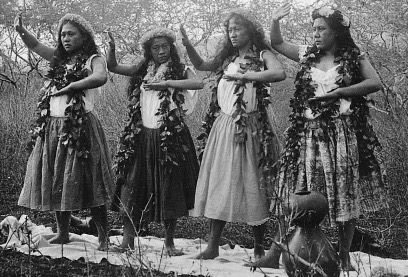
The hālau and its instruments
Hula was, and still is, taught in a hālau by a kumu hula. Kumu means "source", and the teacher's role is to pass on not only steps but chants, protocols and the knowledge behind them. Training was strict; students in the past lived under kapu (sacred restrictions) while they learned the most sacred dances.
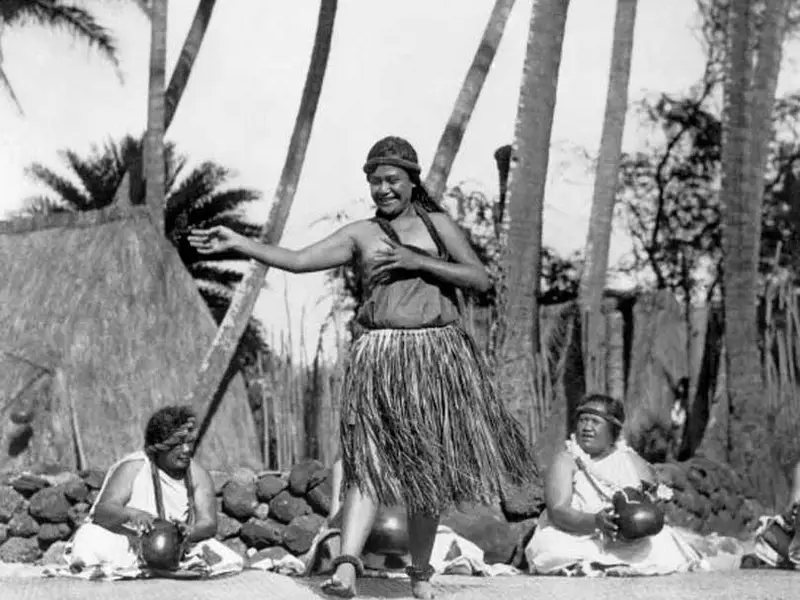
The instruments are part of the sound of old Hawaiʻi. The ipu, a gourd drum, is struck and thumped on the ground to keep time, while the double gourd ipu heke gives a deeper voice. The pahu, a sacred drum of hollowed wood headed with sharkskin, accompanied the most solemn dances. Dancers themselves may play the ʻuliʻuli (feathered gourd rattle), pūʻili (split bamboo sticks) or ʻiliʻili (water-worn stones clicked like castanets).
Discouraged but never silenced
American Protestant missionaries, who arrived in 1820, saw hula as heathen, idle and immodest. They had no power to ban it, but their converts among the chiefs did. In 1830 the powerful kuhina nui (co-ruler) Kaʻahumanu banned public hula. The ban was widely ignored, especially after her death in 1832, and hula went on being taught quietly, above all in rural areas and within families.
The kingdom then moved from prohibition to regulation. A penal code of 1850 required a licence for public hula shows that charged admission, and a law published in 1859 allowed such licences only in Honolulu, at a fee of at least ten dollars a performance, with fines of up to $500 for unlicensed shows. Private hula was never regulated. Through these decades the dance survived because ordinary families kept it alive.
For the wider background to this era, from the end of the kapu system to the missionaries' arrival, see the end of the kapu system and the missionaries.
Kalākaua's revival
Kalākaua, remembered as the Merrie Monarch, made Hawaiian culture a pillar of his reign. Hula performed at his 1883 coronation and again during the jubilee for his 50th birthday in November 1886, where both ancient dances and newly created ones were presented. He also had the great creation chant, the Kumulipo, written down and published.
A new style grew in his court: hula kuʻi, which joined traditional movement to Western-influenced melody and, before long, to guitar and ʻukulele. It was a bridge between the old dances and the modern hula of the 20th century. Read more about the king in King Kalākaua, the Merrie Monarch.
Grass skirts, postcards and a language under pressure
The overthrow of 1893 brought new pressure on Hawaiian culture. In 1896 the Republic passed Act 57, which made English the medium of instruction in schools. It did not formally outlaw Hawaiian, but children were often punished for speaking it, and the number of speakers collapsed over the following decades. Since hula depends on chant in ʻōlelo Hawaiʻi, the dance lost part of its foundation. The state legislature formally apologised for the ban in 2022.
At the same time, hula became a tourist image. The grass skirt, reportedly introduced by immigrants from the Gilbert Islands (today part of Kiribati) in the late 19th century, became a standard costume for performers in Hawaiʻi and on the mainland. A Hawaiian pavilion at the 1915 Panama-Pacific International Exposition in San Francisco helped launch a mainland craze for ʻukulele music and hula, and the softer, song-based style known today as hula ʻauana flourished in hotels and on stage.
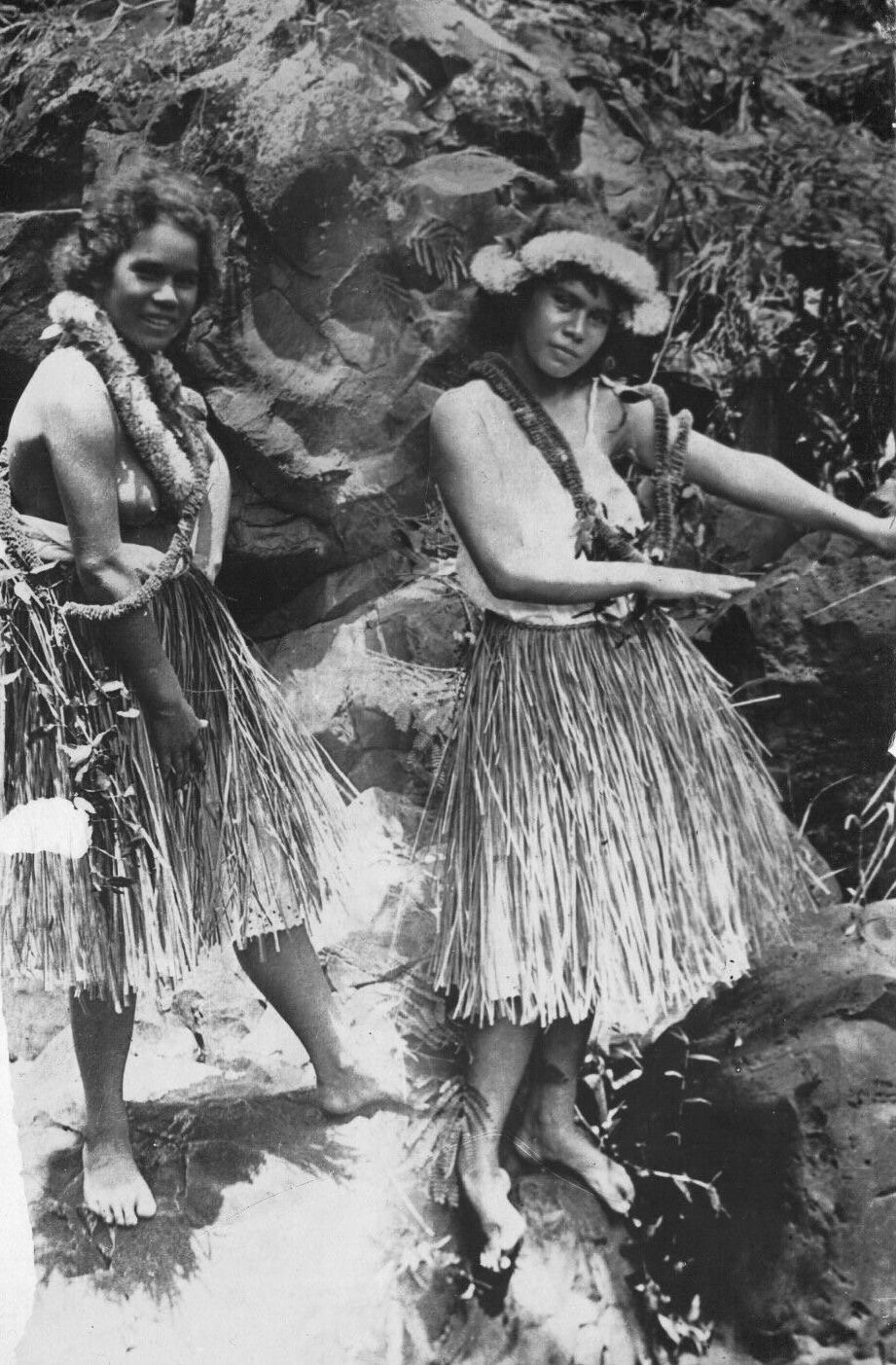
Tourist hula was often dismissed as inauthentic, yet many kumu hula kept the older forms alive alongside it, ready for the moment the tide turned.
The renaissance and the Merrie Monarch Festival
That moment came with the Hawaiian Renaissance of the 1970s, described in the Hawaiian Renaissance and Hōkūleʻa. Hālau multiplied, young Hawaiians sought out elders to learn chants, and in 1978 Hawaiian became an official language of the state. In the 1980s Hawaiian-immersion preschools and then public-school programmes followed, so that many of today's dancers grow up speaking the language of their chants.
The festival that became hula's great stage began more modestly. In 1964 Hilo, still recovering from the 1960 tsunami, held its first Merrie Monarch Festival, named after Kalākaua. When support faded, Dottie Thompson took over in 1968 and refocused it on Hawaiian culture. The first hula competition, in 1971, drew nine women's hālau; men's groups joined in 1976.
Today the competition fills the Edith Kanakaʻole Multi-Purpose Stadium in Hilo in the week after Easter. Soloists vie for the title of Miss Aloha Hula on Thursday, hālau dance kahiko (ancient style) on Friday and ʻauana (modern style) on Saturday, and the event is televised and streamed across the islands.
Where to see hula today
Tickets for the Merrie Monarch Festival are hard to get, so plan early through merriemonarch.com, or watch the free live broadcast. In Waikīkī, a free Kūhiō Beach Hula Show is held in the evenings at the Hula Mound in Kūhiō Beach Park, 2453 Kalākaua Avenue; check current dates before you go. Bishop Museum in Honolulu has rich collections on Hawaiian culture to give the dance its context.
Wherever you watch, remember that hula is a living practice with deep roots, not just a show; our guide to visiting Hawaiʻi respectfully has tips. The story of hula, chant and language runs through our book The History of Hawaii.
Quick answers
What is the origin of hula?
Hawaiian tradition gives more than one origin: in one, Hiʻiaka danced for her sister Pele in Puna; in another, the goddess Laka gave birth to hula on Molokaʻi. Hula developed over centuries as a way of telling stories, keeping history and honouring gods and chiefs.
Was hula banned in Hawaii?
In 1830 Kaʻahumanu, the kingdom's kuhina nui (co-ruler), banned public hula, but the ban was widely ignored after her death in 1832. Later laws required licences for paid public shows. Hula was never banned in private and survived within families.
What is the difference between hula kahiko and hula ʻauana?
Hula kahiko is the ancient style, danced to chant and traditional instruments such as the ipu. Hula ʻauana is the modern style, sung to melody with guitar, ʻukulele and bass, and grew from Western influence.
Who brought hula back?
King Kalākaua, the Merrie Monarch, brought hula back to public life at his 1883 coronation and 1886 jubilee. A broader revival followed in the 1970s Hawaiian Renaissance.
When is the Merrie Monarch Festival?
The Merrie Monarch Festival is held every year in Hilo in the week after Easter, with the hula competition from Thursday to Saturday.
Facts checked October 2026 against the sources below and the research for our book The History of Hawaii. Dates and figures for early Hawaiian history are estimates and scholars still debate some of them.
- Law restricting hula performances, 1859 (Bishop Museum)
- A Brief History: Hula (Ke Ola Magazine)
- History of the Festival (Merrie Monarch Festival)
- Merrie Monarch Festival
- Kalākaua
- Hula ʻAuana (Images of Old Hawaiʻi)
- State formally apologizes for banning Hawaiian language in schools for 90 years (Hawaiʻi Public Radio)
- Kuhio Beach Hula Show (Hawaiʻi Tourism Authority)