David Kalākaua dined at the White House, circled the globe, lit his palace with electricity and brought hula back to court. Then, in 1887, armed opponents forced him to sign away much of his power.
A king at the White House
On 22 December 1874, President Ulysses S. Grant hosted a dinner at the White House for a guest no American president had ever received: a reigning monarch. King David Kalākaua of Hawaiʻi had arrived in San Francisco a few weeks earlier, the first reigning king of any nation to set foot in the United States, and Grant's dinner in his honour is remembered as the first White House state dinner.
Kalākaua had come for a treaty, and he got one. It was typical of a king who thought big, travelled far and loved a celebration. His reign of almost seventeen years brought sugar wealth, a new palace, electric light and a proud revival of Hawaiian culture. It also brought a powerful, organised opposition that would, in the end, set the stage for the overthrow of the monarchy.
An elected king
The Kamehameha dynasty ended in December 1872 (see sandalwood, whaling and the Māhele). Its successor, William Charles Lunalilo, won a popular vote to become Hawaiʻi's first elected king, but he died on 3 February 1874, about a year into his reign, without naming an heir.
On 12 February 1874 the legislature chose between Kalākaua, a high chief and experienced politician, and Queen Emma, widow of Kamehameha IV. Kalākaua won by 39 votes to 6. Emma's supporters stormed the Honolulu courthouse and injured 13 legislators, and the government had to call on American and British troops from warships in the harbour to restore order. It was a rough start for a reign that would never be short of drama.
Sugar's golden key
The treaty Kalākaua championed in Washington was the Reciprocity Treaty, signed in January 1875. It let Hawaiian sugar into the United States duty-free for seven years, and in return Hawaiʻi promised not to lease or cede territory to any other foreign power. It came into force in September 1876.
The effect was spectacular. Sugar exports multiplied many times over by 1890, new plantations spread across the islands and the demand for labour soared (more in the history of Hawaiʻi's sugar plantations). The treaty enriched the planters, many of them American, and tied the kingdom's economy ever more tightly to the United States.
Around the world in 281 days
On 20 January 1881 Kalākaua sailed from Honolulu on a journey that made him the first reigning monarch to travel around the world. His main aim was to recruit workers and families from abroad who might help reverse the decline of the Native Hawaiian population.
He was received by Emperor Meiji in Japan and travelled on through China, Siam, Singapore, India, Egypt and much of Europe, meeting heads of state from Rome to London, before returning across the United States. In Tokyo he quietly proposed a marriage between his young niece, Princess Kaʻiulani, and a Japanese prince; Japan politely declined. He was home by the end of October, and the contacts he made helped open the way for Japanese contract labour from 1885.
A palace with electric light
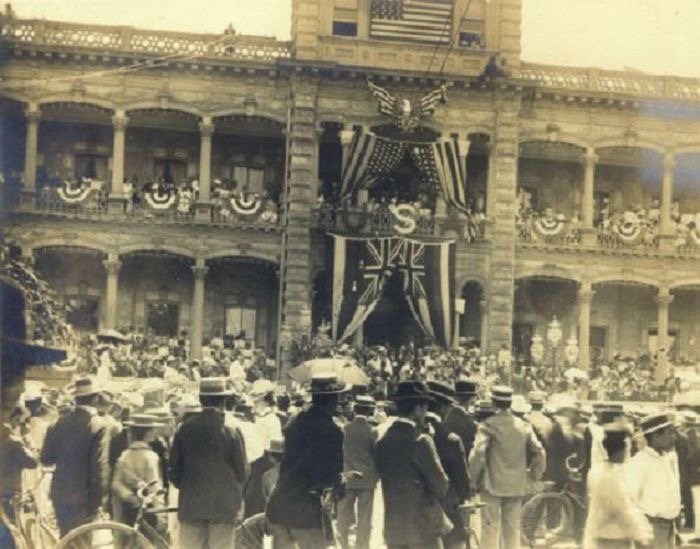
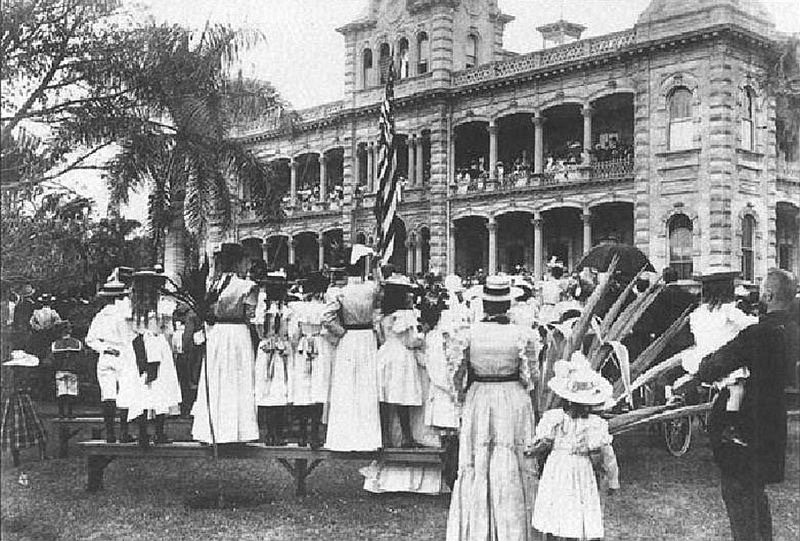
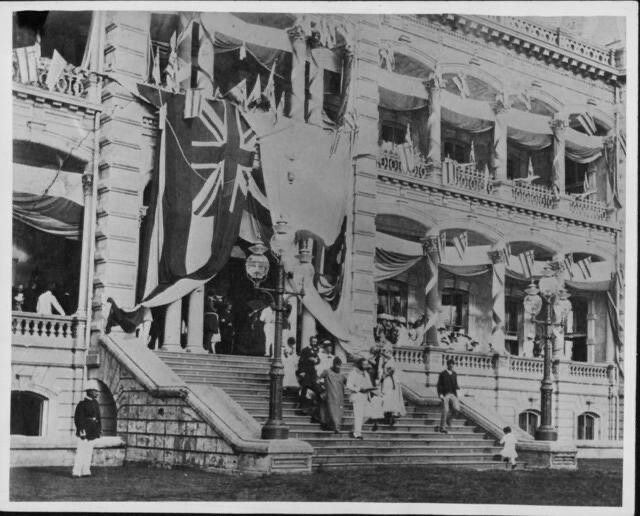
Back in Honolulu, Kalākaua built a residence fit for a modern monarch. The cornerstone of ʻIolani Palace was laid on 31 December 1879, and the building was finished in 1882 with indoor plumbing, a telephone and, from 1886 to 1887, electric light. The palace grounds were lit for the king's 50th birthday in November 1886, and by 1887 hundreds of incandescent bulbs glowed inside, about four years before the White House had electric lighting.
On 12 February 1883, nine years after his election, Kalākaua held a coronation on the palace grounds. The festivities included the unveiling of the gilded Kamehameha statue across the street (see Kamehameha the Great). The palace's later history, from the overthrow to the imprisonment of his sister, is told in our guide to ʻIolani Palace.
Hula comes home
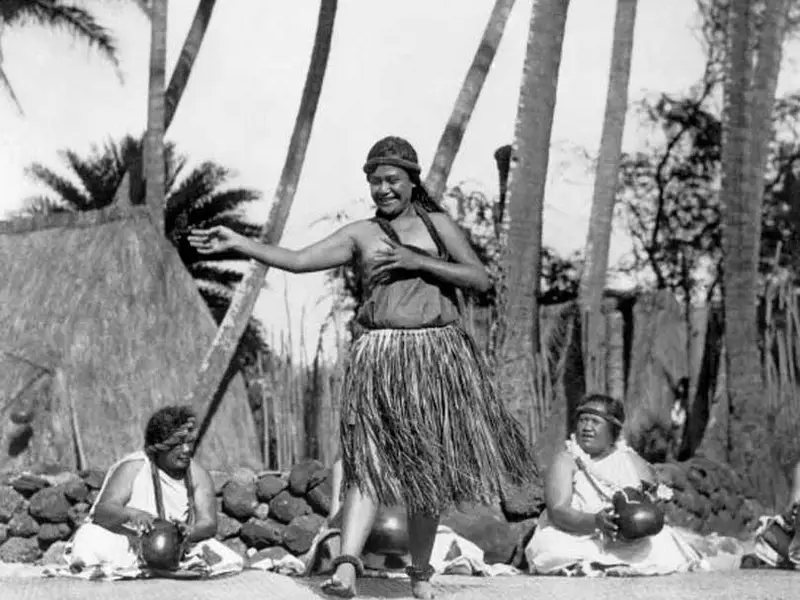
Kalākaua's nickname, the Merrie Monarch, came from his love of music, dance and the ʻukulele, but his cultural programme was serious. Public hula had been discouraged for half a century under missionary influence (see the history of hula). At his coronation, kumu hula (hula masters) were invited to bring their troupes to Honolulu and dances were performed night after night. A new style, hula kuʻi, blending old movement with new music, grew out of these years.
He wrote the words of Hawaiʻi Ponoʻī, set to music by the bandmaster Henri Berger; it became the kingdom's anthem in 1876 and is now the state song. In 1886 he revived the Hale Nauā, a society devoted to genealogy, science and ancient knowledge, and he was the first to publish the Kumulipo, the great Hawaiian creation chant, in print. Critics counted the cost. His two-week 50th birthday jubilee in 1886, for which the legislature voted $15,000, was reported to have cost $75,000.
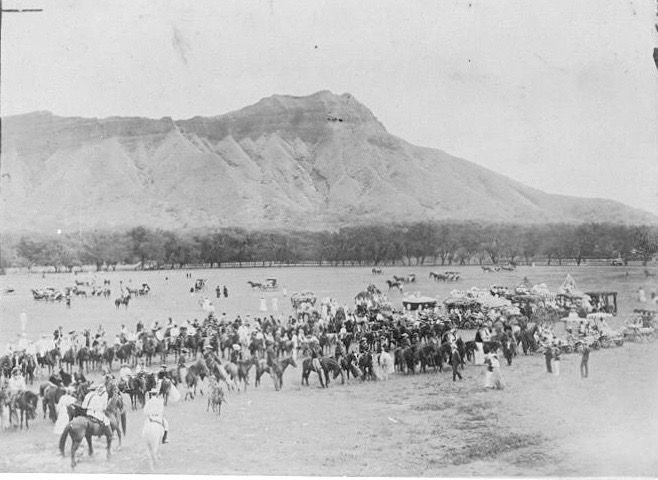
His love of a good gathering left a lasting mark on Waikīkī too. Asked to find a permanent course for horse racing, Kalākaua picked the dry plain at the foot of Diamond Head, and on 11 June 1877 Kapiʻolani Park was dedicated as the kingdom's first public park. Today the Merrie Monarch Festival in Hilo, founded in 1964, carries his nickname and his cultural mission into the twenty-first century.
The Bayonet Constitution of 1887
Not everyone loved the king. Opposition centred on the Hawaiian League, a secret organisation of mostly American businessmen, many of whom favoured annexation by the United States, backed by an armed militia, the Honolulu Rifles. A scandal over an opium licence and anger at the king's powerful premier, Walter Murray Gibson, gave them their opening. On 30 June 1887 they demanded the dismissal of the cabinet, and Gibson fled to California.
A new constitution, drafted in less than a week by lawyers including Lorrin A. Thurston and Sanford B. Dole, was signed by Kalākaua on 6 July 1887 under threat of armed force, which is why it is called the Bayonet Constitution. It stripped the king of most of his power:
- Cabinet rule: the king could act only with his cabinet's consent, and only the legislature could dismiss ministers.
- Veto: a two-thirds vote of the legislature could override the king's veto.
- Voting: electing the House of Nobles required an income of $600 a year or taxable property worth $3,000, which shut out most Native Hawaiians.
- Race: Asian residents were barred from voting, while American and European residents could vote without becoming citizens.
The renewal of the reciprocity treaty, ratified that December, gave the United States exclusive use of Pearl Harbor, the seed of the later naval base. In July 1889 Robert William Wilcox led a rising to restore the old constitution; it was crushed the same day. Liliʻuokalani later wrote that her brother had signed under compulsion, and the 1887 constitution is widely seen as the first step towards the overthrow of 1893, an event the United States formally apologised for in the Apology Resolution of 1993.
Death in San Francisco, and where to find Kalākaua today
In poor health, Kalākaua travelled to California in late 1890. He died at the Palace Hotel in San Francisco on 20 January 1891; navy doctors recorded Bright's disease, a kidney illness. The cruiser USS Charleston carried his body home, and his sister became Queen Liliʻuokalani.
- ʻIolani Palace, downtown Honolulu. Guided and audio tours run several days a week; tickets are sold online only, so book ahead. The palace grounds are free to walk.
- Kapiʻolani Park, Waikīkī. The king's park, still a favourite for picnics, runners and events below Diamond Head.
- Mauna ʻAla, the Royal Mausoleum, Nuʻuanu. Kalākaua and Queen Kapiʻolani rest in the Kalākaua crypt.
- Merrie Monarch Festival, Hilo. The world's most prestigious hula competition, held each spring in the week that begins on Easter Sunday. Tickets are famously hard to get.
Plan your royal Honolulu day with our guide to things to do in Honolulu. Kalākaua's full reign, from the 1874 riot to his last voyage, is one chapter of The History of Hawaii.
Quick answers
Why was King Kalākaua called the Merrie Monarch?
Because of his love of music, dance, parties and the ʻukulele, and his revival of hula and chant at court. The nickname lives on in Hilo's Merrie Monarch Festival, the leading hula competition, founded in 1964.
What was the Bayonet Constitution?
The constitution King Kalākaua was forced to sign on 6 July 1887 by the Hawaiian League and its armed militia, the Honolulu Rifles. It took most of the king's powers, set income and property requirements for voting for the House of Nobles that excluded most Native Hawaiians, and barred Asian residents from voting.
Was Kalākaua the first king to travel around the world?
Yes. His 1881 tour, which lasted 281 days and took him through Japan, China, Southeast Asia, India, Egypt, Europe and the United States, made him the first reigning monarch to circumnavigate the globe.
Did ʻIolani Palace have electricity before the White House?
Yes. The palace grounds were lit by electricity in November 1886 and the interior by 1887, about four years before the White House. Honolulu's streets followed in March 1888.
How did King Kalākaua die?
He died at the Palace Hotel in San Francisco on 20 January 1891, aged 54. US Navy doctors recorded the cause as Bright's disease, a kidney condition. His body was returned to Honolulu aboard USS Charleston, and his sister Liliʻuokalani succeeded him.
Facts checked October 2026 against the sources below and the research for our book The History of Hawaii. Dates and figures for early Hawaiian history are estimates and scholars still debate some of them.
- Kalākaua (Wikipedia)
- Kalākaua's 1874–75 state visit to the United States (Wikipedia)
- The 1874 Election Riot in Honolulu (Ka Wai Ola)
- Kalākaua's 1881 world tour (Wikipedia)
- Milestones: Electric Lighting of the Kingdom of Hawaii, 1886–1888 (IEEE / ETHW)
- Celebrating the life of the Merrie Monarch (Kamehameha Schools)
- 1887 Constitution of the Hawaiian Kingdom (Wikipedia)
- Kapiʻolani Park (Wikipedia)