The first Hawaiians crossed thousands of kilometres of open Pacific guided by stars, swells and birds. Here is how they did it, and how a modern canoe proved it.
A star overhead
Picture a double-hulled canoe somewhere north of the equator, many weeks out from the islands of eastern Polynesia. Each night the navigator watches a bright orange star the Hawaiians later called Hōkūleʻa, the star we know as Arcturus, climb a little higher. When it passes straight overhead, the canoe has reached the latitude of the island it is looking for.
That is roughly how the first people found Hawaiʻi: not by luck, but by a body of knowledge built up over generations and carried entirely in memory. The most isolated island group on Earth was one of the last places in Polynesia to be settled, and its discovery ranks among the great feats of human exploration.
This is the story of who those voyagers were, when they came, how they navigated, and how a single canoe proved their skill to a doubting world in 1976.
Out of the western Pacific
The story begins thousands of kilometres to the west. Archaeologists trace the ancestors of the Polynesians to the Lapita people, seafarers whose roots Britannica traces to Taiwan and other parts of East Asia. Moving out through the islands north-east of New Guinea, they reached Fiji, Tonga and the rest of western Polynesia by about 1000 BC, leaving behind a distinctive stamped pottery that lets archaeologists follow their trail.
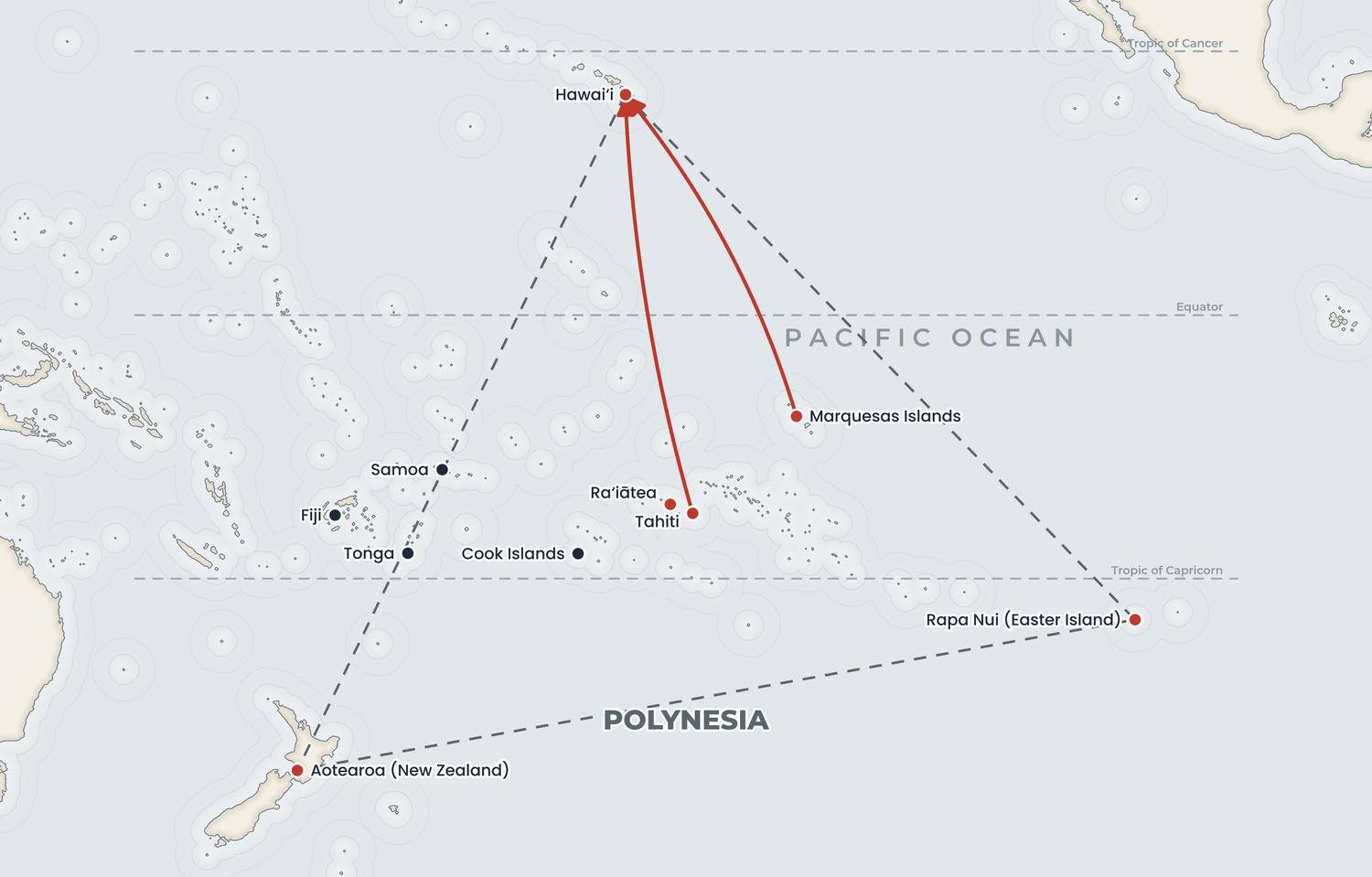
In western Polynesia a recognisably Polynesian culture took shape over many centuries. Then came a second great push east, into the scattered islands of eastern Polynesia, and on to the far corners of what is now called the Polynesian Triangle: Aotearoa (New Zealand) in the south-west, Rapa Nui (Easter Island) in the east and Hawaiʻi in the north.
When did the first Hawaiians arrive?
Few questions in Hawaiian archaeology have moved as much. In the 19th century the scholar Abraham Fornander used chiefly genealogies to place settlement around AD 450, and many 20th-century archaeologists, working with early radiocarbon dates, suggested anything from about AD 300 to 1000.
More precise dating has since pulled the estimates later. The archaeologist Patrick Kirch, reviewing the dated sites, proposed a window of roughly AD 1000 to 1200. In 2011 a team led by Janet Wilmshurst published high-precision radiocarbon results suggesting that the Society Islands were settled around AD 1025–1120, and the remote corners of the triangle, Hawaiʻi included, soon after, around 1190–1290.
The debate is not settled, and some researchers still favour dates nearer AD 1000. What most now agree on is the shape of the story: eastern Polynesia was explored in a rapid burst over a few centuries, not a slow drift.
Kahiki: the homeland to the south
Where did they sail from? Evidence from archaeology, language, biology and plants points to the Marquesas Islands as the most likely homeland of the first settlers, with the Society Islands, Tahiti among them, also involved. Hawaiians remembered the ancestral lands to the south as Kahiki, a name that runs through chant, genealogy and the story of the volcano goddess Pele.
Tradition also remembers later arrivals. Chiefly accounts tell of powerful chiefs and priests, among them Paʻao, coming from the south and of two-way voyaging that went on for generations before it ceased. On Kahoʻolawe, the western point is still called Kealaikahiki, "the way to Kahiki", remembered as a departure point for voyages south.
A founding group may have been small, perhaps around a hundred people by one estimate, but it came prepared. Canoes carried pigs, dogs and chickens, and the so-called canoe plants: taro, breadfruit, banana, coconut, sweet potato, sugar cane, kukui and paper mulberry for cloth. Those plants became the basis of the farming world described in daily life in ancient Hawaiʻi.
How wayfinding works
The voyagers had no compass, charts or clocks. What they had was a detailed mental map of the horizon. The Hawaiian star compass, as taught today by the Polynesian Voyaging Society, divides the horizon into 32 houses, each 11.25 degrees wide, marking where stars, the sun and the moon rise and set. Its four quadrants carry the names of winds, among them Koʻolau for the north-east trades.
A navigator memorises where each star rises and sets and holds a course through the night by the stars nearest the horizon. By day the sun does the same work, and the long ocean swells, which roll across the compass on steady bearings, keep the canoe on line even under cloud.
Closer to land, life gives directions. Some seabirds sleep ashore and fish at sea, so their flight at dawn and dusk points towards an island still below the horizon. The noio (noddy tern) ranges about 64 km (40 mi) from land, the manu o Kū (white tern) farther. Cloud piling over high islands, and changes in the colour and shape of the swell, add more clues.
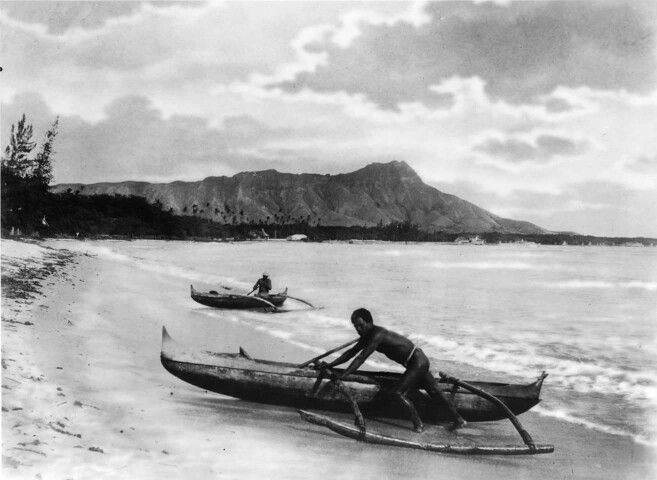
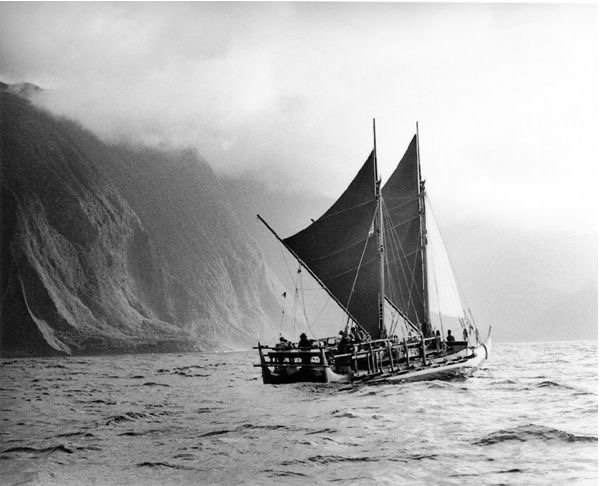
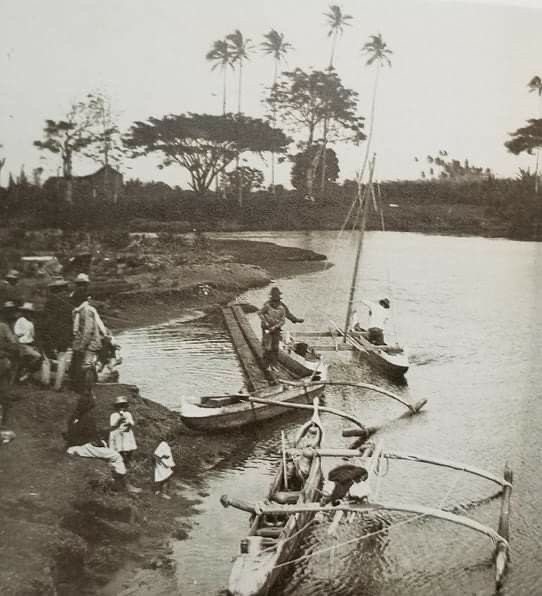
The vessel mattered as much as the knowledge. A voyaging canoe, the waʻa kaulua, joined two hulls with crossbeams and a deck between them, making a stable platform that could carry people, animals, plants, food and water for weeks. Sails plaited from pandanus (hala) leaves drove it and long steering paddles held it on course. A crew at sea lived like a small island community, and success depended on discipline as much as on the navigator's memory.
Accident or design?
For much of the 20th century outsiders doubted that Polynesians could have done this on purpose. In 1956 the New Zealand historian Andrew Sharp argued that their canoes and navigation were too limited for deliberate long voyages, and that distant islands had been found by canoes drifting off course.
In 1973 the anthropologist Ben Finney, the artist Herb Kawainui Kāne and the surfer and sailor Tommy Holmes founded the Polynesian Voyaging Society to test the idea. They built Hōkūleʻa, a double-hulled canoe about 19 m (62 ft) long, and launched her at Kualoa on Oʻahu on 8 March 1975. No Hawaiian still held the old deep-sea knowledge, so the society turned to Mau Piailug, a master navigator from Satawal in Micronesia.
On 1 May 1976 Hōkūleʻa left Honolua Bay on Maui. Thirty-four days later, on 4 June, she sailed into Papeʻete, Tahiti, guided without a single instrument, and an estimated 17,000 people crowded the harbour to greet her. The drift theory had its answer. How the canoe went on to inspire a cultural revival is told in the Hawaiian Renaissance and Hōkūleʻa.
Where to see the voyaging story today
On Oʻahu, Bishop Museum in Honolulu has the deepest collections on Polynesian origins and Hawaiian life, and Kualoa on the windward coast, where Hōkūleʻa was launched, is a beautiful stop on any drive around the island; our things to do on Oʻahu guide covers the route. On Hawaiʻi Island, ʻImiloa Astronomy Center in Hilo links the night sky with Hawaiian wayfinding.
The canoes themselves are often at sea. The Polynesian Voyaging Society tracks Hōkūleʻa and her sister canoe Hikianalia at hokulea.com, and their arrivals and departures are public celebrations worth catching if your dates line up. For the wider picture of everything that followed the first landfall, see our Hawaii history timeline, or read the full account in The History of Hawaii.
Quick answers
Where did the first Hawaiians come from?
Most evidence points to the Marquesas Islands, with the Society Islands (including Tahiti) also involved. Hawaiians remembered these southern homelands as Kahiki.
When did Polynesians arrive in Hawaii?
Current estimates place first settlement roughly between AD 1000 and 1200, with some high-precision radiocarbon studies arguing for about 1190–1290. The date is still debated.
How did Polynesians navigate without instruments?
Navigators used a mental star compass of 32 houses on the horizon, the rising and setting points of stars, the sun, steady ocean swells, wind, clouds and the flight of land-based seabirds.
How long did it take to sail from Tahiti to Hawaii?
Voyages took several weeks. In 1976 the replica canoe Hōkūleʻa sailed from Maui to Tahiti in 34 days, from 1 May to 4 June, without instruments.
What did Polynesians bring to Hawaii?
Settlers brought pigs, dogs and chickens and a set of canoe plants including taro, breadfruit, banana, coconut, sweet potato, sugar cane, kukui and paper mulberry.
Facts checked October 2026 against the sources below and the research for our book The History of Hawaii. Dates and figures for early Hawaiian history are estimates and scholars still debate some of them.
- East Polynesia colonized faster and more recently than previously thought (University of Hawaiʻi)
- The Star Compass (Polynesian Voyaging Society)
- 50 years ago today Hōkūleʻa makes landfall in Papeʻete, Tahiti (Polynesian Voyaging Society)
- Hōkūleʻa is welcomed in Tahiti in 1976 (Smithsonian Ocean)
- Lapita culture (Britannica)
- The Founding of the Polynesian Voyaging Society
- Noio / Noddy Tern (Polynesian Voyaging Society archive)
- 50th anniversary of the historic launch of Hōkūleʻa's 1976 maiden voyage (Maui Now)