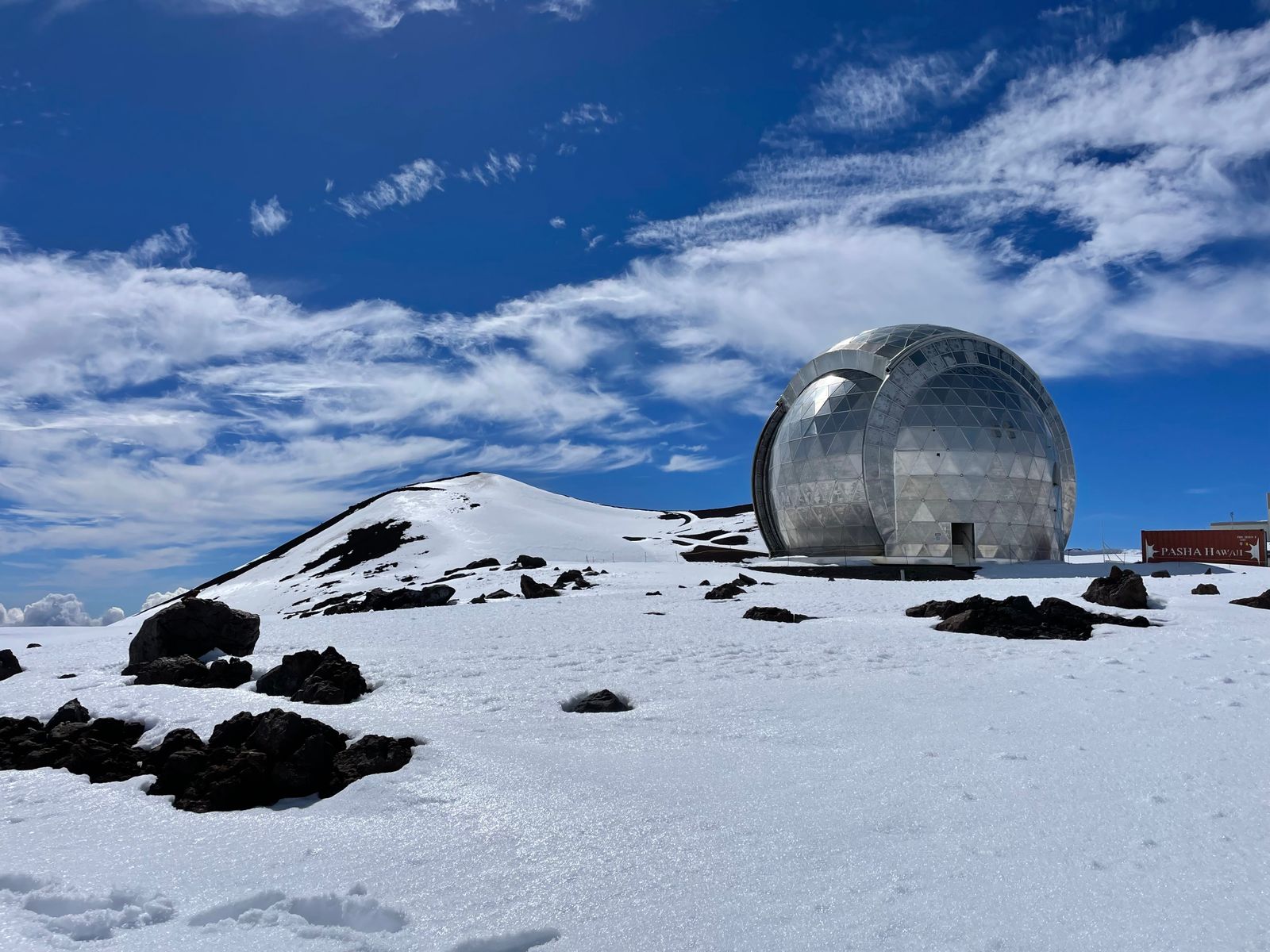
Those white domes on the summit of Mauna Kea, glinting like a moon base above the clouds, are some of the most important telescopes in the world. Mauna Kea is the highest point in Hawaii and one of the best places on Earth to look at the stars. You can visit, but it takes planning: altitude, a four-wheel-drive road and strict rules come with it.
The white domes: what are they?
The domes are observatories: 13 telescopes from 11 countries, including the twin Keck telescopes, Subaru, Gemini North and the Canada-France-Hawaii Telescope. Mauna Kea is above about 40 per cent of the atmosphere and most of the clouds, and its air is dry, clear and still, which makes it one of the best sites in the world for astronomy. The domes open at night to let the telescopes look out, and close during the day to protect them.
The summit is also sacred in Hawaiian tradition, the realm of the gods, and the balance between science and the mountain's cultural importance has been debated for decades. Management is now shared with a state authority that includes Native Hawaiian voices, and the proposed Thirty Meter Telescope remains in doubt.
The other famous research station on the Big Island, the Mauna Loa Observatory, sits on the neighbouring volcano at about 3,400 metres. It is a NOAA atmospheric station where carbon dioxide has been measured since 1958, and it is not open to the public.
The visitor station
The Maunakea Visitor Information Station sits at about 9,200 feet (2,800 m), about six paved miles up the access road from the Saddle Road (Highway 200), near mile marker 28. It is the place to stop for at least 30 minutes to acclimatise, use the restrooms and check the road and weather. Its listed hours are 9 am to 9 pm daily, but check on the day. On clear evenings the area around the station is the public stargazing spot.
Can you drive to the summit?
Only with a four-wheel-drive vehicle: two-wheel-drive cars are not allowed above the visitor station, and many rental contracts forbid the summit road, so check yours. You need a full tank of fuel, and muddy vehicles are turned back to protect the mountain from invasive species. The summit is open from 30 minutes before sunrise to 30 minutes after sunset, so stargazing happens back down at the visitor station, not at the top.
If you would rather not drive, guided summit and stargazing tours run from Kona, Waikoloa and Hilo, with warm clothes and dinner included; they typically last 7 to 9 hours.
Altitude and safety
The summit is over 4,000 metres, and altitude sickness is common. The official advice is not to go above the visitor station if you are under 13, pregnant, have heart or breathing problems, or have been scuba diving in the last 24 hours. Go slowly, drink water and turn back if you get a headache, dizziness or shortness of breath. Temperatures at the summit are often near freezing, and snow falls in winter.
Hiking Mauna Kea
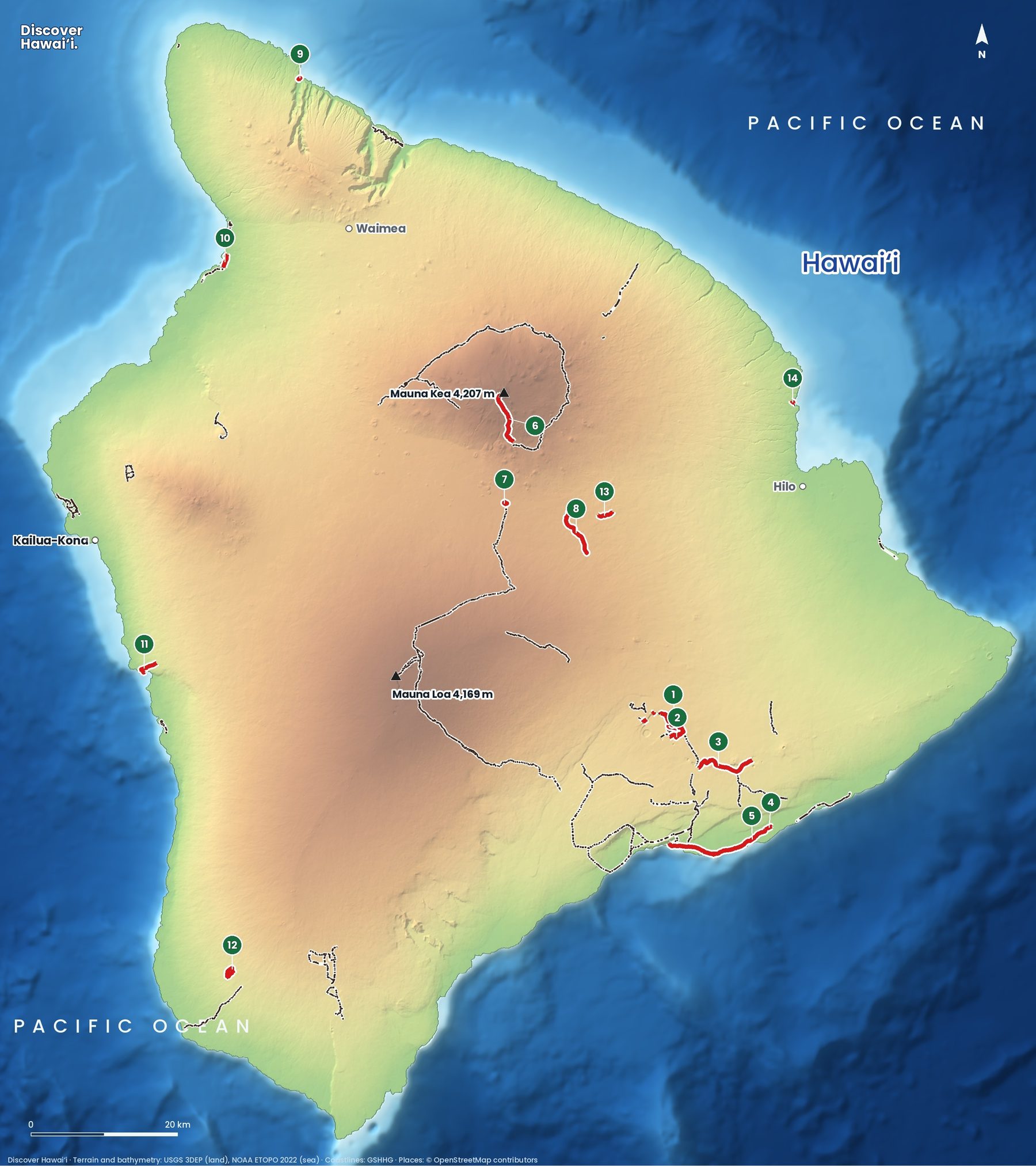
The Humuʻula Trail climbs about 6 miles and 1,400 metres from the visitor station to the summit area, a very hard hike at high altitude that takes most of a day. A gentler option is Puʻu Huluhulu, a short climb up a forested cinder cone on the Saddle Road, with views of both Mauna Kea and Mauna Loa. More in the Big Island hiking trails map and on our Mauna Kea volcano page.
Respect the mountain
- Stay on roads and marked trails; the summit area holds shrines and burial sites.
- Do not build rock piles or take rocks.
- Keep noise and lights low near cultural sites and, at night, near the telescopes.
- Check the summit road and weather before you leave: it closes in storms and snow.
Quick answers
What are the domes on top of Mauna Kea?
Observatories: 13 telescopes from 11 countries, including Keck, Subaru and Gemini North.
Can you drive to the top of Mauna Kea?
Yes, but only by four-wheel drive above the visitor station, and only between 30 minutes before sunrise and 30 minutes after sunset.
Can you go stargazing on Mauna Kea?
Yes, at the visitor station at 9,200 feet, or on a guided tour. The summit closes after sunset.
Is Mauna Kea safe for kids?
Children under 13 are advised not to go above the visitor station because of the altitude.
Facts checked October 2026. Fees, reservations, closures and eruption activity change, so confirm with the official source before you go.