Mauna KeaTaller than Everest, from the sea floor
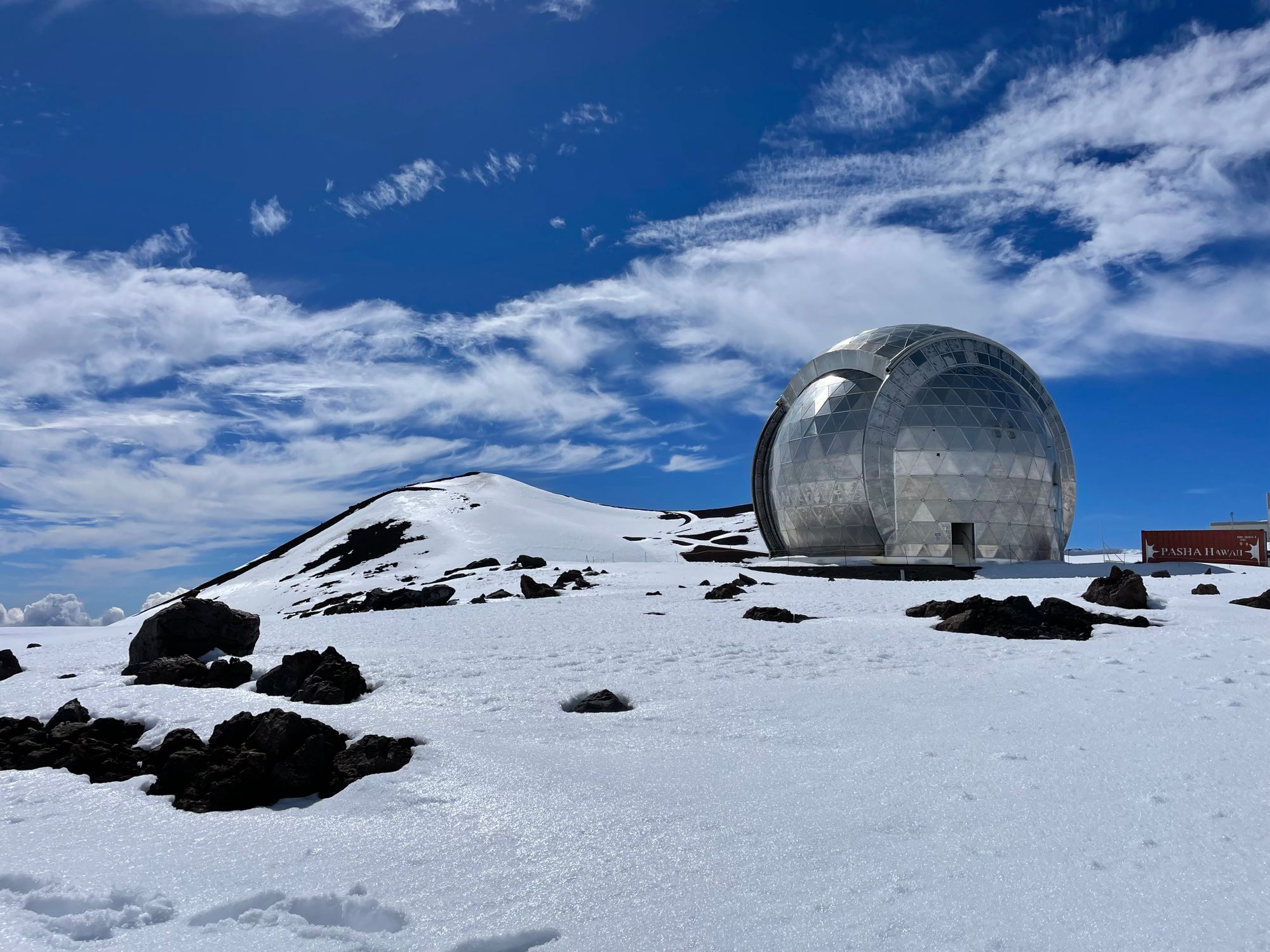
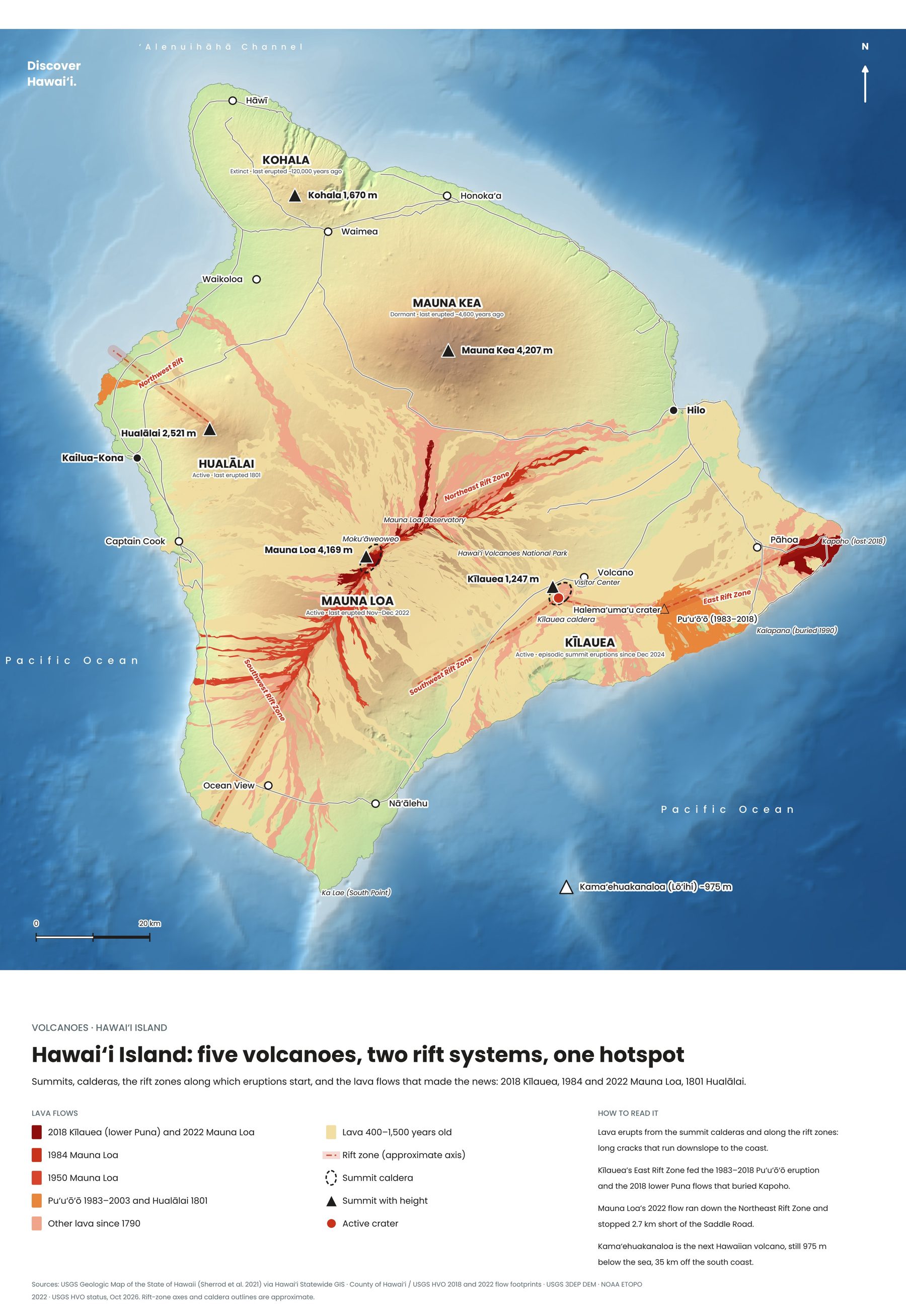
Mauna Kea, the white mountain, is the highest point in Hawaii at 4,207 metres. Measured from its base on the sea floor it is more than 10,000 metres tall, taller than Everest from base to peak. In winter its summit is often capped with snow, which is how it got its name.
It last erupted roughly 4,500 years ago and is considered dormant: quiet for now, but not extinct. During the last ice age glaciers covered its summit, and the small Lake Waiau, near the top, is one of the highest lakes in the United States.
A sacred summitWākea and the stars
In Hawaiian tradition Mauna Kea is the most sacred of mountains, the realm of the gods and a place connected to Wākea, the sky father. Its upper slopes hold shrines and burial sites, and access is shaped by respect for that heritage.
The summit's dry, clear and still air also makes it one of the best places on Earth to study the night sky, and about a dozen major telescopes stand on the summit ridge. The balance between science and the mountain's sacred status has been debated for decades, and management is now shared with a state authority that includes Native Hawaiian voices.
Going up Mauna KeaAltitude, roads and stargazing
The Onizuka Center for International Astronomy visitor station sits at about 2,800 metres, and is the place to stop, acclimatise and, on many evenings, look through telescopes. Above it the road climbs steeply to the summit, and a four-wheel-drive vehicle is required.
Altitude sickness is a real risk at over 4,000 metres: children under 13, pregnant visitors and people with heart or lung conditions are advised not to go to the summit, and divers must wait at least 24 hours after diving. Check the road and weather status before you leave, as snow and ice can close the summit.