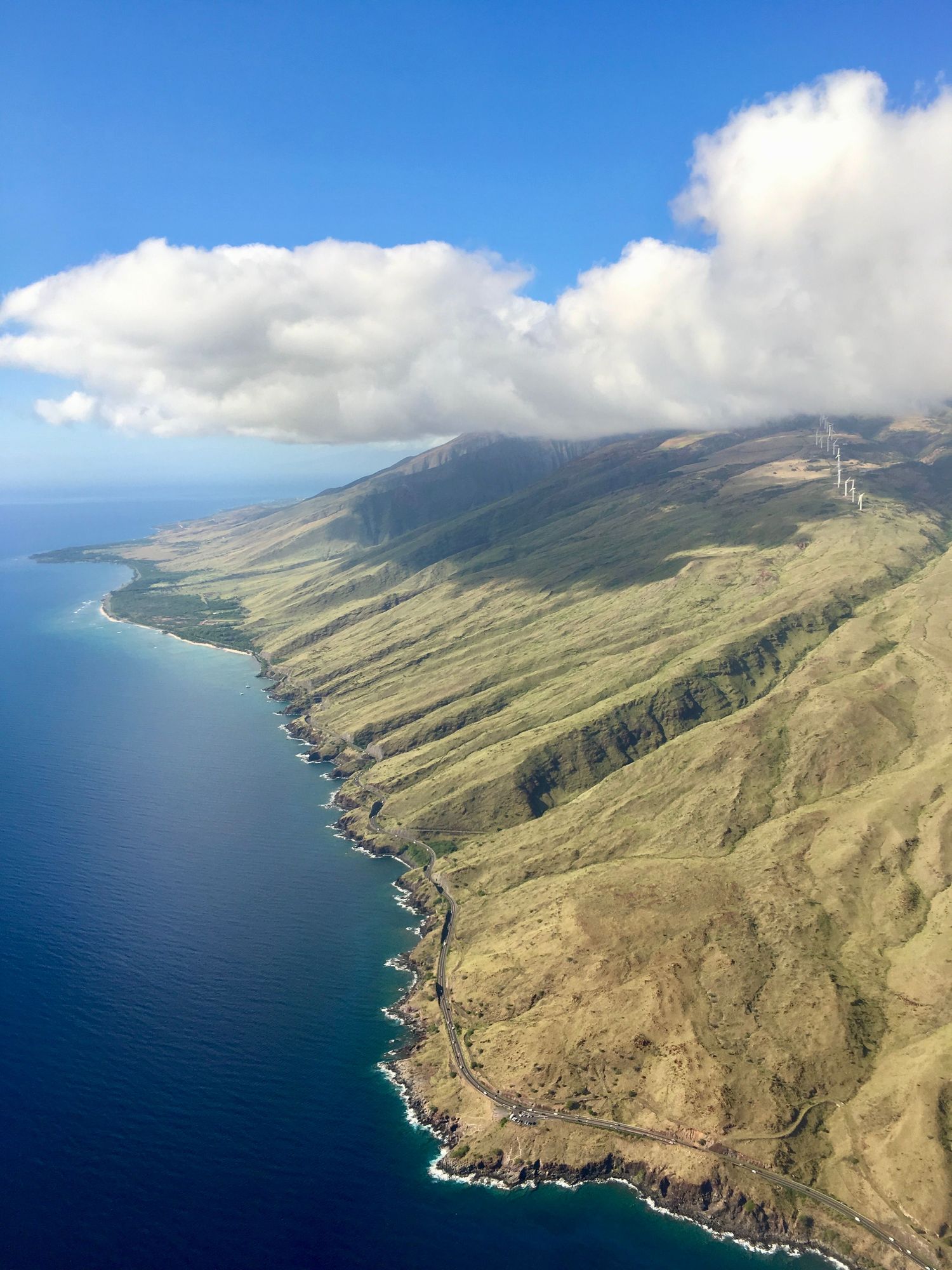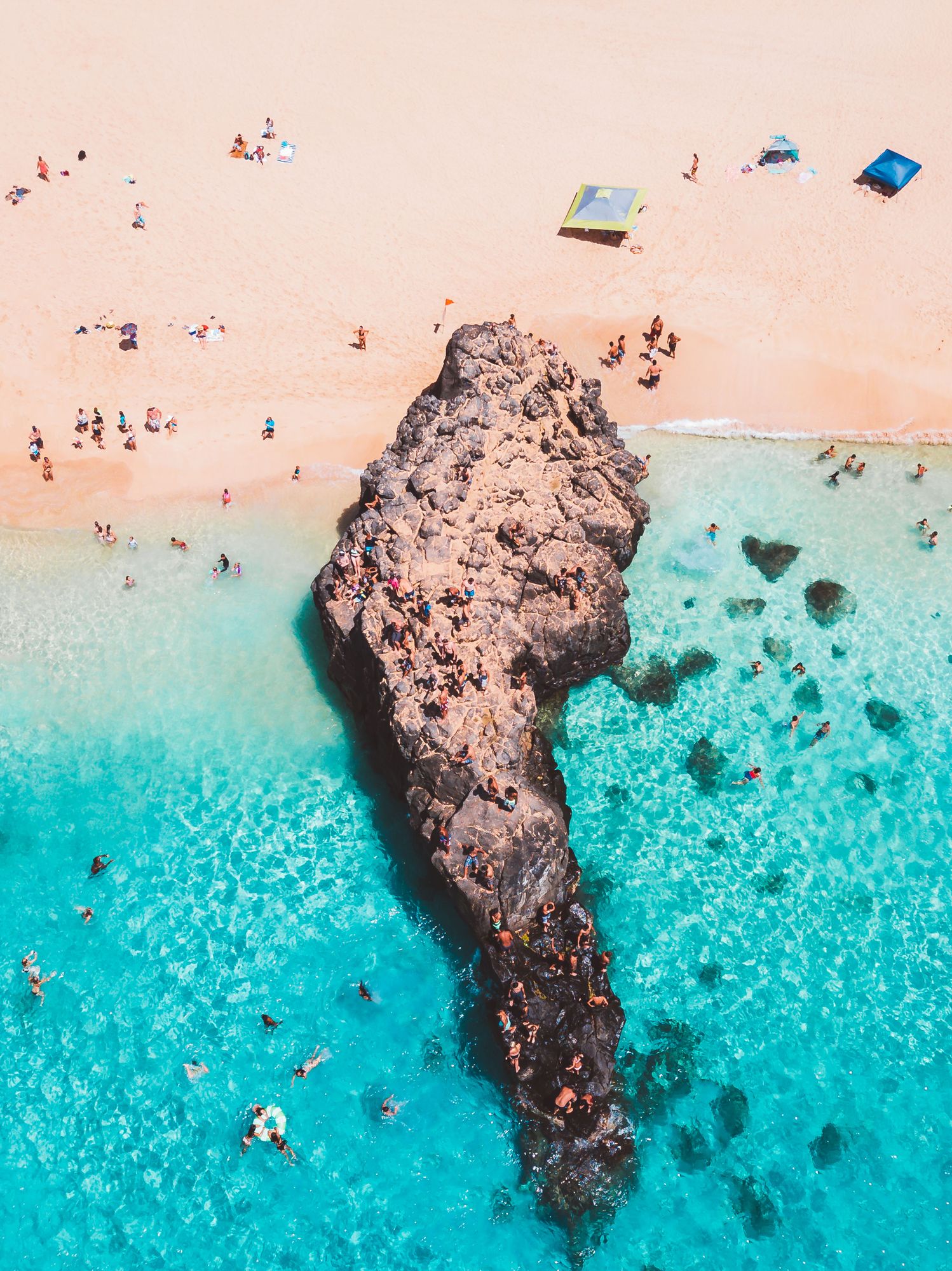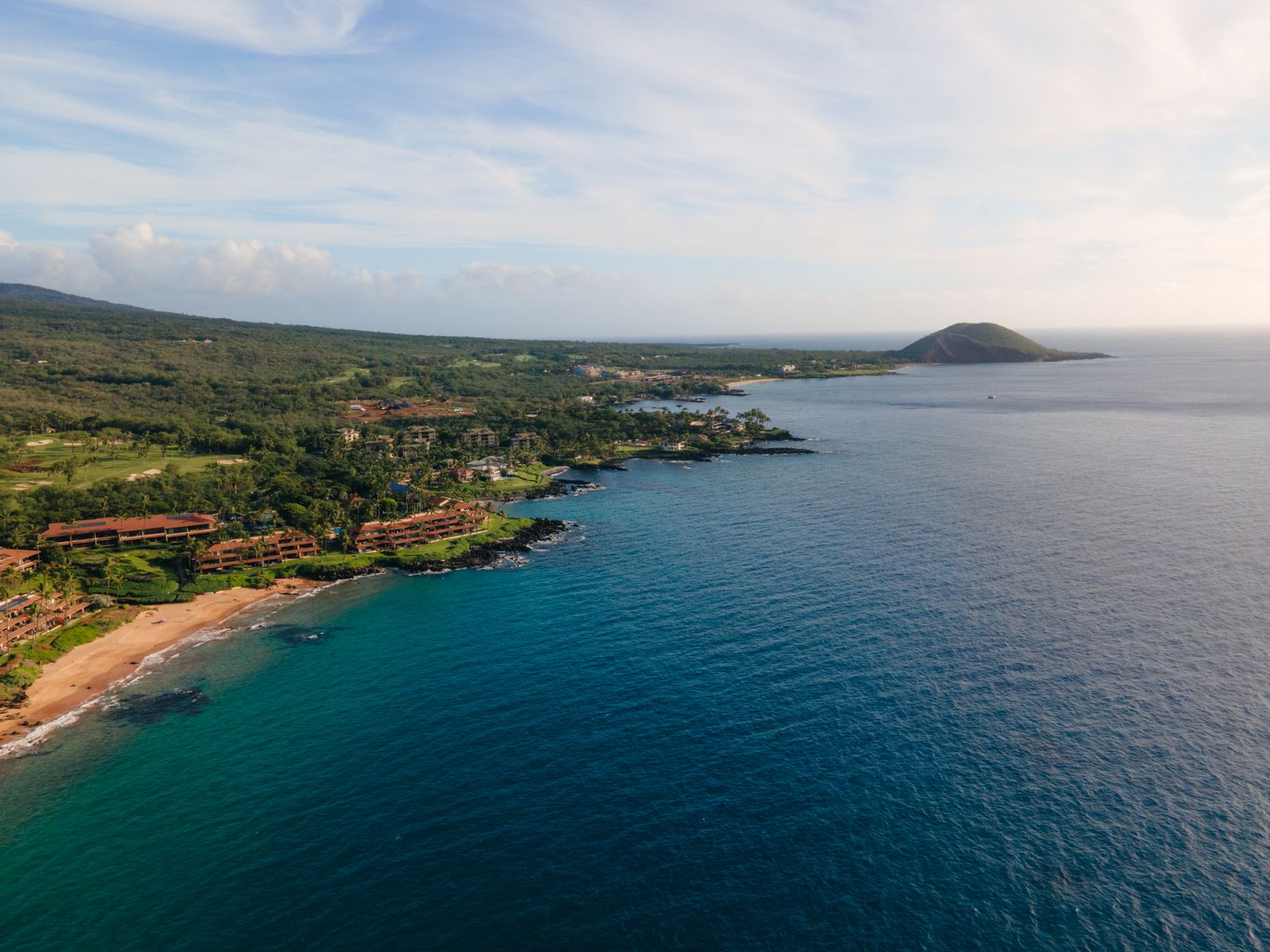
A drowned volcanic crescent in the channel off Mākena, with some of the clearest water in Hawaiʻi. How to see Molokini well, and how to leave it as you found it.
Morning in the crescent
The boat leaves Māʻalaea in the half-light, and by the time the coffee is finished Haleakalā is glowing pink behind you. Ahead, a thin crescent of rock rises out of the channel. The captain slips onto a mooring inside the curve, the engines go quiet, and over the side the water is so clear you can count the fish on the reef far below.
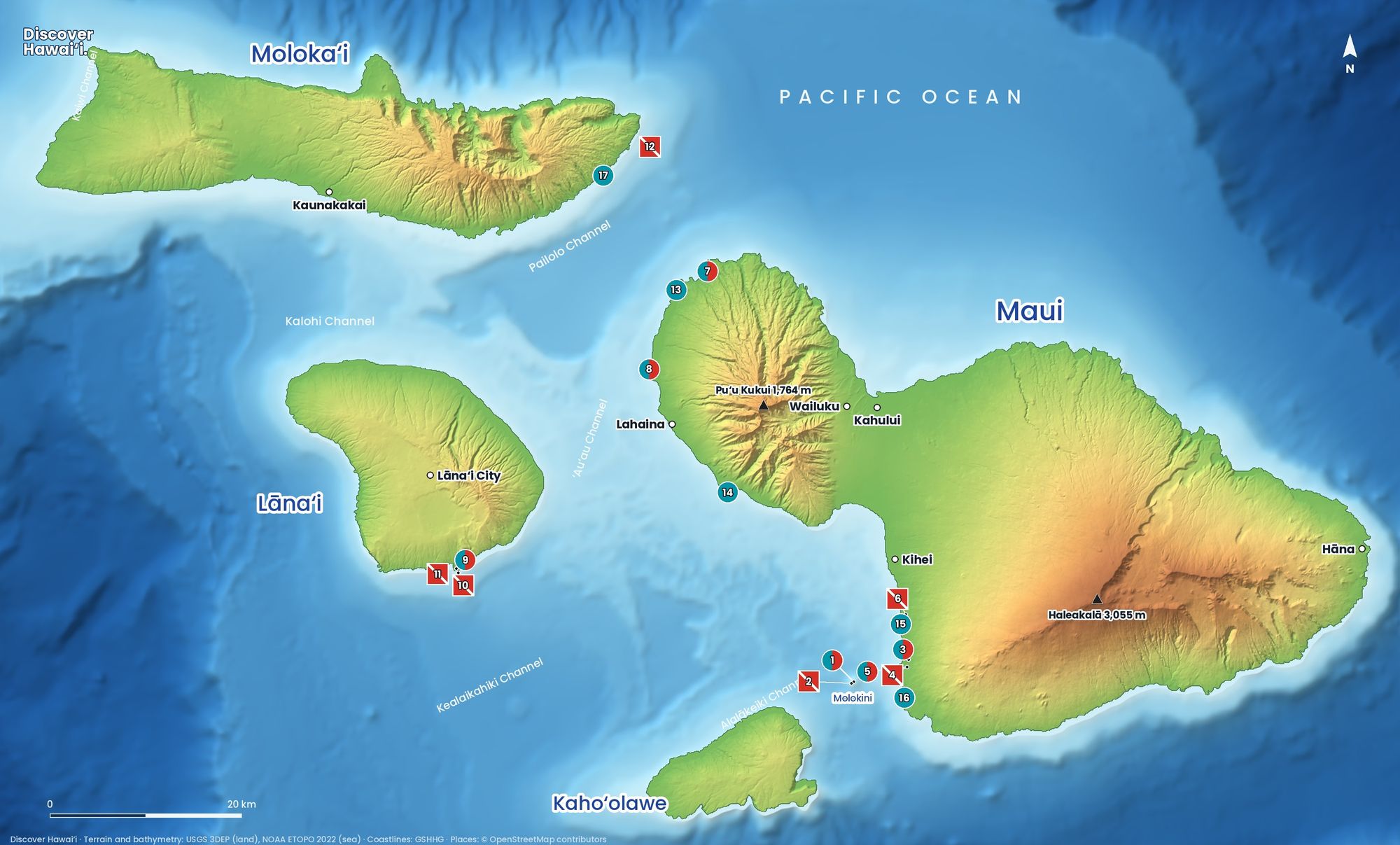
Molokini is the most famous snorkel trip in Hawaiʻi, and on a calm morning it deserves the fame. It is also a small, heavily used and strictly protected place. This guide explains how it formed, which tour to choose, when to go and what the rules ask of you.
What Molokini is
Molokini is the rim of a volcanic tuff cone, built by an explosive eruption in shallow water roughly 230,000 years ago, when Maui, Molokaʻi, Lānaʻi and Kahoʻolawe were joined as one large island geologists call Maui Nui. Most of the crater has since been drowned and eroded, leaving a crescent about 600 m (0.4 miles) across, around 9 ha (23 acres) of land and a high point of roughly 49 m (161 ft). The curved rim shelters the water inside the crescent from much of the open-ocean swell, which is why snorkelling inside is usually so calm.
In one Hawaiian tradition Molokini was a woman cut in two by a jealous Pele; her head became Puʻu Ōlaʻi, the cinder cone at Mākena. The islet had a harder time in the 20th century. The US Navy used it for target practice during the Second World War, and detonations of old munitions in 1975 and 1984 destroyed large areas of coral. Protection since then has allowed the reef inside the crater to recover strongly. Our volcanoes page explains how Maui Nui was built.
What you will see
Around 250 species of fish have been recorded at Molokini, from yellow tang and butterflyfish to Moorish idols, parrotfish, triggerfish (including the state fish, the humuhumunukunukuāpuaʻa) and the occasional whitetip reef shark resting on the sand. Inside the crater the bottom lies about 6 to 15 m (20 to 50 ft) down, which is perfect for snorkellers on the surface. On the best days visibility can reach 45 m (150 ft), far clearer than most shore reefs on Maui.
Outside the rim, the famous Back Wall drops away to about 90 m (300 ft). It is a spectacular drift dive and snorkel, but currents there can be strong, so it is only for confident swimmers on tours that run it as a supervised drift. Above water, look for ʻuaʻu kani (wedge-tailed shearwaters), which use the islet, and ʻiwa (frigatebirds) gliding overhead. In winter, December to April, humpback whales are often seen on the crossing; see our whale watching guide.
Choosing a Molokini tour
The only legal way to Molokini is by boat, and most trips leave from Māʻalaea Harbour or the boat ramp in Kīhei. Broadly, you choose between:
- Large catamarans from Māʻalaea: stable, with shade, toilets, food and slides. Best for families and anyone prone to seasickness.
- Small boats and rafts, mostly from Kīhei: shorter crossings, fewer people, often an earlier arrival, but bumpy and with little shade.
- Dive boats: for certified divers, or introductory dives with an instructor.
Good operators give a clear safety and reef briefing, provide flotation vests, keep a lookout in the water and will change the plan when conditions turn. A typical half-day trip lasts four to five hours, with Molokini first and a second stop along the South Maui coast. Book a day or two ahead in quiet months and further ahead around holidays and in summer.
Tips for first-time snorkellers
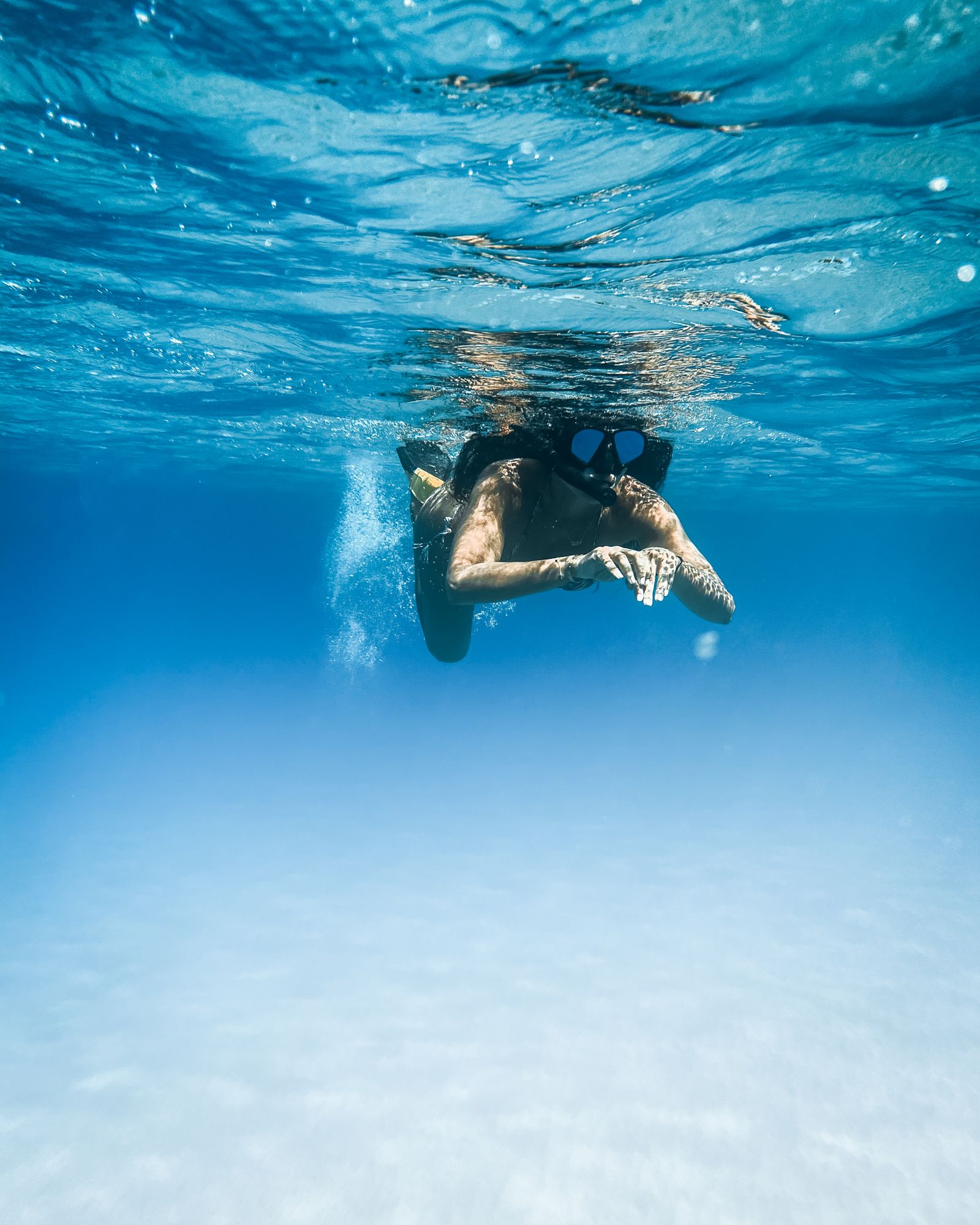
Molokini is a good place to learn, because the water inside the crater is usually calm, clear and deep enough that you will not kick the coral. A few habits make the trip far better:
- Test your mask on the boat. Push out the air with your nose; if it stays stuck to your face without the strap, it fits. Ask the crew for a different size if not.
- Use the vest. A flotation vest lets you float face-down without effort, and it is no admission of weakness: plenty of strong swimmers wear one.
- Float, don't stand. There is nowhere to stand at Molokini, and standing on coral kills it.
- Keep the boat in sight and swim with a buddy. Crews often fly a flag or blow a whistle when it is time to return.
- Bring a rash guard or light wetsuit top, a towel, a dry layer for the ride back, and a waterproof bag for your phone.
Children who have practised in a pool usually love it. If someone in your group is nervous, ask about a boat with a ladder or a platform at water level, and let them hold a noodle or a crew member's float ring for the first swim.
When to go and conditions
Go early. On most days the water is calmest and clearest in the first hours after sunrise, before the trade winds funnel through the channel between Haleakalā and the West Maui mountains. By late morning, wind and chop often build, and afternoon trips may not get inside the crater at all; some go only to the coast instead. Summer brings the steadiest trades; winter can bring calmer mornings broken by storms and big swells. Operators cancel or reroute in poor conditions, which is a good sign, not a nuisance.
The channel is open ocean. Wear a flotation vest if you are not a strong swimmer, stay close to the boat and your group, and tell the crew if you feel tired or cold. If you are prone to seasickness, take medication before you board. Read our Hawaiʻi ocean safety guide before your trip.
The rules, and why they matter
As of October 2026 the waters around Molokini form the Molokini Shoal Marine Life Conservation District, established in 1977, and the islet is a State Seabird Sanctuary. In practice that means:
- No landing. Nobody may go ashore on Molokini.
- No fishing or collecting. Taking or harming marine life is banned; the only exception is trolling in the outer zone.
- No feeding the fish. It changes their behaviour and damages the reef.
- Do not touch, stand on or take coral, rock or sand.
- Moorings, not anchors. Commercial boats need permits and must use the day-use moorings.
Bring the right sunscreen. Hawaiʻi bans the sale of sunscreens containing oxybenzone and octinoxate, and Maui County's own ordinance, in force since 1 October 2022, goes further and allows only mineral sunscreens. Better still, wear a rash guard. For context on how Hawaiʻi protects its reefs, see our guide to marine protected areas in Hawaiʻi.
Turtle Town and other combinations
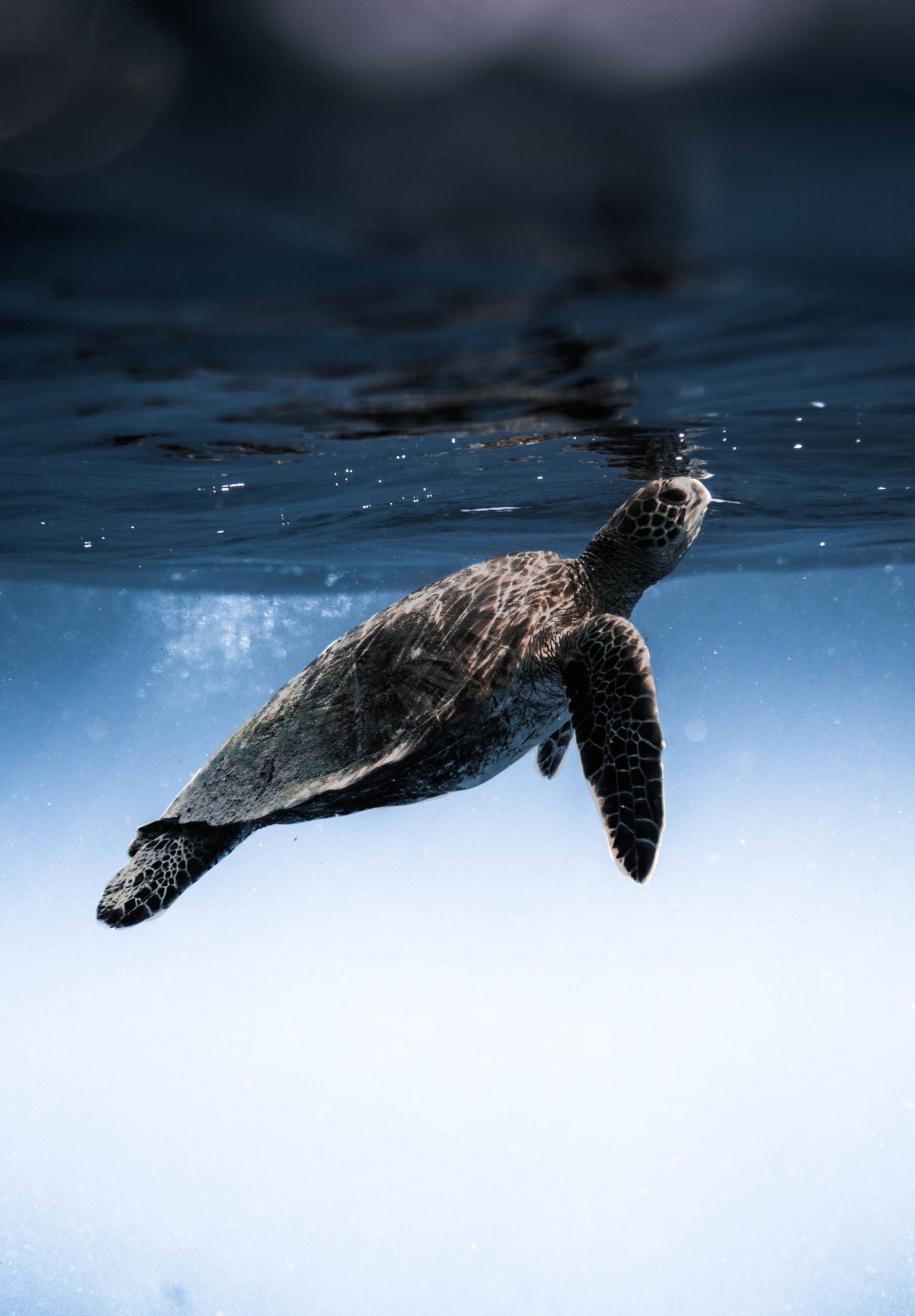
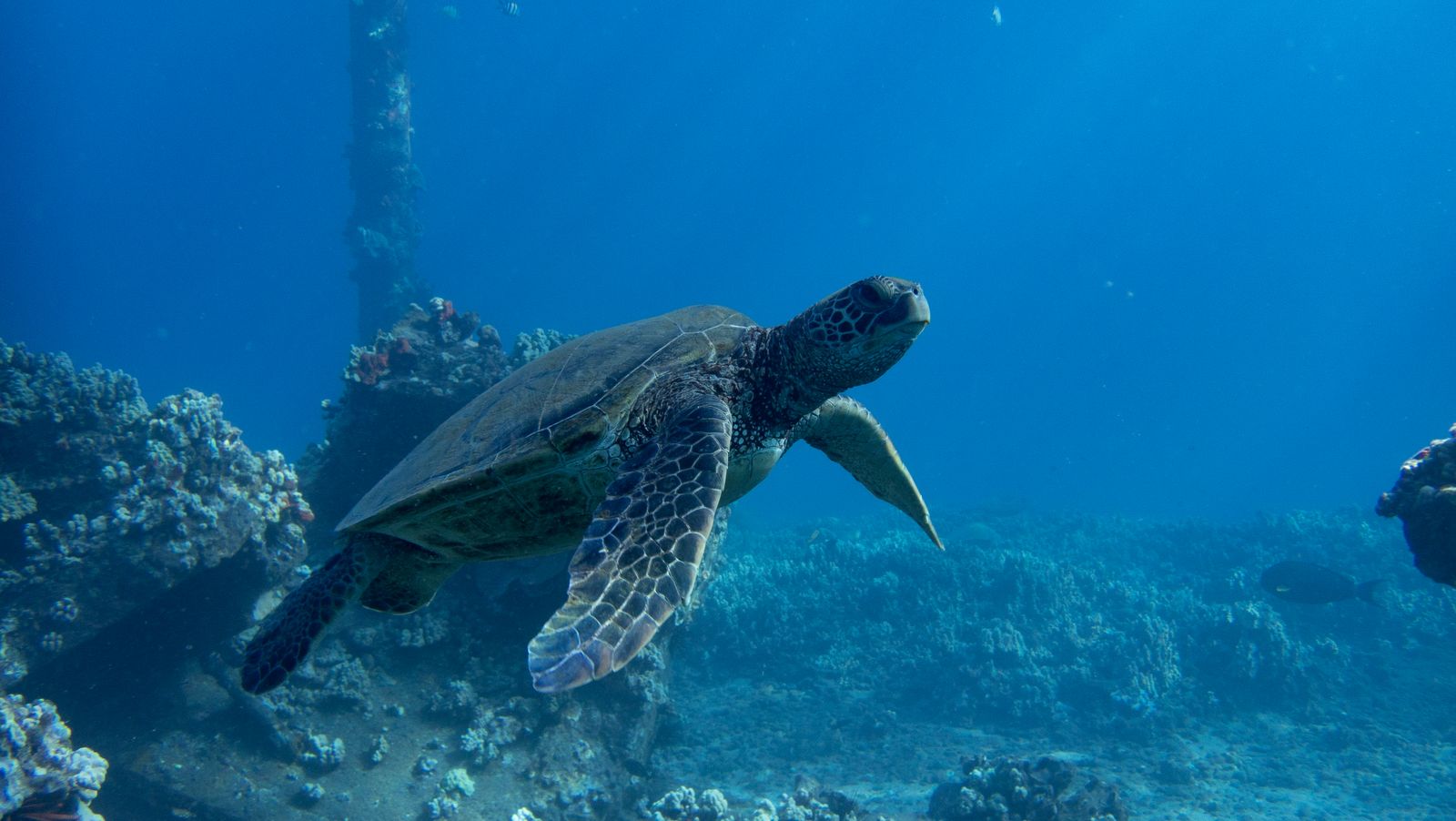
Most Molokini trips add a second stop off the South Maui coast, often at the reefs between Mākena and Wailea nicknamed Turtle Town, where green sea turtles (honu) gather to feed and to be cleaned by reef fish. They are protected by law. Give them at least 3 m (10 ft) of space, never touch or chase them, and never block one that is heading up to breathe.
Back on land, Mākena's Big Beach and the cinder cone of Puʻu Ōlaʻi are close by, and the Maui snorkelling and diving map shows good shore entries for another day. For the rest of the island, see things to do on Maui and our Road to Hāna guide. If turtles are the highlight of your trip, our guide to where to see sea turtles in Hawaiʻi has more.
Quick answers
Is Molokini worth it for snorkelling?
On a calm morning, yes: the water is often far clearer than at Maui's shore reefs and the fish life is outstanding. On windy days, ask whether the boat will actually get inside the crater.
Can you go on Molokini island?
No. Molokini is a State Seabird Sanctuary and landing is prohibited. You can only snorkel or dive around it from a permitted boat.
What is the best time to snorkel Molokini?
Early morning. Most days the water is calmest and clearest soon after sunrise, before the trade winds pick up in the channel.
How deep is the water at Molokini Crater?
Inside the crater the reef is mostly about 6 to 15 m (20 to 50 ft) deep. Outside, the Back Wall drops to around 90 m (300 ft).
Can you swim to Molokini from Maui?
It is not a practical or safe swim for visitors. It lies about 4 km (2.5 miles) offshore across an open, windy channel. Go on a licensed boat tour.
Facts checked October 2026. Reservations, fees, opening hours and trail or road closures change often in Hawaii, so confirm with the official source before you go.
- Molokini Shoal Marine Life Conservation District (Hawaiʻi DLNR Division of Aquatic Resources)
- Maui Offshore Islet Seabird Sanctuaries (Hawaiʻi DLNR Division of Forestry and Wildlife)
- Molokini (Wikipedia)
- BLNR to consider ocean stewardship user fee, Molokini MLCD rules (Maui Now)
- Maui County's sunscreen ordinance takes effect on Oct. 1 (Maui Now)
- Maui County Council passes bill prohibiting non-mineral sunscreens (Hawaiʻi DLNR)