Few things in Hawaii beat watching a honu glide over the reef or doze on warm sand. This guide covers the best beaches for turtle spotting on four islands, what makes Hawaii's turtles unusual, and the simple rules that keep both you and them out of trouble.
What kind of sea turtles live in Hawaii?
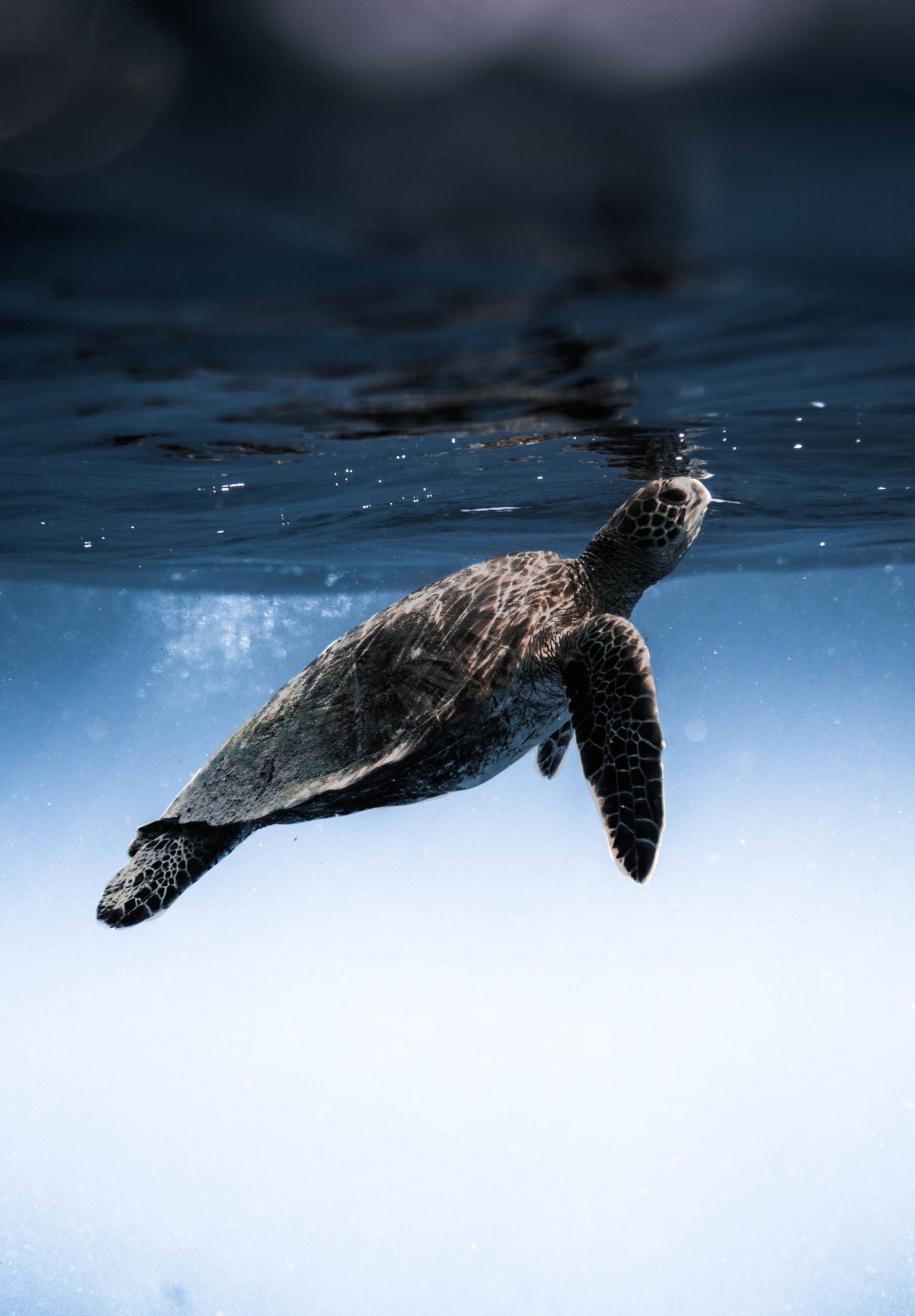
The turtle you are almost certain to meet is the Hawaiian green sea turtle, or honu. It is a resident population: these turtles stay within the Hawaiian archipelago rather than roaming the wider Pacific, and they feed mostly on algae and seagrass on nearshore reefs.
Adults reach roughly 90 to 120 cm (3 to 4 ft) in shell length and can weigh more than 160 kg (350 lb). They mature slowly, at around 25 to 35 years, and can live 70 years or more.
| Species | Hawaiian name | Federal status | How often you'll see one |
|---|---|---|---|
| Green sea turtle (Central North Pacific population) | Honu | Threatened | Common on reefs and some beaches |
| Hawksbill sea turtle | Honuʻea | Endangered | Rare |
Both species are also protected under Hawaii state law, so the same rules apply whether you are on a county beach park or a remote stretch of coast.
Are Hawaiian green sea turtles still endangered?
Hawaii's honu are listed as threatened, not endangered. In 2016 NOAA Fisheries and the U.S. Fish and Wildlife Service split green turtles worldwide into distinct population segments, and Hawaii's turtles became the Central North Pacific population, listed as threatened under the Endangered Species Act.
The recovery story is real. Hunting was banned when green turtles were first listed in 1978. According to Hawaii's Division of Aquatic Resources, nesting has grown about 5% a year since the 1970s, from 67 nesting females counted in 1973 to nearly 500 a year today.
That progress depends on protection continuing, which is why the viewing rules further down matter.
Why do sea turtles lie on the beach in Hawaii?
Seeing a large turtle asleep on the sand surprises most visitors, and it should. Hawaii is one of only a handful of places in the world where green turtles regularly haul out to bask. NOAA Fisheries says they come ashore to rest, regulate body temperature, save energy and avoid predators such as tiger sharks.
A basking turtle can look motionless or even dead. It almost certainly isn't. Let it sleep, keep your distance and don't try to "help" it back into the water.
Where do Hawaiian green sea turtles nest?
Not where most people expect. About 96% of Hawaiian green turtles nest at French Frigate Shoals (Lalo), a remote atoll in the Northwestern Hawaiian Islands inside Papahānaumokuākea Marine National Monument. Adults swim hundreds of kilometres from their feeding grounds in the main islands to lay eggs there.
Lalo is a reminder of how fragile that system is. In October 2018 Hurricane Walaka hit the atoll, and satellite images afterwards showed East Island, one of its most important nesting islets, largely under water. State biologists reported that it had still not fully recovered by 2023. Sea-level rise and stronger storms are now counted among the main threats to the population.
A small amount of nesting does happen on the main islands. Hawaii's nesting season runs from mid-April to November, sometimes into December, so keep beach lights and fires to a minimum during those months and never drive on beaches where turtles may nest. Tyres crush nests, and ruts can trap hatchlings.
Can you see hawksbill turtles in Hawaii?
Rarely. The hawksbill, or honuʻea, is listed as endangered, and NOAA Fisheries estimates that fewer than 15 females nest each year across the whole archipelago. A 30-year NOAA study found most nesting takes place on a few beaches along the southern coast of Hawaiʻi Island, with some on Molokaʻi and other islands.
You can tell a hawksbill by its narrow, pointed beak, which it uses to pick sponges out of the reef. If you spot one, note the place and time and take a photo from a respectful distance. Hawaii's Division of Aquatic Resources asks that hawksbill sightings be reported to the NOAA Marine Wildlife Hotline.
Where is the best place to see sea turtles in Hawaii?
Honu live around every main island, so you can see them on almost any healthy reef. These beaches are well known for basking turtles:
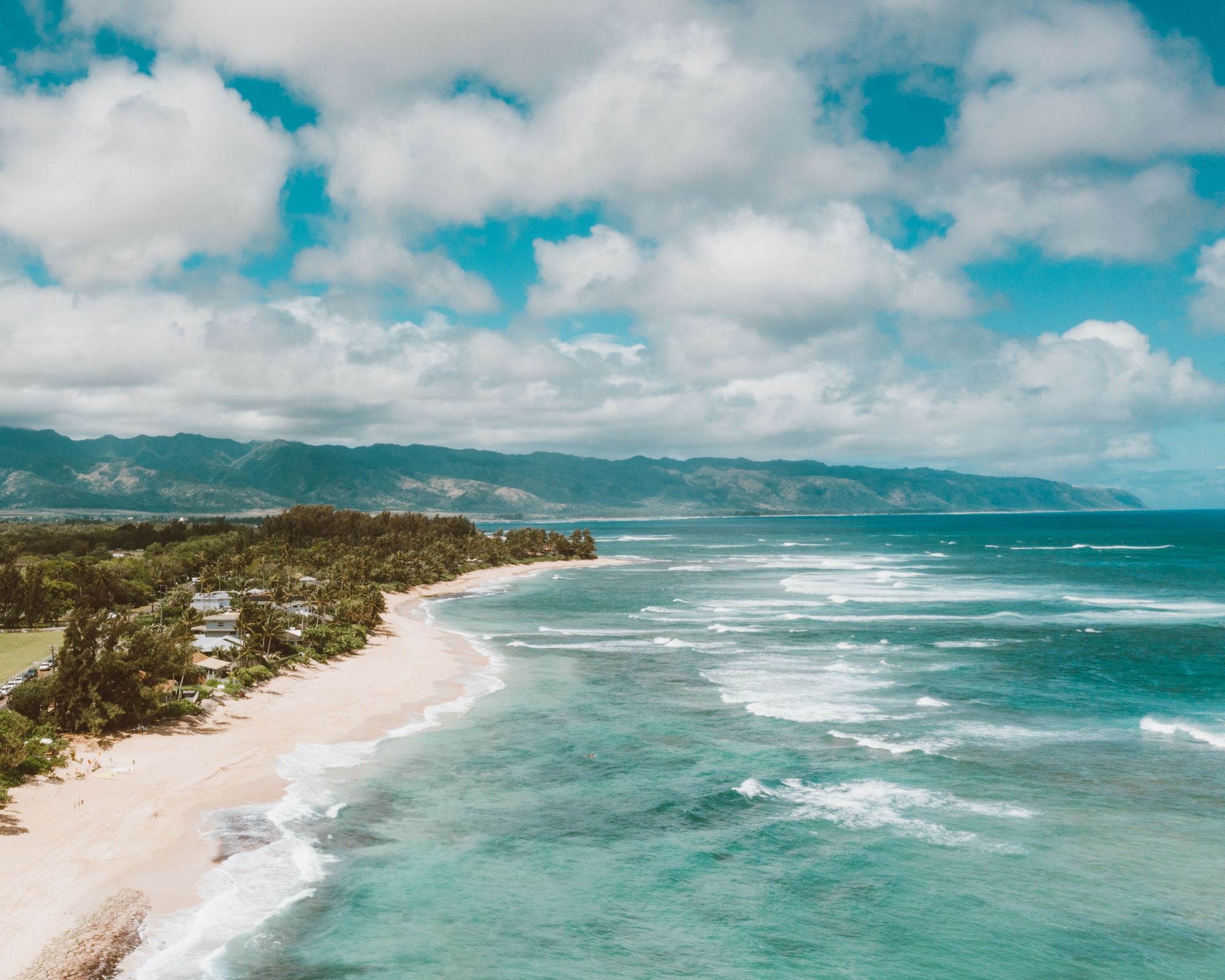
- Laniākea Beach, Oʻahu: The most famous turtle beach on the North Shore. NOAA Fisheries has documented 35 individual turtles basking here since 1999, with zero to four on a typical day. Volunteers from Mālama nā Honu are on the beach from 10 a.m. to sunset and will tell you the turtles' names and stories. Traffic is a known problem here, so park only in legal spots.
- Punaluʻu Black Sand Beach, Hawaiʻi Island: On the Kaʻū coast between Pāhala and Nāʻālehu, where honu often bask on the black sand. Swimming conditions aren't ideal, and taking black sand is not allowed.
- Hoʻokipa, Maui: Known for windsurfers by day and turtles hauled out on the beach. The Maui Nui Marine Resource Council notes that turtles bask most often in the evenings and mornings, so a late-day visit to this Maui spot works well.
- Poʻipū, Kauaʻi: Turtles are regularly seen along this south-shore stretch of Kauaʻi, where Mālama nā Honu volunteers also help look after a turtle site.
For more species and wildlife spots, see our Hawaii wildlife guide.
Can you snorkel with sea turtles in Hawaii?
Yes, and it is often the highlight of a trip. On Maui, the Maui Nui Marine Resource Council lists Mākena Landing, Maluaka, Keawakapu and Ulua in the south, and Puʻu Kekaʻa (Black Rock), Kapalua Bay and Honolua Bay in the west as good places to look.
A few habits make the encounter better for you and the turtle:
- Float, don't chase. Turtles come up to breathe. Never block a turtle's path to the surface or swim above it.
- Never surround or corner one. If you're in a group, stay on one side.
- Use your zoom. A wide-angle camera gets a great shot from 3 m (10 ft).
- Protect the reef. Wear mineral sunscreen and don't stand on coral, which is the turtles' food source.
How close can you get to a sea turtle in Hawaii?
NOAA Fisheries and Hawaii's DLNR recommend you stay at least 3 m (10 ft) away from sea turtles, on land and in the water. At Laniākea, NOAA has found that when people keep this distance, turtles' basking and feeding behaviour shows little or no change.
- Don't touch, feed, ride or pursue a turtle, in the water or on the sand.
- Stay behind ropes and signs where volunteers have set up a perimeter.
- Keep dogs leashed and well away from basking turtles and nesting areas.
- Never pick up a hatchling or carry it to the water.
Harassment is illegal under federal and state law. NOAA has said civil penalties under the Endangered Species Act can exceed $50,000, and criminal penalties can include fines of up to $100,000 and up to a year in prison. People have been fined simply for picking up a turtle for a photo.
If you see someone harassing a turtle, contact NOAA's Office of Law Enforcement on 1-800-853-1964 or DLNR enforcement on (808) 643-DLNR (3567).
What should you do if you find an injured sea turtle?
Call the statewide NOAA Marine Wildlife Hotline: (888) 256-9840. It covers injured, entangled, hooked and dead turtles, 24 hours a day. Save the number in your phone before you hit the beach.
If you hook a turtle while fishing, call the hotline for guidance, reel it in gently, hold it by the shell and cut the line as close to the hook as you can. Leave the hook in place. DLNR says you won't be penalised for helping reduce injury this way.
The main threats you might notice are:
- Fishing line and gear: Monofilament is especially dangerous. Pick up any you find.
- Plastics and marine debris: Turtles eat plastic and get tangled in nets.
- Fibropapillomatosis: A disease that causes tumour-like growths. DLNR reports it has declined over the past decade but is still present in Hawaii.
Want to go deeper? Our upcoming book, Discover Sea Turtles, covers honu, honuʻea and where to watch them responsibly.
Facts checked October 2026. Listing status, viewing guidance and hotline numbers come from NOAA Fisheries, the U.S. Fish and Wildlife Service and Hawaii DLNR; rules can change, so check posted signs and official sources before you go.
- NOAA Fisheries: Frequent questions about sea turtles, Pacific Islands
- Hawaii DAR: Green sea turtle
- Hawaii DAR: What should I do if I see a sea turtle?
- NOAA Fisheries: Turtles, tourism and traffic
- NOAA Fisheries: Hawksbill sea turtles are truly Hawaii locals
- NOAA Library: Hawksbill nesting in Hawaii, 30-year dataset
- Papahānaumokuākea: French Frigate Shoals bulletin, October 2018
- USFWS: Green sea turtle final listing rule (2016)