In late 1819 a young king sat down to eat with women and a religious order centuries old came to an end. The decision was Hawaiian, taken months before the first missionaries stepped ashore.
A meal at Kailua
Late in 1819, at a feast at Kamakahonu in Kailua on the Kona coast, the young king Liholiho walked over to the table where the women were eating, sat down and ate with them. Around him, chiefs and guests understood exactly what they were watching. Under the old law, that meal was punishable by death. Now it was the king's own act.
Messengers carried the news across the islands: eating was free. This was the ʻAi Noa, and it brought down the kapu system that had ordered Hawaiian life for centuries. Remarkably, it happened before a single Christian missionary had reached Hawaiʻi. The revolution was planned and carried out by Hawaiian leaders, two of them women, with the blessing of the kingdom's own high priest.
What the kapu was
Kapu means sacred or forbidden, and in old Hawaiʻi it was the framework of law and religion (more on this in daily life in ancient Hawaiʻi). It set chiefs apart from commoners, protected fishing grounds and forests, and governed the calendar of the gods.
Some of its strictest rules concerned food. Under the ʻai kapu, the sacred eating laws, men and women ate separately, and women were forbidden certain foods, among them pork, most bananas and some kinds of fish. Breaking a kapu could mean death. During mourning for a great chief, the rules lapsed, and a new ruler was expected to restore them.
By 1819 the system was under strain. Foreign sailors broke kapu openly without being struck down, epidemics had shaken faith in the gods' protection, and some aliʻi (chiefs) had begun to question rules that bound them as much as anyone.
Two women and a high priest
Kamehameha the Great died at Kamakahonu on 8 May 1819 (see Kamehameha the Great). His son Liholiho, about 22, became Kamehameha II. Kaʻahumanu, the late king's favourite wife, announced that Kamehameha had wanted her to share the government, and the chiefs created a new office for her: kuhina nui, a co-ruler with real executive power.
Liholiho intended to restore the kapu. But Kaʻahumanu, his mother Keōpūolani, who was the highest-ranking chief in the islands, and the high priest Hewahewa pressed him to let it go. He reportedly spent two days drifting offshore in a canoe before making up his mind. After the meal at Kailua, Hewahewa ordered temple images burned and heiau (temples) dismantled, though family guardian gods, the ʻaumākua, were spared.
Not everyone accepted the change. Kamehameha's nephew Kekuaokalani, keeper of the war god, rallied priests and chiefs to defend the old religion. In December 1819 royal forces under Kalanimōkū met the rebels at Kuamoʻo, south of Kailua. More than 300 people died, among them Kekuaokalani and his wife Manono, who fought beside him. Their stone burial mounds at Lekeleke are listed on the National Register of Historic Places.
The brig Thaddeus
Meanwhile a mission was on its way, and it too had Hawaiian roots. Henry ʻŌpūkahaʻia, a young man from Kaʻū, had sailed to New England in 1807, become a Christian and inspired a school for foreign missionaries in Connecticut. He died of typhus in 1818, but his published memoir moved others to go to his homeland.
On 23 October 1819 the first company of the American Board of Commissioners for Foreign Missions sailed from Boston aboard the brig Thaddeus, led by the ministers Hiram Bingham and Asa Thurston, with their wives, a doctor, teachers, a farmer, children and four young Hawaiians. After rounding Cape Horn they reached Kawaihae on 30 March 1820, and learned that the kapu had already fallen.
On 4 April 1820 they anchored off Kailua. Liholiho, backed by Kaʻahumanu, gave them permission to stay on trial. The Thurstons remained in Kailua and the Binghams went on to Honolulu. It was the beginning of a long mission period: over the following decades the American Board sent many more companies of ministers, teachers, doctors and printers to the islands.
A kingdom learns to read
The missionaries' first printing in Hawaiʻi came off the press in Honolulu on 7 January 1822. Working with Hawaiian scholars, they shaped an alphabet for ʻōlelo Hawaiʻi, the Hawaiian language, and in 1826 voted to keep one letter for each sound, choosing p over b, l over r and k over t. That is why the word for prayer is written pule.
Literacy spread with astonishing speed, carried by chiefs who embraced it as a new form of mana. Lahainaluna Seminary opened on Maui in 1831 with 25 students, among them the future historian David Malo. Its press printed the first Hawaiian-language newspaper, Ka Lama Hawaiʻi, in 1834, and the complete Bible appeared in Hawaiian in 1839. By the middle of the century Hawaiʻi was often described as one of the most literate nations on Earth, and an 1853 government report claimed that three-quarters of adults could read.
Today that legacy lives on in thousands of pages of Hawaiian-language newspapers and manuscripts, a treasure for anyone tracing Hawaiian history in Hawaiian words.
Faith, power and suppression
The new religion spread fastest from the top. Keōpūolani was baptised as she was dying at Lahaina in September 1823, the first high chief to convert. Liholiho sailed for Britain that November and died of measles in London in July 1824, days after his queen, Kamāmalu. His young brother Kauikeaouli became Kamehameha III, with Kaʻahumanu as regent.
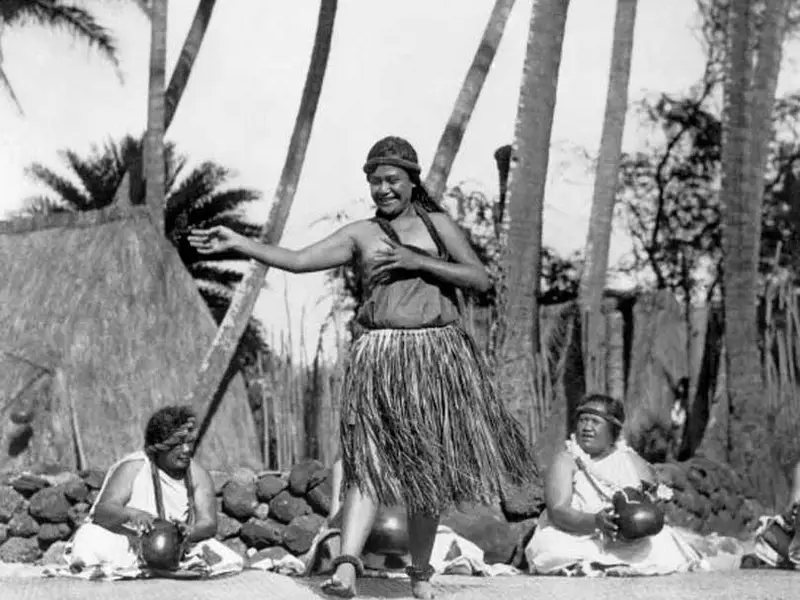
Kaʻahumanu herself was baptised in 1825 and used her power to promote Christian laws. The mission years brought schools and printing presses, but also suppression. In 1830 she forbade Catholic teaching and banned public hula performances, which survived in private and in the countryside until King Kalākaua brought them back to court (see the history of hula).
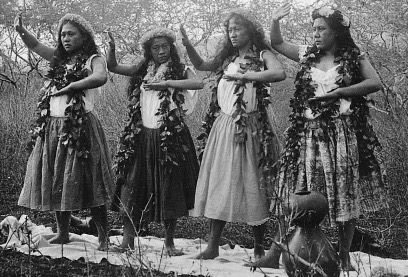
Political change followed. In 1839 a Declaration of Rights promised protection to chiefs and people alike, and an Edict of Toleration allowed Catholic worship. On 8 October 1840 Kamehameha III signed the kingdom's first constitution, which created a House of Nobles and an elected House of Representatives. In barely twenty years Hawaiʻi had moved from sacred law to written law. Whether one sees this era chiefly as enlightenment or as loss, and many Native Hawaiians see both, its effects run through everything that followed.
Where to see this era today
- Kamakahonu and ʻAhuʻena Heiau, Kailua-Kona. The setting of the ʻAi Noa and of the missionaries' landing, beside Kailua Pier. A short walk along Aliʻi Drive, Mokuʻaikaua Church traces its congregation to the Thurstons' arrival in 1820.
- Kawaiahaʻo Church, Honolulu. Dedicated on 21 July 1842 and built from about 14,000 slabs of reef coral, it still holds services in Hawaiian and English. King Lunalilo is buried in the churchyard.
- Hawaiian Mission Houses Historic Site, 553 South King Street, Honolulu. The 1821 Frame House, the oldest surviving wood-frame building in Hawaiʻi, was cut in Boston and shipped round Cape Horn. The Print House tells how missionaries and Hawaiian printers produced the first books in ʻōlelo Hawaiʻi. Opening days are limited, so check before you go.
- Lahaina, Maui. The royal capital of this era was devastated by the wildfire of August 2023. The town is rebuilding, and its museums remained closed in October 2026. Visit with care and respect for residents.
Pair these with our Honolulu and Big Island guides, and the story continues in sandalwood, whaling and the Māhele. For the full account of these two decades, from Kuamoʻo to the 1840 constitution, see The History of Hawaii.
Quick answers
When did the kapu system end in Hawaii?
In late 1819, months after Kamehameha I died. Accounts usually date the ʻAi Noa, the public meal at which King Liholiho ate with women, to October or November 1819 at Kailua-Kona. Supporters of the old religion were defeated at the Battle of Kuamoʻo that December.
Who ended the kapu system?
Hawaiian leaders did. King Liholiho (Kamehameha II) made the decision under pressure from Kaʻahumanu, the kuhina nui, and his mother Keōpūolani, with the support of the high priest Hewahewa. The missionaries did not arrive until April 1820.
When did the first missionaries arrive in Hawaii?
The first company of American Protestant missionaries sailed from Boston on the brig Thaddeus on 23 October 1819, sighted Hawaiʻi Island at the end of March 1820 and came ashore at Kailua-Kona in early April 1820.
Did missionaries ban hula in Hawaii?
Public hula was banned in 1830 by the Christian convert Kaʻahumanu, then the most powerful chief in the kingdom, under missionary influence. Hula continued in private and was revived publicly by King Kalākaua in the 1880s.
Can you visit the Hawaiian Mission Houses?
Yes. The Hawaiian Mission Houses Historic Site and Archives is at 553 South King Street in downtown Honolulu, next to Kawaiahaʻo Church. It preserves the 1821 Frame House, the 1831 Chamberlain House and the Print House. Check its website for current tour days and times.
Facts checked October 2026 against the sources below and the research for our book The History of Hawaii. Dates and figures for early Hawaiian history are estimates and scholars still debate some of them.
- ʻAi Noa (Wikipedia)
- Ending the Kapu (Punahou Bulletin)
- Voyage of the Thaddeus (Images of Old Hawaiʻi)
- Hawaiian alphabet (Wikipedia)
- Lorrin Andrews and Lahainaluna (Wikipedia)
- Hawaiian Bible (Bridwell Library, SMU)
- Kawaiahaʻo Church (Hawaiʻi Tourism Authority)
- Hawaiian Mission Houses Historic Site and Archives (Wikipedia)