Before the towers, Waikīkī was a marsh of taro patches and fishponds, and a playground for Hawaiian royalty. In little more than a century it became the most famous beach in the Pacific.
11 March 1901: a hotel on the sand
On 11 March 1901 a grand white wooden hotel opened its doors on the beach at Waikīkī. The Moana had 75 guest rooms, some with private bathrooms and telephones, a rare luxury at the time. Downtown Honolulu lay a few kilometres away, across fields, ponds and coconut groves.
It was the first large hotel on a stretch of shore that, until then, had belonged to fishermen, farmers and chiefs. Within a lifetime, those fields and ponds would vanish beneath streets and hotels. The story of how that happened is the story of modern Hawaiʻi in miniature.
Spouting waters: the wetlands of Waikīkī
The name Waikīkī is usually translated as "spouting waters". It describes what the place once was: a broad, marshy plain, around 800 ha (some 2,000 acres) in extent, fed by streams running down from the Makiki, Mānoa and Pālolo valleys and by springs bubbling up from the ground.
Hawaiians turned that water into food. They shaped the marsh into loʻi kalo (irrigated taro patches) and loko iʻa (fishponds), the kind of carefully managed system described in our guide to daily life in ancient Hawaii. In the nineteenth century many patches were converted to rice paddies and duck ponds. Waikīkī was one of the most productive districts on Oʻahu, not a beach resort.
A playground for chiefs and kings
Waikīkī was also a seat of power. Tradition credits the Oʻahu ruler Kākuhihewa, in the seventeenth century, with planting a great grove of coconut palms at Helumoa, where the Royal Hawaiian Hotel now stands. When Kamehameha conquered Oʻahu in 1795 (see Kamehameha the Great), his war canoes landed along this shore, and he lived at Helumoa at times until about 1809, before moving his court to Honolulu.
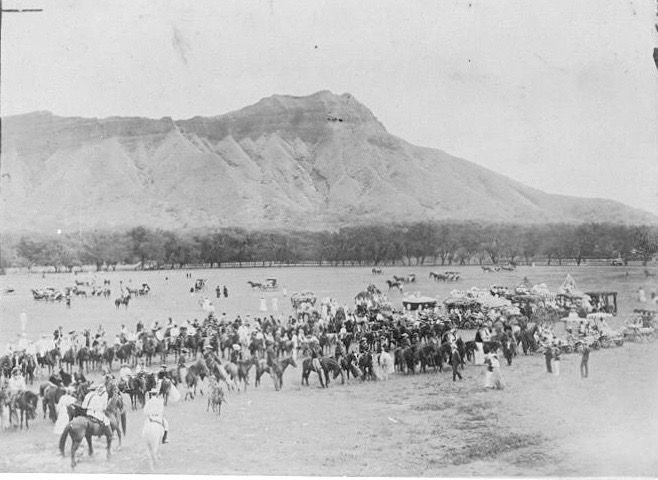
Later monarchs kept coming back for the surf and the sea breeze. Kamehameha V used Helumoa as a summer retreat, and Princess Bernice Pauahi Bishop spent her last months there in 1884. King Kalākaua kept a beach house, and on Kamehameha Day, 11 June 1877, he dedicated some 80 ha (200 acres) at the foot of Diamond Head as Kapiʻolani Park, named after his queen.
Nearby lay ʻĀinahau, the 4 ha (10 acre) estate of Princess Kaʻiulani, heir to the throne. Peacocks roamed its gardens, and the writer Robert Louis Stevenson visited her there in 1889. After the monarchy fell, Kaʻiulani returned to ʻĀinahau, where she died on 6 March 1899, aged 23.
The first hotels and the first visitors
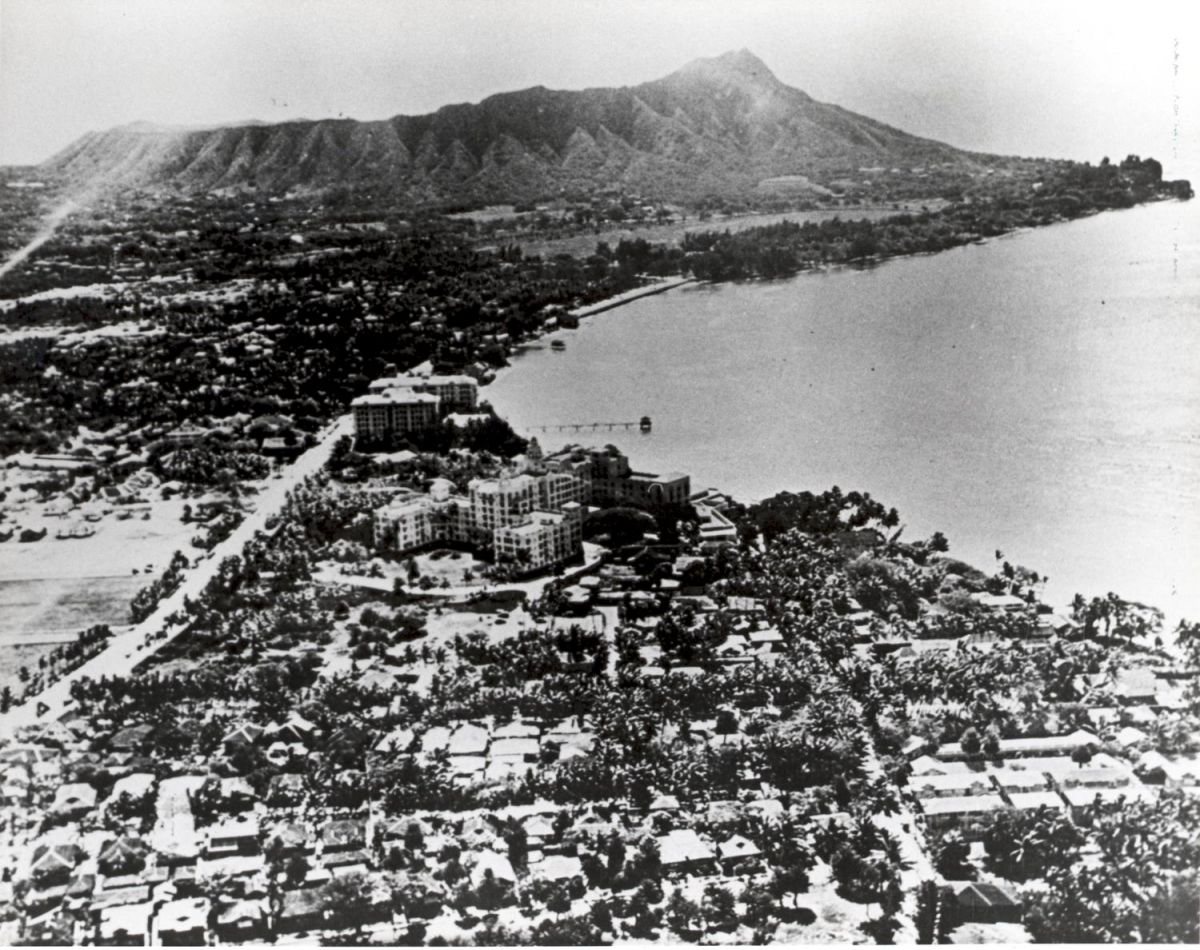
By the 1880s a few modest bathhouses and guest cottages had appeared, and in 1893 Stevenson stayed at the Sans Souci, one of the first true beach resorts. After the Moana opened in 1901, Waikīkī's fame spread quickly. The banyan tree planted in its courtyard in 1904 still shades guests today.
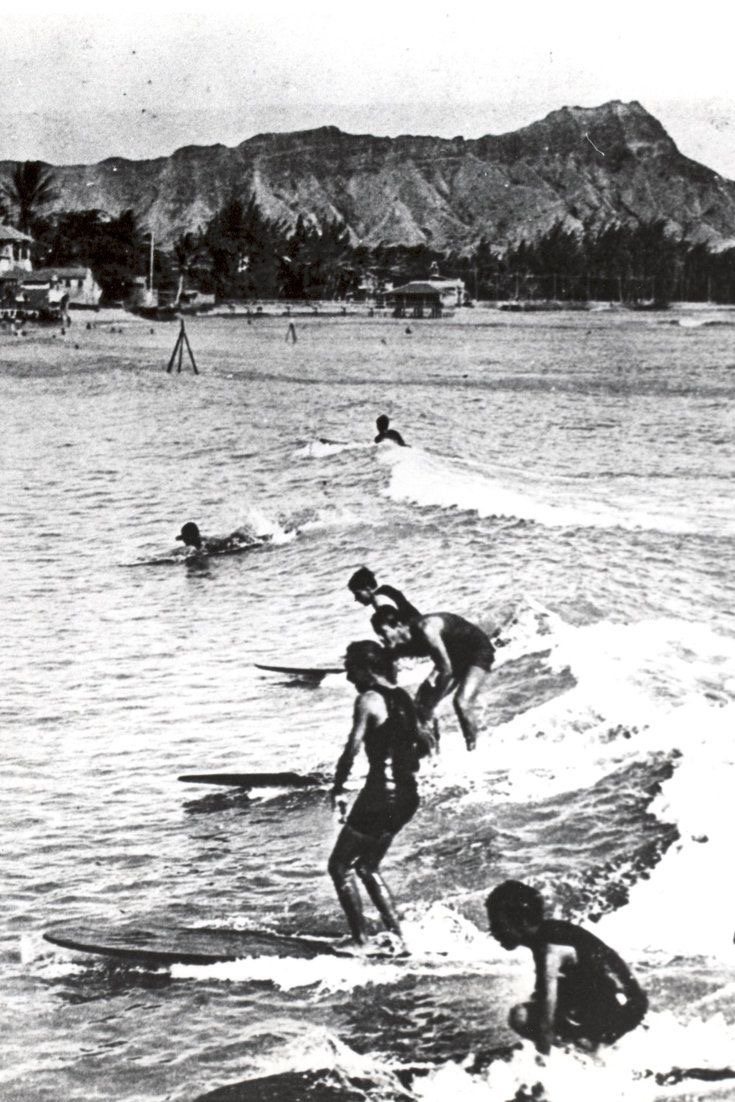
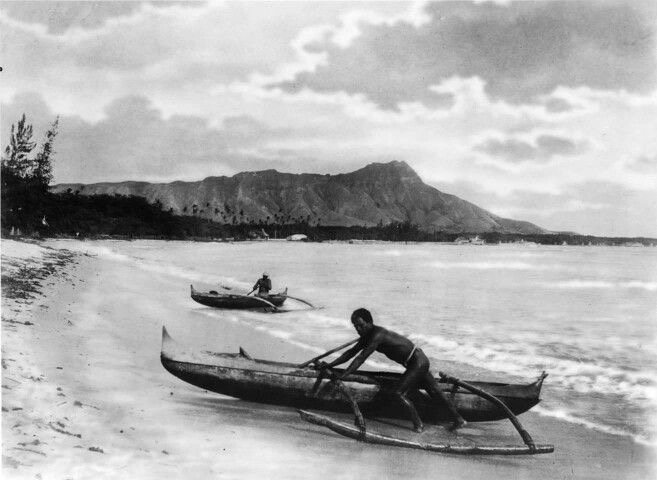
Visitors wanted to try the ocean sports they had read about, and young Hawaiian watermen were happy to teach them. In 1908 Alexander Hume Ford founded the Outrigger Canoe Club on a lease of beach between the hotels, and the Hui Nalu club soon followed. Their members gave surfing lessons and canoe rides, laying the foundations of a distinctly Waikīkī profession.
Draining the marsh: the Ala Wai Canal
To officials of the new territory, the wetlands looked like a mosquito-ridden obstacle. Lucius Pinkham, president of the Board of Health and later governor, championed a plan to drain them. Between 1921 and 1928 Walter Dillingham's Hawaiian Dredging Company cut the Ala Wai Canal along the inland edge of Waikīkī, diverting the streams into it and using the dredged material to fill the ponds and patches behind the beach.
Roughly 250 ha (about 625 acres) of wetland disappeared. By 1924 the old streams had stopped flowing to the shore, the taro, rice and duck farms gave way to building plots, and land values soared. Waikīkī as a food-producing district was gone for good.
The new landscape was made for leisure. On 24 August 1927 the Waikīkī War Memorial Natatorium, a saltwater swimming pool built to honour those who served in the First World War, opened at the Diamond Head end of the beach.
The Pink Palace and the beach boys
That same year, on 1 February 1927, the Matson Navigation Company had opened the Royal Hawaiian Hotel on the old royal grounds of Helumoa. Built for about $4 million to fill Matson's passenger liners, the pink, Spanish-Moorish "Pink Palace of the Pacific" drew Hollywood stars and wealthy travellers who stayed for weeks. In the Second World War the Navy leased it as a rest centre for its sailors; it reopened to the public in 1947.
The golden age belonged to the beach boys. From the Moana's early days, Hawaiian watermen taught visitors to surf and paddle, played ukulele in the evenings and showed guests a kind of hospitality they never forgot. Names such as Chick Daniels, Panama Dave Baptiste and Rabbit Kekai became legends.
Above them all stood Duke Kahanamoku, Olympic gold medallist in 1912 and 1920, who carried surfing to Australia and California. He was never a paid beach boy, but he was the model for one, and his story is told in our history of surfing in Hawaii.
Towers and tides: Waikīkī since the 1950s
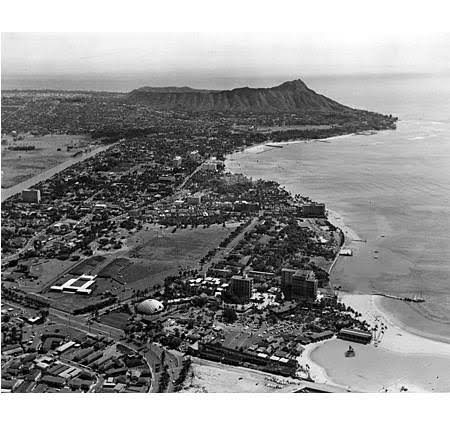
The first high-rise hotels appeared in 1955. Then came statehood in 1959 and the jet age, and Waikīkī changed faster than ever. Within a decade low-rise cottages and gardens were giving way to towers, and visitor numbers to Hawaiʻi passed one million a year.
The beach itself is partly man-made. Seawalls and buildings close to the shoreline disrupted the natural movement of sand from the late nineteenth century onwards, and sand was brought in from elsewhere from the 1920s to the 1970s. Replenishment and erosion remain constant battles, sharpened by rising seas.
Walking Waikīkī's history today
The best guide is the Waikīkī Historic Trail: 23 bronze markers shaped like surfboards, conceived by the Hawaiian scholar George Kanahele and now cared for by the Native Hawaiian Hospitality Association. They mark sites from Kālia to Kapiʻolani Park. Highlights along the way:
- Moana Surfrider: the 1901 Banyan Wing and its courtyard banyan, open to anyone for a drink or a look.
- Royal Hawaiian: the Pink Palace and the remnant coconut grove of Helumoa.
- Duke Kahanamoku statue, Kūhiō Beach: a 2.7 m (9 ft) bronze installed in 1990 for his 100th birthday, usually draped in lei. Beside it stand the Stones of Kapaemahu, said in tradition to hold the healing powers of four māhū healers from Tahiti.
- Princess Kaʻiulani statue: unveiled in 1999 in a small park at Kūhiō and Kaʻiulani avenues, near the old entrance to ʻĀinahau.
- Kapiʻolani Park: still a free public park, as Kalākaua intended. The Natatorium at its edge has been closed to swimmers since 1979, and its future is still debated.
Pair the trail with an early-morning lesson from today's beach boys, still working from stands on the sand, and with our things to do in Honolulu guide. For how Waikīkī fits the wider story of tourism and statehood, see The History of Hawaii.
Quick answers
What does Waikiki mean?
Waikīkī is usually translated as "spouting waters", a reference to the springs and streams that once fed the wetlands, taro patches and fishponds of the area.
What was the first hotel in Waikiki?
The Moana, which opened on 11 March 1901 with 75 rooms, was the first large hotel on Waikīkī Beach. Smaller guest houses such as the Sans Souci were operating in the 1880s and 1890s. The Moana survives as the Moana Surfrider.
Why was the Ala Wai Canal built?
Between 1921 and 1928 the canal was dug to drain Waikīkī's wetlands, which officials saw as unsanitary. Dredged material filled the old ponds and taro patches, opening the land to development.
When was the Royal Hawaiian Hotel built?
The Matson Navigation Company opened the Royal Hawaiian, the "Pink Palace of the Pacific", on 1 February 1927, on the site of the royal coconut grove of Helumoa.
Who were the Waikiki beach boys?
Hawaiian watermen who, from the early 1900s, taught visitors to surf and paddle outrigger canoes, played music and acted as hosts on the beach. The tradition continues at beach stands in Waikīkī today.
Facts checked October 2026 against the sources below and the research for our book The History of Hawaii. Dates and figures for early Hawaiian history are estimates and scholars still debate some of them.
- Ala Wai Canal (Images of Old Hawaiʻi)
- Helumoa (Images of Old Hawaiʻi)
- ʻĀinahau (Images of Old Hawaiʻi)
- Moana Hotel (Wikipedia)
- History overview (The Royal Hawaiian)
- How Waikīkī's legendary beach boys defined aloha (Hawaiʻi Magazine)
- Kapiʻolani Regional Park (City and County of Honolulu)
- Waikīkī Historic Trail (Images of Old Hawaiʻi)