For a century the Kingdom and then the Territory of Hawaiʻi sent people with Hansen's disease to a peninsula walled off by sea cliffs. They made it a home, and a few still call it one.
6 January 1866: a landing below the cliffs
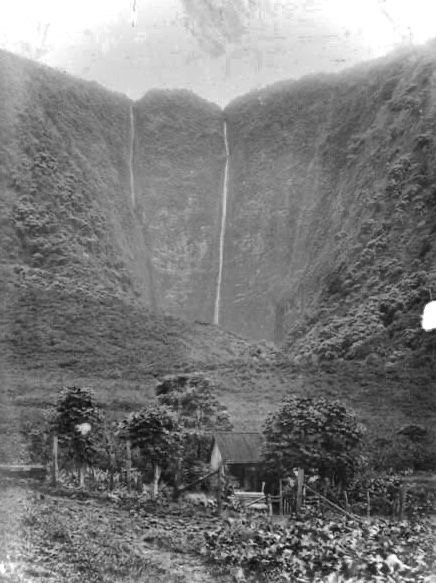
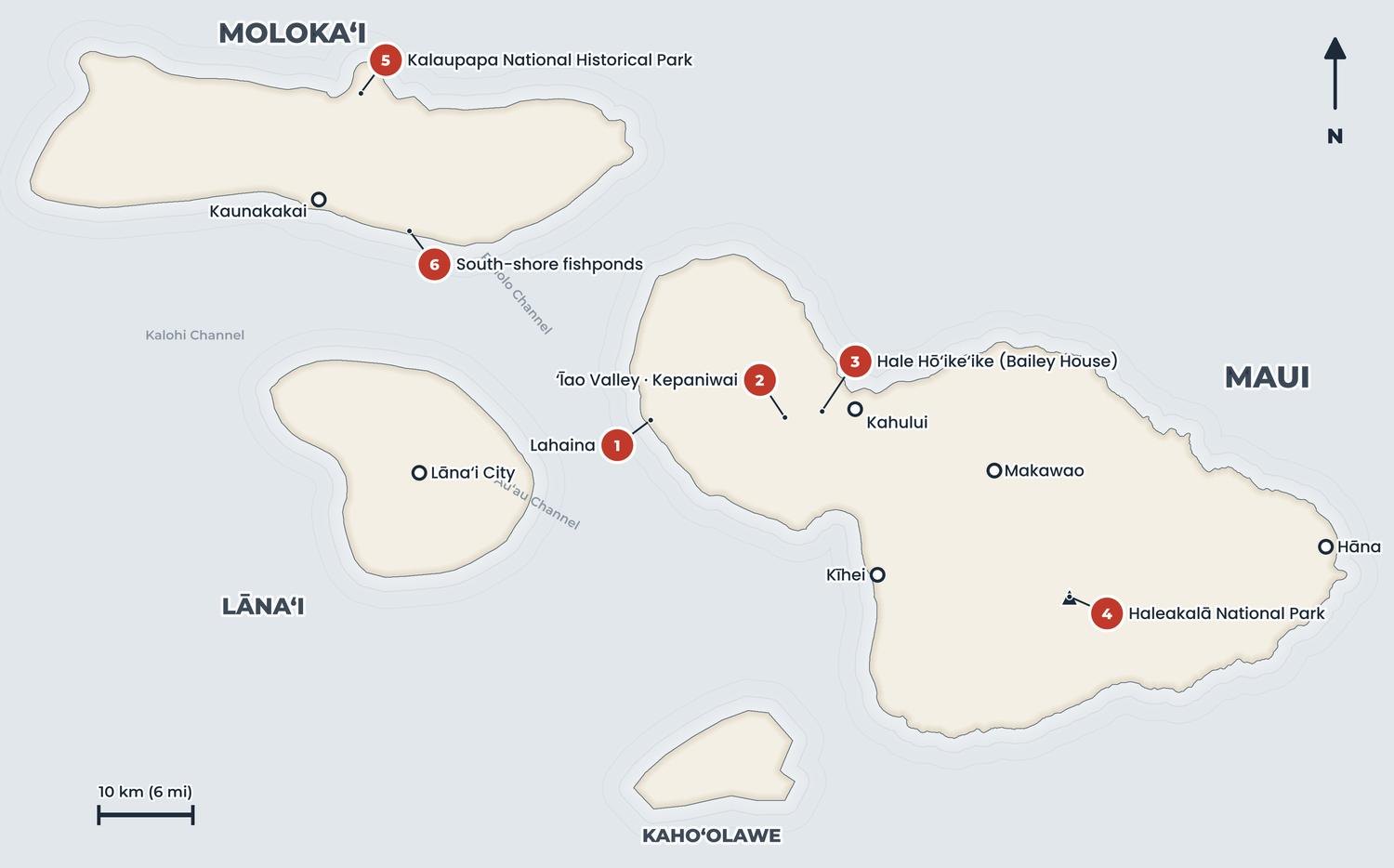
On 6 January 1866 a boat put twelve people ashore at the mouth of Waikolu Valley, on the north coast of Molokaʻi. Nine men and three women stepped onto a rocky beach below sea cliffs that rise close to 610 m (2,000 ft). They had been diagnosed with leprosy, now called Hansen's disease, and the law said they could not go home.
By October that year 142 people had followed them to Kalawao, the windward side of the Kalaupapa peninsula. Over the next century roughly 8,000 people, most of them Native Hawaiians, were sent to this flat tongue of lava between the cliffs and the sea. For most, the separation from parents, children and home islands lasted the rest of their lives.
Kalaupapa is one of the most moving places in Hawaiʻi, and one of the hardest to reach. Its story is about two saints, but above all it is about the thousands of ordinary people who built a community in exile.
Why the kingdom chose exile
Hansen's disease spread through the islands in the middle of the 19th century, at a time when introduced diseases had already cut the Native Hawaiian population drastically (see sandalwood, whaling and the Māhele). Nobody knew how it passed from person to person, and there was no cure. Fear did the rest.
In 1865 the legislature passed, and Kamehameha V approved, An Act to Prevent the Spread of Leprosy. It set aside land to isolate anyone believed to be contagious. Kalawao was chosen because the cliffs and the sea made it a natural prison: the only ways out were a steep trail or a boat.
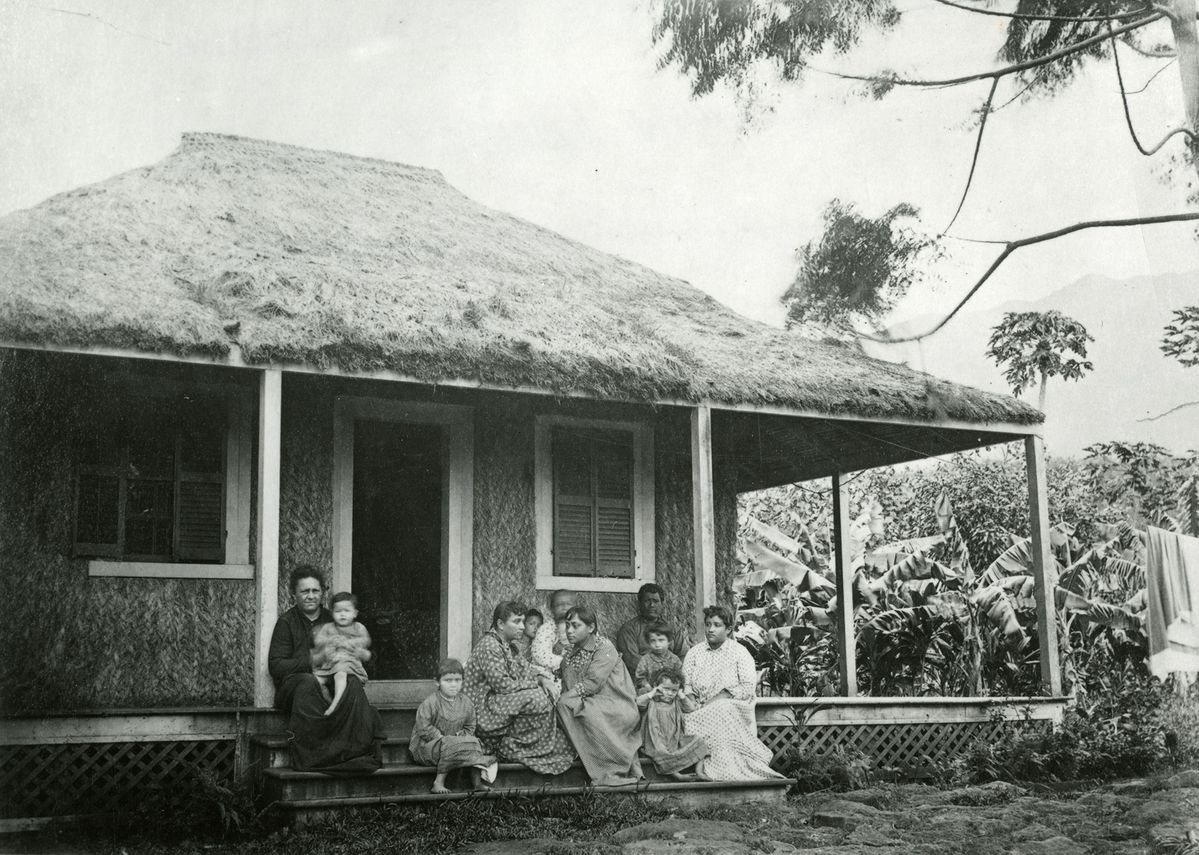
The early years were grim. The government expected the exiles to farm for themselves, but many were too sick, and food, shelter and medical care fell far short through the 1870s. Families were torn apart at the point of diagnosis, and some relatives chose to go with their loved ones as kōkua (helpers) rather than be parted from them.
Father Damien at Kalawao
In May 1873 a 33-year-old Belgian priest volunteered to serve at Kalawao. Jozef De Veuster, known as Father Damien, had reached Honolulu in 1864. According to the National Park Service, he sailed to the settlement with about 50 patients.
He did far more than say Mass. Damien built houses, a water system and schools, planted trees, organised bands and choirs, dressed wounds and made coffins. He also kept up a stream of letters pressing the government and his church for more help. He enlarged St Philomena Church at Kalawao, which still stands.
About twelve years after he arrived, Damien was confirmed to have the disease himself. He kept working until he died at Kalawao on 15 April 1889, aged 49. He was buried beside St Philomena; his body was moved to Belgium in 1936, but a relic of his right hand was returned to the grave in 1995. The Catholic Church declared him a saint in 2009.
Mother Marianne and the Bishop Home
Damien was not alone. Mother Marianne Cope, born Barbara Koob in Heppenheim, Germany, and raised in New York, led a group of Franciscan sisters from Syracuse to Hawaiʻi in 1883 to care for patients in Honolulu. In November 1888 she moved to Kalaupapa with two fellow sisters.
There she ran the Bishop Home, funded by Charles Reed Bishop, a refuge for girls and women who had been sent to the settlement alone and were vulnerable. She was at Damien's bedside when he died and took over care of his home for boys. She never left Molokaʻi, dying at Kalaupapa in 1918 after some 30 years of service, and was canonised in 2012.
The saints rightly draw pilgrims, but residents and their descendants have long asked that the patients' own story not be overshadowed. Kalaupapa's truest monuments are its graves.
A community, not only a colony
The exiles did not simply wait to die. By the late 1880s the settlement had hundreds of cottages, several churches, stores, hospital buildings and gardens. Patients founded Siloama, the Church of the Healing Spring, in 1866, the year the first of them arrived. Music ran through daily life, with choirs, glee clubs and bands, alongside debate clubs, horse racing and baseball teams. The composer Lizzie Kapoli Kamakau, sent there in 1888, had collaborated with Queen Liliʻuokalani and Princess Likelike.
Residents followed the politics of their kingdom closely. Ka Wai Ola, the Office of Hawaiian Affairs newspaper, notes that more than 700 of them signed the 1897 Kūʻē petitions against annexation (see Hawaii annexation 1898). King Kalākaua and Princess Kaʻiulani visited to show the patients they were not forgotten.
From 1893 the Board of Health took over the whole peninsula, removed its remaining Hawaiian villagers and gradually moved patients from Kalawao to the drier, more sheltered Kalaupapa side. In 1905 the area became Kalawao County, which is still, uniquely, administered by the state Department of Health.
Cure, freedom and the choice to stay
Effective treatment finally arrived with sulfone drugs, introduced in Hawaiʻi in 1946. New patients were increasingly treated at Hale Mōhalu in Pearl City on Oʻahu, and in 1969 the state repealed the isolation law that had stood for a century.
By then Kalaupapa was the only home many residents had known, and the state promised that those who wished could stay for life. In 1980 Congress created Kalaupapa National Historical Park, protecting the settlement and its stories while the remaining residents lived on.
Fewer than 1,000 of the estimated 8,000 people sent there have identifiable graves. For decades Ka ʻOhana O Kalaupapa, an organisation founded by residents and families, has worked for a memorial listing every name, authorised by Congress in 2009 and still moving through state approvals in 2026.
Very few former patients remain. The Kalaupapa Registry listed four in autumn 2026, two of them living full-time on the peninsula. In September 2026 a failing water system, and then power cuts after Hurricane Nolo, forced a temporary evacuation of residents and staff; power was restored on 2 October and officials expected residents to return soon after.
Can you visit Kalaupapa today?
Not at present. Access to the peninsula, including the Kalaupapa Pali Trail, has always been restricted to protect the privacy of the residents, and visitors could enter only on a permitted tour. A patient-owned tour company resumed visits in September 2025 after a five-year pause, but stopped after its owner died in May 2026. The National Park Service ran one ranger-led tour on 9 July 2026, met by Molokaʻi residents protesting a lack of consultation, then paused further tours. As of late October 2026 none had restarted.
- Do not trespass. The Pali Trail is reached across private land, and entering without a permit is not allowed.
- See it from above. The Kalaupapa overlook in Pālāʻau State Park, at the top of the Kalae Highway, looks straight down on the settlement. The park reopened in July 2026, is free and is open daily from 7 am to 7 pm.
- Check before you plan. Current status is posted at nps.gov/kala, or call the park on 808 567 6802.
In Honolulu you can visit the Cathedral Basilica of Our Lady of Peace, which holds most of Saint Marianne's relics, and Father Damien's statue outside the State Capitol. Read visiting Hawaii respectfully before you go to Molokaʻi, an island that prefers quiet visitors, and plan your hops with island hopping in Hawaii. Kalaupapa's place in the kingdom's wider story, alongside the royal sites of historic sites in Hawaii, is traced in our book The History of Hawaii.
Quick answers
Is Kalaupapa still a leper colony?
No. Forced isolation ended when Hawaiʻi repealed its isolation law in 1969, and Hansen's disease has been curable since sulfone drugs arrived in 1946. A few former patients chose to stay on as residents, and the peninsula is now Kalaupapa National Historical Park.
Can you visit Kalaupapa?
Not as of October 2026. The National Park Service paused public tours after a single ranger-led tour on 9 July 2026, and no commercial tour operates. You can view the peninsula from the overlook in Pālāʻau State Park; check nps.gov/kala for updates.
How many people were sent to Kalaupapa?
About 8,000 people were sent to Kalawao and Kalaupapa between 1866 and 1969, most of them Native Hawaiians. Fewer than 1,000 have identifiable graves.
Who was Father Damien?
A Belgian Catholic priest, born Jozef De Veuster, who served the Kalawao settlement from 1873, contracted Hansen's disease himself and died there in 1889. He was canonised as Saint Damien of Molokaʻi in 2009.
Are there still patients living at Kalaupapa?
Very few. In autumn 2026 the Kalaupapa Registry listed four former patients, two of whom lived full-time at Kalaupapa. All are now elderly, and they were cured long ago.
Facts checked October 2026 against the sources below and the research for our book The History of Hawaii. Dates and figures for early Hawaiian history are estimates and scholars still debate some of them.
- National Park Service: A Brief History of Kalaupapa
- National Park Service: Father Damien
- National Park Service: Guided Tours, Kalaupapa National Historical Park
- Ka Wai Ola: Kalaupapa, a thriving, resilient community
- Hawaii News Now: Effort to honor Kalaupapa patients with permanent memorial moves forward (2026)
- Civil Beat: Kalaupapa evacuated with no return date after crucial infrastructure fails (2026)
- Honolulu Star-Advertiser: Patients, staff expected to return to Kalaupapa after power restored (2026)
- Hawaiʻi Division of State Parks: Pālāʻau State Park