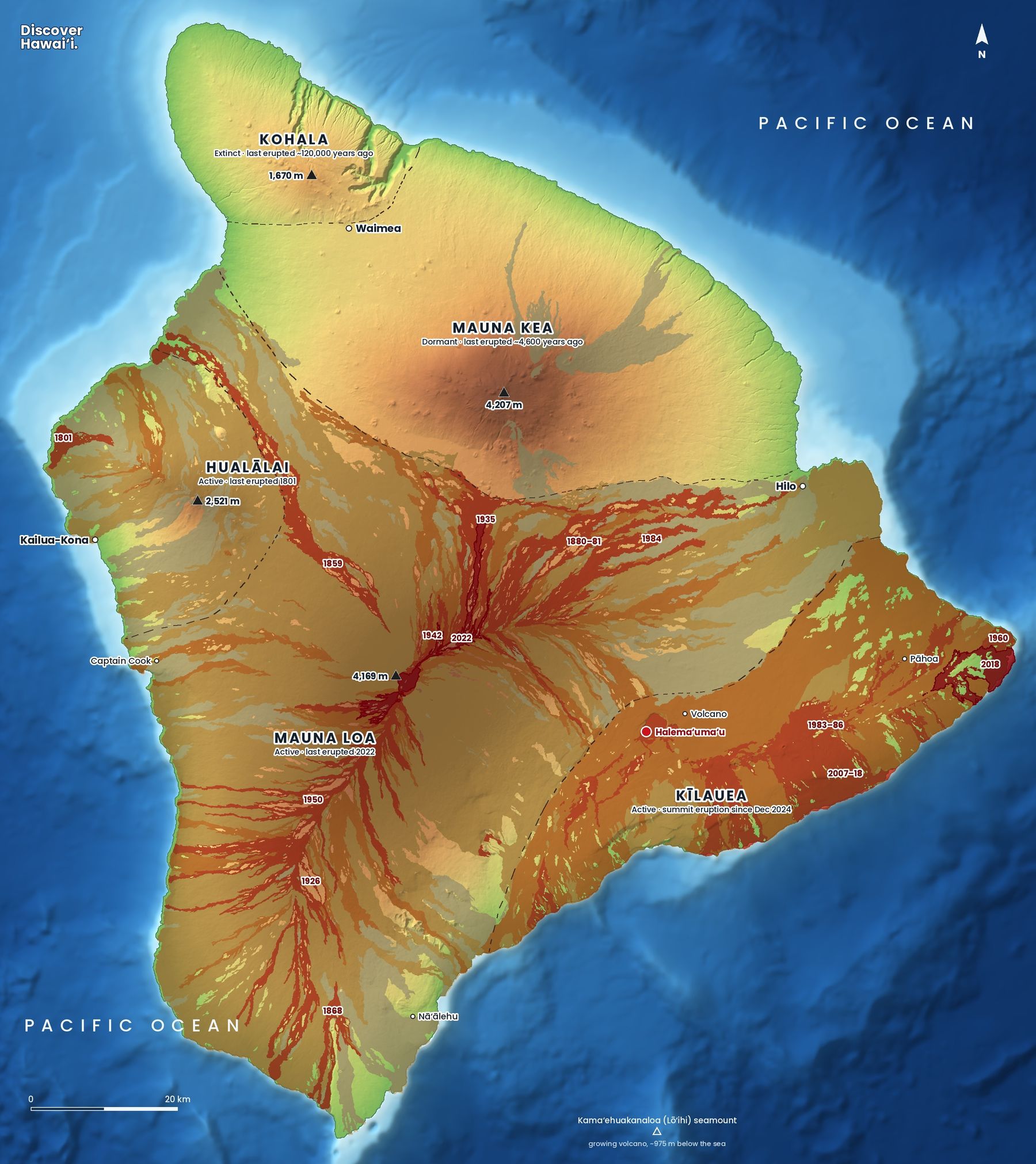
The Big Island has two faces, divided by the great mountains of Mauna Kea and Mauna Loa. On the west, Kona basks in sunshine above black lava fields and coral reefs. On the east, Hilo sits in a rain-soaked bay, surrounded by waterfalls and rainforest, close to the volcano. Most visitors only see one side. Here is how they compare, and why the best answer may be both.
The short answer
Stay in Kona (or the Kohala Coast north of it) for beaches, snorkeling, manta rays, boat trips and sunshine. Stay in Hilo (or Volcano Village) for Hawaiʻi Volcanoes National Park, waterfalls, rainforest gardens, an old-fashioned Hawaiian town and lower prices. For a week, spend four or five nights in Kona and two near the volcano.
Side by side
| Kona | Hilo | |
|---|---|---|
| Weather | Dry and sunny | Wet and green |
| Beaches | Best on the island (Kohala Coast) | Few swimming beaches |
| Ocean | Snorkeling, mantas, dolphins, diving | Rocky coast, tide pools |
| Volcano | About 2.5 hours away | About 45 minutes away |
| Waterfalls and rainforest | Few | ʻAkaka, Rainbow Falls, Hāmākua Coast |
| Town | Visitor town, restaurants, bars | Local town, farmers' market, museums |
| Prices | Higher, especially Kohala resorts | Lower |
| Flights | Most mainland flights | Mostly inter-island |
Kona: the sunny side
Kailua-Kona is the Big Island's visitor hub, a seafront town of restaurants, bars and boat harbours on the dry west coast. South of town are Kona coffee farms, Kealakekua Bay, where spinner dolphins rest, and Puʻuhonua o Hōnaunau, the ancient place of refuge. North are the white-sand beaches and luxury resorts of the Kohala Coast. At night, boats take snorkelers and divers to watch manta rays feeding off Keauhou and the airport. Every October the town hosts the Ironman World Championship; in 2026 it took place on 10 October with men and women racing on the same day.
Hilo: the green side
Hilo is the island's largest town and its working heart, with wooden storefronts, a famous farmers' market, the Pacific Tsunami Museum (Hilo was devastated by tsunamis in 1946 and 1960), the gardens of Liliʻuokalani Park and the waterfalls of Rainbow Falls and ʻAkaka Falls. Each spring it hosts the Merrie Monarch Festival, the world's most prestigious hula competition. Hilo is about 45 minutes from Hawaiʻi Volcanoes National Park; Volcano Village, just outside the park, is even closer. Bring a rain jacket: rain is part of Hilo's charm.
Since October 2026 some trails and overlooks at the Kīlauea summit are closed because of earthquakes and inflation; check the USGS and park updates. Read our volcanoes guide.
The best plan: stay in both
Splitting your stay saves hours of driving. A typical week: four nights in Kona or Kohala for beaches, mantas and Kealakekua Bay, then two nights in Volcano or Hilo for the national park and the waterfalls. Fly into Kona and out of Hilo if the fares work, or drive back to Kona via the Saddle Road, about two hours. See five days on the Big Island and where to stay on the Big Island.
When to go
Kona is sunny almost every day of the year, with afternoon clouds building over the slopes. Hilo is wet in every season, wettest in winter, with mornings often clearer than afternoons. Humpback whales pass the Kona and Kohala coasts from December to April. Kona is busiest during Ironman week in October, and Hilo fills up for the Merrie Monarch Festival in the week after Easter, so book early for both.
A day on each side
In Kona, a day might begin with a kayak across Kealakekua Bay, spinner dolphins surfacing nearby, continue with coffee tasting on a farm in the hills, and end in the dark ocean with manta rays somersaulting beneath your mask.
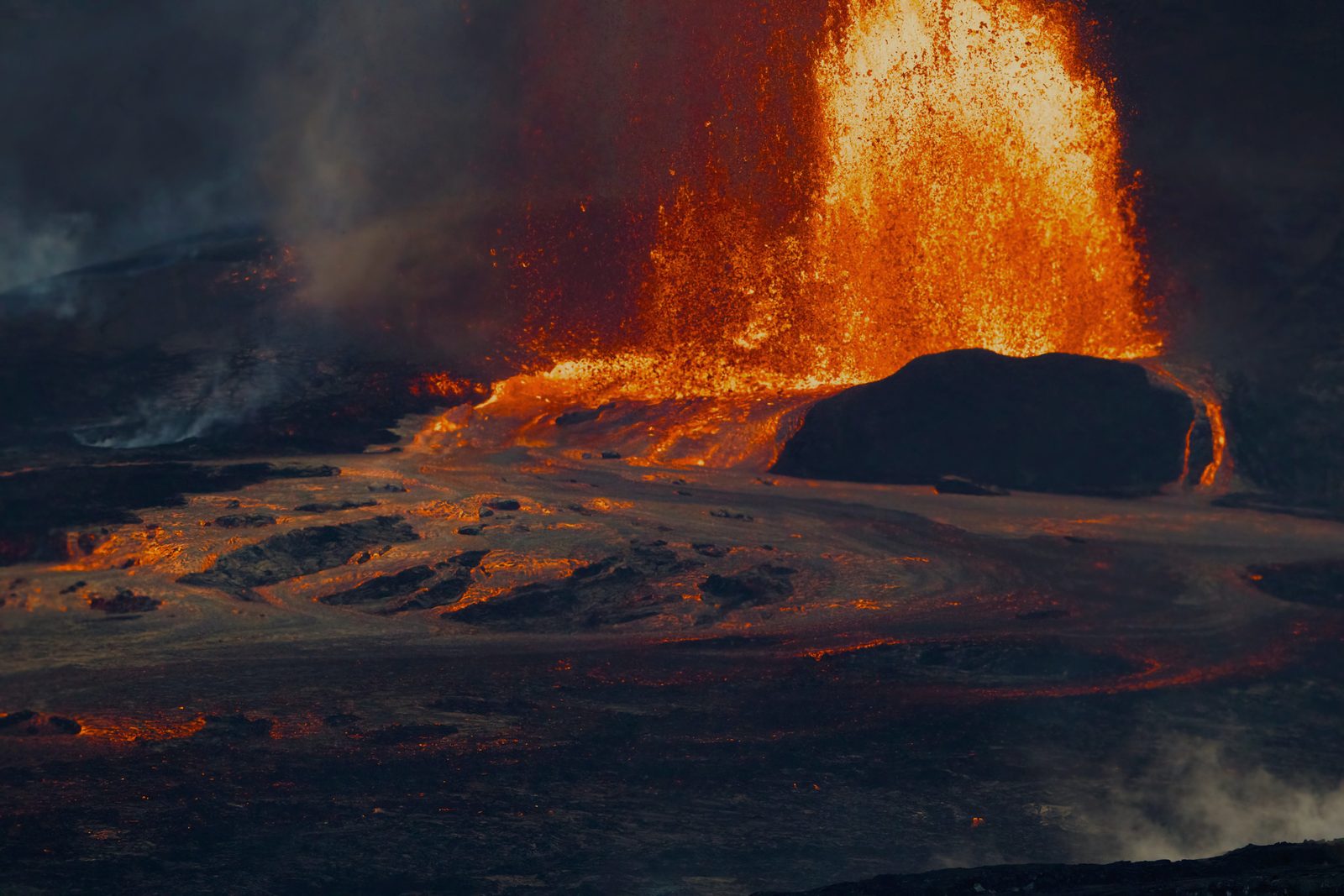
In Hilo, it might begin at the farmers' market among rambutan and lilikoʻi, take you through rainforest to ʻAkaka Falls, plunging 442 feet into a gorge, and end at the rim of Kīlauea, the volcano's glow, during eruptions, painting the clouds red. Two sides, one island: the Big Island at its fullest.
Getting there and around
Kona International Airport handles most direct flights from the US mainland and inter-island flights; Hilo International Airport is mainly served by inter-island flights from Honolulu. You need a rental car on both sides. The Daniel K. Inouye Highway, better known as the Saddle Road, crosses the island between Mauna Kea and Mauna Loa and links Kona and Hilo in about two hours; the southern route via the volcano and Punaluʻu black-sand beach takes longer but is spectacular.
Most rental contracts forbid driving to the summit of Mauna Kea and on some rough roads; check yours. For costs, see a week in Hawaii.
Quick answers
Is it better to stay in Kona or Hilo?
Kona for sunshine, beaches, snorkeling and manta rays; Hilo for waterfalls, rainforest, local life, lower prices and quick access to Hawaiʻi Volcanoes National Park. Many visitors stay in both.
Is Hilo closer to the volcano than Kona?
Yes. Hilo is about 45 minutes from Hawaiʻi Volcanoes National Park; Kona is about two and a half hours away.
Does it rain a lot in Hilo?
Yes. Hilo is one of the wettest cities in the United States, with rain on most days, often in the afternoon or overnight. Kona is much drier and sunnier.
Should I fly into Kona or Hilo?
Most mainland flights land in Kona. If you can, fly into Kona and out of Hilo, or the reverse, to avoid driving back across the island.
More comparisons: Maui vs Oʻahu, Maui vs Kauaʻi, Maui vs the Big Island, Oʻahu vs Kauaʻi, Maui vs Oʻahu vs Kauaʻi, Kona vs Hilo and the best island for kids.
Facts checked October 2026. Prices are averages and conditions change, especially after storms; check the official sources before you travel.
- National Park Service: Kīlauea summit safety closures (7 October 2026)
- USGS Hawaiian Volcano Observatory: Kīlauea
- National Park Service: Puʻuhonua o Hōnaunau
- Triathlon Magazine Canada: Ironman World Championship returns to Kona, 10 October 2026
- Merrie Monarch Festival, Hilo
- NOAA / NWS Honolulu: Hawaii climate