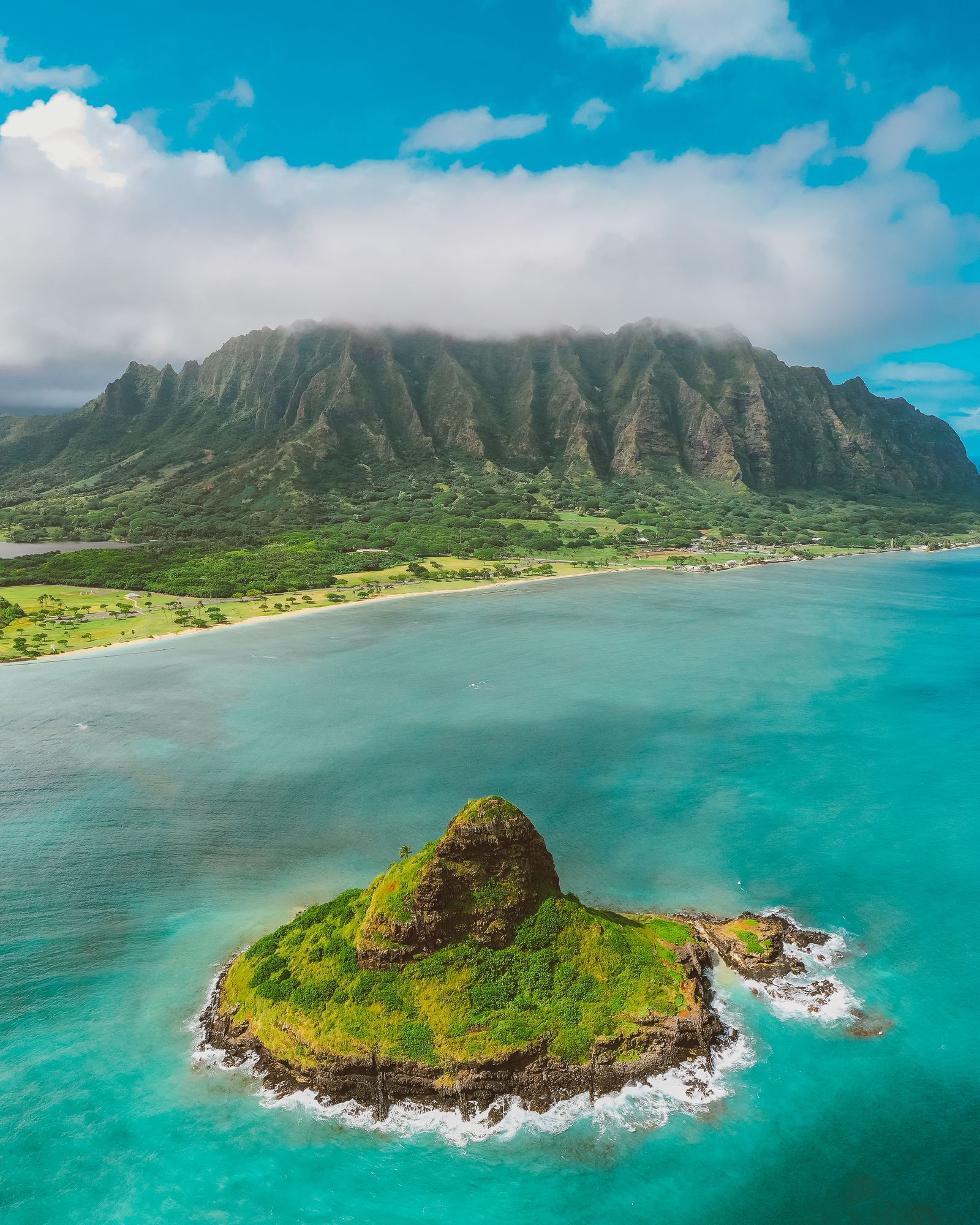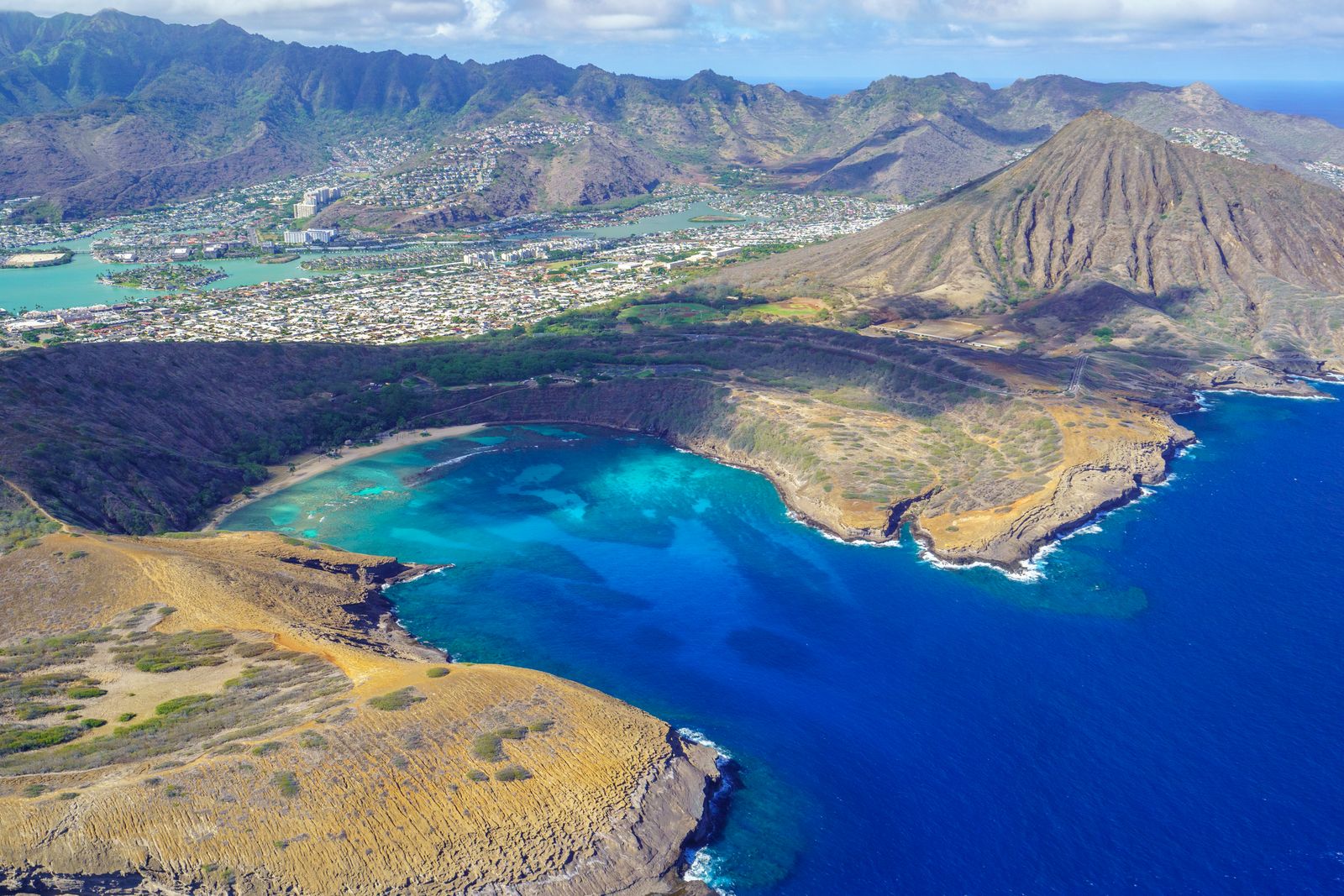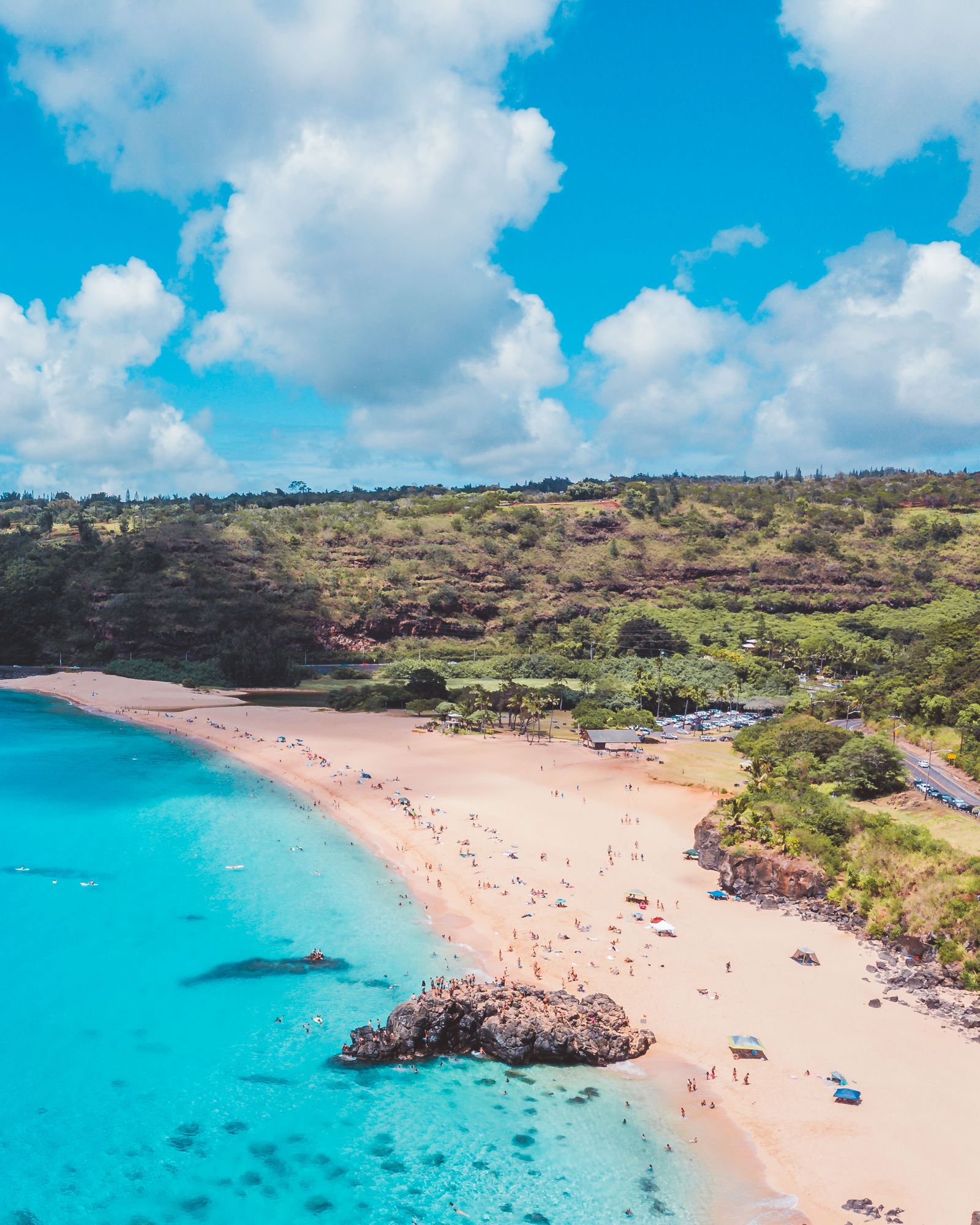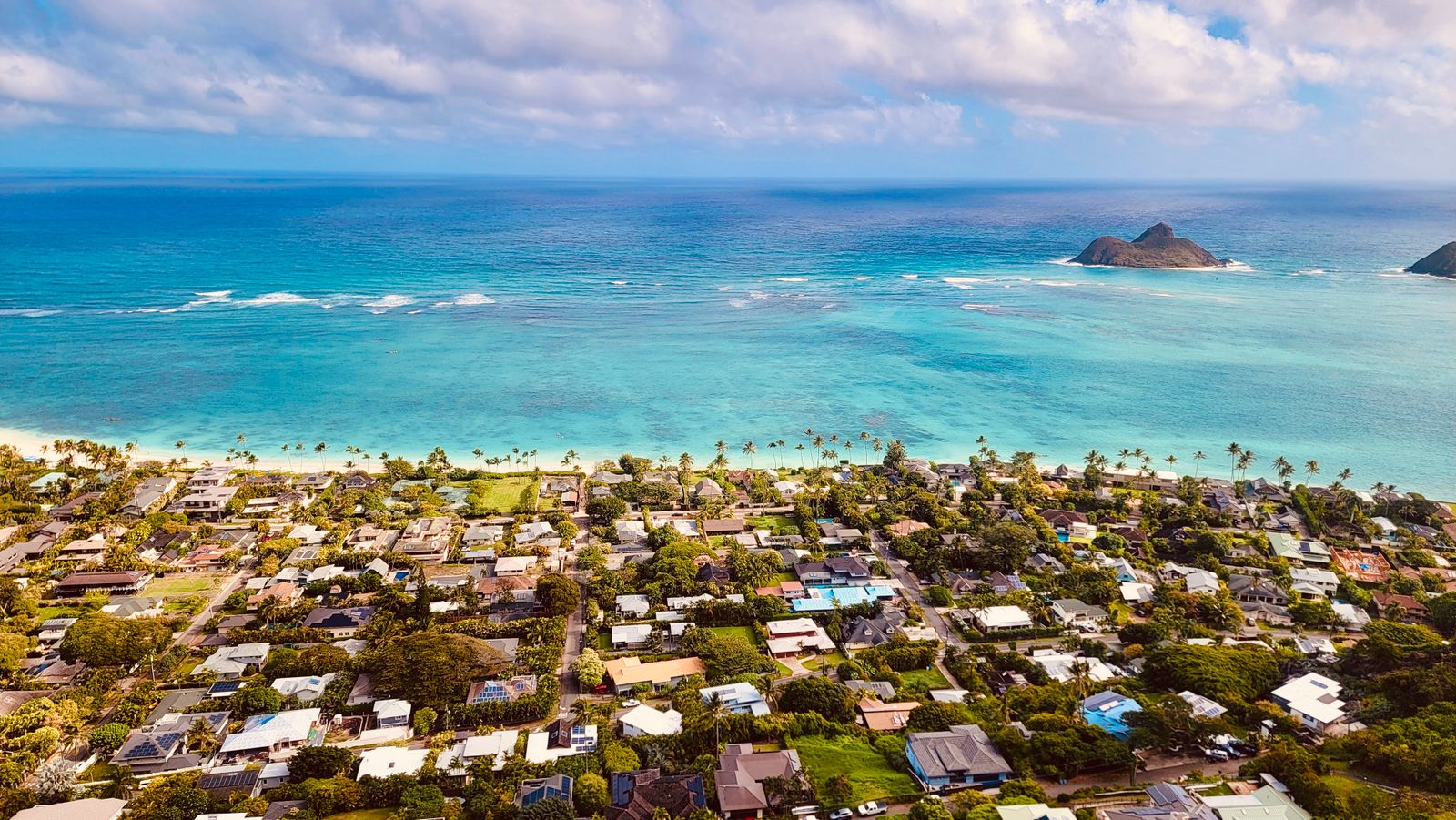
Powder sand, turquoise water and two islets on the horizon, all inside a quiet neighbourhood. How to enjoy Kailua and Lanikai without becoming the visitor locals complain about.
Sunrise from the pillbox
It is not yet six o'clock and a line of head torches is bobbing up the red dirt of Kaʻiwa Ridge. At the first concrete pillbox the climbers stop, sit on the roof and wait. Then the sun comes up behind the two islets of Nā Mokulua, the sea turns from grey to pale green, and the curve of Lanikai Beach appears below like a white thread.
Kailua and Lanikai, on Oʻahu's windward side, have some of the most photographed sand in Hawaiʻi. They are also residential neighbourhoods with narrow streets, no hotels and very little parking. That combination is the key to visiting well. This guide covers both beaches, the pillbox hike, paddling to the Mokulua islets and the rules you need to know, all checked as of October 2026.
Kailua Beach and Lanikai Beach compared
Kailua Beach is the big one, a broad sweep of fine sand about 4 kilometres (2.5 miles) long, backed by ironwood trees. Kailua Beach Park, at the southern end, has lifeguards, toilets, showers, picnic tables and a car park. The trade winds that blow most days make it one of Hawaiʻi's best spots for windsurfing and kitesurfing, and the sheltered water near the park is good for families on calmer days.
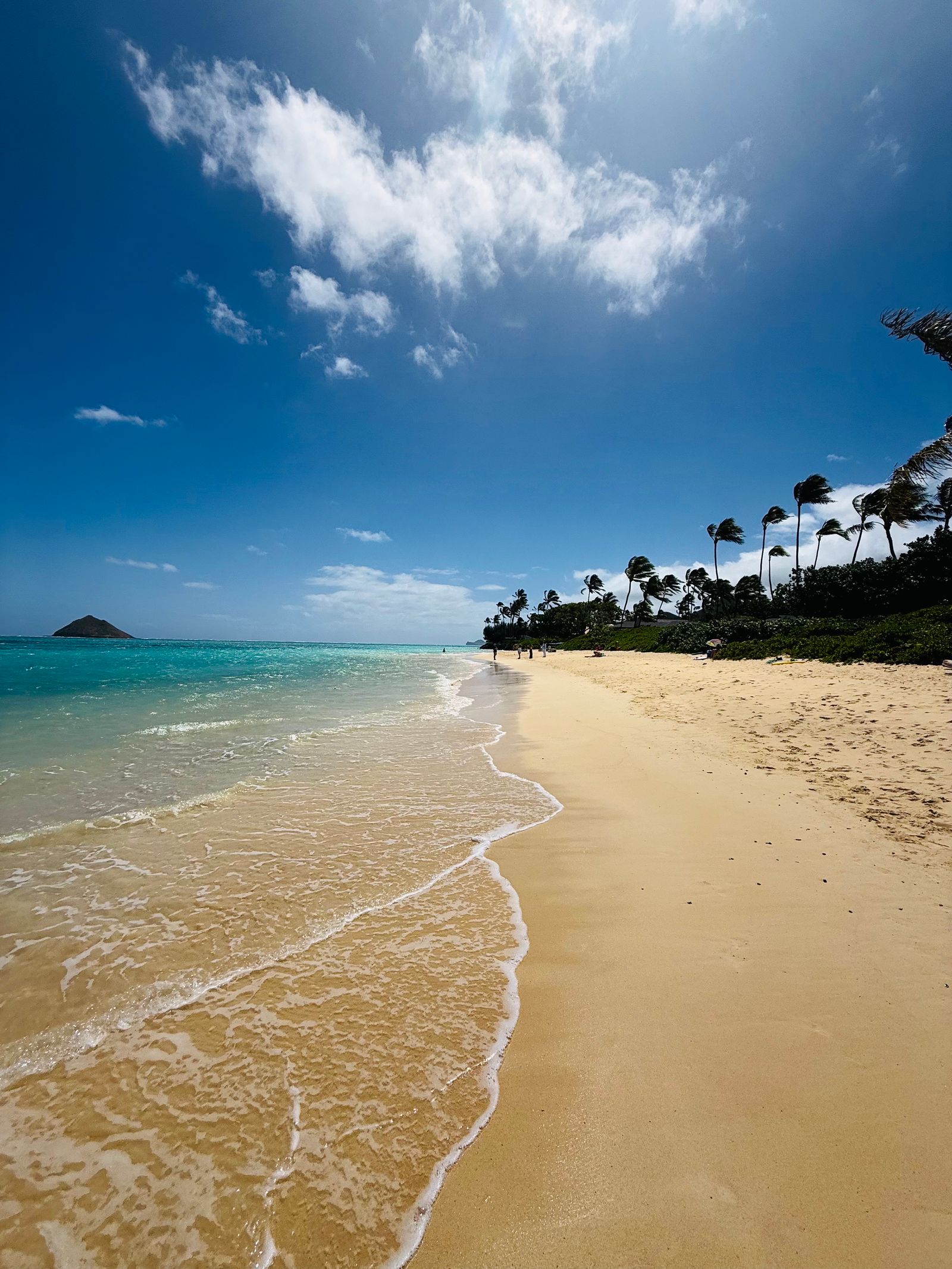
Lanikai Beach, just around the point, is smaller and quieter, about a kilometre of soft sand lined by houses, with the Mokulua islets offshore. Its name is usually translated as "heavenly sea", and it was coined for the housing development in the 1920s; the older Hawaiian name of the area is Kaʻōhao. Lanikai has no lifeguards, no toilets, no showers and no car park. You reach the sand along narrow public rights-of-way between the homes.
The beach itself has been shrinking. Sections of the shoreline have eroded right back to sea walls, so at high tide there may be little dry sand. Visit at mid or low tide, and if one access path leads to a strip of water, try another. For more of the island's best sand, see our guide to the best beaches in Hawaiʻi.
Parking and getting there (as of October 2026)
Parking is the single biggest source of friction between visitors and Lanikai residents. Here is how to get it right.
- Park at Kailua Beach Park or in Kailua town and walk or cycle the 15 to 20 minutes to Lanikai. This is the simplest option, and the park also has the toilets Lanikai lacks.
- In Lanikai, park only where it is legal. Keep all four wheels off the road edge where signs require it, never block a driveway, mailbox or fire hydrant, and do not park on lawns. Illegally parked cars are ticketed and towed.
- Holiday weekends: on major holiday weekends the city bans parking on the streets and shoulders of Mokulua and Aʻalapapa Drives and their cross streets, typically from 10 am to 3 pm. Temporary signs go up beforehand. Check the city's Department of Transportation Services announcements before you go.
- Bus or bike: TheBus connects Kailua with Honolulu, and Kailua town has bike rental shops. Cycling from town to Lanikai is flat and easy.
The drive from Waikīkī over the Pali or Likelike highways takes about 30 minutes without traffic. If you are building a day around it, our Oʻahu itinerary shows how it fits with the rest of the island.
The Lanikai Pillbox hike (Kaʻiwa Ridge)
The Kaʻiwa Ridge Trail climbs a dry, rocky ridge above Lanikai to concrete observation posts built during the Second World War. They are known as pillboxes, though they were lookouts rather than gun positions. The round trip is roughly 1.6 kilometres (1 mile) to the first pillboxes and takes about an hour, longer if you continue along the ridge.
- Trailhead: on Kaʻelepulu Drive, opposite the Mid-Pacific Country Club. Street parking here is very limited and towing is common; park at Kailua Beach Park and walk.
- Conditions: steep, loose, gravelly dirt with one short roped section. The descent is harder than the climb. Avoid it after rain, when it turns slick.
- Heat: there is no shade at all. Go at sunrise or late afternoon, take water and wear proper shoes, not flip-flops.
- Respect: keep your voice down on the street before dawn, stay on the trail and heed "no trespassing" signs at the edges.
Kaʻiwa Ridge is one of many trails on our Oʻahu hiking trails map. If you like old wartime lookouts, the summit of Diamond Head has more.
Kayaking to the Mokulua islets: the rules
Nā Mokulua, the two islets off Lanikai, are Mokulua Nui (the larger) and Moku Iki. Paddling out from Kailua Beach is a classic half-day trip, roughly 2 to 3 kilometres (1.5 to 2 miles) each way depending on your route, and the crossing from Lanikai is shorter. The islets are state wildlife sanctuaries, set aside in 1932, where wedge-tailed shearwaters (ʻuaʻu kani) nest in burrows in the ground.
- Where you may go: on both islets, access is restricted to areas below the high-water mark, and to any areas marked on official signs. Do not walk inland: you can collapse burrows and kill chicks.
- When: the islets are off-limits from dusk to dawn. Fires, dogs, camping and tents are banned at all times.
- Moku Iki: the smaller islet is steep and rocky with no easy landing, and waves surge onto its ledges. Most paddlers simply admire it from the water.
- Monk seals: Hawaiian monk seals rest on Mokulua Nui, and in 2024 a pup was born there. The state closed the islet's shoreline from July to October that year and suspended commercial landing permits. Similar closures can happen again, so check DLNR notices before you paddle.
- Guided or self-guided: rent from a licensed shop in Kailua or join a guided tour. Commercial activity is allowed only on Mokulua Nui and only with a state permit, so ask your operator what they are allowed to do.
- Conditions: trade winds make the paddle back harder. Go early, wear a life jacket and turn back if the wind picks up. Never go round the far side of the islets, where waves break on the rocks.
Popoiʻa, the low flat island off Kailua Beach Park, is also a seabird sanctuary. For safe paddling in general, see Hawaiʻi ocean safety, and for the wider protected areas, our guide to Hawaiʻi's marine protected areas.
Being a good guest in Kailua and Lanikai
Residents here have seen their streets fill with tour vans, Instagram crowds and cars parked across driveways. A few simple habits make a big difference.
- Arrive early, park legally and walk in quietly, especially at sunrise.
- Use the toilets at Kailua Beach Park before you go: Lanikai has none.
- Take everything home with you, including cigarette ends and bottle tops.
- Keep away from monk seals and turtles on the sand, at least 15 metres (50 ft) for seals and 3 metres (10 ft) for turtles.
- Do not fly drones over private homes.
Our guide to visiting Hawaiʻi respectfully covers more.
Best time to go and what to combine
Weekday mornings are best for every reason: calmer wind, softer light, emptier sand and easier parking. Winter weekends are quieter than summer ones, but the trade winds blow most of the year.
In Kailua town, the Ulupō Heiau State Historic Site and the Kawainui Marsh, one of Hawaiʻi's largest wetlands, show how the area once fed a large Hawaiian population. Combine the day with the coast drive past Makapuʻu and Hanauma Bay, or head north along the windward coast towards Kualoa and the North Shore. For more ideas, see things to do on Oʻahu and our Oʻahu island page.
Quick answers
Where do you park for Lanikai Beach?
The easiest option is Kailua Beach Park, then walk 15 to 20 minutes. In Lanikai, park only where signs allow, never block driveways, and expect a ban on street parking along Mokulua and Aʻalapapa Drives on major holiday weekends (as of October 2026).
Does Lanikai Beach have lifeguards or restrooms?
No. Lanikai has no lifeguards, toilets, showers or car park. Kailua Beach Park, next door, has all of these.
How long is the Lanikai Pillbox hike?
Roughly 1.6 kilometres (1 mile) return to the first pillboxes, taking about an hour. It is steep, loose and unshaded, so go early and take water.
Can you land on the Mokulua islands?
Yes, but only below the high-water mark and only in daylight, because both islets are seabird sanctuaries. Mokulua Nui has the beach most paddlers use; Moku Iki is rocky and hard to land on. Temporary closures for monk seals can happen, so check DLNR notices first (as of October 2026).
Is Kailua or Lanikai better for families?
Kailua Beach Park is better for families because it has lifeguards, toilets, showers and parking. Lanikai is lovely but has no facilities.
Facts checked October 2026. Reservations, fees, opening hours and trail or road closures change often in Hawaii, so confirm with the official source before you go.
- Lanikai parking restrictions in place through Christmas weekend, Hawaii News Now
- Oʻahu Offshore Islet Seabird Sanctuaries, DLNR Division of Forestry and Wildlife
- Monk seal born on Mokulua Nui delivers first pup on the islet, DLNR
- Mokulua Nui shoreline access restored, DLNR news release
- Oʻahu Hike of the Month: Lanikai Pillbox Trail, Honolulu Magazine
- Paddling Oahu's beautiful Kailua Bay to the Mokulua Islands, Hawaii Magazine