Every Hawaiian island is a volcano, but only some of them let you stand on a summit, walk across a crater floor or, with luck, watch lava. Here are the volcanoes you can really visit, island by island, with what each one involves, the reservations you need and the hiking trails that get you closest.
The short list
If you only have time for a few, these are the volcano experiences worth planning a trip around. Each has its own guide on this site.
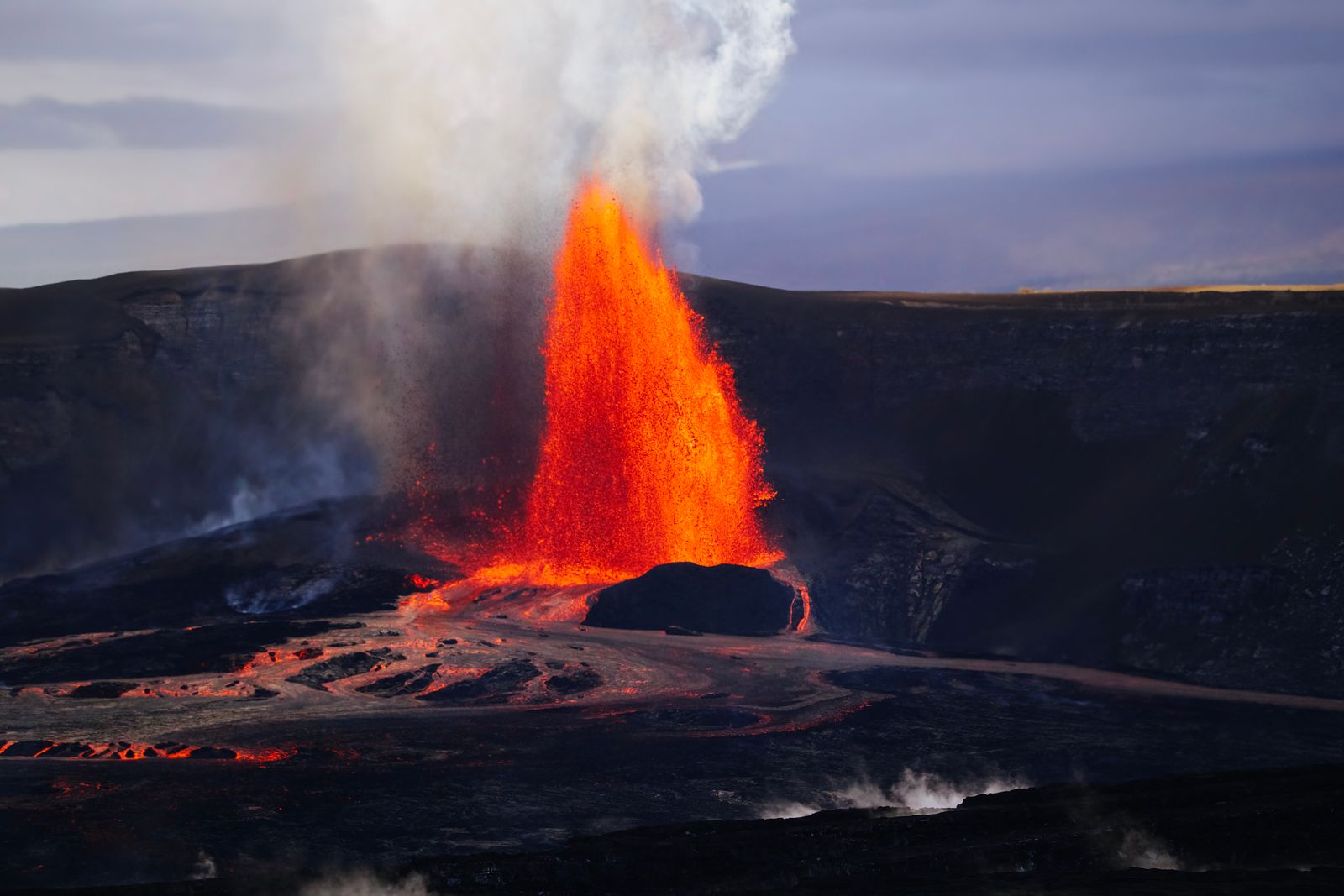
- Kīlauea, Big Island. The most active volcano in Hawaii, inside Hawaiʻi Volcanoes National Park. Crater overlooks, the Kīlauea Iki trail across a 1959 lava lake and, during eruptive episodes, glowing lava. Read the Kīlauea visit guide.
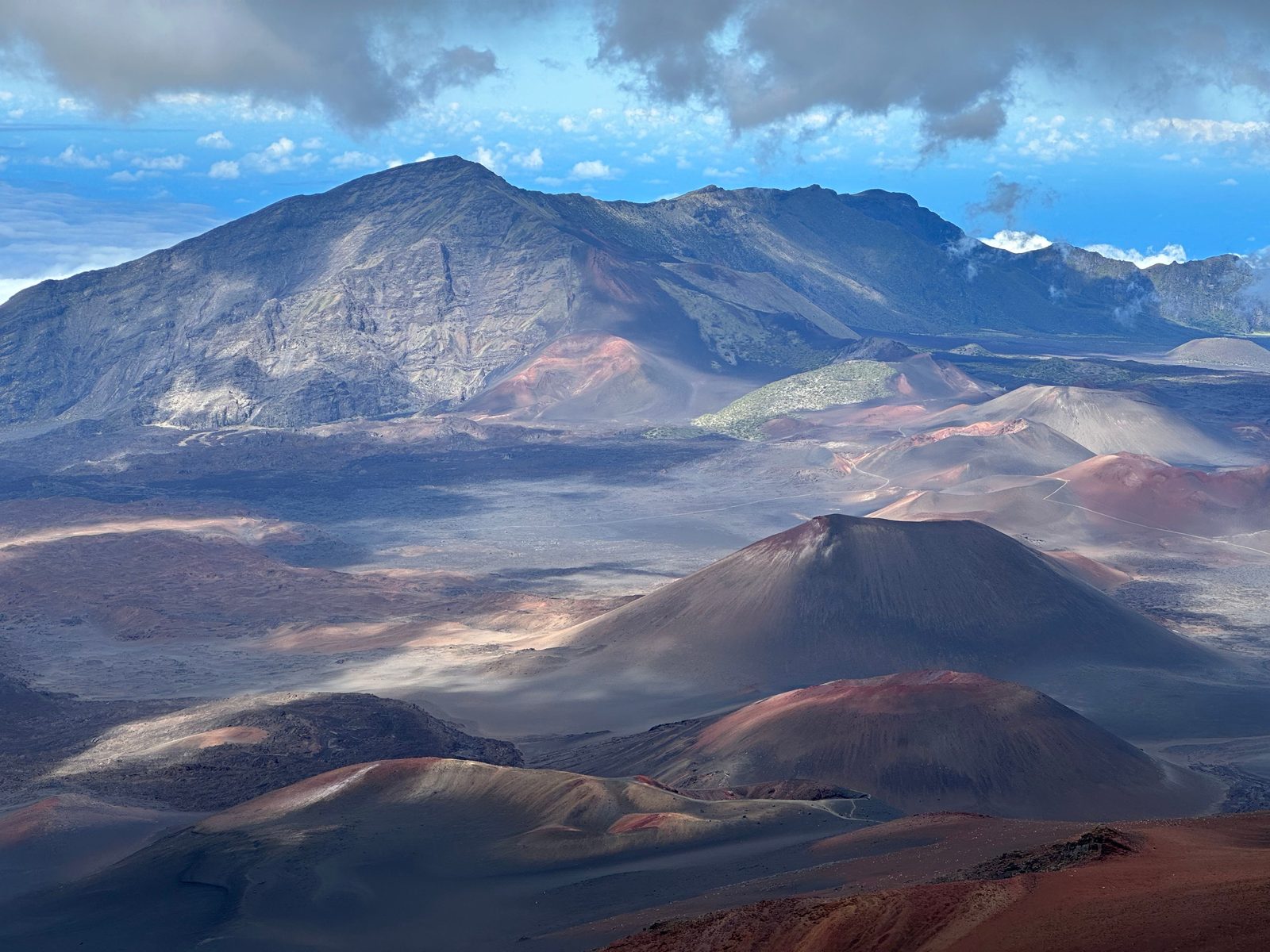
- Haleakalā, Maui. A 3,055-metre summit above the clouds, famous for sunrise and for trails down into a crater of red cinder cones. Read the Haleakalā sunrise guide.
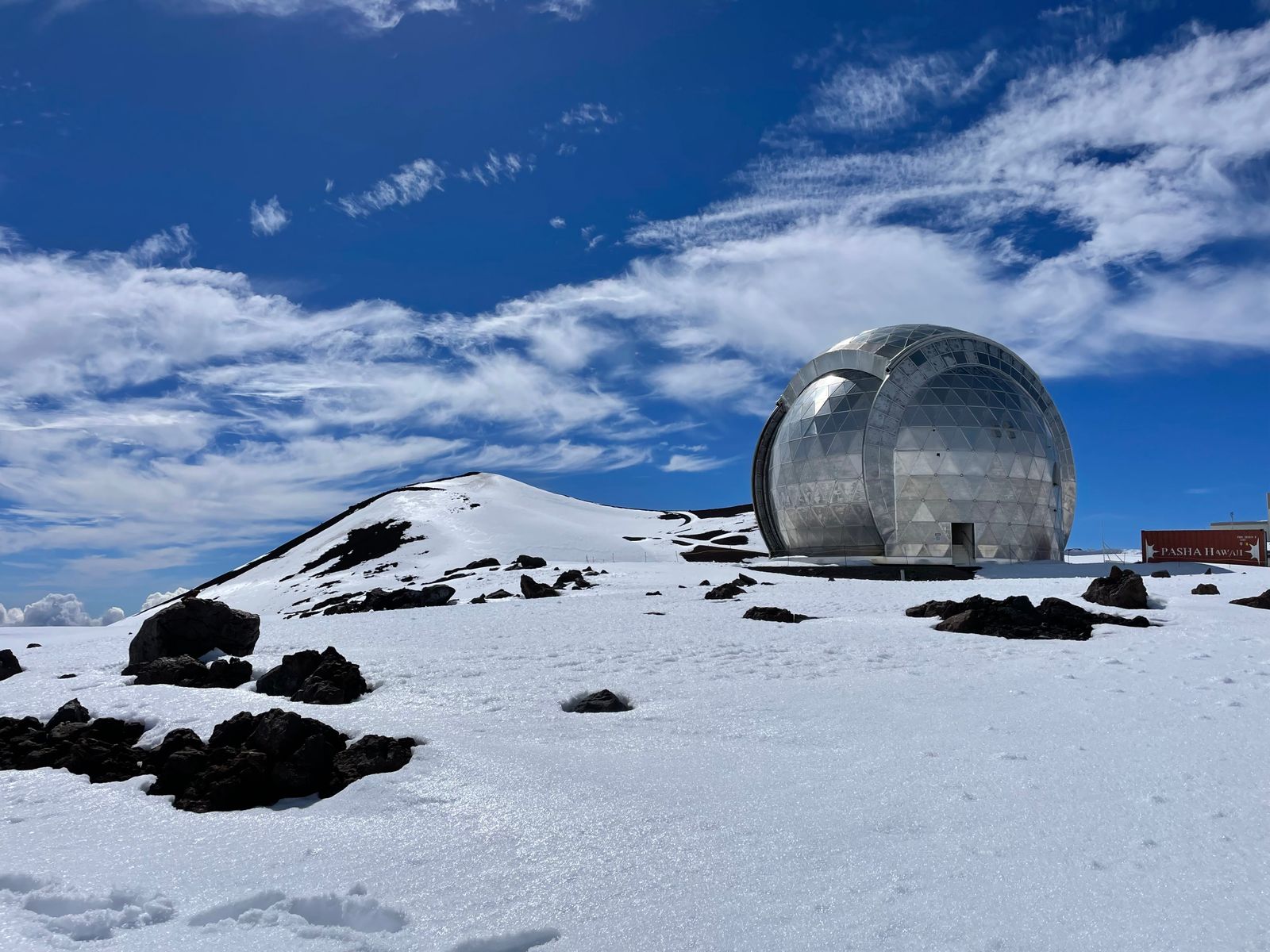
- Mauna Kea, Big Island. The highest point in Hawaii, with the white domes of the observatories on its summit and some of the best stargazing on Earth. Read the Mauna Kea guide.
- Diamond Head (Lēʻahi), Oʻahu. A volcanic cone above Waikīkī with a short, steep trail to the crater rim. Read the Diamond Head hike guide.
Hawaiʻi Island: the living volcanoes
The Big Island is the only place in Hawaii where volcanoes are still building land. Kīlauea has been erupting in episodes of lava fountaining at its summit since December 2024, and Hawaiʻi Volcanoes National Park lets you drive and walk around the caldera, through rainforest and lava tubes and down the Chain of Craters Road to the sea. Which overlooks are open changes with the eruption, so check the park and the USGS before you go.
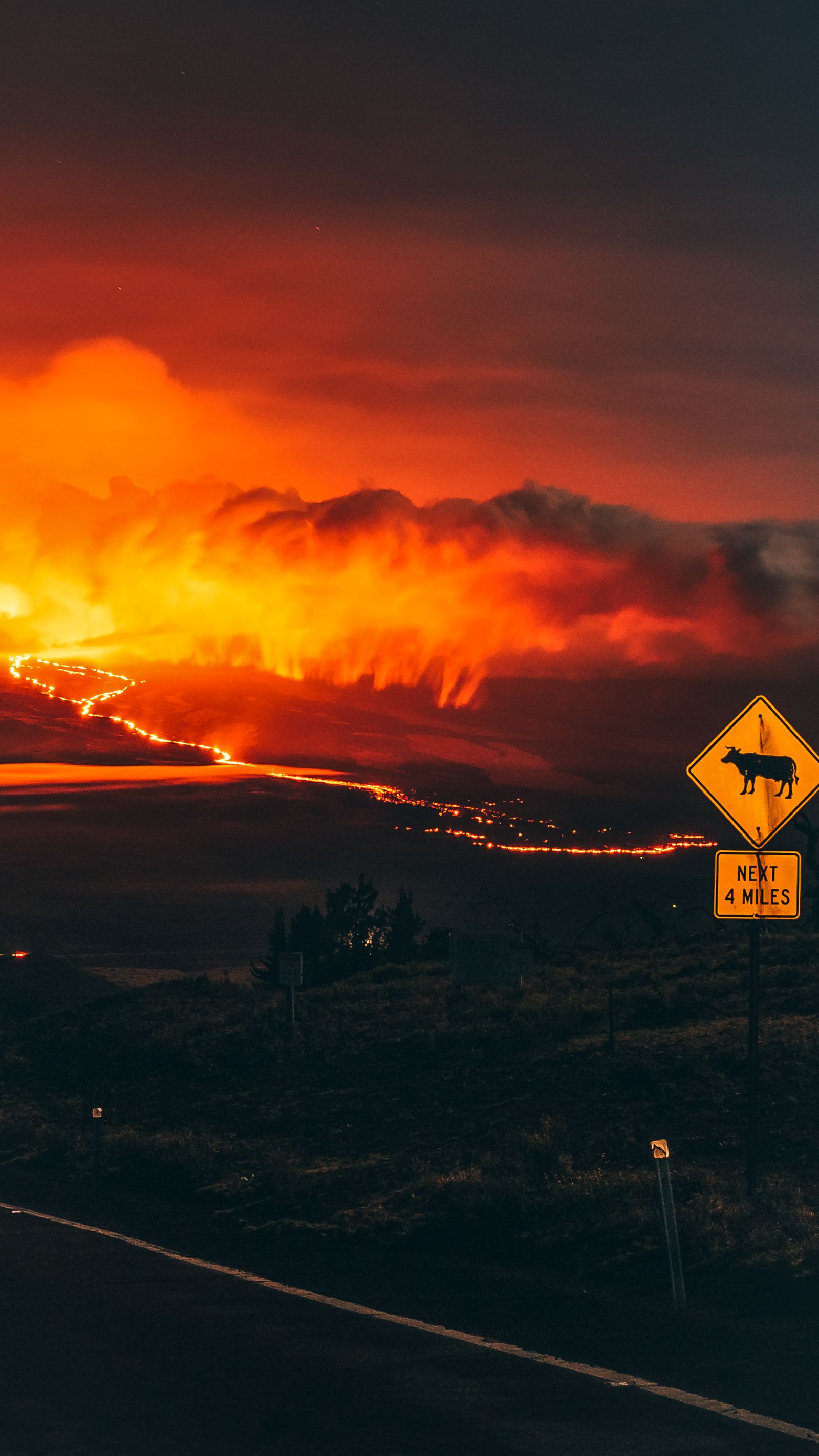
Mauna Loa, the largest active volcano on Earth, last erupted in 2022. Its summit is a serious multi-day trek, but you can see its vast slopes from the Saddle Road and from Kīlauea. Mauna Kea is the easiest of the giants to visit: a paved road climbs to the visitor station at 2,800 metres, and four-wheel-drive vehicles can continue to the summit. Hualālai rises behind Kona and is mostly private land, while the old Kohala volcano is best seen from the Pololū and Waipiʻo valley lookouts.
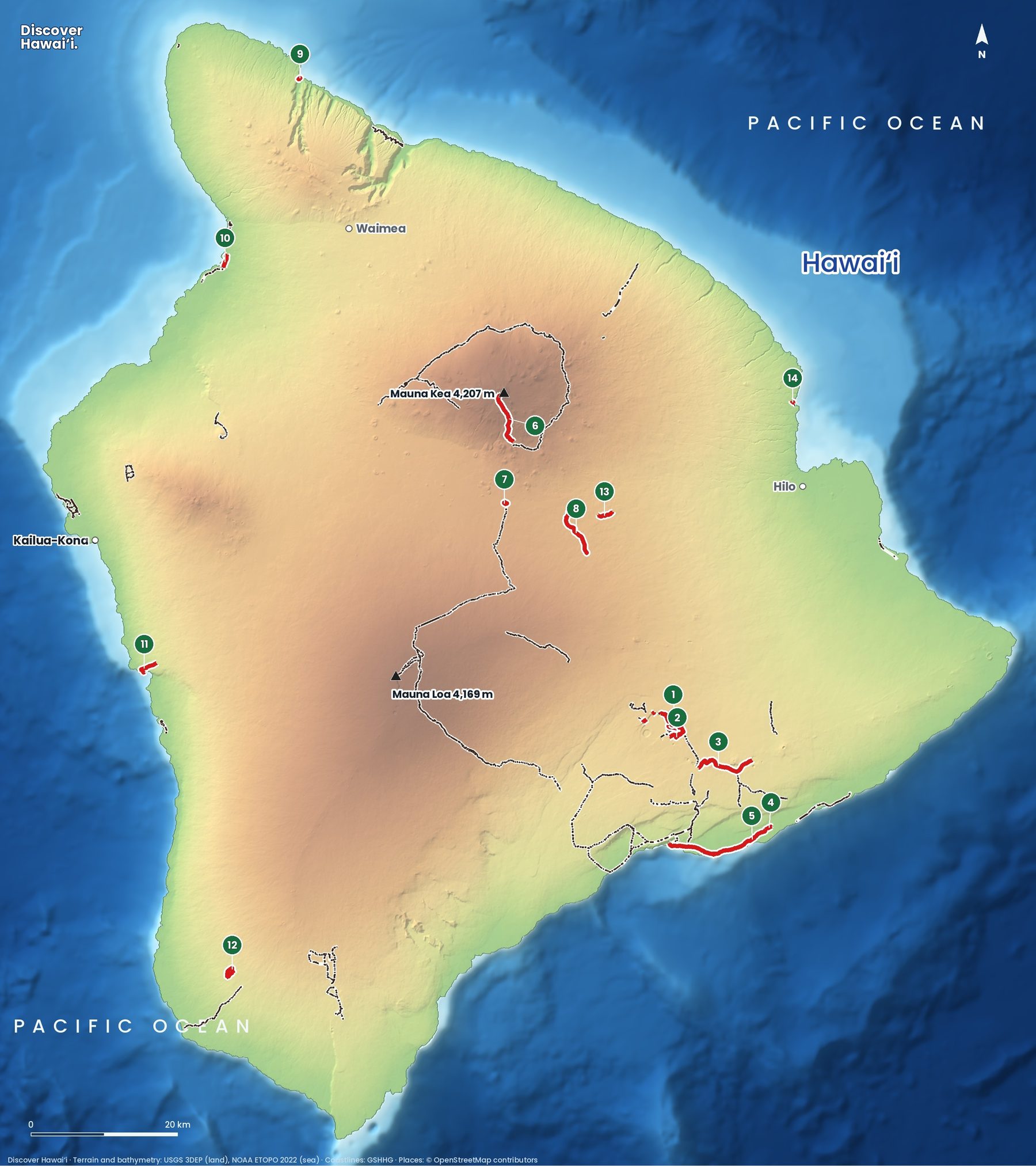
Best volcano hikes on the Big Island: the Kīlauea Iki Trail (3.3-mile loop across the 1959 lava lake), the open sections of the Crater Rim Trail, the Puʻu Loa Petroglyphs boardwalk off Chain of Craters Road, and Puʻu Huluhulu on the Saddle Road, a short climb with views of both Mauna Kea and Mauna Loa. See the full Big Island hiking trails map and our guide to the Big Island's five volcanoes.
Maui: Haleakalā
Haleakalā is the volcano most visitors to Maui see, and one of the most dramatic drives in the United States. The road climbs from sea level to the summit at 3,055 metres in about 60 kilometres. Watching sunrise from the top needs a $1 reservation per car for entry between 3 and 7 am, on top of the $30 park entrance fee; sunset and daytime visits need only the entrance fee.
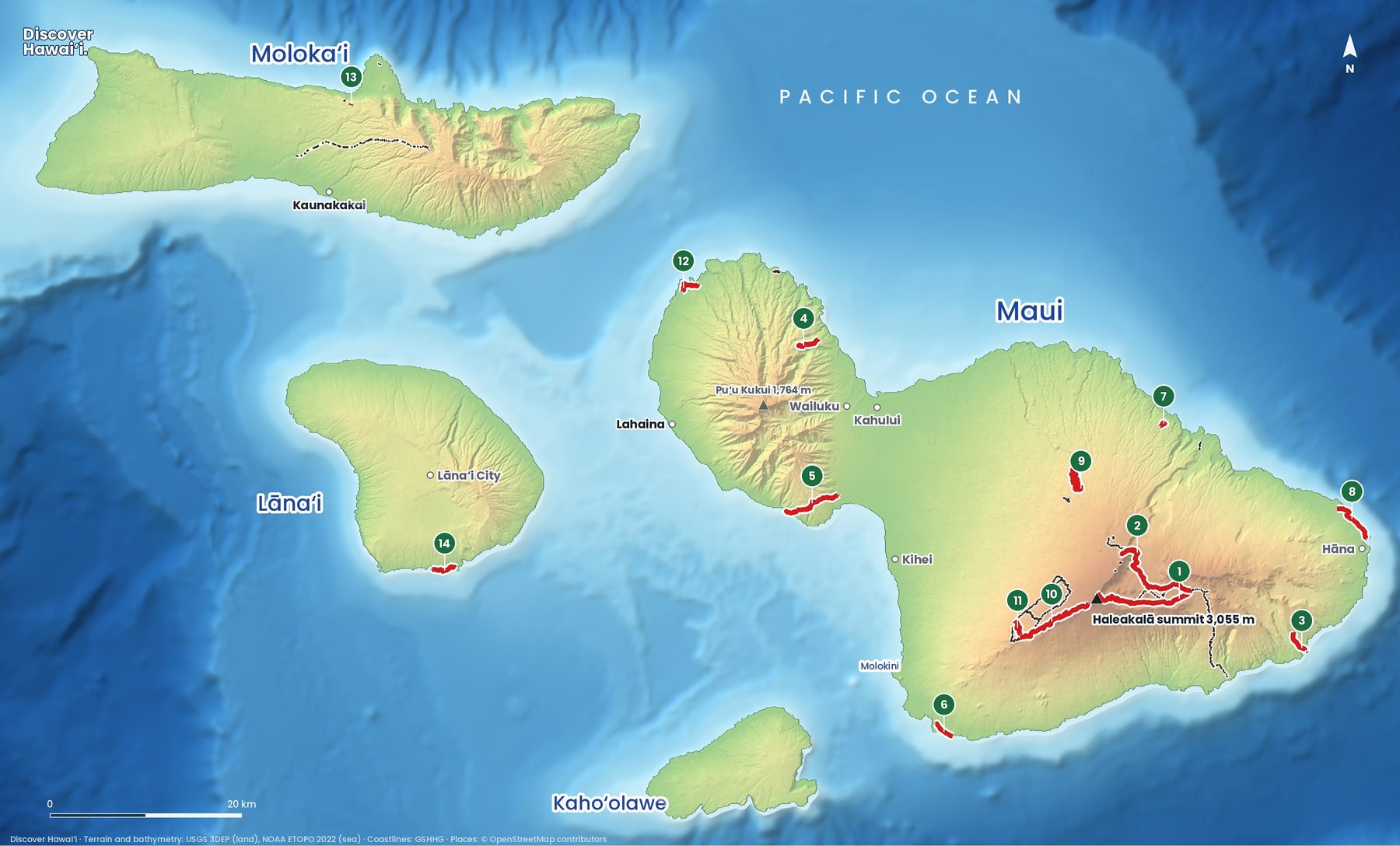
Two trails lead into the crater: Keoneheʻeheʻe (Sliding Sands) from the summit visitor centre, and Halemauʻu from the crater's edge further down. Even a short walk down Sliding Sands gives you the full Mars-like view, but remember that the climb back up at nearly 3,000 metres is hard. Full details in the Maui hiking trails map.
Oʻahu: Diamond Head and the young craters
Oʻahu's two great shield volcanoes, the Waiʻanae and the Koʻolau, are long extinct and worn into mountain ranges, but the island is dotted with much younger cones you can climb. Diamond Head (Lēʻahi) is the classic: a 0.8-mile trail, each way, to the crater rim above Waikīkī, with a timed reservation for non-residents. The Koko Crater Stairs, about 1,000 old railway ties straight up the side of Koko Crater, are the island's toughest short workout, and Hanauma Bay, a flooded volcanic crater, is the island's most famous snorkel spot.
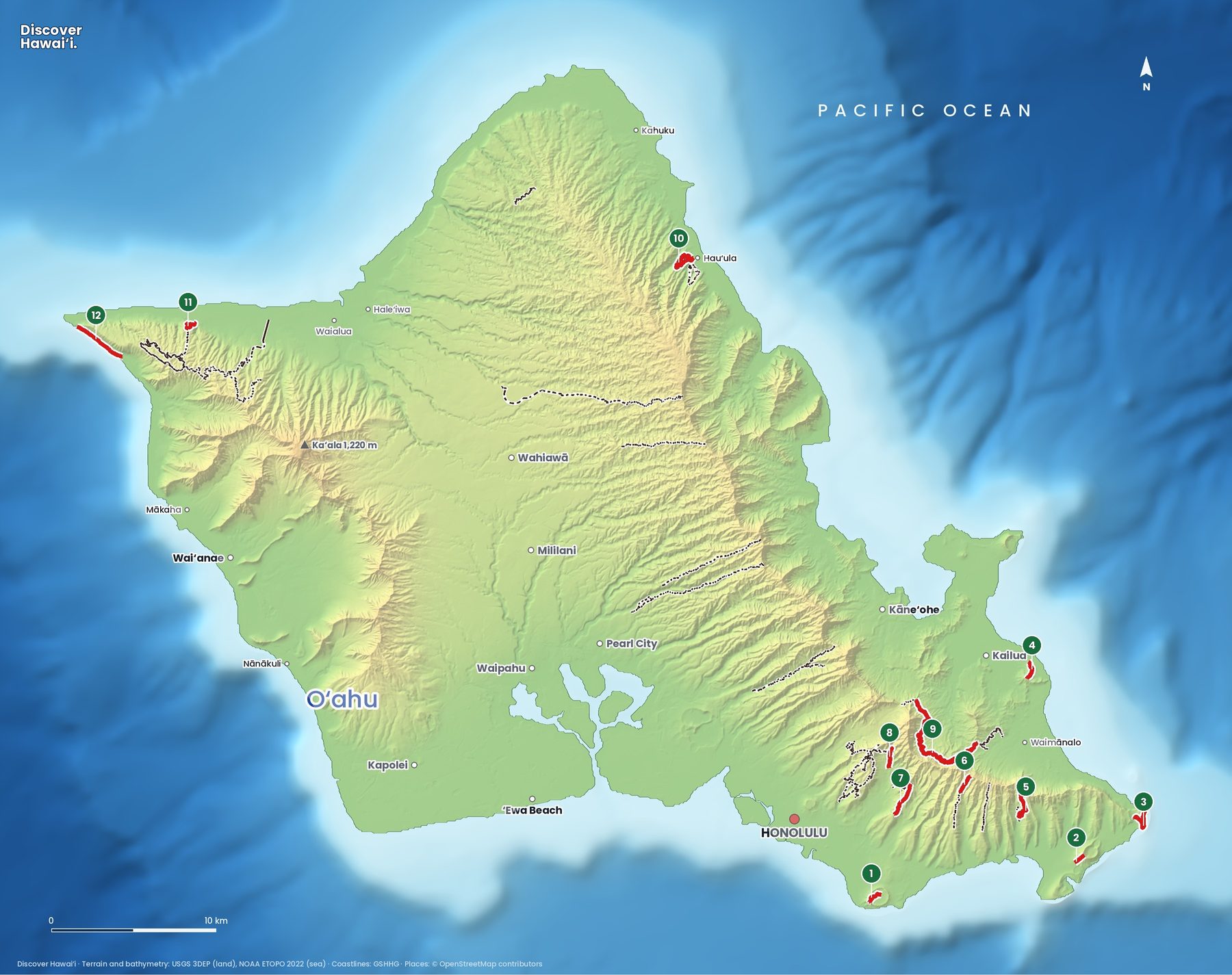
See all the routes in the Oʻahu hiking trails map.
Kauaʻi and the older islands
Kauaʻi is a single volcano five million years old, so you will not find a crater to stand in, but you can see the inside of one: Waimea Canyon is carved through the lava flows that filled the old summit caldera, and the lookouts along the canyon road show layer after layer of eruptions. On Molokaʻi, Lānaʻi and West Maui, the volcanoes are long extinct and have become valleys, sea cliffs and ridges. Our Volcanoes page maps every one of them.
Can you see lava in Hawaii?
Sometimes. Lava is only visible when Kīlauea is erupting, and in the current eruption it appears in episodes of fountaining inside the summit crater, separated by quiet pauses of days or weeks. During an episode, the glow can be seen from viewpoints in Hawaiʻi Volcanoes National Park, best at dusk and after dark. Between episodes there is nothing to see except steam. Check the USGS Hawaiian Volcano Observatory and the park's alerts on the day, and never go beyond closure signs: rims collapse and volcanic gas can be dangerous.
Safety and respect
- Altitude. Haleakalā and Mauna Kea are high enough to cause altitude sickness. Go slowly, drink water and do not go to Mauna Kea's summit within 24 hours of scuba diving.
- Cold. Summit temperatures can drop below freezing, even when it is hot at the beach.
- Vog and gas. Volcanic gas from Kīlauea can affect people with asthma or heart problems; check air quality before you go.
- Sacred places. Volcanoes are sacred in Hawaiian culture. Stay on trails, do not take lava rocks and leave offerings undisturbed.
Quick answers
Which volcano in Hawaii is the easiest to visit?
Kīlauea in Hawaiʻi Volcanoes National Park: you can drive to the caldera overlooks and walk short trails. On Oʻahu, Diamond Head is the easiest summit to hike.
Can you visit an active volcano in Hawaii?
Yes. Kīlauea is erupting in episodes and can be visited in Hawaiʻi Volcanoes National Park, and Haleakalā on Maui is considered active but quiet.
Do you need reservations to visit Hawaii's volcanoes?
For Haleakalā sunrise (3–7 am) and for Diamond Head (non-residents), yes. Hawaiʻi Volcanoes National Park needs only the entrance fee.
Can you drive to the top of a volcano in Hawaii?
Yes: Haleakalā's summit by any car, and Mauna Kea's summit by four-wheel drive only, above the visitor station.
Facts checked October 2026. Fees, reservations, closures and eruption activity change, so confirm with the official source before you go.