It began as a tailor's sideline in 1930s Honolulu, cut from Japanese kimono cloth. Within forty years the aloha shirt had become Hawaiʻi's business suit, a Hollywood costume and the most copied garment in the Pacific.
28 June 1935: a name in the newspaper
On 28 June 1935 a small advertisement appeared in the Honolulu Advertiser. Musa-Shiya Shoten, a small downtown tailor and shirtmaker, offered "aloha shirts" that were "well tailored, beautiful designs and radiant colors". It is the earliest known use of the name in print.
Nobody can say exactly who made the first one, and several families still claim the honour. What is certain is that by the mid-1930s Honolulu had all the ingredients: Japanese and Chinese tailors who could cut a shirt to measure, bolts of brightly printed cloth, students who liked to dress loud and a growing stream of visitors who wanted to take a piece of the islands home.
Kimono cloth and Chinatown tailors
The earliest shirts were made from fabric meant for something else. Japanese families in Hawaiʻi brought or imported printed cotton and silk for kimono and yukata, the light summer robe, and tailors began cutting it into short-sleeved shirts. Musa-Shiya, where the tailor Kōichirō Miyamoto worked with his wife Dolores, was one of the best known; the actor John Barrymore reportedly ordered a shirt there.
Ellery Chun, whose family ran the King-Smith dry-goods store in Waikīkī, is often credited with turning the shirt into a ready-to-wear product in the early 1930s, selling them off the rack with "aloha shirts" signs in the window. He registered "Aloha Sportswear" as a trade mark in 1936 and "Aloha Shirt" in 1937, and held the name for around twenty years.
Other firms followed fast. Kamehameha Garment Company and Branfleet, later renamed Kahala, opened in 1936, and by the end of the decade the industry employed about 450 people and was worth some $600,000 a year. Shops began commissioning their own island designs too. In 1936 Watamull's East India Store asked the artist Elsie Das to create fifteen Hawaiian prints, an early sign that the cloth itself, not just the cut, would make the shirt. Kahala later produced a line of shirts carrying the name of Duke Kahanamoku, the island's most famous waterman, whose broad shoulders were the best advertisement a print could have.
Rayon, tourists and the golden age
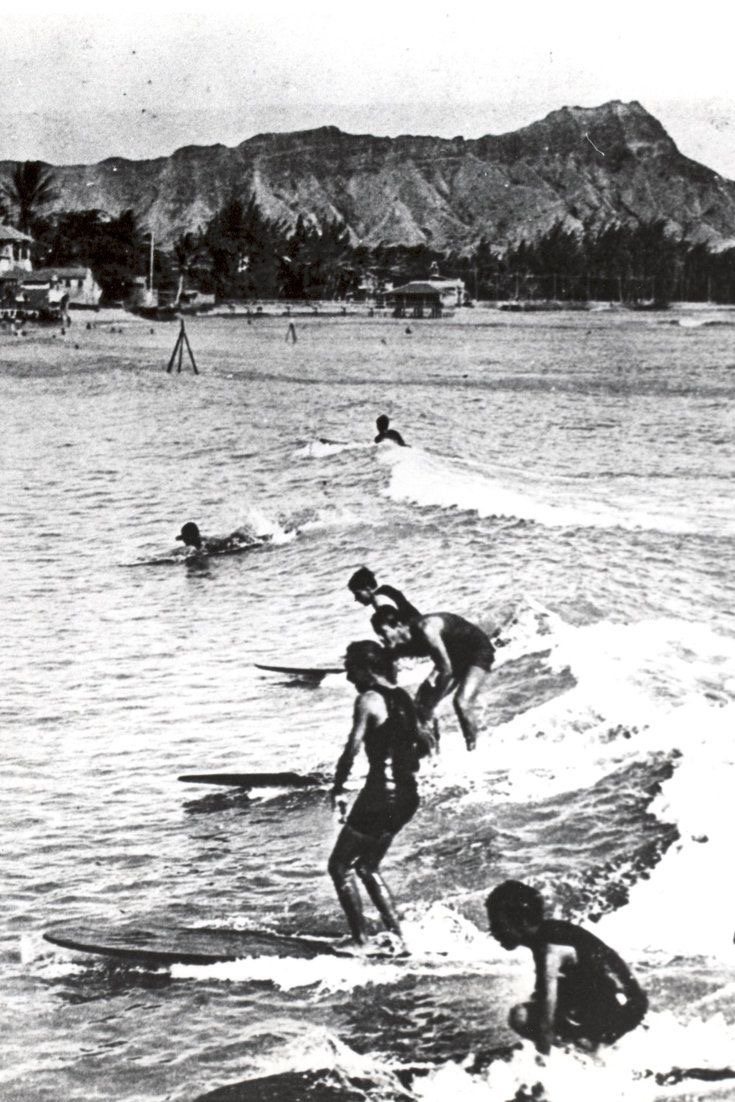
Collectors call the late 1930s to the 1950s the golden age. Silk gave way to rayon, which held deep colours and draped well, and designers moved from Japanese motifs to island scenes: hula dancers, outrigger canoes, Diamond Head, hibiscus, pineapples and tapa patterns borrowed from Hawaiian bark cloth.
Tourists drove the market. A shirt was the easiest souvenir to carry home after a boat-day arrival on a Matson liner, and servicemen passing through Honolulu in the Second World War sent thousands to the mainland. By the 1950s airline adverts showed visitors dressed head to toe in island prints, and the business had grown up: Kahala alone was selling about $1 million worth of shirts a year by 1959.
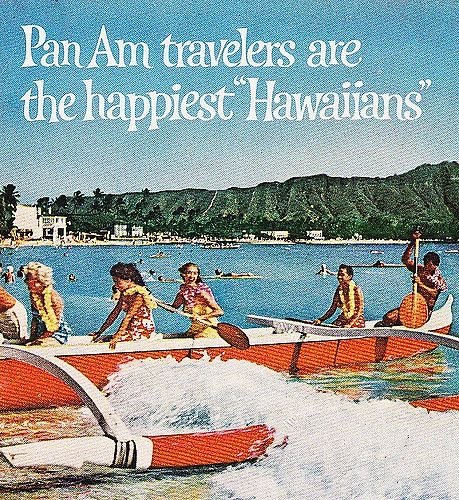
The most admired maker of the post-war years was Alfred Shaheen, who started his company in 1948 and controlled every stage himself, from designing and printing the cloth to sewing the shirts. His prints were finer and more carefully researched than most, and they reached Hollywood: Elvis Presley wears a red Shaheen shirt on the cover of the Blue Hawaii soundtrack album of 1961.
From souvenir to business suit
At home, the shirt had to fight for respect. Offices in Honolulu expected jackets and ties, whatever the weather. In 1946 the Honolulu Chamber of Commerce paid for a study of aloha shirts as work clothes, and city employees were allowed to wear sport shirts from June to October. During Aloha Week, launched in 1947, the rules were relaxed further, though in the 1950s shirts often had to be tucked in.
The decisive push came after statehood. In 1962 the Hawaiian Fashion Guild ran Operation Liberation, giving two aloha shirts to every member of the state legislature, and the Senate later recommended aloha attire for the summer. In 1965 Bill Foster Sr. led a campaign for a weekly Aloha Friday, and in 1966 it began. By 1970 an aloha shirt was accepted business dress on any day of the week. The custom became so much a part of local life that in 1982 the entertainer Kimo Kahoano and Paul Natto recorded a song about the end-of-week feeling of Aloha Friday.
That small revolution later went global. Many historians of office wear trace "casual Friday", which spread through American and European offices in the 1990s, back to Honolulu's Aloha Friday.
Reverse prints and the local look
As the shirt became everyday wear, locals developed their own taste. The bright rayon prints that tourists loved were joined in the 1960s by quieter shirts that suited an office or a wedding. Reyn McCullough, who opened his first shop in 1956 and later joined forces with Ruth Spooner, popularised the reverse print, a shirt cut so that the paler back of the printed fabric faces out. Button-down collars and soft cotton blends completed the look.
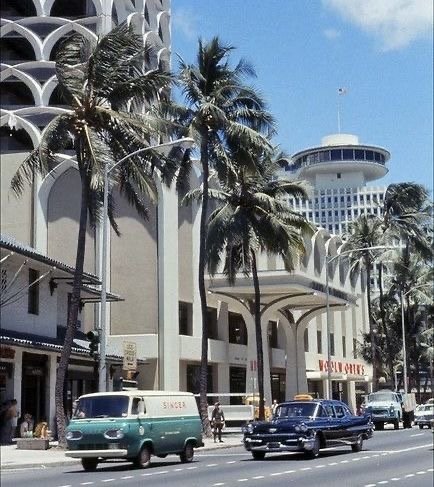
By the 1970s the aloha shirt was everywhere in Hawaiʻi: in court, in the classroom, on television detectives and on the governor. "Aloha attire" on an invitation still means an aloha shirt for men and a muʻumuʻu or island print for women.
How to buy a good aloha shirt
The aloha shirt is one of the most copied garments in the world, and most souvenir versions are mass printed far from the islands. A few things separate a good one:
- A matched pocket: on a well-made shirt the breast pocket is cut so the pattern continues across it almost invisibly. It takes more fabric and more care, which is the point.
- Buttons: coconut shell, wood or mother-of-pearl buttons are traditional; cheap plastic ones are a clue.
- The cloth: rayon drapes and keeps its colour, cotton breathes, silk is for special occasions. Reverse prints are cooler and more formal.
- The label: look for shirts designed and, ideally, made in Hawaiʻi. Long-running local labels include Reyn Spooner, Kahala and Tori Richard, and smaller designers print patterns rooted in Hawaiian plants and culture.
- The print: avoid designs that misuse sacred images, such as kiʻi (carved figures) as cartoon "tikis". Our guide to visiting Hawaiʻi respectfully has more on this.
Where to see and shop for vintage shirts
Honolulu is still the best place in the world to look at old aloha shirts. Bailey's Antiques and Aloha Shirts on Kapahulu Avenue, near Waikīkī, has one of the largest collections of vintage shirts in the city, with prices from a few dollars to collector level. Department stores and local labels around Ala Moana and Waikīkī carry new island-made shirts, and many museum shops sell prints by local designers. Combine a shopping trip with our things to do in Honolulu.
The shirt is a small object with a large story about migration, tourism and how island people made a borrowed style their own, a theme that runs through The History of Hawaii. Wear one on a Friday and you are taking part in a Honolulu custom that is now sixty years old.
Quick answers
Who invented the aloha shirt?
No single person. Honolulu tailors were cutting shirts from Japanese kimono fabric by the early 1930s. Musa-Shiya Shoten used the name aloha shirt in a 1935 newspaper advert, and Ellery Chun of King-Smith Clothiers sold them ready-made and registered the name as a trade mark.
What is the difference between an aloha shirt and a Hawaiian shirt?
In Hawaiʻi they are called aloha shirts; Hawaiian shirt is the mainland term. A genuine aloha shirt is usually designed or made in Hawaiʻi, with island prints and good construction.
When did Aloha Friday start?
Aloha Friday began in 1966, after a campaign by the Hawaiian Fashion Guild led by Bill Foster Sr. By 1970 aloha shirts were accepted business wear on any day of the week in Hawaiʻi.
Should an aloha shirt be tucked in?
Traditionally no. The straight hem is designed to be worn untucked, even with smart trousers, though in the 1950s offices sometimes required it.
What shirt did Elvis wear in Blue Hawaii?
On the cover of the 1961 Blue Hawaii soundtrack album Elvis Presley wears a red aloha shirt designed by the Honolulu maker Alfred Shaheen.
Facts checked October 2026 against the sources below and the research for our book The History of Hawaii. Vintage photos and adverts are shown as period illustrations; adverts are credited to their original advertisers.