Long before 1778, Hawaiians built one of Polynesia's most elaborate societies, with sacred law, mountain-to-sea land divisions and farms that fed whole valleys.
Morning in Waipiʻo
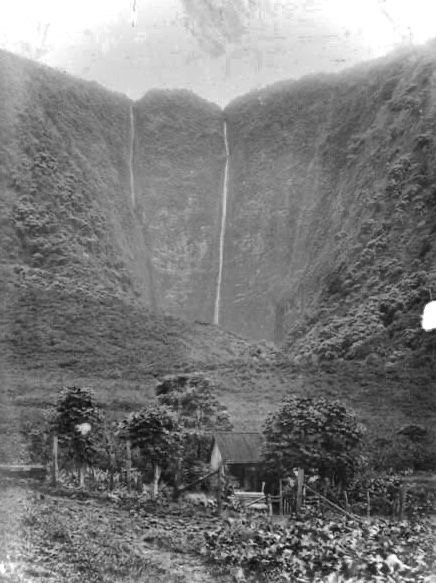
Imagine Waipiʻo Valley on the north coast of Hawaiʻi Island a few centuries ago. Mist hangs on cliffs hundreds of metres high, and water from the falls at the head of the valley runs through stone-banked ditches into terrace after terrace of taro. Farmers are already knee-deep in the cool mud, fishers are heading for the river mouth, and smoke rises from earth ovens outside the thatched houses.
Waipiʻo was a seat of chiefs, remembered as the place where the young Kamehameha spent part of his boyhood, and it was also simply a working valley that fed a large population. Its rhythm was repeated across the islands, in hundreds of valleys and coastal plains, for generations before any foreign ship arrived.
So what was daily life in ancient Hawaiʻi actually like? It was ordered by rank, governed by sacred law, organised around land that ran from mountain to sea, and fed by some of the most sophisticated farming and aquaculture in the Pacific.
Chiefs, priests and commoners
When Europeans arrived in 1778, Hawaiian society was sharply ranked. At the top stood the aliʻi, chiefs who traced their descent from the gods. Rank came from genealogy, and the highest-born carried the greatest mana, a spiritual power that could be dangerous to those beneath them.
Below the chiefs came the kahuna, the priests and the masters of skilled crafts such as canoe building, healing and navigation. The great majority were makaʻāinana, the commoners: farmers, fishers and labourers who worked the land and paid tribute upwards. At the bottom were the kauwā, a hereditary outcast class.
The system was hierarchical but not static. Commoners were not tied to a single chief and could move if they were treated badly, and chiefs relied on a contented, productive population to stay in power.
Kapu: the sacred law
Binding everything together was kapu. The word is usually translated as "forbidden", but it also means "sacred"; its opposite is noa, free or ordinary. Kapu protected the sanctity of high chiefs, governed religious practice, and set seasons for fishing, planting and harvesting so that resources were not exhausted.
Some rules shaped every day. Commoners lay face down before the most sacred chiefs. Under the ʻai kapu (sacred eating), men and women ate separately, and pork, coconuts, most bananas and certain fish were forbidden to women. Breaking a serious kapu could mean death.
There was one escape. A kapu-breaker who reached a puʻuhonua, a place of refuge, ahead of his pursuers could be absolved by the priests there and return home. The finest surviving example is Puʻuhonua o Hōnaunau on the Kona coast. The whole system was abandoned in 1819, soon after Kamehameha's death, when Hawaiian leaders chose to break the ʻai kapu in public.
The ahupuaʻa: from mountain to sea
Each island was divided into districts, called moku, and each moku into ahupuaʻa. An ahupuaʻa usually followed a valley or watershed from the uplands down to the reef, so that the people living in it could reach everything they needed: timber and birds' feathers in the forest, water from the stream, farmland on the slopes and flats, and fish on the shore and reef.
The name joins ahu, a stone heap or altar, and puaʻa, pig: a cairn marked the boundary, where tribute was laid for the chief. A konohiki, a land manager appointed by the chief, oversaw each ahupuaʻa's water, fishing rights and labour, and could set seasonal kapu to protect fish and plants.
The result was a system in which uplands and coast, farmers and fishers, depended on each other. Many Hawaiians today still use the ahupuaʻa as a model for caring for land and water.
Kalo, the elder brother
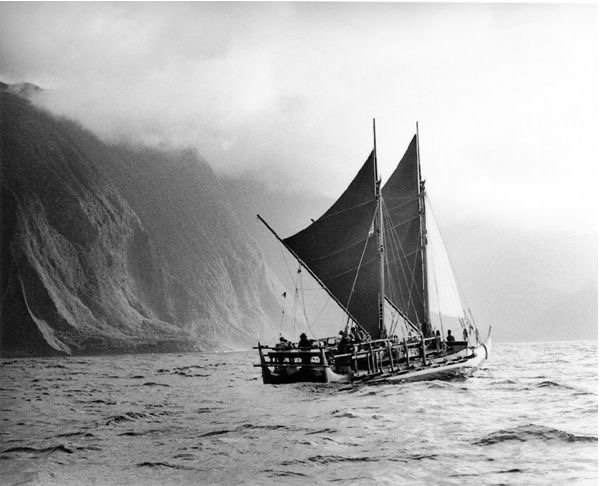
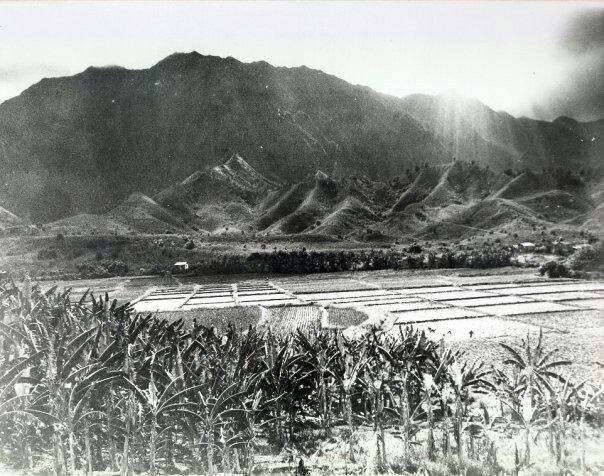
The first settlers brought their crops by canoe, the story told in how Polynesians discovered Hawaiʻi. Above all came kalo (taro). It grew in loʻi, irrigated pond fields fed by ʻauwai (ditches) that carried cold, fresh stream water from one terrace to the next. Hawaiians developed an estimated 300 varieties. Steamed and pounded with a stone, kalo became poi, the staple of every meal.
Where water was scarce, on dry leeward slopes, farmers planted ʻuala (sweet potato) instead, alongside breadfruit, bananas, sugar cane and coconuts. Wauke, the paper mulberry, was beaten into kapa cloth for clothing and bedding.
Kalo was more than food. In the tradition of Wākea, the Sky Father, his first child was born lifeless and buried, and from the grave grew the first taro. A second child, Hāloa, became the ancestor of the Hawaiian people. Kalo is therefore the elder brother, to be cared for, and in return it feeds the family.
Farming the sea: the fishponds
Hawaiians were also master fish farmers. Their loko iʻa (fishponds) ranged from inland freshwater ponds to the loko kuapā, a pond enclosed from the sea by a wall of stacked lava stone that let water through but broke the waves. A mākāhā, a sluice gate in the wall, let small fish swim in with the tide; once they had grown fat on algae, they could no longer squeeze out.
The main crops were ʻamaʻama (mullet) and awa (milkfish), often reserved for chiefs. The wall at Kaloko Fishpond on the Kona coast, a favourite of Kamehameha I, runs about 229 m (250 yd) and is 9–12 m (30–40 ft) wide; the National Park Service calls it the largest retaining fishpond wall in the state.
Home, heiau and the season of Lono
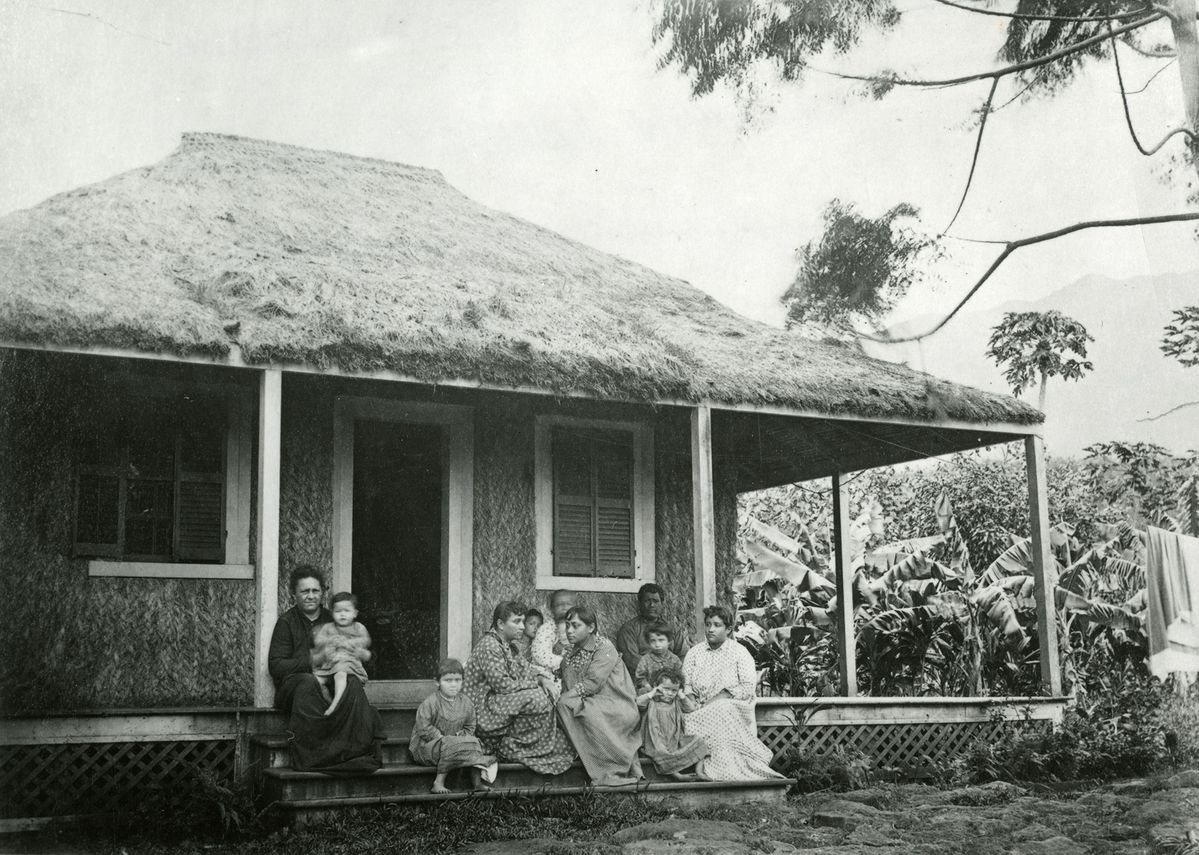
A family lived not in one house but in a kauhale, a cluster of thatched buildings. There was a hale noa where the family slept together, a hale mua where men ate and gathered, a separate eating house for women, a house for women during menstruation, and sheds for canoes and fishing gear. Frames of timber were bound with cord and thatched, ideally with pili grass, which gave a new house a sweet smell.
Above the household stood the gods, worshipped at heiau (temples). Kāne was the creator, Kū the god of war and of chiefs, Lono the god of rain and fertility, and Kanaloa was linked with the ocean. The largest heiau were luakini, war temples that only a ruling chief could build.
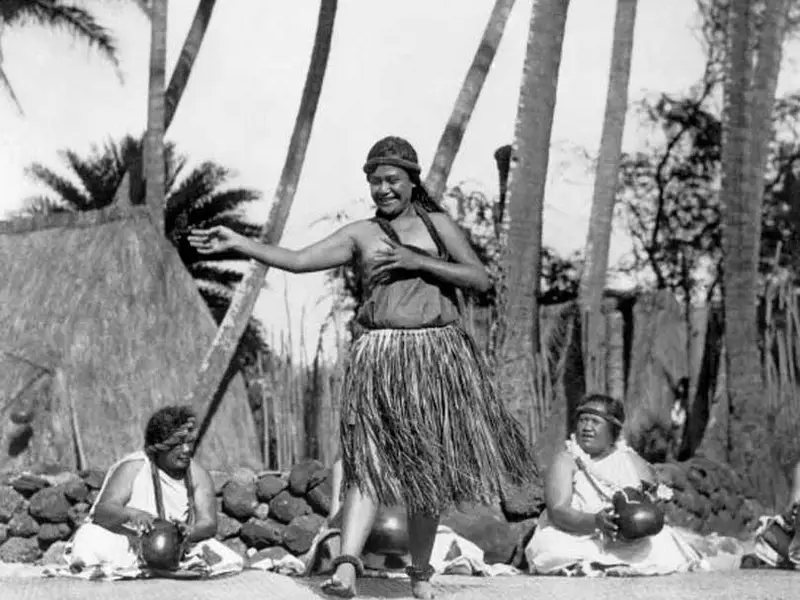
Every year, when Makaliʻi (the Pleiades) rose at dusk, usually in November, the Makahiki began: about four months honouring Lono, when war was forbidden. Priests carried Lono's image around the island, and at each ahupuaʻa boundary people offered pigs, taro, dried fish, kapa and feathers as tribute. Then came feasting, hula, boxing, sledding and surfing, the sport whose story is told in the history of surfing in Hawaiʻi.
Where to see ancient Hawaiʻi today
On Hawaiʻi Island, Puʻuhonua o Hōnaunau National Historical Park has a reconstructed temple, the massive Great Wall and royal grounds by the sea, and Kaloko-Honokōhau National Historical Park near Kailua-Kona protects Kaloko Fishpond and other ponds. The Waipiʻo Valley lookout gives a view of the valley floor; check current access rules before heading down. Our things to do on the Big Island guide puts these in a route.
On Oʻahu, Heʻeia Fishpond in Kāneʻohe Bay is being restored by a community group, and Bishop Museum in Honolulu brings the gods, crafts and chiefs to life. When visiting any heiau or burial site, stay on paths, leave stones where they are and follow the guidance in visiting Hawaiʻi respectfully. The full story of this world, and how it changed after 1778, is in The History of Hawaii; for the bigger picture, see the Hawaii history timeline.
Quick answers
What was the ahupuaʻa system?
An ahupuaʻa was a land division that usually ran from the mountains to the sea, giving its people access to forest, fresh water, farmland and fishing grounds. It was managed for the chief by a konohiki.
What was the kapu system in ancient Hawaii?
Kapu was a system of sacred laws that protected chiefs and religion, regulated fishing and farming, and kept men and women apart at meals. Serious breaches could be punished by death. It ended in 1819.
What did ancient Hawaiians eat?
The staple was poi made from kalo (taro), with sweet potato, breadfruit and bananas, plus fish from the sea and fishponds. Pigs, dogs and chickens were raised, and some foods were kapu for women.
What were Hawaiian fishponds used for?
Fishponds (loko iʻa) raised fish such as mullet and milkfish. Walled sea ponds used sluice gates that let young fish in with the tide but kept grown fish inside.
Where can I see ancient Hawaiian sites?
Good places include Puʻuhonua o Hōnaunau and Kaloko-Honokōhau national historical parks on Hawaiʻi Island, Heʻeia Fishpond on Oʻahu and Bishop Museum in Honolulu.
Facts checked October 2026 against the sources below and the research for our book The History of Hawaii. Dates and figures for early Hawaiian history are estimates and scholars still debate some of them.