For half a century the way to arrive in Hawaiʻi was by sea, and the way to arrive in style was on one of Matson's white liners. Boat Day turned every arrival into a festival. Then the jets came.
21 April 1948: the Lurline comes home
On 21 April 1948 the SS Lurline steamed into Honolulu as a passenger liner for the first time since 1941. She had spent the Second World War painted grey, carrying troops across the Pacific, and Matson had just spent about $20 million turning her back into a luxury liner. Honolulu turned out to meet her.
Fourteen outrigger canoes, organised by the Outrigger Canoe Club and crewed by Kamehameha School students in traditional dress, paddled out to meet her, scattering flowers on the water. Some went as far as Diamond Head with fruit and flowers, recalling the days when Hawaiians traded island produce with arriving ships. They escorted the liner to Pier 11, where a couple playing a Hawaiian king and queen, carried on a double canoe, offered a chanted welcome. Boat Day was back.
Matson and the white ships
The company behind Boat Day began with a Swedish-born sea captain, William Matson, who first sailed to Hawaiʻi in 1882 with a cargo for Hilo aboard the schooner Emma Claudina. His business grew on sugar freight, but he and his successors saw that wealthy Americans would cross an ocean for a holiday if the ship and the hotel were grand enough.
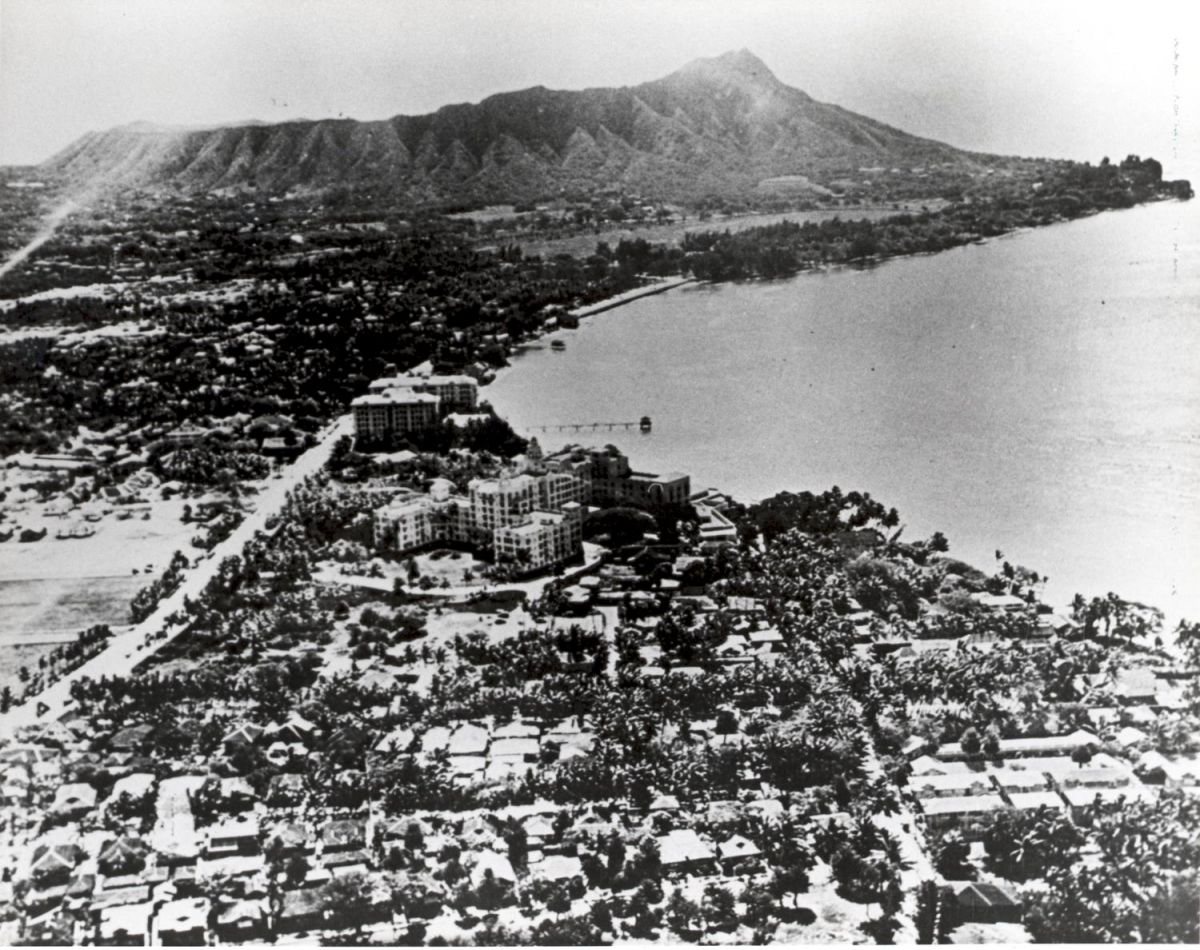
In 1927 Matson launched the Malolo, the fastest ship in the Pacific at about 22 knots, and the same year opened the pink Royal Hawaiian Hotel on the beach at Waikīkī to give its passengers somewhere to stay. Three more liners, the Mariposa, Monterey and Lurline, followed in 1931 and 1932, and in 1932 the company bought the Moana Hotel too. Painted white, the fleet became known as the White Ships, and by the 1930s a liner was reaching Honolulu roughly every two weeks with several hundred passengers aboard. The longer story of the hotels is in our history of Waikīkī.
Four and a half days at sea
The crossing from San Francisco or Los Angeles took four and a half to five days, and it was part of the holiday. Passengers read in deck chairs, swam in the pool, dressed for dinner and danced in the evenings. A favourite game was horse racing with wooden horses moved by the throw of dice. Children explored the passageways and the gift shop, and by the last night the ship had become a small town.
Wealthy families came for whole seasons, sometimes shipping their cars and bringing their own staff; the Royal Hawaiian had rooms for servants. For island families the liners were also the way to the mainland, and generations of local students sailed to college on the Lurline each September.
Boat Day under Aloha Tower
The stage for arrival was Aloha Tower, finished in 1926 at the edge of Honolulu Harbor. At 56 m (184 ft) it was the tallest building in the islands for some forty years, with a huge clock and the word ALOHA on each face. When a liner was due, the piers below filled with people.
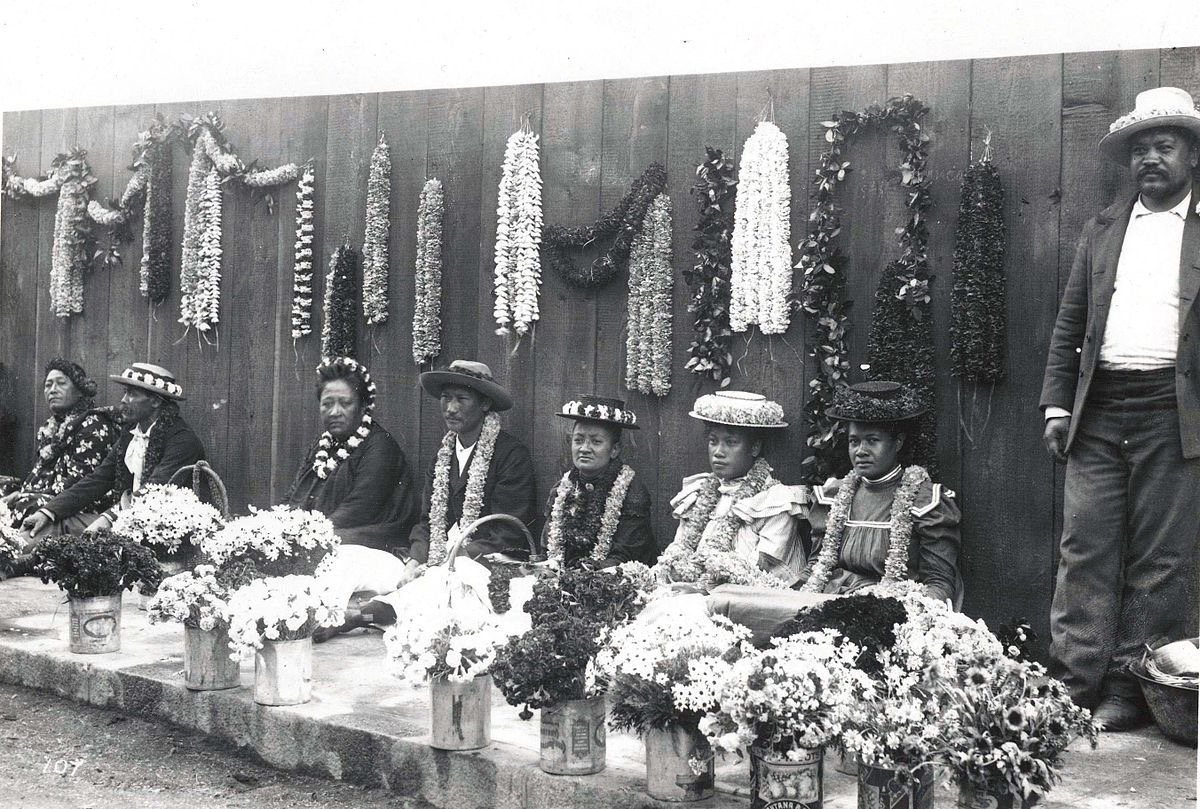
The Royal Hawaiian Band played on the wharf, hula dancers performed, and lei sellers along the pavement called out their prices, which dropped as sailing time came closer. In the water beside the ship, local boys dived for coins tossed by passengers from the rails. Arrivals left the pier draped in flowers, a custom traced in our history of the lei and Lei Day. At the Royal Hawaiian, new guests were greeted on the lawn with Hawaiian music, hula and pineapple juice while their trunks were carried up.
Departures were more emotional still. Passengers threw coloured paper streamers to the people on the pier, and the ship pulled away until the streamers stretched and broke as the ship's whistle sounded three times, the last thread to the island snapping. Island composers wrote about these partings; the Hawaiian-language song "Matsonia" by Leialoha Kalaluhi tells of a loved one sailing away aboard the liner of that name.
War and a second golden age
The attack on Pearl Harbor ended the first era overnight. On 7 December 1941 the Lurline was midway between Honolulu and San Francisco. Within weeks she and her sisters had been painted grey and turned into troopships. Together the four converted liners made 119 wartime voyages and carried some 736,000 troops, and all of them survived. Aloha Tower was painted in camouflage and its beacon shut off.
Peace brought a second, shorter golden age. In 1946 the Matsonia, the former Malolo, became the first Matson liner back in white, and the Lurline returned in 1948. The cost of restoring the old Mariposa and Monterey was so high that both were sold, but in 1957 Matson brought the Monterey back, refitted and renamed Matsonia, to sail alongside the Lurline.
The jets and the last Boat Day
By the late 1950s the writing was on the wall. Propeller airliners already carried a growing share of visitors, and in 1959 jets cut the flight from the West Coast to around five hours. The story of that shift is told in our golden age of Hawaii tourism. Honolulu still went ahead with a grand rebuilding of its passenger piers: a contract worth more than $5 million was signed in 1963 and the new terminals were dedicated on 29 March 1965. Within five years they were largely unused.
In 1963 the ageing Lurline was sold to a Greek line, and the second Matsonia took over her famous name. That ship, the last Lurline, sailed her final Boat Day in June 1970. Matson ended its passenger service the same year to concentrate on cargo, a business it had already transformed by adopting shipping containers from 1958, and the liner went to Greece's Chandris Lines as the Britanis. More than four decades of white ships had ended. In 1994 the 1960s pier buildings were cleared away and Aloha Tower stood alone again.
Where to find Boat Day today
- Aloha Tower, Honolulu Harbor: the tower turned 100 in 2026 and still stands over Piers 10 and 11, where cruise ships dock. Watching a big ship come in under the tower is the closest thing to a Boat Day left.
- The Royal Hawaiian, Waikīkī: Matson's Pink Palace is still a hotel, and its lobby and gardens are open to anyone for a look or a drink.
- The Moana Surfrider, Waikīkī: the other Matson-era grand hotel, with its 1901 Banyan Wing and courtyard.
- Cruising between the islands: a few lines still sail the islands; see island hopping in Hawaiʻi for how cruises compare with flying.
Boat Day survives above all in family photo albums and in the lei that still greet visitors at the airport. The wider story of how Hawaiʻi learned to welcome the world is part of The History of Hawaii, and the decade when the liners still ruled is pictured in Hawaii in the 1950s.
Quick answers
What was Boat Day in Hawaii?
The celebration that greeted passenger liners at Honolulu Harbor from the 1920s until 1970. Crowds gathered under Aloha Tower with the Royal Hawaiian Band, hula dancers, lei sellers and boys diving for coins thrown by passengers.
How long did it take to sail to Hawaii on the Lurline?
About four and a half to five days from San Francisco or Los Angeles to Honolulu on Matson's liners.
When was the last Boat Day in Honolulu?
The last Matson Boat Day departure was in June 1970, when the Lurline (the former Monterey and Matsonia) made her final sailing for the company before Matson ended passenger service.
What happened to the SS Lurline?
The 1932 Lurline was sold in 1963 and sailed for a Greek line as the Ellinis until she was scrapped in the 1980s. Her successor, the 1932 Monterey renamed Lurline, was sold to Chandris in 1970 as the Britanis and sank under tow off South Africa in 2000.
Can you still visit Aloha Tower?
Yes. Aloha Tower still stands at Honolulu Harbor beside Piers 10 and 11, where cruise ships dock, and the area around it is open to the public.
Facts checked October 2026 against the sources below and the research for our book The History of Hawaii. Vintage photos and adverts are shown as period illustrations; adverts are credited to their original advertisers.
- Boat Day Interrupted (Outrigger Canoe Club, Ka Nūpepa, April 2015)
- Lurline (Images of Old Hawaiʻi)
- Aloha Tower history
- Aloha Tower at 100 years old, part II (Aloha State Daily)
- Monterey / Matsonia / Lurline / Britanis (Great Ships)
- Matsonia, song by Leialoha Kalaluhi (Huapala)
- Maritime memories made aboard Matson's vessels (Honolulu Star-Advertiser)
- Only four and a half days (Tattered and Lost Ephemera)