In 1959 a trip to Hawaiʻi still meant days at sea for most visitors. A decade later it meant five hours in a jet, and more than a million people a year were making it.
October 1960: four and a half hours
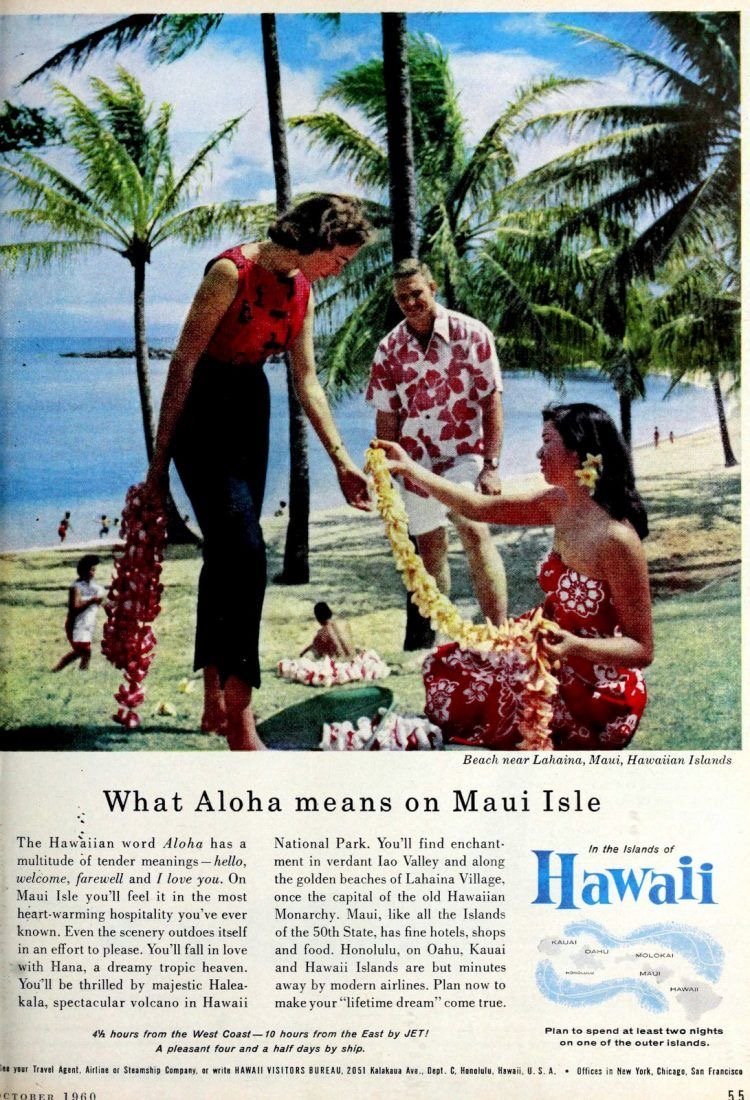
Turn to page 55 of an American magazine in October 1960 and you meet a scene on a beach near Lahaina, Maui. A visitor in a red blouse holds out her hands while a young woman in a floral sarong offers her a lei, and a man in an aloha shirt grins behind them. The headline reads "What Aloha means on Maui Isle". At the bottom, in small italic type, is the line that mattered most: "4½ hours from the West Coast... by JET!"
Right below it the advert added, almost as an afterthought, "A pleasant four and a half days by ship." In a single page the Hawaii Visitors Bureau had captured the hinge of an era. For a century Hawaiʻi had been a voyage. Within a few years it would be a flight, and the islands would never be quiet again.
The age of the white ships
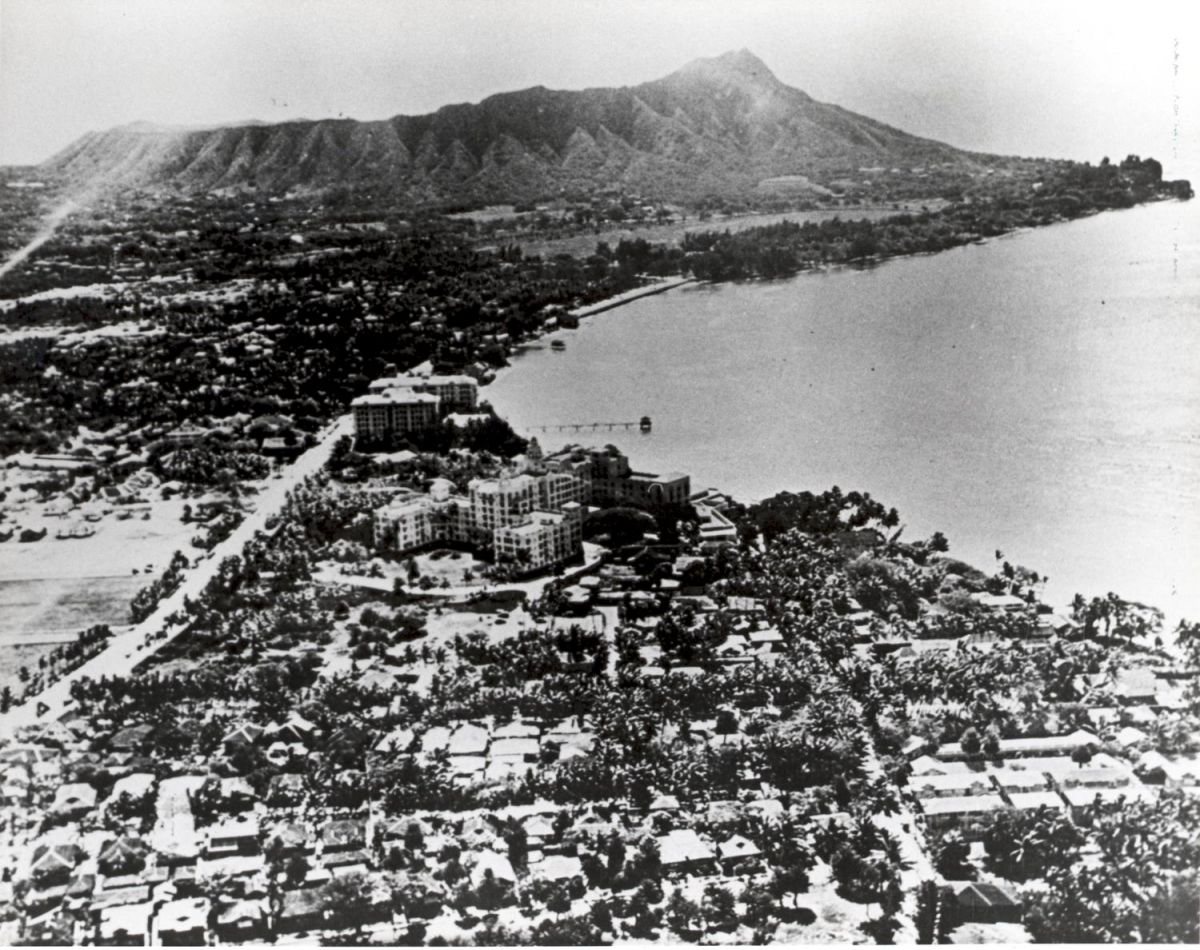
Before the jets, most visitors arrived by sea, and most of them came with Matson. The company's white liners ran between California and Honolulu, and the arrival under Aloha Tower, with lei sellers, the Royal Hawaiian Band and boys diving for coins, became the most famous welcome in the Pacific (we tell that story in boat days and the Matson liners). Matson also owned the hotels its passengers stayed in, including the pink Royal Hawaiian at Waikīkī.
The Second World War stopped all of it. The liner Lurline became a troopship, and it took Matson until 15 April 1948 to put her back on the San Francisco, Los Angeles and Honolulu run after a refit costing more than $18 million. A year later a maritime strike cut visitor numbers to about 25,000. Ships were glamorous, but they were also slow and vulnerable.
Clippers and propellers
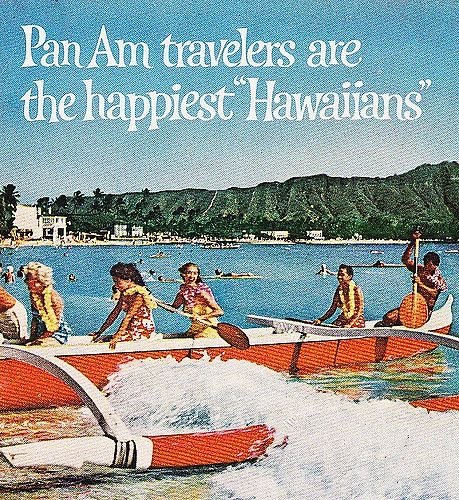
The challenge had come from the air years earlier. On 22 November 1935 Pan Am's China Clipper, a Martin M-130 flying boat, left Alameda in California carrying only mail. Passenger service began on 21 October 1936 with the Hawaii Clipper. The flight took about 18 hours and a round trip cost $648, a fortune at the time, so only the very rich flew.
After the war the propeller airliners arrived in earnest. Northwest began flying to Honolulu at the end of 1948 with Douglas DC-4s, and United's double-deck Stratocruisers cut the crossing to roughly eight or nine hours from 1949. Flying was now faster than sailing by days, though still a long night in the air. The airlines began printing posters to match, many of them now prized by collectors (see vintage Hawaii travel posters and ads).
Selling paradise: the Visitors Bureau
Behind the ships and planes stood a promotion machine that was older than either. In 1903 the territorial legislature voted $15,000 for a Hawaii Promotion Committee, in a year when about 2,000 visitors arrived. It became the Hawaii Tourist Bureau in 1919 and was relaunched in 1945 as the Hawaii Visitors Bureau, run as a non-profit with money from business and, increasingly, from government.
The bureau and its partners invented much of what visitors still picture. The radio programme Hawaiʻi Calls, produced by Webley Edwards from 1935, carried steel guitar and surf sounds from Waikīkī to listeners across the mainland for nearly four decades. In 1937 Kodak began a free hula show at Kapiʻolani Park so visitors could photograph dancers in daylight. Aloha Week was launched in 1947 to fill hotel rooms in the autumn, and in 1953 the bureau named its first official Poster Girl, Mae Beimes.
1959: statehood and the jet
Then came 1959. Hawaiʻi became the fiftieth state in August (the politics are covered in Hawaii statehood 1959), and the same summer Qantas began the first jet service through Honolulu, flying Boeing 707s between Sydney, Fiji, Honolulu and San Francisco. American carriers followed with 707s and DC-8s, and the flight from the West Coast fell to about five hours.
The effect was immediate and dramatic. These visitor counts, from the Visitors Bureau and the state's data books, tell the story:
| Year | Visitors to Hawaiʻi | What was happening |
|---|---|---|
| 1941 | 31,846 | A pre-war record, by sea and flying boat |
| 1949 | about 25,000 | Maritime strike halts the liners |
| 1955 | 109,798 | Propeller airliners and liners share the trade |
| 1959 | 243,216 | Statehood and the first jets |
| 1967 | over 1 million | A new record, and talk of limits |
| 1970 | about 1.6 million | Jumbo jets arrive |
The ships could not compete. Matson laid up its Matsonia in late 1962 and sold the old Lurline in 1963, and by 1970 the company had left the passenger trade for good. That same year Pan Am began flying the Boeing 747 to Hawaiʻi, and mass tourism, rather than tourism for the well-off, had arrived.
What the boom built
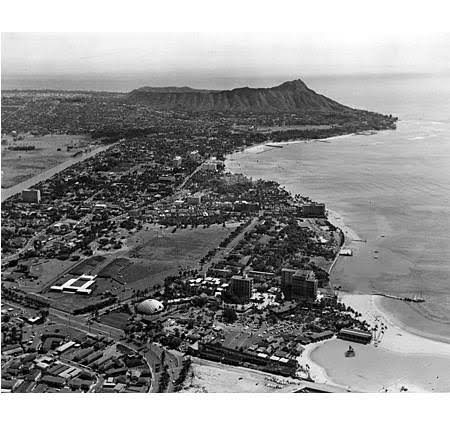
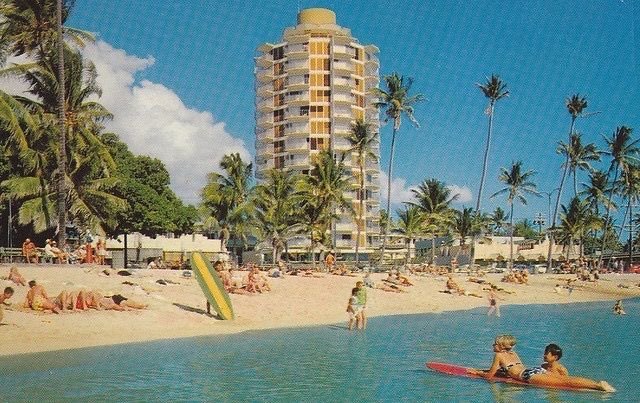
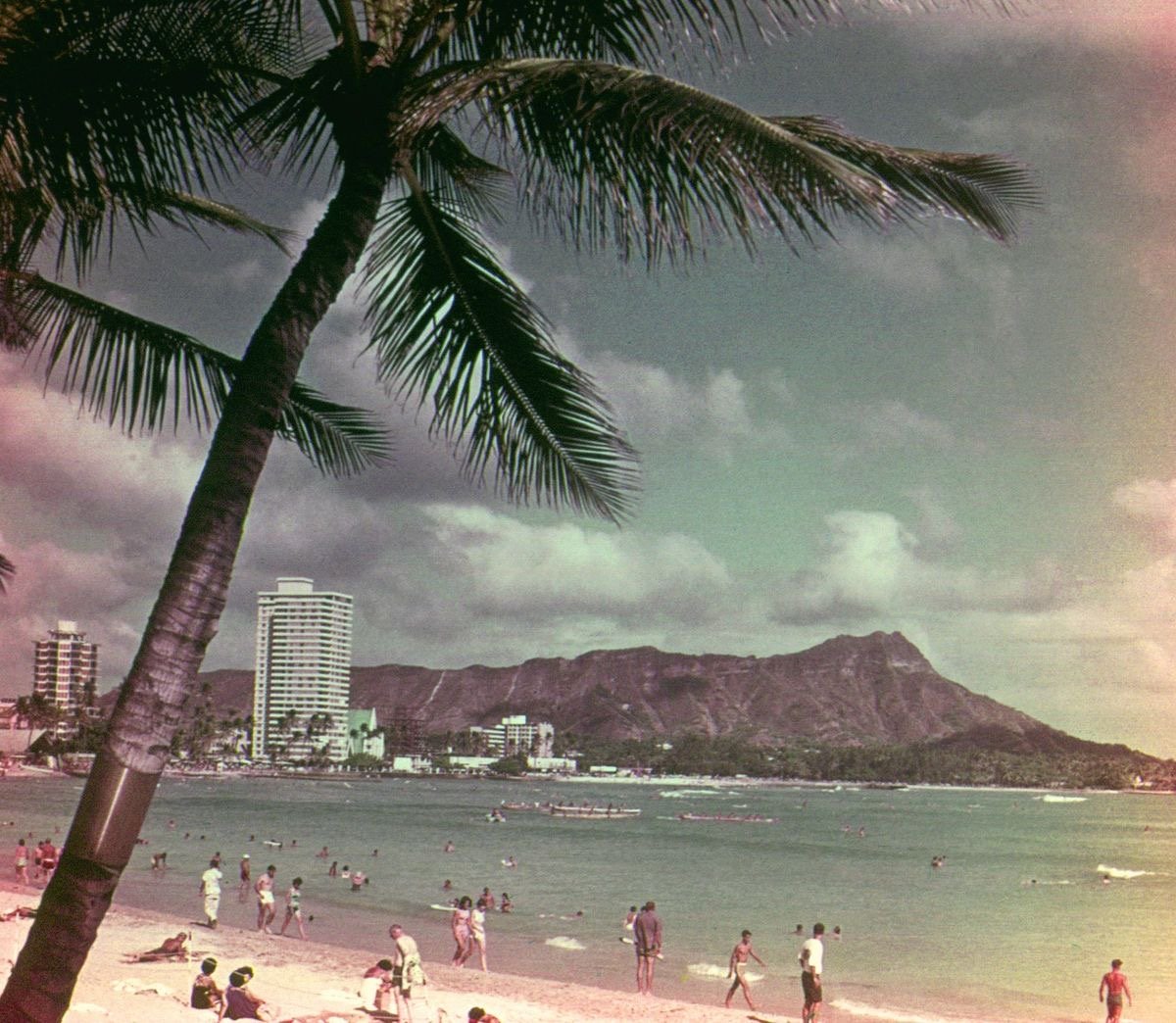
Visitors needed beds, and Waikīkī rose to meet them. Henry J. Kaiser's Hawaiian Village opened in 1955 with thatched cottages and a lagoon (see tiki culture and Hawaii hotels), the Ilikai followed in 1964, and towers multiplied along the shore, a story told in Waikīkī in the 1960s and 1970s. Ala Moana Center opened beside the city in August 1959.
The bureau's adverts also began pushing visitors beyond Oʻahu. The 1960 Maui page told readers to "plan to spend at least two nights on one of the outer islands", promising they were "but minutes away by modern airlines". That meant the inter-island carriers, whose story we follow in Aloha Airlines and inter-island flights.
Not everyone celebrated. Farmland and old neighbourhoods gave way to hotels and subdivisions, critics said many jobs in the new industry paid poorly, and many Native Hawaiians saw their culture packaged as a backdrop. By the end of the 1960s those doubts were feeding the cultural awakening described in the Hawaiian Renaissance.
Finding the golden age today
Much of the era survives if you know where to look:
- Aloha Tower, Honolulu Harbor: the old welcome point for the liners, still standing over the cruise piers.
- The Moana and the Royal Hawaiian, Waikīkī: the two Matson-era grand hotels are still open, and their lobbies and verandas keep the pre-jet atmosphere.
- The Ilikai: the 1964 tower that featured in the opening credits of Hawaii Five-O.
- International Market Place, Kalākaua Avenue: founded in 1956 under a great banyan; a plaque marks the treehouse of its creator, Donn Beach.
Vintage postcards, menus and magazine adverts like the ones on this page turn up in Honolulu antique shops and online, and they are a cheap, vivid way to hold the period in your hand. For the longer arc, from the first voyagers to the jet age, see our book The History of Hawaii, and for a walk through the city's older landmarks try things to do in Honolulu.
Quick answers
When did tourism boom in Hawaii?
The boom began in 1959, when statehood coincided with the first jet airliners. Visitor numbers rose from about 243,000 in 1959 to more than one million in 1967 and about 1.6 million in 1970.
How long did it take to sail to Hawaii in the 1950s?
The Matson liners took about four and a half days from the West Coast. A Hawaii Visitors Bureau advert of 1960 contrasted that with four and a half hours by jet.
When was the first commercial flight to Hawaii?
Pan Am's China Clipper carried mail from Alameda to Honolulu in November 1935, and regular passenger flights began on 21 October 1936. The flight took about 18 hours.
When did the first jet fly to Hawaii?
Scheduled jet service began in the summer of 1959, when Qantas flew Boeing 707s through Honolulu on its Sydney to San Francisco route. American airlines followed soon after.
When did Matson stop passenger service to Hawaii?
Jet competition emptied the liners in the early 1960s. Matson sold the original Lurline in 1963 and ended its Hawaiʻi passenger service altogether around 1970, becoming a cargo company.
Facts checked October 2026 against the sources below and the research for our book The History of Hawaii. Vintage photos and adverts are shown as period illustrations; adverts are credited to their original advertisers.
- HVCB: History of the Hawaiʻi Visitors & Convention Bureau
- Wikipedia: SS Lurline (1932)
- Beat of Hawaii: First Pan Am Hawaii flight changed the world
- SFGate: 89 years ago, an SF-to-Hawaii flight changed the world forever
- Northwest Airlines History Centre: 1957 Airventure Guide to Hawaii
- Wikiwand: Daniel K. Inouye International Airport (history)
- Beat of Hawaii: Boeing 747 in Hawaii, 50 years
- State of Hawaii Data Book 1971, Section 11 (archive)