In January 1778 two British warships ended centuries of Hawaiian isolation. Thirteen months later their captain lay dead on the lava shore of Kealakekua Bay, and the islands had joined the wider world for good.
Two ships off Oʻahu
On 18 January 1778, lookouts aboard HMS Resolution and HMS Discovery saw a high, green island rise out of the Pacific. It was Oʻahu. Soon a second island, Kauaʻi, appeared to the north-west. Captain James Cook, two years into his third great voyage and bound for the Arctic in search of a Northwest Passage, had come upon the most isolated inhabited islands on Earth.
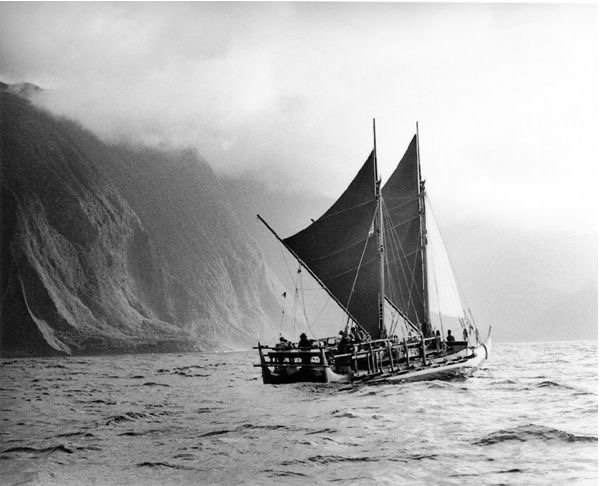
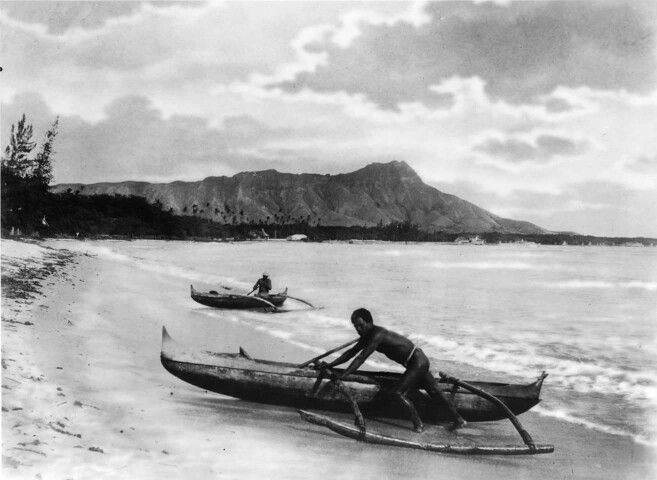
For centuries after the great voyaging era (see how Polynesians discovered Hawaiʻi), the islands had lived apart from the rest of humanity. Within a year of Cook's arrival they were on European charts, and within a generation they were part of the world economy. This is the story of those thirteen months, and of a death on a lava shore that has made Cook's name in Hawaiʻi complicated ever since.
Waimea, January 1778: the first landing
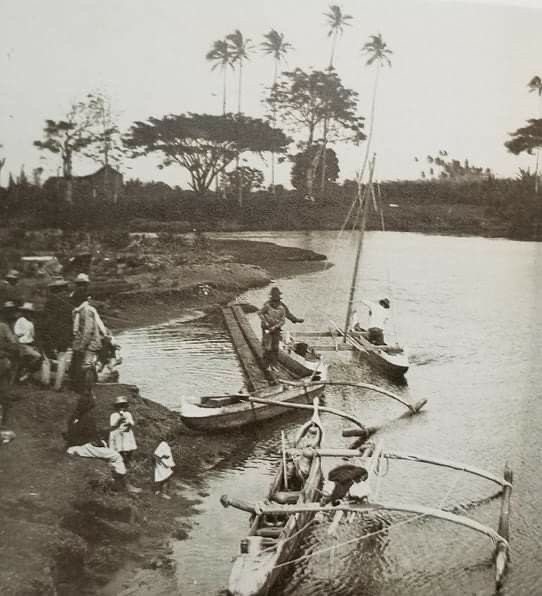
On 20 January the ships anchored off the mouth of the Waimea River on Kauaʻi's south-west coast. Cook sent Lieutenant John Williamson ahead to look for fresh water, then went ashore himself with three armed boats. Villagers and aliʻi (chiefs) met the strangers, and the next day Cook walked up the valley, noting temples and carefully tended fields.
Iron was what islanders wanted most, and nails changed hands quickly for pigs, taro and sweet potatoes. Cook named the group the Sandwich Islands after his patron, the 4th Earl of Sandwich, First Lord of the Admiralty. The ships sailed north on 2 February.
They left something deadly behind. Cook knew that many of his men carried venereal disease and ordered them kept away from Hawaiian women. The orders failed. When the ships came back to the islands that November, people on Maui were already blaming the visitors for illnesses they had never seen before.
The season of Lono
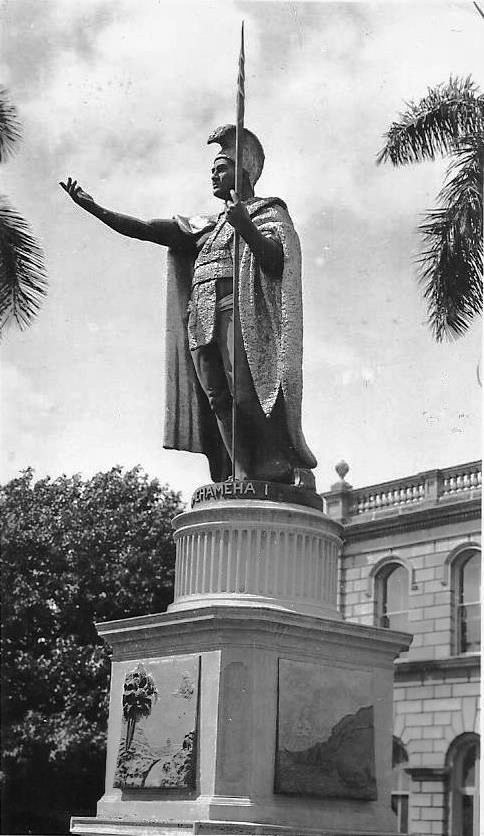
Cook spent the northern summer probing the Arctic ice, then turned south for the winter. On 26 November 1778 his crews sighted Maui, and Kalaniʻōpuʻu, the aliʻi nui (paramount chief) of Hawaiʻi Island, came aboard. With him, the records say, was his young nephew Kamehameha, the future founder of the kingdom (see Kamehameha the Great).
The ships spent weeks sailing round Hawaiʻi Island before anchoring in Kealakekua Bay on the Kona coast on 17 January 1779. The timing was extraordinary. It was the Makahiki, the long season of peace, harvest tribute and games dedicated to Lono, god of fertility and agriculture. Huge crowds filled the shore and the water.
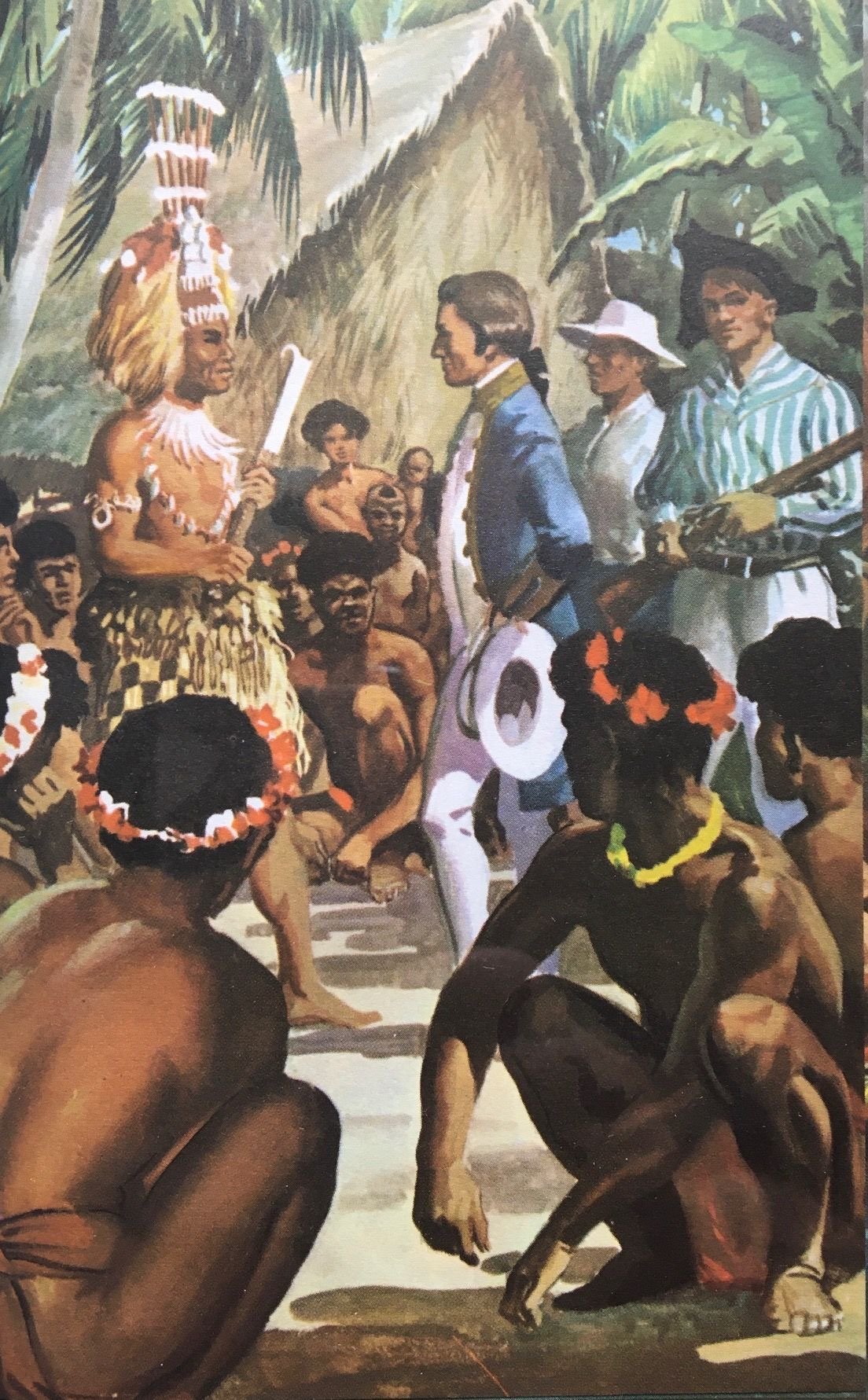
Priests led Cook to Hikiau Heiau, the temple on the south side of the bay, wrapped him in sacred cloth and made offerings in long ceremonies. Later that month Kalaniʻōpuʻu paid a formal visit and exchanged gifts, among them a magnificent feathered cloak (ʻahuʻula) and helmet (mahiole). After more than two centuries abroad, both are now back in Hawaiʻi at Bishop Museum in Honolulu.
Was Cook taken for a god?
Few questions in Pacific history have caused more argument. The anthropologist Marshall Sahlins argued that Hawaiian priests received Cook as a form of Lono, whose return the Makahiki rituals celebrated. The scholar Gananath Obeyesekere replied in The Apotheosis of Captain Cook (1992) that the idea of a white god arriving from the sea was a European myth, and that Hawaiians judged Cook in practical, political terms.
Other historians take a middle path. High chiefs were themselves regarded as sacred, so Cook may have been honoured as a powerful chief linked to Lono without anyone believing he was literally divine. The debate has never been settled. It is worth remembering that nearly all the written accounts of these weeks were made by Europeans, while Hawaiian memory of the events survives mainly through later chroniclers.
14 February 1779: death at Kaʻawaloa
The ships left Kealakekua on 4 February. Within days a gale damaged the Resolution's mast, and on 11 February Cook turned back to the bay for repairs. The welcome had cooled. The Makahiki was over and the season of Kū, god of war, had begun. Feeding two crews again was a heavy burden, and quarrels and thefts multiplied.
On the morning of 14 February the Discovery's large cutter was found missing. Cook landed at Kaʻawaloa, the village on the bay's northern point, with a party of marines. His plan, one he had used elsewhere in the Pacific, was to take Kalaniʻōpuʻu aboard as a hostage until the boat was returned. The old chief agreed at first, but his wife Kānekapōlei and other chiefs begged him not to go. A crowd gathered, tension spiralled and fighting broke out at the water's edge.
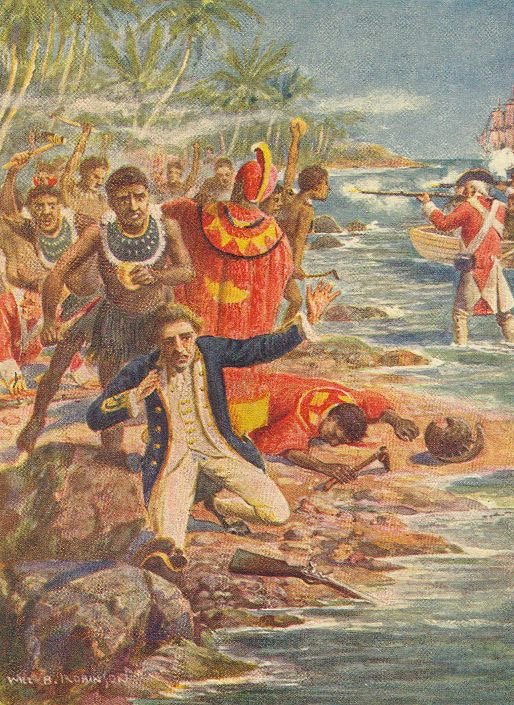
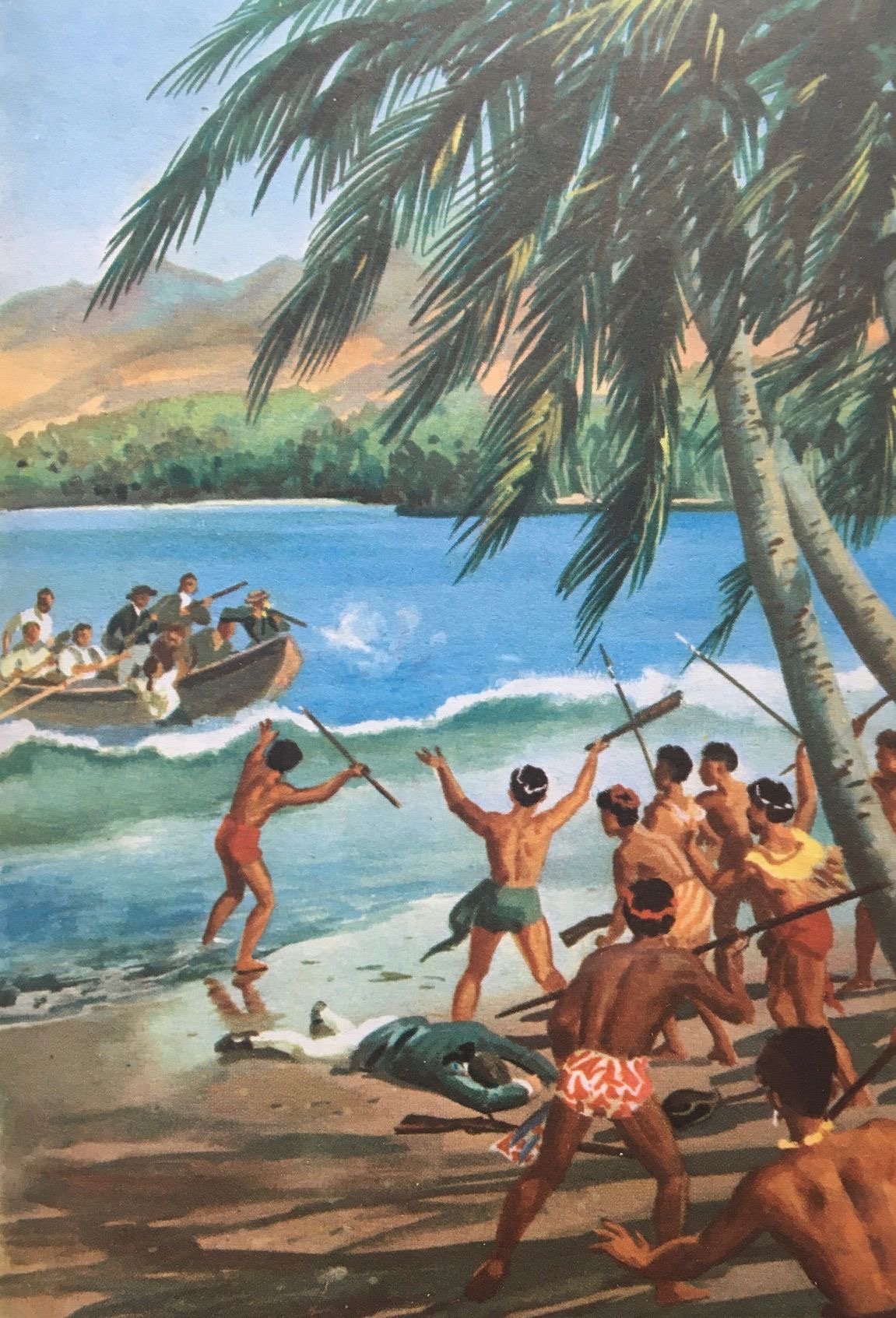
Cook was struck down in the shallows, and four marines died with him. On the Hawaiian side, 17 people were killed at Kaʻawaloa and eight more elsewhere around the bay that day, and British reprisals over the following days took further lives.
What happened next shocked the British but made sense in Hawaiian terms. Cook's body was treated as befitted a high-ranking enemy: it was divided among the chiefs, an honour that shared out his mana (spiritual power). After tense negotiations some remains were handed back, and the crew buried them at sea in the bay. The expedition sailed on under Charles Clerke and, after his death, John Gore, and reached England in October 1780.
After Cook: iron, guns and disease
The official account of the voyage, published in 1784, put the islands on every trader's map. Ships in the fur trade between the North-west Coast of America and Canton began calling for food, water and rest, and ambitious chiefs bargained hard for muskets and light cannon.
Violence followed the trade. In 1790 the American trader Simon Metcalfe, angry over a stolen boat and a murdered watchman, invited canoes alongside his ship at Olowalu on Maui and opened fire, killing about 100 people. Soon after, the chief Kameʻeiamoku, whom Metcalfe had once flogged, seized the little schooner Fair American, commanded by Metcalfe's son. Two Britons caught up in these events, John Young and Isaac Davis, were spared by Kamehameha and became his trusted advisers, and the schooner's guns helped him win his wars.
The deepest change was invisible. Nobody knows how many people lived in the islands in 1778: scholarly estimates range from about 100,000 to as many as a million, and the Office of Hawaiian Affairs uses 300,000. What is certain is that introduced diseases began a collapse that left a population of just 73,138 at the census of 1853, a story told in sandalwood, whaling and the Māhele.
Where to see Cook's Hawaiʻi today
- Cook Landing Site, Waimea, Kauaʻi. A National Historic Landmark near the river mouth, across from the ruins of the Russian fort Pāʻulaʻula (Fort Elizabeth). The exact landing spot is unknown, because the shoreline has shifted since 1778. The fort site was closed after the September 2026 storms, so check Hawaiʻi State Parks before you go.
- Kealakekua Bay State Historical Park, Hawaiʻi Island. Hikiau Heiau stands at Nāpōʻopoʻo on the south shore. It is still sacred, so please view it from outside and stay off the stones. The white Cook obelisk, about 8 m (27 ft) tall and unveiled in November 1874, stands across the water at Kaʻawaloa. You can reach it only on foot by the steep Kaʻawaloa Trail or on a guided kayak tour with a permitted operator, and every vessel crossing the bay needs a State Parks permit.
- Bishop Museum, Honolulu. Kalaniʻōpuʻu's feathered cloak and helmet, returned from New Zealand's Te Papa museum in 2016 and now kept in Hawaiʻi permanently.
The obelisk has a curious footnote. In 1877 its small plot was deeded in trust to Britain's consul to look after the monument, which is why it is often called a little piece of Britain in Kona, even though it was held in trust rather than owned by the British state. Whatever you think of Cook, treat the bay as Hawaiians do: as a royal and sacred place first, and a memorial second.
To plan a visit, see our guides to the Big Island and Kauaʻi, and our notes on visiting Hawaiʻi respectfully. The full story of contact, from Waimea to Vancouver's cattle, is one of the opening chapters of The History of Hawaii.
Quick answers
Where did Captain Cook first land in Hawaii?
At Waimea on the south-west coast of Kauaʻi. His ships anchored off the mouth of the Waimea River on 20 January 1778, two days after sighting Oʻahu. The spot is remembered as the Cook Landing Site, a National Historic Landmark.
How did Captain Cook die in Hawaii?
On 14 February 1779, after a ship's boat was stolen, Cook landed at Kaʻawaloa on Kealakekua Bay to take the chief Kalaniʻōpuʻu hostage. A crowd gathered, fighting broke out at the shoreline, and Cook and four marines were killed, along with at least 25 Hawaiians around the bay that day.
Did Hawaiians think Captain Cook was a god?
Historians disagree. Marshall Sahlins argued that priests treated Cook as a form of the god Lono, because he arrived during the Makahiki season. Gananath Obeyesekere argued that the 'white god' idea was a European myth. Many scholars now think Cook was honoured as a sacred high chief rather than worshipped as a god.
Can you visit the Captain Cook Monument?
Yes, but access is limited. The obelisk at Kaʻawaloa can be reached only by hiking the steep Kaʻawaloa Trail or on a guided kayak tour with a permitted operator. Every vessel crossing Kealakekua Bay needs a Hawaiʻi State Parks permit, and permitted vessels may not land at Kaʻawaloa Flat.
Why did Captain Cook call Hawaii the Sandwich Islands?
He named them after his patron, John Montagu, the 4th Earl of Sandwich, who was First Lord of the Admiralty. The name was used abroad for decades, but Hawaiians always called their islands Hawaiʻi.
Facts checked October 2026 against the sources below and the research for our book The History of Hawaii. Dates and figures for early Hawaiian history are estimates and scholars still debate some of them.
- Cook Landing Site (National Park Service)
- Death of James Cook (Wikipedia)
- Kealakekua Bay State Historical Park (Hawaiʻi DLNR State Parks)
- Captain Cook Monument (Images of Old Hawaiʻi)
- Captain Cook Monument marker (Historical Marker Database)
- Cloak and helmet given to Captain Cook return to Hawaiʻi (Smithsonian Magazine)
- Estimated Population of the Hawaiian Islands, 1778–1896 (Office of Hawaiian Affairs)