In the 1800s Hawaiians read more than a hundred newspapers in their own language. A century later only a few thousand native speakers were left. This is how ʻōlelo Hawaiʻi came back.
A schoolgirl's chant, 1937
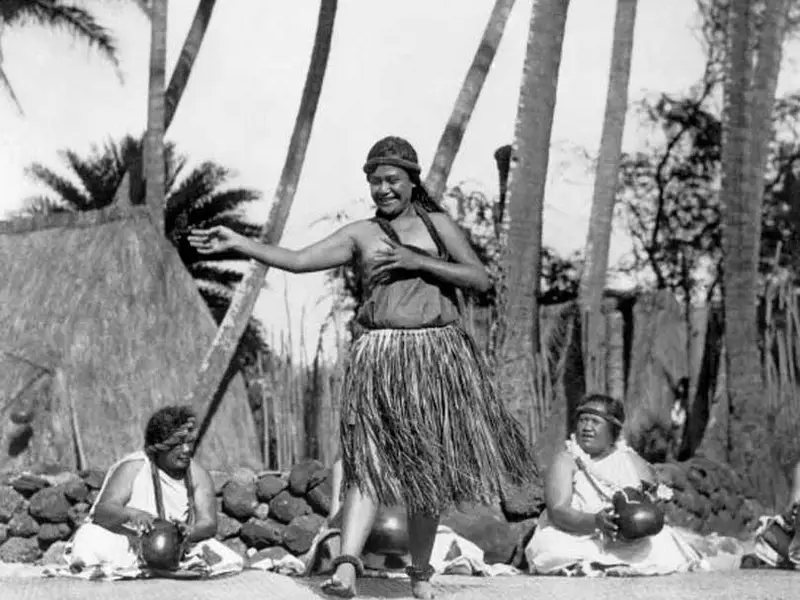
In 1937 a teenager named Winona Beamer was expelled from Kamehameha Schools in Honolulu. Her offence, as later accounts of the language tell it, was chanting in Hawaiian. She came from a family of celebrated musicians and dancers, and she would go on to become one of the great teachers of Hawaiian culture. But in the Territory of Hawaiʻi of the 1930s, the language of her ancestors had been pushed out of the classroom.
Barely a century earlier, Hawaiians had been among the most literate people on Earth, reading newspapers, Bibles and laws in their own tongue. The story of ʻōlelo Hawaiʻi, the Hawaiian language, is one of astonishing growth, near disappearance and a revival that is still under way.
A spoken world becomes a written one
Hawaiian is a Polynesian language, a close cousin of Tahitian, Māori and Marquesan, carried north by the first voyagers. For centuries it lived only in speech: in genealogies, chants, place names and the formal oratory of chiefs (see the history of hula).
The American missionaries who arrived in 1820 set out to write it down. Their first printing came off the press in Honolulu on 7 January 1822. Early spellings wobbled between letters, so pule (prayer) might appear as bule or pure. In 1826 the mission voted to keep one letter for each sound, dropping B, D, R, T and V in favour of P, K, L and W.
The result was a compact alphabet of 13 letters: five vowels and eight consonants. One of those consonants is the ʻokina, the glottal stop heard in the middle of Hawaiʻi. It was not marked consistently until much later, and neither was the kahakō, the macron that lengthens a vowel. Both can change meaning entirely, which is why modern writers take care to use them.
A nation of readers
Hawaiians took to reading with extraordinary speed. Chiefs led by example, schools spread across every island, and the kingdom passed laws that tied literacy to daily life: an 1842 law required people born after 1819 to be able to read before they could marry. By 1853, the minister of public instruction reported, about three-quarters of adults could read.
Newspapers became the great public square. The first, Ka Lama Hawaii, was printed by students at Lahainaluna Seminary on Maui on 14 February 1834 (see Lahaina history). More than 100 Hawaiian-language papers followed before the last of them, Ka Hoku o Hawaii, closed in 1948.
They carried everything: births and deaths, laws, shipping news, foreign wars, serialised novels, chants, laments and furious letters to the editor. Ka Wai Ola, the Office of Hawaiian Affairs newspaper, recalls villagers gathering to hear the paper read aloud. Scholars estimate the surviving papers hold the equivalent of more than a million pages of text, an archive historians are still working through.
1896: English only
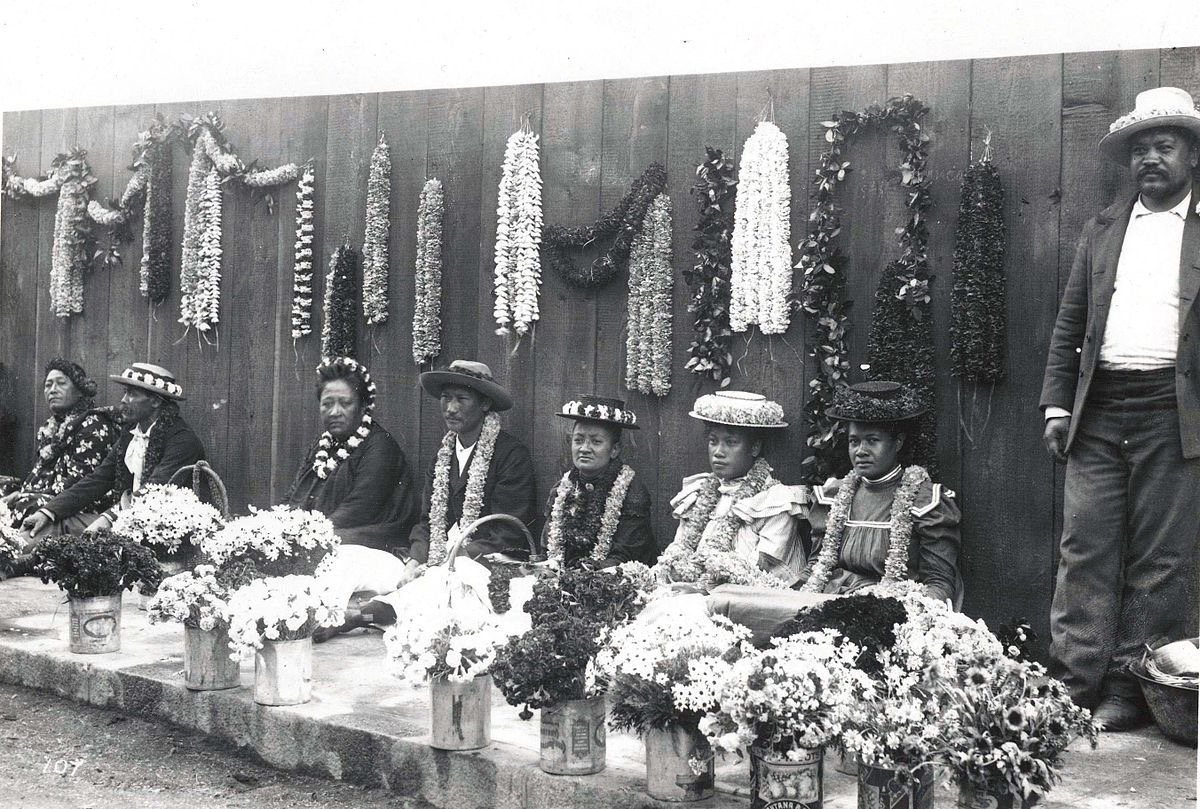
The turning point came after the overthrow of Queen Liliʻuokalani in 1893 (see the overthrow of the Hawaiian Kingdom). In 1896 the Republic of Hawaiʻi passed Act 57, which declared that English "shall be the medium and basis of instruction in all public and private schools".
The law did not ban Hawaiian outright, but in practice it drove the language from the classroom. Children were disciplined for speaking it, and many parents, wanting their children to succeed in an English-speaking territory, stopped using it at home. Hawaiian-language newspapers kept printing for decades. In the 1890s nationalist papers such as Ke Aloha ʻĀina gave voice to opposition to annexation, and on 13 August 1898, the day after the Hawaiian flag came down at ʻIolani Palace, it filled its headlines with grief. Yet each generation spoke less of the language.
When Larry Kimura began recording native speakers in the 1970s, he estimated that only about 2,000 people who had grown up speaking Hawaiian at home were still alive, most of them elderly. The main exception was Niʻihau, where a small community kept Hawaiian as the language of daily life (see Niʻihau history).
Keeping the words alive
Even in the darkest decades, some people refused to let the language go. Mary Kawena Pukui, born in Kaʻū in 1895 and raised in a family steeped in tradition, spent her life recording, translating and teaching. With Samuel Elbert she produced the Hawaiian dictionary, commissioned by the territory in 1949 and published in 1957, still the standard reference today.
In the 1970s Kimura, then a young university teacher, persuaded the Honolulu station KCCN to air Ka Leo Hawaiʻi, a programme in which he interviewed native speakers in their own language. The recordings preserved hundreds of hours of fluent speech, with idioms, humour and stories found nowhere in print, and became a vital resource for the revival.
Nests of language: the revival
The Hawaiian Renaissance of the 1970s put language at the heart of a wider cultural awakening (see the Hawaiian Renaissance and Hōkūleʻa). At the 1978 constitutional convention, delegates added a clause that voters approved that November: "English and Hawaiian shall be the official languages of Hawaii."
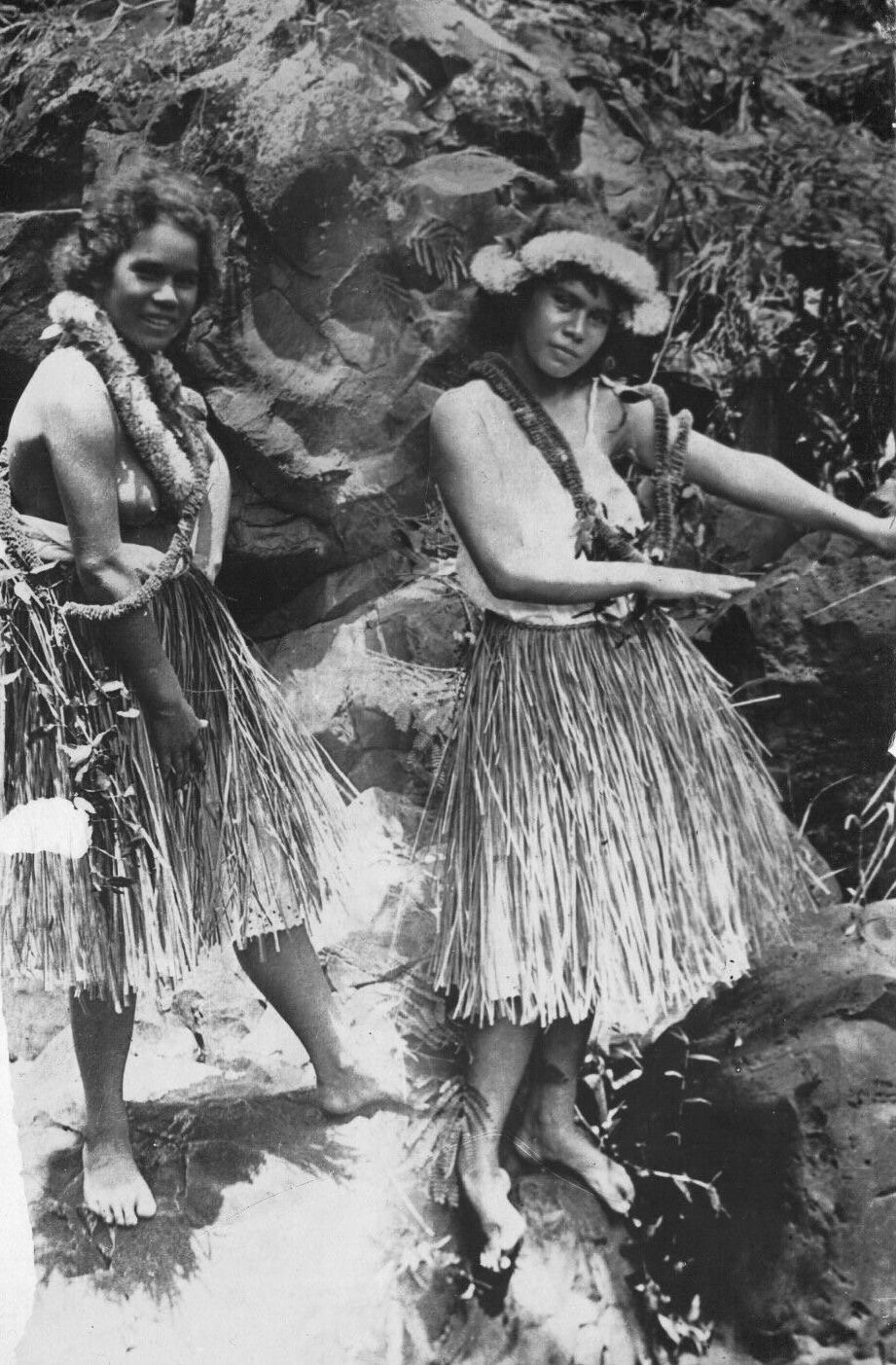
In 1983 a group of educators, Kimura among them, founded the ʻAha Pūnana Leo. Inspired partly by Māori-language preschools in New Zealand, its Pūnana Leo, or language nests, teach young children entirely in Hawaiian. The first opened at Kekaha, Kauaʻi, in August 1984, followed by Hilo and Honolulu in 1985.
There was a legal obstacle: the 1896 law was still on the books. In 1986 the legislature lifted the 90-year ban on teaching in Hawaiian, and in 1987 public immersion classes opened at Keaukaha Elementary in Hilo and Waiau Elementary in Pearl City. Today Hawaiian-medium education runs from preschool to doctorate: Ka Haka ʻUla O Keʻelikōlani, the language college at the University of Hawaiʻi at Hilo, is the only US college offering master's and doctoral degrees in an Indigenous language.
Where Hawaiian stands today
In 2022 the state legislature adopted a resolution, written in English and Hawaiian, formally apologising for the 1896 law. That year the Department of Education counted 23 Hawaiian immersion programmes with more than 3,600 students, and Kimura estimated around 20,000 speakers. Census surveys suggest about 18,000 residents speak Hawaiian at home. UNESCO still classifies the language as critically endangered, but it is no longer disappearing.
Visitors hear it everywhere now: in place names, airport announcements, songs and the greetings of hotel staff. Every vowel is sounded, and the ʻokina is a brief catch in the voice, so Hawaiʻi has a small break before its final vowel: ha-wai-ʻi. Get that right and you are already taking part. To see the old newspapers, chants and manuscripts up close, visit Bishop Museum in Honolulu, which holds more than half of the surviving Hawaiian-language papers. The language's journey is one thread of our book The History of Hawaii, and visiting Hawaii respectfully has a few words worth learning before you land.
Quick answers
Is Hawaiian an official language?
Yes. Since a constitutional amendment approved by voters in 1978, English and Hawaiian have both been official languages of the State of Hawaiʻi, though Hawaiian is required for public acts and transactions only as provided by law.
Was the Hawaiian language banned?
Not in so many words. Act 57 of 1896 made English the medium of instruction in all schools, which drove Hawaiian out of classrooms for 90 years. Children were punished for speaking it. The legislature lifted the restriction in 1986 and apologised for the law in 2022.
How many letters are in the Hawaiian alphabet?
Thirteen: the vowels a, e, i, o and u, and the consonants h, k, l, m, n, p, w and the ʻokina, which marks a glottal stop. The kahakō (macron) marks long vowels.
How many people speak Hawaiian today?
Estimates vary. Census surveys suggest about 18,000 Hawaiʻi residents speak Hawaiian at home, and linguist Larry Kimura has estimated around 20,000 speakers. Native speakers from birth outside Niʻihau and immersion families are far fewer.
What is a Pūnana Leo?
A Hawaiian-language immersion preschool. The name means language nest. The ʻAha Pūnana Leo opened the first one at Kekaha, Kauaʻi, in 1984, and the schools helped launch today's Hawaiian-medium education system.
Facts checked October 2026 against the sources below and the research for our book The History of Hawaii. Dates and figures for early Hawaiian history are estimates and scholars still debate some of them.
- Wikipedia: Hawaiian language
- ʻAha Pūnana Leo: Our History
- Ka Wai Ola: Nūpepa engaged readers in global affairs and a changing society
- Hawaii News Now: Lawmakers adopt resolution apologizing for ban on Hawaiian language in schools (2022)
- Lahaina Restoration Foundation: Hale Paʻi Printing Press
- NPR / GBH: The Hawaiian language nearly died. A radio show sparked its revival (2019)
- Puna Wai Ola, University of Hawaiʻi at Mānoa: August 12, 1898, Lowering of the Hawaiian Flag
- Constitution of the State of Hawaii, Article XV, Section 4: Official Languages