Long before it was a global sport, surfing was heʻe nalu, the wave sliding of Hawaiian chiefs and commoners. Here is how it survived and how Waikīkī gave it to the world.
Kealakekua Bay, 1779
Early in 1779, with Captain Cook's ships anchored in Kealakekua Bay on Hawaiʻi Island, Lieutenant James King watched something no European had described before. Men were paddling out on long wooden boards, ducking under the breaking waves, then turning to ride the largest swells towards the rocky shore. When a rider misjudged a wave and lost his board, King noted, it was thought very disgraceful.
The official account of the voyage, published in 1784 and drawing on King's notes, called the riders' boldness and skill "altogether astonishing". It became the most influential description of Hawaiian surfing for half a century, and the first glimpse many outsiders had of a sport that would one day reach every coastline on Earth.
To Hawaiians, though, there was nothing new about it. Heʻe nalu, wave sliding, was already old.
Heʻe nalu: the sport of chiefs and commoners
Hawaiians are generally credited with turning wave riding into a full art and culture. Surfing chants are thought to date back at least five centuries, and the sport was probably practised long before that. Men and women, chiefs and commoners all surfed, and contests drew crowds who bet on the outcome.
Boards reflected rank. Chiefs rode the olo, long, heavy boards often shaped from light wiliwili wood and reaching around 4.9 m (16 ft). Most people rode the shorter alaia, carved from koa or breadfruit. Making a board was a serious undertaking, accompanied by offerings and prayers when the tree was cut, and finished boards were stained dark and carefully stored.
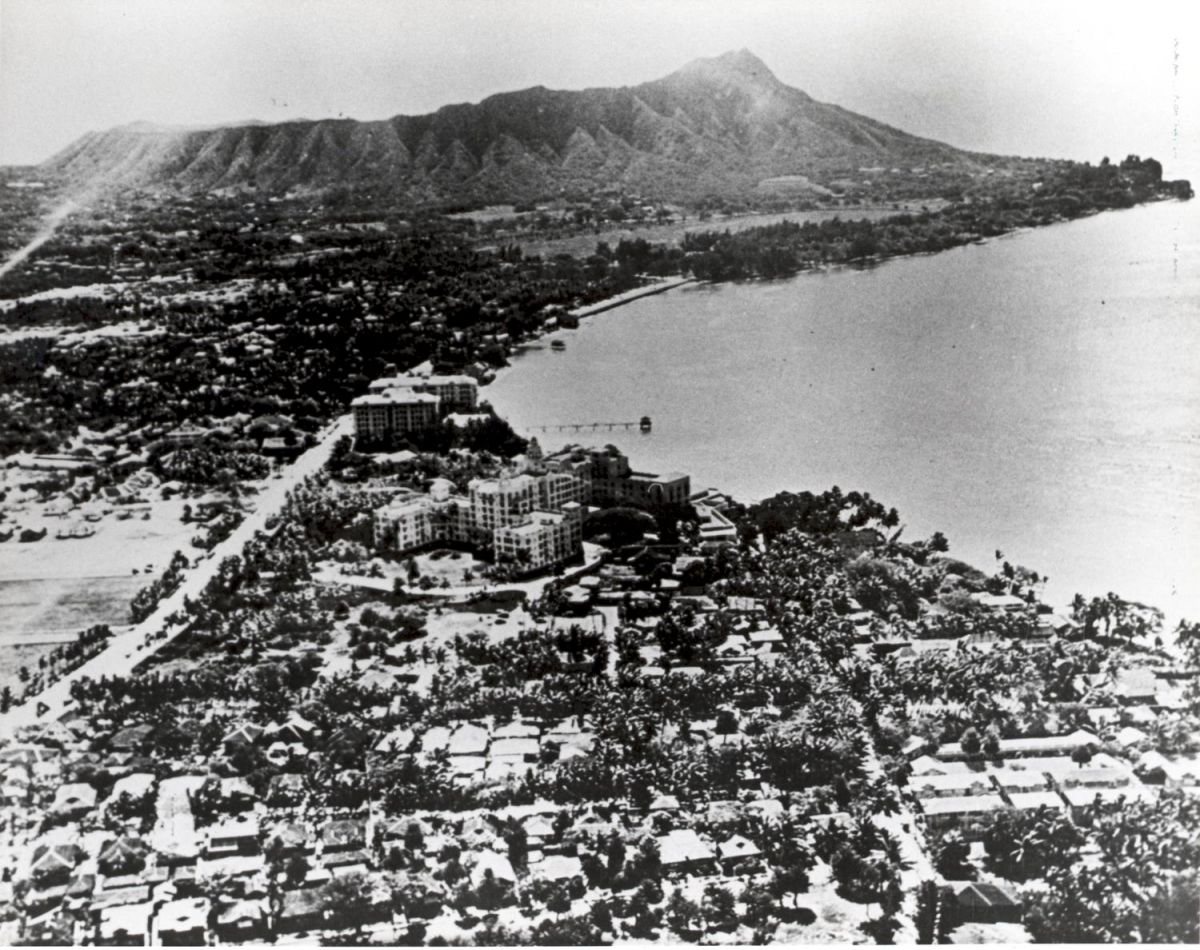
Some surf breaks were reserved for chiefs, and a commoner who rode one could face punishment under kapu. Surfing was also part of the Makahiki season of games and feasting, described in daily life in ancient Hawaiʻi. Many favourite breaks had names, and some of the best known were at Waikīkī, already a playground of Oʻahu's chiefs.
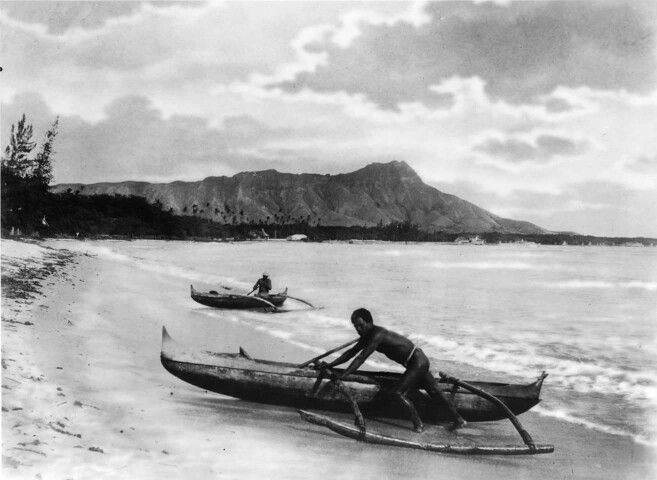
Did surfing really disappear?
The 19th century brought heavy blows. Introduced diseases devastated the Hawaiian population, the kapu system that framed the old games ended in 1819, and American Protestant missionaries, who arrived in 1820, disapproved of surfing's gambling, nudity and mixing of the sexes. In 1847 the missionary leader Hiram Bingham wrote that such "heathen sports" had nearly disappeared, and he gave the mission credit.
For a long time historians took accounts like this at face value and told a story of near extinction followed by a revival led by outsiders. More recent research has challenged that. The scholar Patrick Moser, working through travellers' accounts and Hawaiian-language newspapers, found steady evidence that Hawaiians kept surfing throughout the century: a British visitor in 1856 saw men, women and children surfing at a village on Hawaiʻi Island, and royals were reported surfing at Waikīkī in the 1860s and 1870s.
Surfing certainly became rarer, and good boards were hard to find by the 1890s. But it never died, and Hawaiians themselves carried it forward.
Royal surfers and a revival at Waikīkī
King Kalākaua, who championed hula and other traditions in the 1870s and 1880s, also staged surfing displays for visitors (see the history of hula for his wider cultural revival). In July 1885 three young Hawaiian princes, David Kawānanakoa, Jonah Kūhiō Kalanianaʻole and Edward Keliʻiahonui, rode waves near the mouth of the San Lorenzo River in Santa Cruz, California, on boards shaped from local redwood: the first recorded surfing on the American mainland.
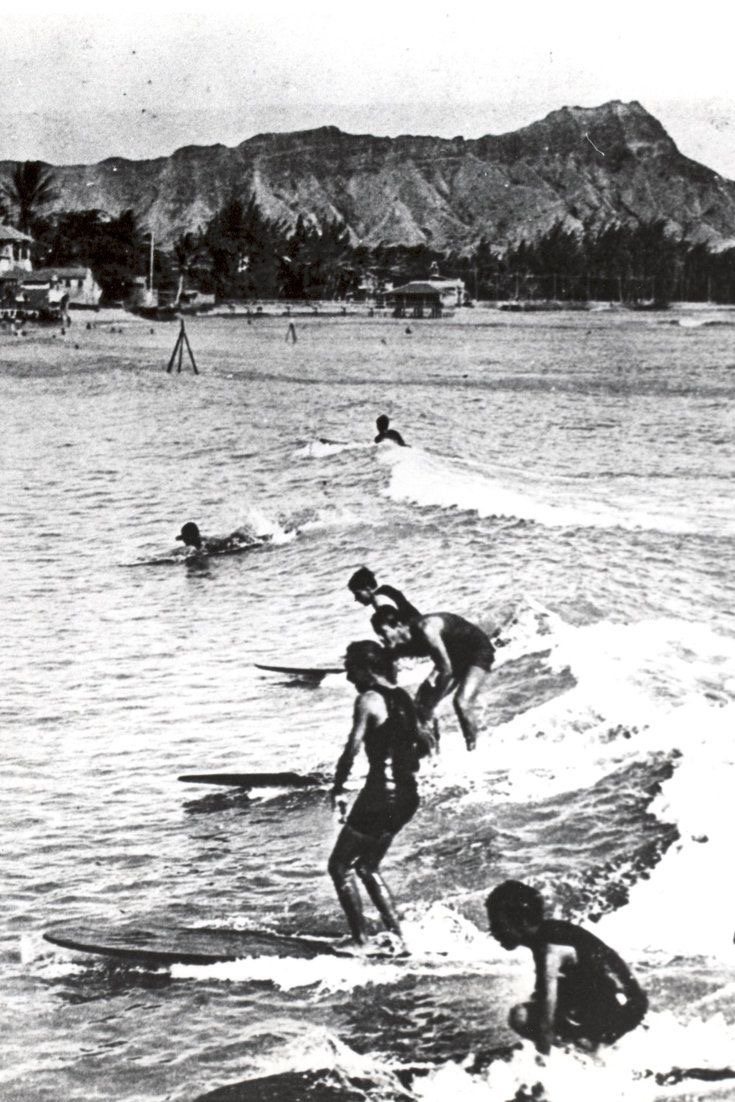
Back home, Waikīkī became the centre of a new surf scene in the early 1900s. George Freeth, a young Honolulu surfer of Hawaiian and European descent, is credited with helping popularise riding waves at an angle rather than straight towards the beach. In 1907 he gave the writer Jack London a lesson, and London's essay "A Royal Sport" carried the thrill of Waikīkī to a mainland audience.
In May 1908 Alexander Hume Ford, a newcomer from South Carolina, founded the Outrigger Canoe Club on beachfront land between the Moana and Seaside hotels to promote "the water sports of old Hawaii". Around the same time a group of mostly Hawaiian surfers, Duke Kahanamoku among them, formed their own club, Hui Nalu, which dates its founding to 1908 and gathered under a hau tree beside the Moana.
Duke Kahanamoku, ambassador of aloha
Duke Paoa Kahanamoku was born in Honolulu on 24 August 1890 and grew up in the water at Waikīkī. In 1912, at the Stockholm Olympics, he won gold in the 100 m freestyle and silver in the relay. He added two more golds at Antwerp in 1920 and a silver in Paris in 1924.
Everywhere he travelled to swim, Duke also surfed, and crowds came to watch. On 24 December 1914 he gave a celebrated exhibition at Freshwater Beach in Sydney, widely seen as a starting point for surfing in Australia. In California he trained new surfers, and in 1925 he used his board to rescue eight men from a capsized boat at Newport Beach, publicity that helped lifeguards adopt surfboards as rescue equipment.
At home he served for more than a quarter of a century as sheriff of Honolulu and became Hawaiʻi's best-loved ambassador of aloha. When he died in January 1968, his ashes were scattered off Waikīkī as beach boys sang Hawaiian songs. A bronze statue of Duke, unveiled in 1990, stands on the beach he made famous.
From Freeth to the world
Freeth himself moved to California in 1907, with letters of introduction from Ford and London. At Redondo Beach the railway magnate Henry Huntington hired him to give surfing demonstrations, and he went on to train lifeguards and was honoured by Congress for rescuing seven fishermen off Venice Pier in 1908. Between them, Freeth, Duke and the Santa Cruz princes planted Hawaiian surfing on the American and Australian coasts.
The rest is a global story: lighter boards, surf films, professional contests and, in 2021, surfing's debut at the Olympic Games, the stage where Duke first found fame. Hawaiʻi has stayed at its heart. The big-wave contest at Waimea Bay honours Eddie Aikau, the North Shore lifeguard lost at sea in 1978 while trying to save the crew of the voyaging canoe Hōkūleʻa, a story told in the Hawaiian Renaissance and Hōkūleʻa.
Where to see surfing history today
Start at Waikīkī. The Duke Kahanamoku statue stands at Kūhiō Beach, usually draped in fresh lei, and the gentle breaks offshore are still where beginners take their first lessons, as Jack London did. Bishop Museum in Honolulu holds one of the world's finest collections of early Hawaiian surfboards.
For winter giants, watch from the beach at Waimea Bay or Sunset Beach on Oʻahu's North Shore, and always follow lifeguard advice. Our guide to where to surf in Hawaiʻi covers the best breaks for every level, and things to do on Oʻahu fits them into a trip. The wider story of the islands, from the age of chiefs to Duke's Waikīkī, is told in The History of Hawaii.
Quick answers
Did surfing originate in Hawaii?
Wave riding was practised in several parts of Polynesia, but Hawaiians developed it into a full art and culture, heʻe nalu, and spread modern surfing to the world. The first European description of board surfing was written in Hawaiʻi in 1779.
Who brought surfing to the world?
Native Hawaiians did. Hawaiian princes surfed in Santa Cruz in 1885, George Freeth demonstrated surfing in California from 1907, and Duke Kahanamoku introduced it to Australia in 1914 and popularised it worldwide.
Did missionaries ban surfing in Hawaii?
Missionaries strongly discouraged surfing from the 1820s, but there was no formal ban. Recent research shows Hawaiians kept surfing throughout the 19th century, even though it became less common.
Why is Duke Kahanamoku called the father of modern surfing?
Duke, a five-time Olympic swimming medallist, gave surfing exhibitions around the world, including at Freshwater Beach in Sydney in 1914, and became Hawaiʻi's ambassador of aloha.
What were ancient Hawaiian surfboards made of?
Long olo boards for chiefs were often made of light wiliwili wood, while shorter alaia boards were carved from koa or breadfruit wood.
Facts checked October 2026 against the sources below and the research for our book The History of Hawaii. Dates and figures for early Hawaiian history are estimates and scholars still debate some of them.
- First European written account of Hawaiian surfing (Museum of British Surfing)
- 1779: King and Cook, first surfing account (Surf Research)
- Did white people really revive surfing? (JSTOR Daily)
- The History of Surfing (Hawaiian Encyclopedia)
- How 3 Hawaiian teen princes brought surfing to the mainland 140 years ago (NPR via KNAU)
- George Douglas Freeth Jr. (Images of Old Hawaiʻi)
- History (Outrigger Canoe Club)
- Duke Kahanamoku