For five months in 1843 the Union Jack flew over Honolulu. Its lowering on 31 July gave Hawaiʻi a national holiday, a motto and a square that still fills with Hawaiian flags every summer.
A flag comes down on the plain
On the morning of 31 July 1843, thousands of people gathered on an open plain east of Honolulu. The Union Jack that had flown over the islands for five months was lowered, and the red, white and blue striped flag of the Hawaiian Kingdom was raised in its place as the crowd cheered.
The man who ordered it was a British admiral, Richard Thomas. The man who had lost his kingdom and now had it back was Kamehameha III, Kauikeaouli, the last son of Kamehameha the Great to reign. The day became Lā Hoʻihoʻi Ea, Sovereignty Restoration Day, and the plain became Thomas Square.
How a Pacific kingdom came to be seized by a single ship's captain, and why the day still matters, says a lot about Kauikeaouli's long and difficult reign.
The boy who was born twice
Kauikeaouli was born at Keauhou Bay on the Kona coast of Hawaiʻi Island, the son of Kamehameha I and his highest-ranking wife, Keōpūolani. Tradition says the baby seemed stillborn until a priest named Kapihe prayed over him and he began to breathe. His birth date is uncertain; in 1846 the Privy Council declared 17 March 1814 the official one.
He became king in 1825, at about 11, after his elder brother Liholiho died of measles in London. For years real power lay with the kuhina nui, first his formidable stepmother Queen Kaʻahumanu and then his half-sister Kīnaʻu. As a teenager he rebelled against their strict new Christian order, gathering friends who revived old pastimes, drinking and hula, and he longed to marry his sister Nāhiʻenaʻena in the old chiefly way. She died in 1836, and in 1837 he married Kalama in a Christian ceremony.
He grew into a cautious, reforming king who reigned for 29 years, the longest of any Hawaiian monarch.
From chiefs' council to constitution
With the help of the former missionary William Richards, Kauikeaouli turned an absolute monarchy into a constitutional one. A Declaration of Rights in 1839 promised protection to chiefs and commoners alike, and on 8 October 1840 he signed the kingdom's first constitution, creating a legislature with an elected house (see the end of the kapu system and the missionaries).
Reform was also defence. Foreign consuls and naval captains were quick to bully a government they could call backward. In April 1842 the king sent three envoys, his secretary Timoteo Haʻalilio, Richards and the Hudson's Bay Company governor Sir George Simpson, to win formal recognition of Hawaiian independence from the great powers. Haʻalilio and Richards sailed from Lahaina on 18 July 1842 and by December were in Washington, where Secretary of State Daniel Webster wrote that the islands' government ought to be respected.
Five months under the Union Jack
While the envoys were still in Europe, trouble came to Honolulu. On 10 February 1843 the frigate HMS Carysfort arrived under Captain Lord George Paulet. He had been sent to look into complaints from the British consul, Richard Charlton, who was locked in a land dispute with the government. Paulet made sweeping demands and threatened to open fire on the town.
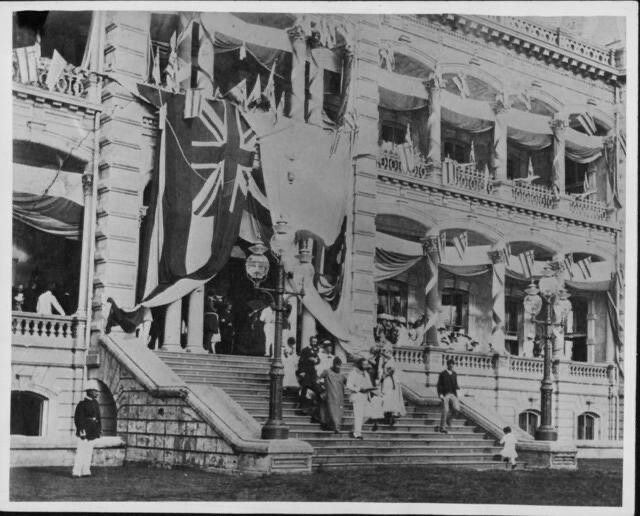
To avoid bloodshed, the king ceded the kingdom to Britain on 25 February 1843, under protest and pending an appeal to London. Paulet set up a commission to govern, restricted trade, had Hawaiian flags destroyed and raised the Union Jack.
London had never authorised any of it. When Rear Admiral Thomas, Paulet's commanding officer, learned what had happened, he sailed for Hawaiʻi and reached Honolulu aboard HMS Dublin on 26 July. He met the king, found the consul's complaints unfounded and, five days later, handed the kingdom back on the plain.
Later that day the king gave thanks at Kawaiahaʻo Church, where by many accounts he spoke the words that became the national motto: Ua mau ke ea o ka ʻāina i ka pono. It is usually rendered as "the life of the land is perpetuated in righteousness"; ea also means sovereignty, and many Hawaiians read it that way. The motto passed to the Territory and, in 1959, to the State of Hawaiʻi.
Independence recognised
Restoration was followed by recognition. On 28 November 1843 Britain and France signed a joint declaration in London recognising Hawaiʻi as an independent state, the result of the envoys' patient work. That date became a second national holiday, Lā Kūʻokoʻa, Independence Day. Haʻalilio never saw home again: he died on the voyage back in December 1844.
Kauikeaouli's remaining years brought the Māhele of 1848, which created private land ownership (see sandalwood, whaling and the Māhele), the move of the capital from Lahaina to Honolulu in 1845, a second constitution in 1852 and a French raid on Honolulu in 1849. Late in his reign, worried about threats from American filibusters, his government even negotiated a treaty of annexation to the United States, but it was never signed.
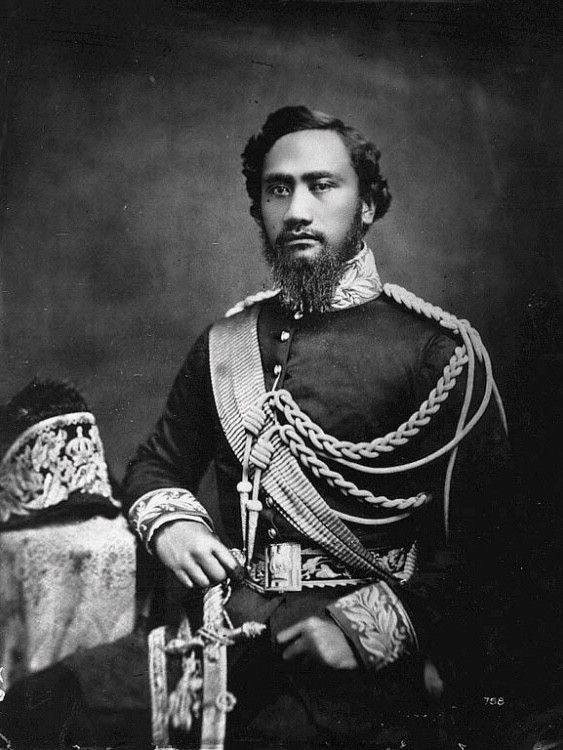
He died in Honolulu on 15 December 1854, aged about 40, and was succeeded by his nephew and adopted son, Alexander Liholiho, as Kamehameha IV.
A holiday lost and found
Lā Hoʻihoʻi Ea was the kingdom's first national holiday. The king marked the restoration with ten days of celebration, and for years 31 July was kept with feasts and speeches. Kamehameha V later dropped it in favour of Kamehameha Day on 11 June. After the overthrow of 1893 the new government abolished the holiday, and loyal Hawaiians kept the day privately, as a quiet act of resistance.
It came back during the Hawaiian Renaissance. In the mid-1980s the physician and sovereignty advocate Dr Richard Kekuni Blaisdell and fellow activists revived the celebration at Thomas Square, and it has been held there ever since (see the Hawaiian Renaissance). In 2022 the State of Hawaiʻi designated 31 July as Lā Hoʻihoʻi Ea, Sovereignty Restoration Day, a day of observance though not a paid holiday.
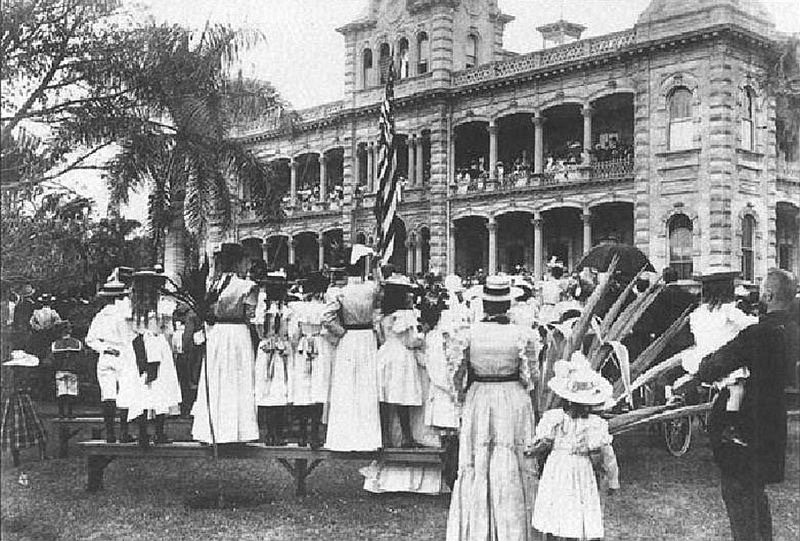
Today the gathering, usually held on or near 31 July, mixes music, hula, speeches, food and education booths, and ends with a flag ceremony re-enacting the lowering of the Union Jack and the raising of the Hawaiian flag. For many Native Hawaiians it is both a celebration and a reminder that sovereignty, once restored, was lost again in 1893.
Thomas Square and other places to visit
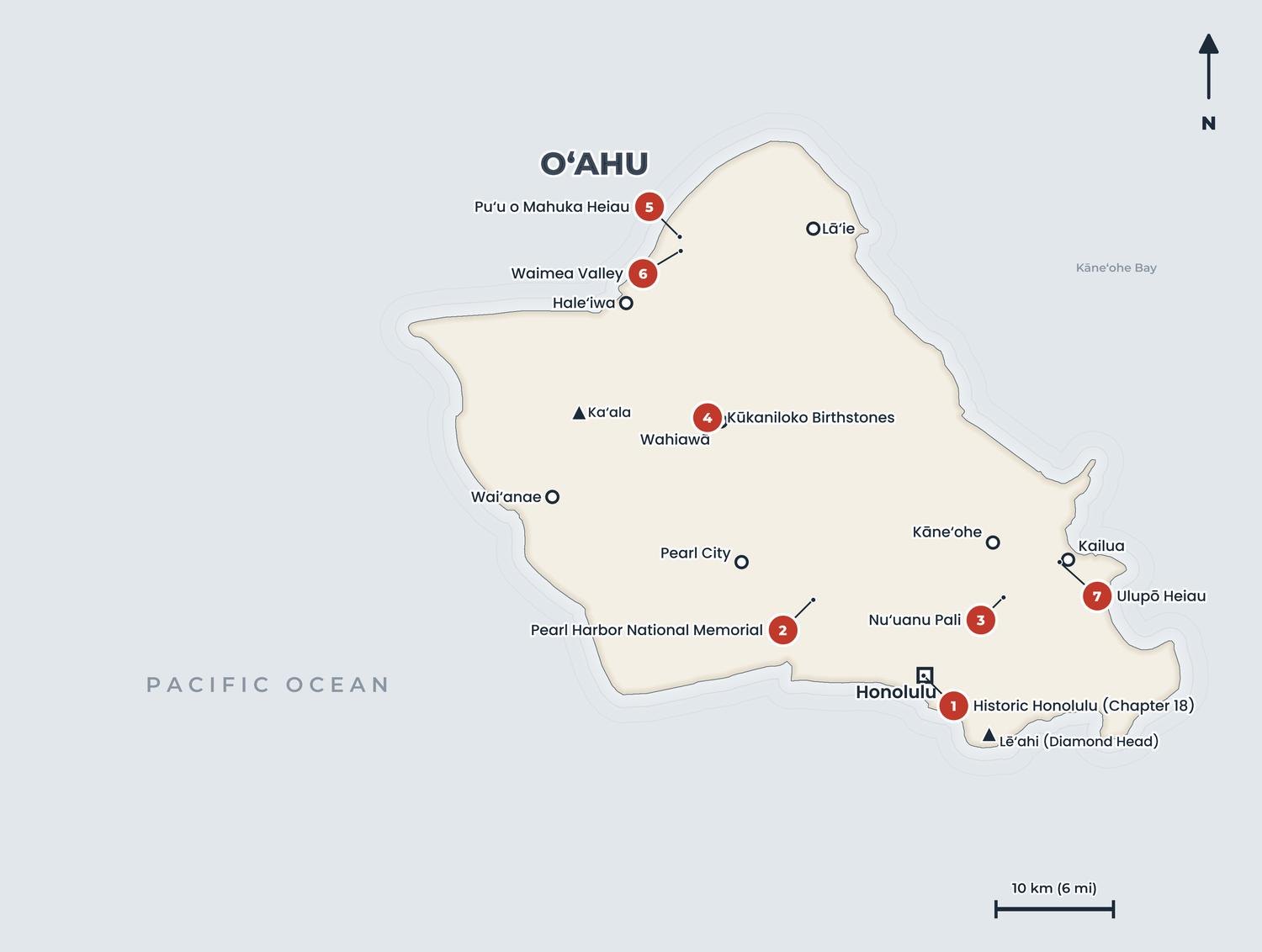
Thomas Square, bounded by King and Beretania streets, Victoria Street and Ward Avenue, opposite the Honolulu Museum of Art: the king named the site for the admiral and dedicated it as a public park, and it is often called Honolulu's oldest park. Its giant banyans were planted from cuttings brought from ʻĀinahau, the estate of Princess Kaʻiulani's family, when the park was redesigned in the 1880s. It is one of the few places in Hawaiʻi where the Hawaiian flag flies on its own.In 2018, for the 175th anniversary, a 3.7 m (12 ft) bronze statue of Kamehameha III by the sculptor Thomas Jay Warren was unveiled there. Kawaiahaʻo Church, downtown, is where the king gave thanks, and Mauna ʻAla in Nuʻuanu is where he lies. On Hawaiʻi Island, a memorial at Keauhou Bay marks his birthplace.
If you are in Honolulu in late July, the celebration is open to all; come to listen and learn. The kingdom's story from Kamehameha to the overthrow is told in our book The History of Hawaii.
Quick answers
What is Lā Hoʻihoʻi Ea?
Lā Hoʻihoʻi Ea, Sovereignty Restoration Day, marks 31 July 1843, when Britain restored the Hawaiian Kingdom's sovereignty after five months of unauthorised occupation by Lord George Paulet. It was the kingdom's first national holiday and is celebrated today at Thomas Square in Honolulu.
Is Sovereignty Restoration Day a state holiday in Hawaii?
Since 2022 the State of Hawaiʻi has recognised 31 July as Lā Hoʻihoʻi Ea, a day of observance. It is not a paid state holiday, so offices and businesses stay open.
What does Ua mau ke ea o ka ʻāina i ka pono mean?
It is usually translated as "the life of the land is perpetuated in righteousness". The word ea also means sovereignty, so many read it as the sovereignty of the land being perpetuated in righteousness. Kamehameha III spoke the words in 1843, and it is now the state motto.
Why did Britain take over Hawaii in 1843?
It did not, officially. Captain Lord George Paulet of HMS Carysfort forced the king to cede the islands on 25 February 1843 over a British consul's land dispute, acting without authority. His superior, Rear Admiral Richard Thomas, reversed the cession on 31 July 1843.
Why is it called Thomas Square?
Kamehameha III named the site after Rear Admiral Richard Thomas, who restored the kingdom there on 31 July 1843, and dedicated it as a public park.
Facts checked October 2026 against the sources below and the research for our book The History of Hawaii. Dates and figures for early Hawaiian history are estimates and scholars still debate some of them.
- Sovereignty Restoration Day (Wikipedia)
- Lā Hoʻihoʻi Ea: our first national holiday (Ka Wai Ola)
- Lā Kūʻokoʻa: how Timoteo Haʻalilio helped secure Hawaiian independence (Ka Wai Ola)
- Kamehameha III (Wikipedia)
- Thomas Square (Wikipedia)
- 183rd anniversary of Lā Hoʻihoʻi Ea to be celebrated at Thomas Square (City and County of Honolulu)