In about thirty years a Kohala chief went from keeper of a war god to ruler of every inhabited Hawaiian island. Kamehameha's story is one of cannon and conquest, but also of shrewd diplomacy and a law that still protects the weak.
1795: the cliffs of Nuʻuanu
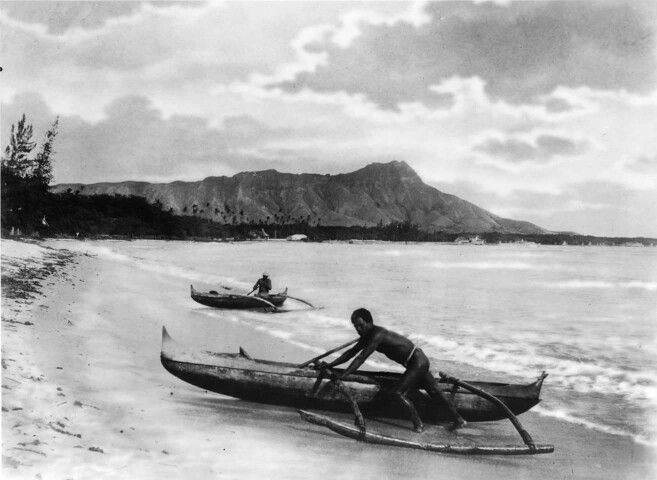
In 1795 an armada of war canoes, estimated at 960 to 1,200 hulls carrying 10,000 or more warriors, swept across the channel from Molokaʻi and landed along the shore at Waiʻalae and Waikīkī on Oʻahu. Its commander was Kamehameha, already master of Hawaiʻi Island and freshly victorious on Maui and Molokaʻi.
His army pushed the defenders of Oʻahu, led by Kalanikūpule, up Nuʻuanu Valley to the head of the Pali, where the Koʻolau cliffs drop sheer to the windward plain. Many Oʻahu warriors were driven or leapt over the edge, though accounts of their number vary too widely to trust any single figure. Kalanikūpule escaped, was later captured and was sacrificed to Kamehameha's war god. After the Battle of Nuʻuanu, only Kauaʻi and Niʻihau lay outside his rule.
How did one chief from the windswept north tip of Hawaiʻi Island come to this? The answer mixes ambition, religion, timing and, crucially, foreign guns.
A chief born under a star
Even Kamehameha's birth year is uncertain. Proposed dates run from about 1736, the reckoning of the Hawaiian historian Samuel Kamakau, to 1761. The popular date of around 1758 links his birth to Halley's Comet, the bright star of tradition, though some historians think it too late to fit his adult career.
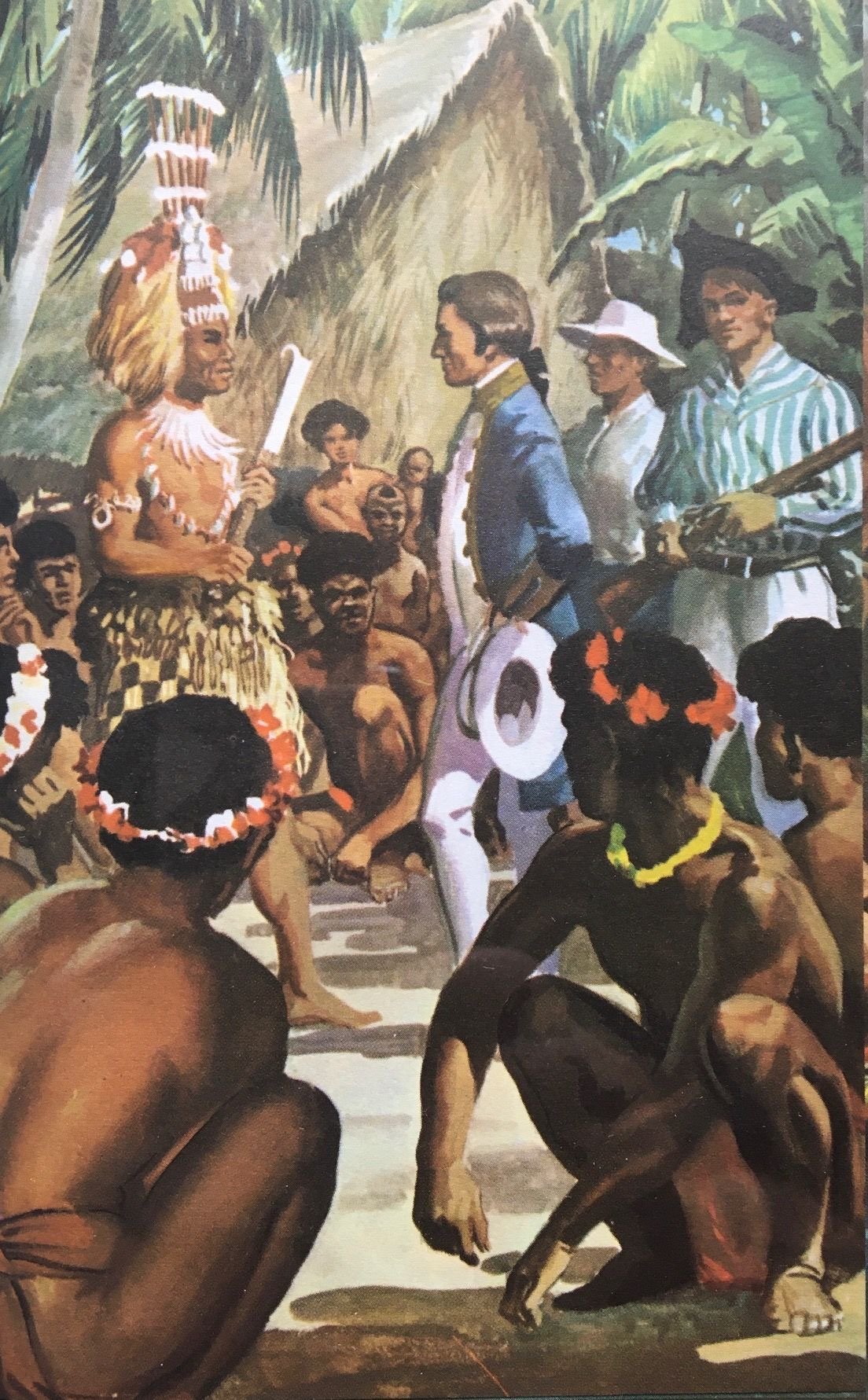
He was born in Kohala to the chief Keōua and the chiefess Kekuʻiapoiwa II. Tradition says a prophecy alarmed the ruling chief, who wanted the newborn killed, so the baby, first named Paiʻea, was hidden and raised in secret. He grew up at the court of his uncle Kalaniʻōpuʻu, trained as a warrior, and was with him when Captain Cook's ships arrived in 1778 (see Captain Cook in Hawaiʻi).
Another legend says that whoever could move the massive Naha Stone would unite the islands, and that the young Kamehameha overturned it. The slab, estimated at roughly 2.3 to 3.2 tonnes (2.5 to 3.5 US tons), still sits in front of the public library in Hilo.
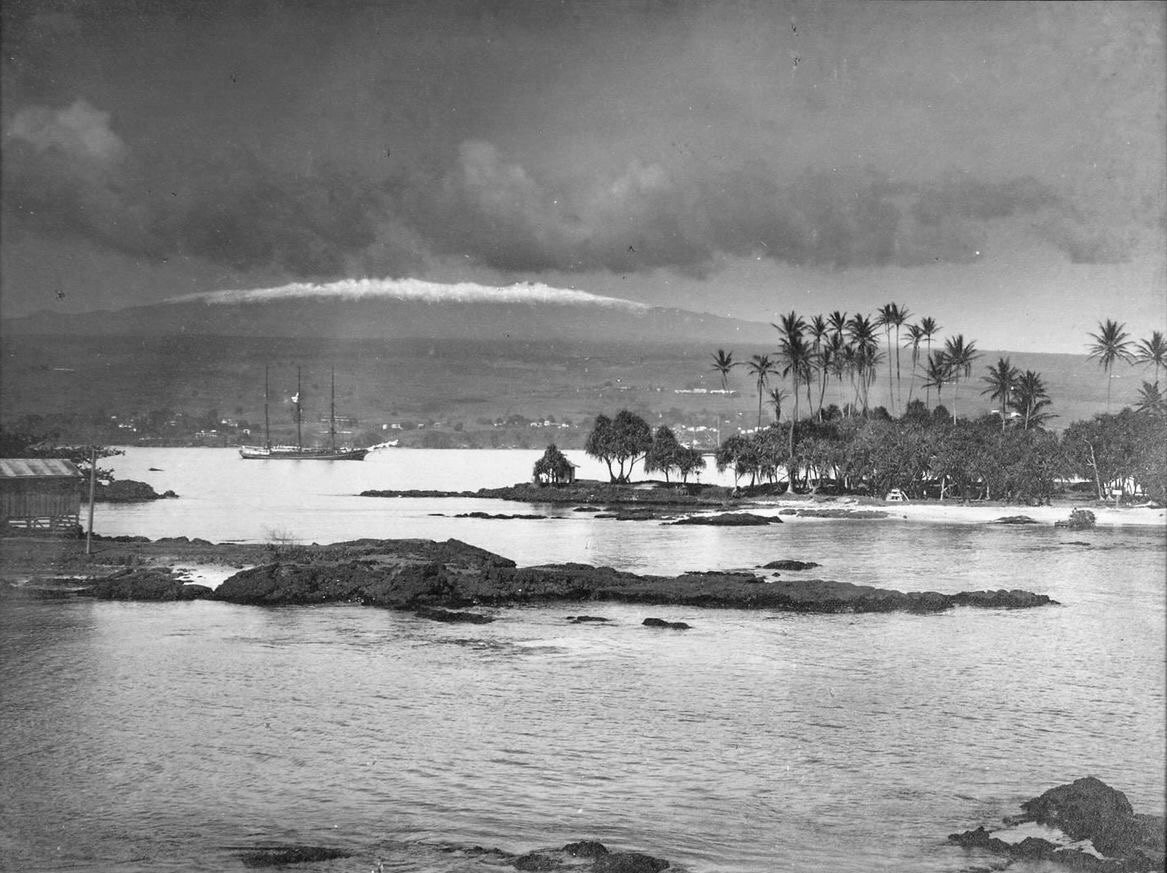
Keeper of the war god
When Kalaniʻōpuʻu died in 1782, he split his legacy. His son Kīwalaʻō inherited the rule, while Kamehameha received custody of the war god Kūkāʻilimoku. Quarrels over the redistribution of land soon followed, and a group of powerful Kona chiefs threw their support behind Kamehameha. At the Battle of Mokuʻōhai that year, Kīwalaʻō was killed.
Victory did not bring the whole island. For years Kamehameha held the west, while rival chiefs held Kaʻū and Hilo. From this era comes his most famous law. During a raid, the story goes, Kamehameha caught his foot in a rock and a fisherman broke a paddle over his head. Years later, when the men were brought before him, he blamed himself for attacking innocent people, set them free and proclaimed the Kānāwai Māmalahoe, the Law of the Splintered Paddle.
Hawaiʻi's state constitution still quotes it in its article on public safety: "Let every elderly person, woman and child lie by the roadside in safety." A conqueror's best-remembered law protects the defenceless from men like himself.
Cannon, an eruption and the temple on whale hill
By 1790 Kamehameha had something no rival could match: muskets, the cannon of the captured schooner Fair American, and two British gunners, John Young and Isaac Davis, who had become his advisers. That year he invaded Maui and crushed its army, led by Kalanikūpule, at Kepaniwai in ʻĪao Valley.
While he was away, his cousin Keōua Kuahuʻula raided the west coast of Hawaiʻi Island. As one of Keōua's war parties passed Kīlauea in 1790, an explosive eruption overwhelmed them with surges of hot ash and gas. Estimates of the dead vary enormously. Footprints in the Kaʻū Desert were long credited to Keōua's warriors, but USGS scientists think most were made by other people caught in the same eruption.
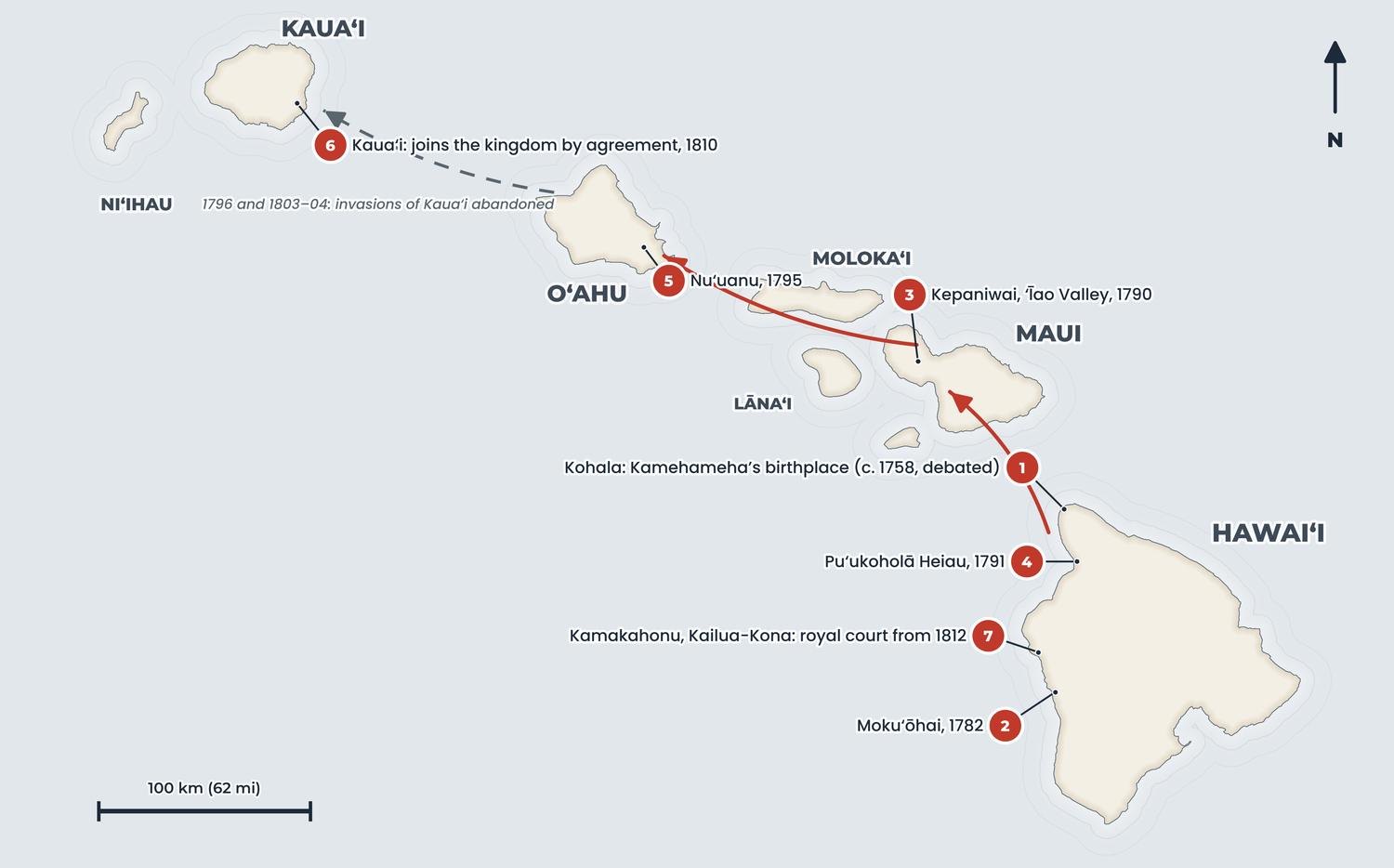
A prophet, Kapoukahi, told Kamehameha he would rule all the islands if he built a great heiau (temple) to his war god on Puʻukoholā, the hill of the whale, above Kawaihae. Thousands of labourers passed water-worn stones hand to hand from Pololū Valley, and fitted them without mortar into a platform about 68 by 30 m (224 by 100 ft), with walls up to about 6 m (20 ft) high.
When it was finished in the summer of 1791, Kamehameha invited Keōua to Kawaihae. Fighting broke out as he landed, and Keōua and many of his companions were killed. His body was carried up the heiau as its principal offering. Kamehameha was now undisputed ruler of Hawaiʻi Island.
Kauaʻi: won without a battle
After Nuʻuanu, only Kauaʻi and Niʻihau, ruled by Kaumualiʻi, remained independent. In 1796 Kamehameha's invasion fleet was beaten back by rough seas in the channel. He built a new fleet and stockpiled guns, but in 1803 to 1804, with his army gathered on Oʻahu, an epidemic, possibly cholera or typhoid, killed many of his warriors and chiefs. The second invasion never sailed.
Diplomacy finished what war could not. In 1810 Kaumualiʻi met Kamehameha in Honolulu and accepted him as supreme ruler, keeping Kauaʻi as a tributary king. For the first time in history, every inhabited Hawaiian island answered to one crown.
Ruling the kingdom
Kamehameha governed through trusted chiefs. He appointed governors for each island, relied on his chief minister Kalanimōkū, and listened closely to Kaʻahumanu, his favourite wife. He kept the kapu, the sacred laws governing daily life, as the religious frame of his rule.
He was also a sharp businessman. He came to control the lucrative sandalwood trade with China and by 1819 owned a fleet of more than thirty foreign-built vessels. When Russian agents built forts on Kauaʻi in 1816 and 1817, his authority helped see them expelled. The flag he adopted around 1816, with the Union Jack in its corner, is the ancestor of today's state flag.
In 1812 he returned to Kona and built his royal compound at Kamakahonu in Kailua, where he restored ʻAhuʻena Heiau as his personal temple. He died there on 8 May 1819 (some sources give 14 May). Following the custom of hūnākele, secret burial, two trusted companions hid his bones so that no rival could take their mana. The site has never been found. Within months, his widow and son would overturn the religious order he had upheld (see the end of the kapu system).
Historians still weigh his record. He kept the islands independent through a dangerous age of traders and empires and left his heirs a single, recognised kingdom. He also built it by conquest, at a cost of thousands of lives.
Following Kamehameha today
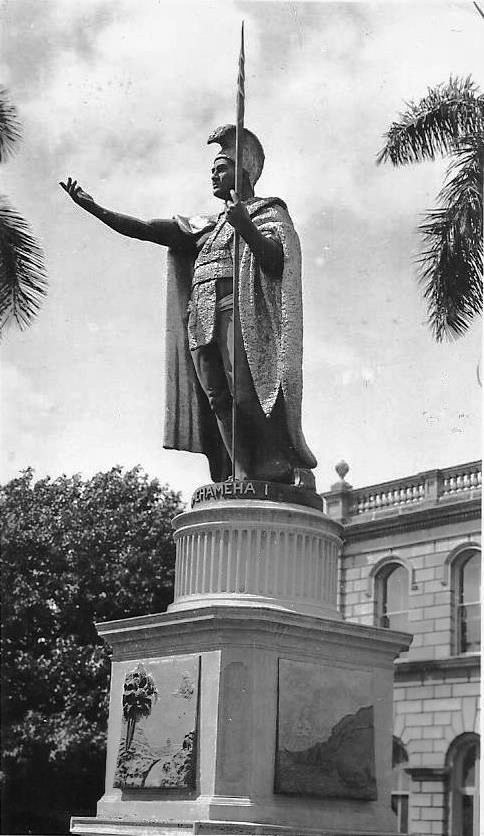
- King Kamehameha statue, Honolulu. The gilded bronze on South King Street, outside Aliʻiōlani Hale, was unveiled in February 1883 during Kalākaua's coronation celebrations. The first casting sank off the Falkland Islands in 1880; it was salvaged and now stands in Kapaʻau, North Kohala, near the king's birthplace. Other statues stand in the US Capitol (1969) and in Hilo (dedicated 1997).
- Puʻukoholā Heiau National Historic Site, Kawaihae. The great temple still dominates its hill. Visitors stay on the trails and do not enter the heiau.
- Kamakahonu and ʻAhuʻena Heiau, Kailua-Kona. The king's last home, beside the pier.
- ʻĪao Valley (Maui) and the Nuʻuanu Pali Lookout (Oʻahu). The settings of the 1790 and 1795 battles.
Every 11 June, Kamehameha Day, first proclaimed in 1871 by his grandson Kamehameha V, the statues are hung with long strands of lei and Honolulu holds a floral parade. Combine the sites with our guides to the Big Island and Honolulu, and read on into the reign of his successors in sandalwood, whaling and the Māhele. Kamehameha's full life, battle by battle, is a central chapter of The History of Hawaii.
Quick answers
When did Kamehameha unite the Hawaiian Islands?
He became ruler of Hawaiʻi Island in 1791 and conquered Maui, Molokaʻi and Oʻahu in 1795. The unification was completed in 1810, when Kaumualiʻi of Kauaʻi and Niʻihau peacefully accepted him as supreme ruler.
Where is King Kamehameha buried?
Nobody knows. After his death at Kailua-Kona in May 1819, his bones were hidden by trusted companions according to the custom of hūnākele, secret burial, so that no rival could take their mana. The location has never been revealed.
What is the Law of the Splintered Paddle?
The Kānāwai Māmalahoe is a law Kamehameha proclaimed after pardoning fishermen who had struck him with a paddle during a raid. It protects the defenceless, and Hawaiʻi's state constitution quotes it in its article on public safety: "Let every elderly person, woman and child lie by the roadside in safety."
Where are the King Kamehameha statues?
The best known stands outside Aliʻiōlani Hale in downtown Honolulu. The original casting, which sank off the Falklands and was salvaged, stands in Kapaʻau, North Kohala. Others are in the US Capitol's National Statuary Hall collection and in Hilo.
When is King Kamehameha Day?
11 June each year. It was first proclaimed in 1871 by Kamehameha V and is a state holiday in Hawaiʻi, celebrated with lei-draping ceremonies at the statues and a floral parade in Honolulu.
Facts checked October 2026 against the sources below and the research for our book The History of Hawaii. Dates and figures for early Hawaiian history are estimates and scholars still debate some of them.