Over 1,000 old railway ties, no shade and a view that makes every one worth it. How to tackle Oʻahu's famous stair climb safely, and what to pair it with.
Sunrise on a staircase
It is not yet six in the morning at Koko Head District Park, and headlamps are already bobbing up the dark slope of the crater in a perfectly straight line. Some climbers are training, some are on holiday, and some are wondering what they agreed to. Half an hour later the sun clears Molokaʻi on the horizon and the whole south-east coast of Oʻahu lights up below them.
The Koko Crater Railway Trail, almost always called the Koko Head stairs, is the island's second most popular hike after Diamond Head, according to the City and County of Honolulu. It is short, brutally steep and completely exposed. Done well, it is one of the best mornings on the island.
Koko Head or Koko Crater?
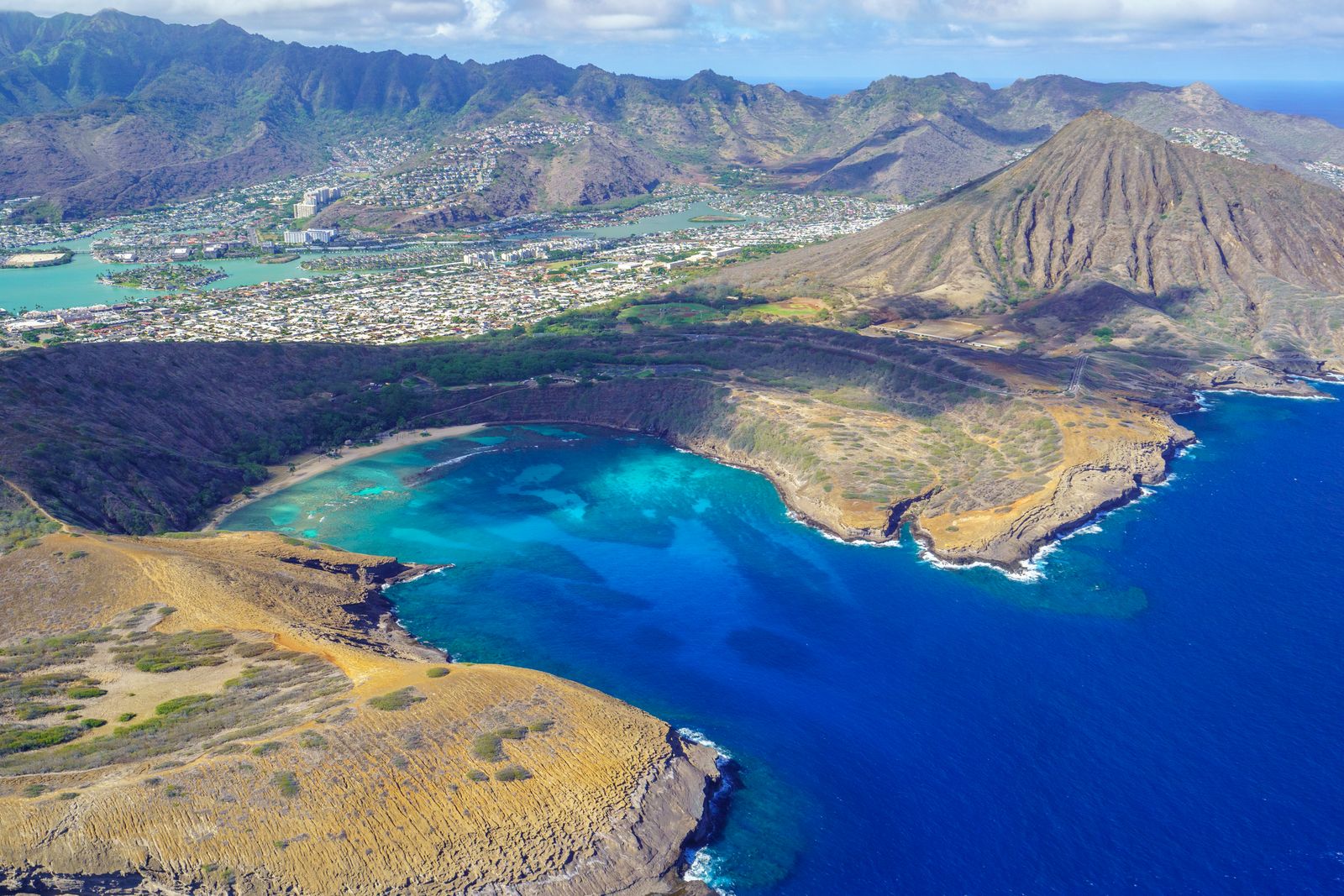
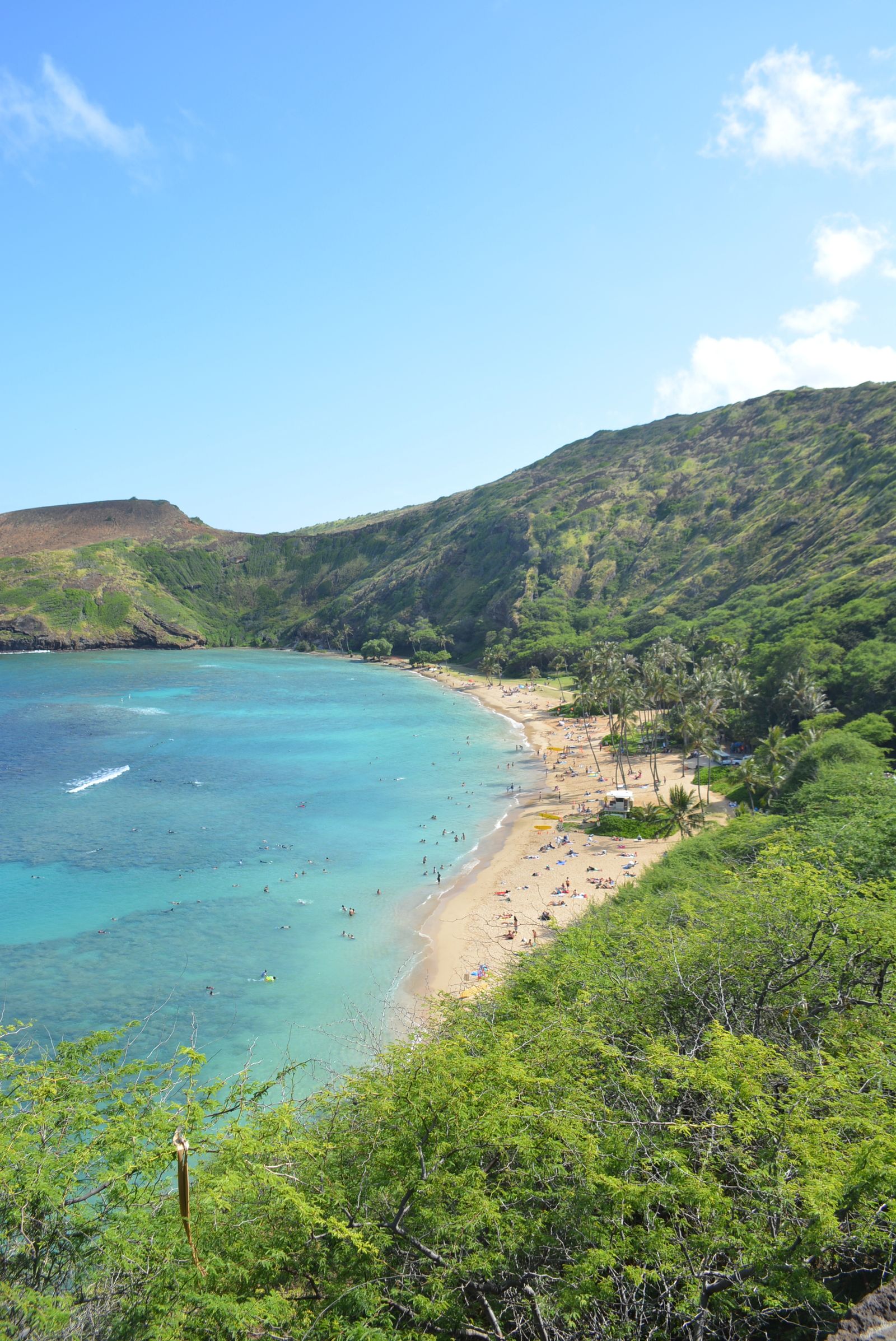
The name causes endless confusion. The stairs climb Koko Crater, the tall tuff cone behind the park, whose Hawaiian name is Kohelepelepe. Koko Head is the separate headland to the south-west, and its sunken crater holds Hanauma Bay. Both were built by explosive eruptions near the sea in Oʻahu's late volcanic period, which is why the layers of ash look so finely banded on the way up.
The trail itself is a relic of war. During the Second World War the military built lookout and radar positions on the summit and a cable-hauled tramway to carry people and supplies up the slope. The site later became an Air Force station, and in 1966 it was handed to the City and County of Honolulu. The rails are long gone, but the wooden ties remain, and they are your staircase. The line was built for hauling loads, not for walkers, which explains why some ties sit knee-high apart while others are sunk almost flush with the slope.
The hike became popular in the decades after the military left, long before social media made it famous, and today it is as much a local workout as a visitor attraction. Expect to share it with fitness groups and residents doing repeat climbs before work, many of them far faster than you. Nobody minds if you stop for a breather; just step off to the side so the line keeps moving. You can read more about Oʻahu in wartime in our Pearl Harbor history.
What the climb is really like
The figures sound modest: about 1.6 km (1 mile) each way and 1,048 ties to the top at roughly 368 m (1,208 ft). The reality is that almost all of the height comes in that one straight line, with no switchbacks to soften it. The lower third is steady. Around halfway the ties cross a gully on a raised section like a narrow bridge with a drop beneath; a well-used bypass path on the right lets you skip it and rejoin on solid ground.
The final third is the steepest, with ties set high and sometimes loose. Take it slowly, use your hands if you need to, and step to the side to let faster climbers pass. First-timers usually take 30 to 45 minutes up; regulars do it in 20. Coming down is harder on the knees than it looks, so face sideways or go backwards on the steepest bits.
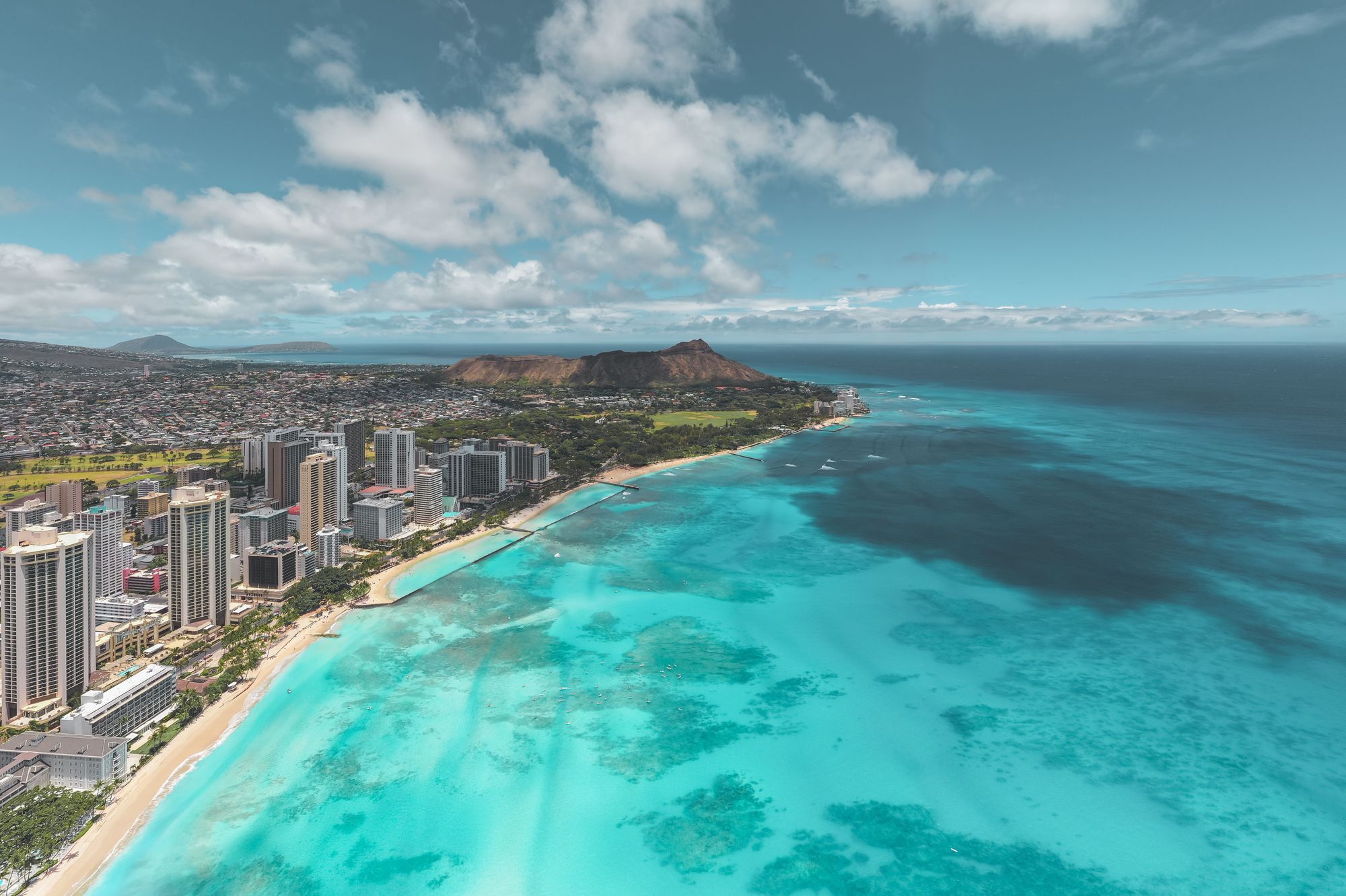
At the top, a viewing platform (rebuilt by the city in 2023) looks over Hanauma Bay, Hawaiʻi Kai and its marina, Diamond Head and, on clear days, Molokaʻi, Lānaʻi and Maui. Stay on the platform and the tramway line. In July 2025 a young boy was critically injured after falling down an old bunker shaft at the summit, and the city closed the trail for several days to seal openings. Old military tunnels are not for exploring.
Parking, timing and what to bring
As of October 2026 the trail is free and has no permit system. Park in the free lot at Koko Head District Park on Anapālau Street, off Kalanianaʻole Highway; the park gate closes from 11pm to 4am. Please do not park on residential streets nearby, which has been a long-running complaint from neighbours. There is no direct bus from Waikīkī, so most visitors drive or take a rideshare.
- Go early or late: sunrise and the last hour before sunset are cooler and prettier. Midday is quieter but punishing.
- Water: carry at least 1 litre per person, more on hot days. There is no water on the trail.
- Shoes: trainers or trail shoes with grip. The ties are slippery after rain.
- Sun: hat, sunglasses and reef-safe sunscreen; you will be heading for Hanauma or the beach afterwards.
- Know your limits: Honolulu Fire Department crews rescue injured or exhausted hikers here regularly. Turning back halfway is a perfectly good hike.
The volunteer group Kokonut Koalition helps maintain the ties alongside the city's work. Leave no rubbish and stay on the line to protect the eroding slopes.
Heat, safety and when not to go
The tramway climbs the open western flank of the crater, so by mid-morning the sun is on your back with nothing to block it, and the dark ties soak up heat. On a still summer day it can feel far hotter than the forecast suggests. Signs of heat exhaustion (dizziness, nausea, a pounding headache, cramps) are your cue to stop, find what shade you can and turn around. Do not push on to the top to make a point.
Skip the climb after heavy rain, when the ties and the soil between them become slick, and in strong winds, which can be fierce at the summit. Children can manage it with care, but keep them close at the bridge section and on the summit, and never let them near the old bunker entrances. If you have knee, heart or balance problems, Diamond Head or the paved Makapuʻu Lighthouse Trail are kinder alternatives with similar views.
Hike with a charged phone. If someone is injured, call 911 and say you are on the Koko Crater tramway; counting ties gives rescuers a rough position. Many hikers descend in the dark after sunset, so carry a headlamp if you plan to watch the sun go down from the top.
Respect any closure signs. The city has closed the tramway at short notice for bunker sealing, bee removal and repairs, and hikers who ignore the tape put rescuers at risk too.
Hanauma Bay next door
Hanauma Bay is a few minutes' drive away inside Koko Head, and a morning stair climb followed by a snorkel is a classic east Oʻahu day. Plan it carefully. As of October 2026 the nature preserve is closed on Mondays and Tuesdays, and non-residents pay $25 entry (children 12 and under free) plus $3 parking. Reservations open online two days ahead at 7am Hawaiʻi time and go fast. Entry runs from 6:45am to 1:30pm.
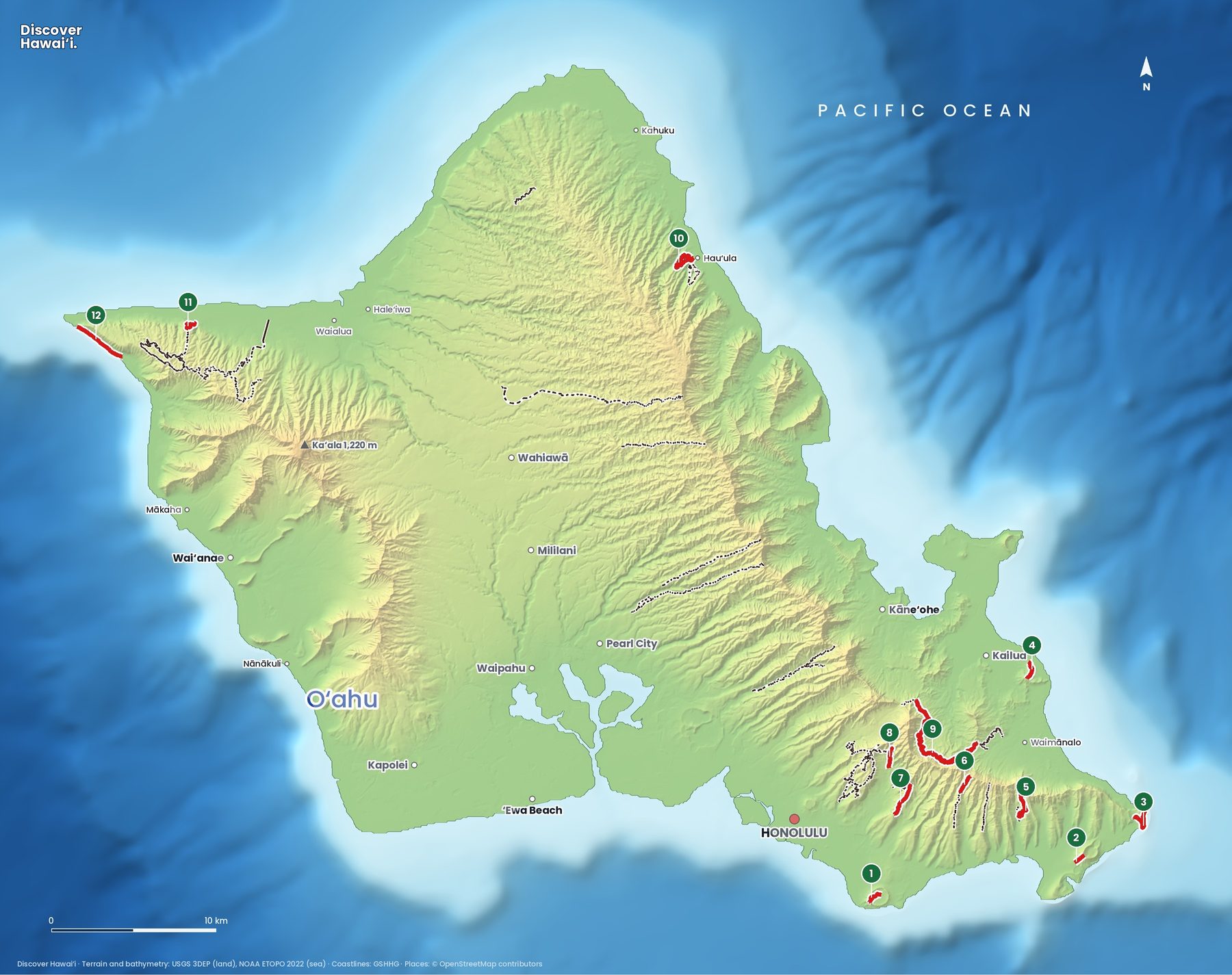
Our full Hanauma Bay guide covers the booking, the education video and where to snorkel, and the Oʻahu snorkelling and diving map shows the reef zones.
Hālona Blowhole and the rest of the coast
Continue east along Kalanianaʻole Highway and you reach the Hālona Blowhole lookout, where swells force water up through a lava tube in a white plume. It is most impressive when the south-east swell is running. Watch from the lookout: the wet ledges around the blowhole are dangerous and people have been swept off them. Beside it, tiny Hālona Cove is lovely to look at but often has strong surges.
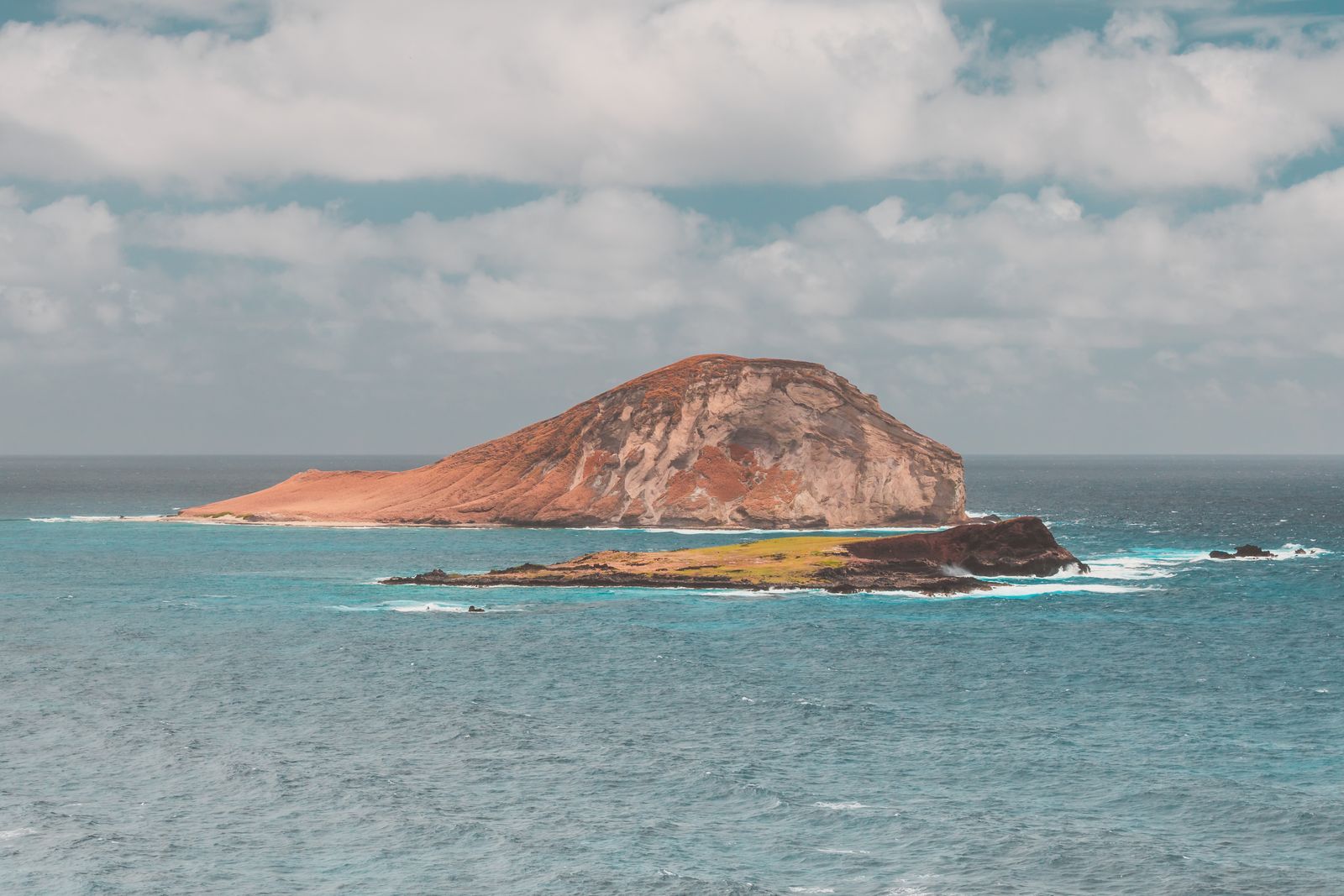
Beyond is Sandy Beach, famous for bodyboarding and for one of the most dangerous shorebreaks in Hawaiʻi; read our ocean safety guide before going in. Further on are the Makapuʻu Lighthouse Trail and lookout, with views of Mānana (Rabbit) Island. Inside Koko Crater itself, the city's Koko Crater Botanical Garden offers a quiet, flat walk among dryland plants. For more options, see our Oʻahu hiking trails map and the Diamond Head hike.
Quick answers
How many steps are on the Koko Head stairs?
There are 1,048 old railway ties from the bottom to the summit of Koko Crater, gaining about 365 m (1,200 ft) in roughly 1.6 km (1 mile).
How long does it take to hike Koko Crater?
Most first-timers take 30 to 45 minutes to reach the top and a little less to come down, so allow 60 to 90 minutes return with a rest at the summit.
Is the Koko Head hike free?
Yes. As of October 2026 there is no fee or reservation. Use the free parking lot at Koko Head District Park; the park gate is closed from 11pm to 4am.
Is Koko Head harder than Diamond Head?
Yes, much harder. Diamond Head is longer and gentler with handrails and a fee; Koko Crater is a short, relentless climb with no shade or switchbacks.
Can you do Koko Head and Hanauma Bay on the same day?
Yes, they are minutes apart. Climb at sunrise, then use a Hanauma Bay reservation later in the morning. Remember Hanauma is closed on Mondays and Tuesdays.
Facts checked October 2026. Reservations, fees, opening hours and trail or road closures change often in Hawaii, so confirm with the official source before you go.
- Koko Crater Tramway remains closed pending additional bunker sealing (City and County of Honolulu)
- Koko Head District Park time-activated gate (City and County of Honolulu)
- Hanauma Bay Nature Preserve (City and County of Honolulu)
- Hiking Koko Crater Stairs (Hawaii.com)
- Koko Crater Trail (Atlas Obscura)
- Hundreds hike Koko Crater Trail despite closure (Hawaii News Now)