Half Hawaiian, half Scottish, heir to a throne that vanished while she was at school in England: the short, brave life of the princess of the peacocks.
A teenager on a New York pier
On 1 March 1893 a 17-year-old girl stepped off a transatlantic liner in New York to face a crowd of reporters. Six weeks earlier, a committee of businessmen backed by American troops had overthrown her aunt, Queen Liliʻuokalani, and a treaty to annex Hawaiʻi was already before the US Senate.
Princess Victoria Kaʻiulani, heir to the Hawaiian throne, had come from school in England to argue her country's case. Her prepared statement, printed in newspapers across the United States, began with a line Hawaiians still quote: "Unbidden, I stand upon your shores today".
She did not win back the throne. But she won something rarer in that year: the sympathy of the American press, and an audience with the president. This is her story, from a Waikīkī garden to the world stage and home again.
The princess of ʻĀinahau
Kaʻiulani was born in Honolulu on 16 October 1875, the only child of Princess Miriam Likelike, sister of King Kalākaua and of the future Queen Liliʻuokalani, and Archibald Scott Cleghorn, a Scottish-born merchant and keen gardener. Her name is often translated as "the royal sacred one".
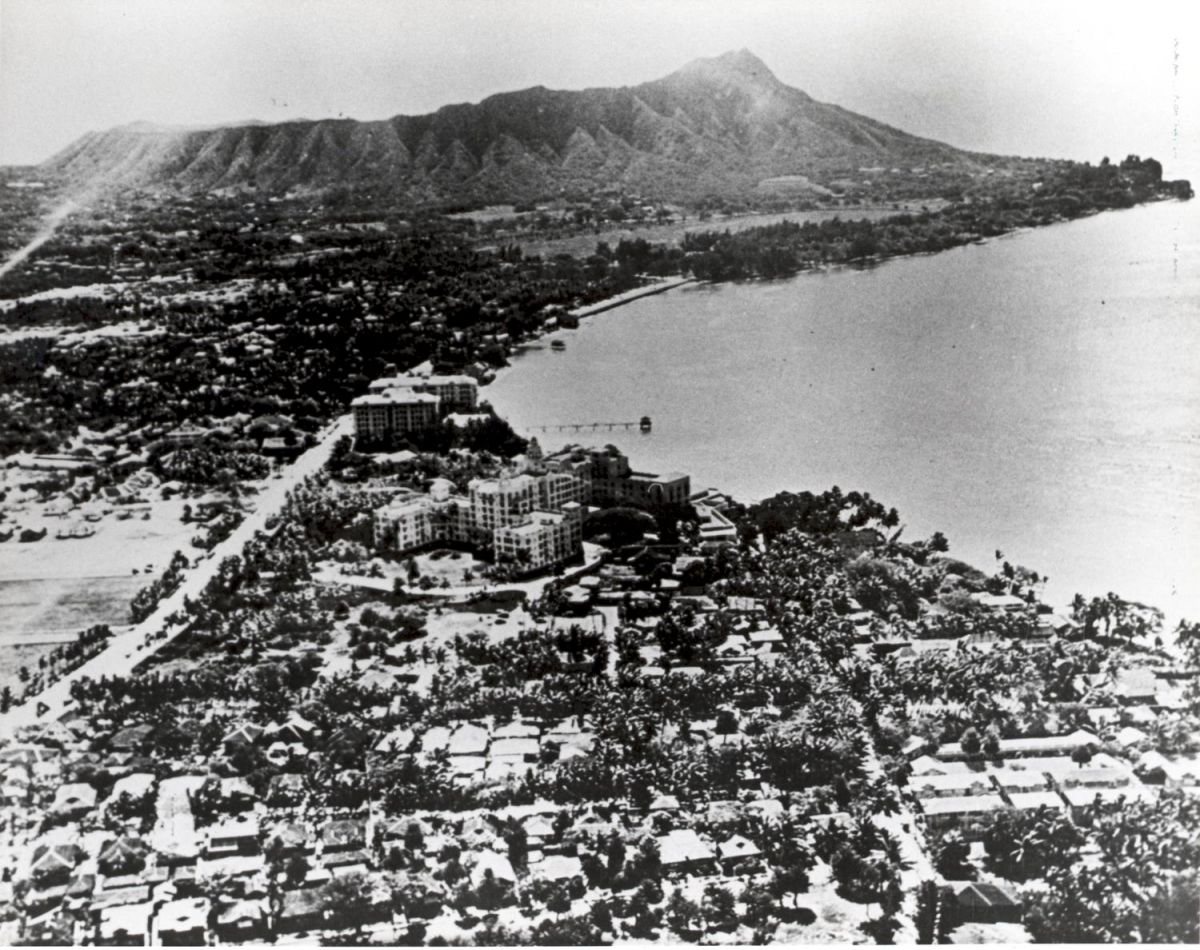
Her godmother, the high chiefess Ruth Keʻelikōlani, gave her a 4 ha (10 acre) estate in Waikīkī, which her mother named ʻĀinahau. Cleghorn filled it with trees from around the world, including a great banyan, and with peacocks that became the princess's favourite pets. Her uncle the king had high hopes for her: in Tokyo in 1881 he secretly proposed a marriage between his niece and a Japanese prince, an offer Japan politely declined.
Childhood ended early. Her mother died in 1887, when Kaʻiulani was 11, and her family decided she should be educated in Britain, as befitted a future queen.
The poet under the banyan
In January 1889 the Scottish writer Robert Louis Stevenson arrived in Honolulu, ill and behind with a novel. Cleghorn, a fellow Scot, welcomed him at ʻĀinahau, and the author and the 13-year-old princess became friends. He sat with her under the banyan, telling her stories of the cold northern country she was about to see.
Before she left he wrote a poem in her small red autograph album, dated April 1889, calling her "the island maid, the island rose". On 10 May 1889 she sailed from Honolulu, reaching Liverpool on 17 June. She would not see Hawaiʻi again for more than eight years.
Schooldays in England
From September 1889 she boarded at Great Harrowden Hall, a girls' school in Northamptonshire, and in 1892 moved to Brighton to study privately. Her guardian in Britain was Theo H. Davies, a Honolulu businessman with a home in England, who became one of her most loyal defenders.
When Kalākaua died in January 1891 and Liliʻuokalani became queen, the new monarch named her niece heir apparent on 9 March 1891, with the approval of the House of Nobles. Kaʻiulani was 15, and far away. She learned the news, like everything else from home, by letter and telegram, weeks after the fact.
1893: a princess takes on Washington
Late in January 1893 the news reached England: the queen had been deposed, and annexation commissioners were already on their way to Washington. Davies urged her to go to America and speak for herself, and he went with her.
Her statement to the press asked plainly whether she had done anything wrong that "this wrong should be done to me and my people". In New York, Boston and Washington she impressed reporters who had expected an exotic curiosity and found instead a poised, articulate young woman. On 13 March 1893 she was received at the White House by President Grover Cleveland and his wife Frances.
Cleveland had already withdrawn the annexation treaty and sent James Blount to investigate, as told in the overthrow of the Hawaiian Kingdom. Kaʻiulani's visit could not change the outcome in Honolulu, where the Provisional Government refused to step aside. She went back to Europe and spent four more years in Britain, Jersey, France and Germany, waiting.
Coming home to a lost kingdom
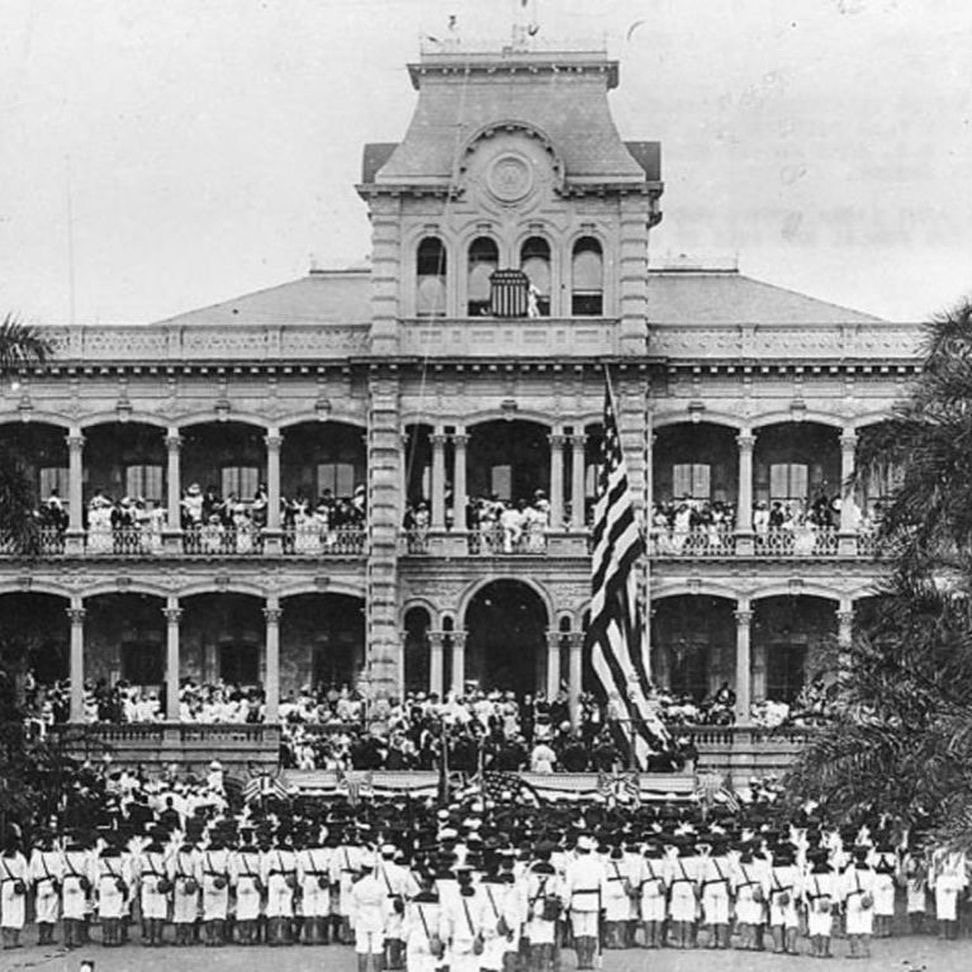
She finally returned to Honolulu on 9 November 1897, to a republic that no longer recognised her title. Eight months later the United States annexed Hawaiʻi. On 12 August 1898, as the Hawaiian flag came down over the old palace, she and the former queen stayed away, mourning privately with their family (see Hawaii's annexation in 1898).
She made the best of what remained. At ʻĀinahau she entertained visiting American officials, including the commissioners drafting the territory's laws, and made sure they met educated Hawaiians. In January 1899 she travelled to Waimea on Hawaiʻi Island for a wedding at Parker Ranch. Out riding with friends, she was caught in a heavy rainstorm and fell ill.
She was brought home to Oʻahu but never recovered. Kaʻiulani died at ʻĀinahau on 6 March 1899, aged 23. Her doctor recorded inflammatory rheumatism, later adding exophthalmic goitre. Legend says her peacocks screamed through the night she died. After lying in state at Kawaiahaʻo Church, she was given a state funeral on 12 March and laid to rest at Mauna ʻAla, the Royal Mausoleum, where her coffin was later moved to the Kalākaua crypt.
What became of ʻĀinahau
Cleghorn lived on at ʻĀinahau until his death in 1910 and left it to the territory as a park, but the legislature declined the gift. The estate was divided into building lots and sold. The house became a hotel, then a rental, and burned down on 2 August 1921. The great banyan survived until 1949, when it too was cut down.
Today the Sheraton Princess Kaiulani hotel stands on part of the old grounds, and the street names around it, Kaʻiulani Avenue among them, are almost all that recall the garden. The full story of how Waikīkī's royal estates gave way to hotels is told in the history of Waikīkī.
Finding Kaʻiulani today
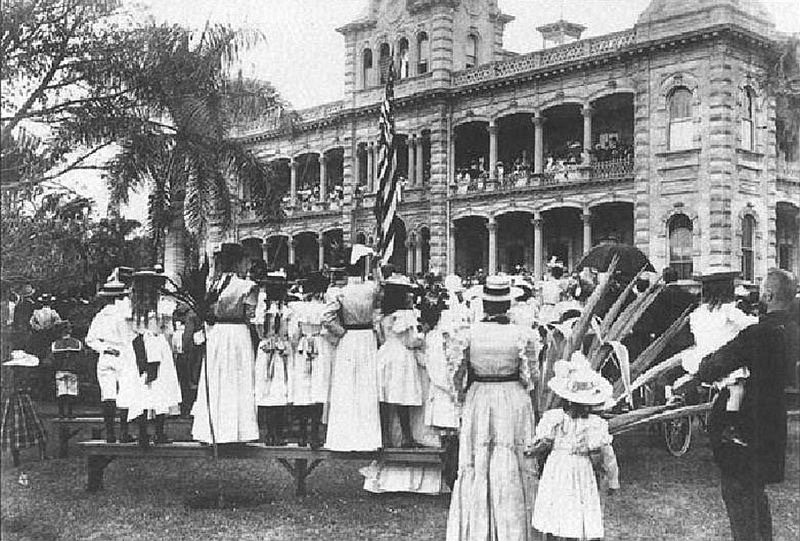
Princess Kaʻiulani statue: a bronze by Jan Gordon Fisher, unveiled in 1999 in a small triangular park at Kūhiō and Kaʻiulani avenues, near the old entrance to ʻĀinahau. It shows her feeding one of her peacocks. The same sculptor made the statue of Duke Kahanamoku a short walk away on Kalākaua Avenue. Lei-draping ceremonies are held here around her birthday in October.ʻIolani Palace and Kawaiahaʻo Church, downtown: the palace of her uncle and aunt, and the church where she lay in state. Mauna ʻAla, Nuʻuanu Avenue: her resting place, beside the aunt who outlived her, Queen Liliʻuokalani.Combine them with our things to do in Honolulu. Kaʻiulani's brief life spans the last years of the kingdom and the first of the territory, and that whole turbulent era is traced in our book The History of Hawaii.
Quick answers
Who was Princess Kaʻiulani?
Victoria Kaʻiulani Cleghorn (1875–1899) was the niece of King Kalākaua and Queen Liliʻuokalani and heir apparent to the Hawaiian throne from 1891. After the 1893 overthrow she travelled to the United States to plead for her kingdom.
How did Princess Kaʻiulani die?
She fell ill after being caught in a rainstorm while riding near Waimea on Hawaiʻi Island in January 1899. She died at ʻĀinahau on 6 March 1899, aged 23; her doctor recorded inflammatory rheumatism, later adding exophthalmic goitre.
Did Princess Kaʻiulani meet President Cleveland?
Yes. On 13 March 1893 she was received at the White House by President Grover Cleveland and his wife Frances, weeks after the overthrow of Queen Liliʻuokalani.
Where was ʻĀinahau?
ʻĀinahau was her family's 4 ha (10 acre) estate in Waikīkī, around today's Kaʻiulani Avenue. It was subdivided after 1910 and the house burned in 1921; the Sheraton Princess Kaiulani hotel stands on part of the site.
Is there a statue of Princess Kaʻiulani?
Yes. A bronze statue by Jan Gordon Fisher, unveiled in 1999, stands in a small park at Kūhiō and Kaʻiulani avenues in Waikīkī, showing the princess with one of her peacocks.
Facts checked October 2026 against the sources below and the research for our book The History of Hawaii. Dates and figures for early Hawaiian history are estimates and scholars still debate some of them.
- Kaʻiulani (Wikiwand / Wikipedia)
- Kaʻiulani, Hawaiʻi's island rose (Smithsonian Magazine)
- Kaʻiulani, beloved aliʻi (Ka Wai Ola)
- The Princess and the Poet (Ka Wai Ola)
- March 6, 1899 (Images of Old Hawaiʻi)
- Kaiulani (1875–1899) (Encyclopedia.com)
- Statues of Oʻahu walking tour: Waikīkī (Historic Hawaiʻi Foundation)