Torches, thatch, rum and a lagoon wedding with Elvis: in the 1950s and 60s Hawaiʻi's hotels sold a Polynesian fantasy invented in Hollywood. Here is how tiki came to the islands.
7.30 pm in the coconut grove
Every evening at 7.30, for about forty years, torch bearers ran through a coconut grove beside a lagoon at Wailua on Kauaʻi, lighting flames one by one, while guests of the Coco Palms resort watched from the terraces with drinks in hand. The hotel called it the "Call to Feast", and so many other Hawaiʻi hotels copied the idea that the torch-lighting ceremony became a standard of island tourism.
Coco Palms opened on 25 January 1953 with just 24 rooms. The Honolulu hotel executive Lyle Guslander had bought the old lodge for $150,000, and his wife, Grace Buscher Guslander, turned it into a legend of more than 400 rooms, suites and thatched bungalows. It was the perfect expression of a craze that swept America and Hawaiʻi in the 1950s and 1960s: tiki.
Tiki was born in Hollywood
Tiki culture did not begin in Polynesia. It began in Los Angeles in 1933, when a young adventurer named Ernest Raymond Gantt opened a small bar called Don's Beachcomber on McCadden Place in Hollywood as Prohibition ended. He decorated it with fishing nets, bamboo and souvenirs of the South Seas, served potent rum drinks such as the Zombie, and later changed his name to Donn Beach.
In 1936 Victor Bergeron opened the first Trader Vic's in Oakland, California, and in 1944 he created the Mai Tai, though Beach claimed it was a copy of one of his own drinks. Both men built chains, and after the Second World War, as returning servicemen brought home memories of the Pacific, the style spread across the United States: carved poles, glowing puffer-fish lamps, thatch, torches and rum. In 1957 Hilton licensed Trader Vic's restaurants for its hotels.
The word itself came from far away. In Māori tradition Tiki is the first man, and the word also means a carved human figure, as it does in the Marquesas. The Hawaiian equivalent is kiʻi, an image, and in old Hawaiʻi carved kiʻi of gods stood in heiau, the temples (see ancient Hawaii daily life). They were sacred objects, not bar décor.
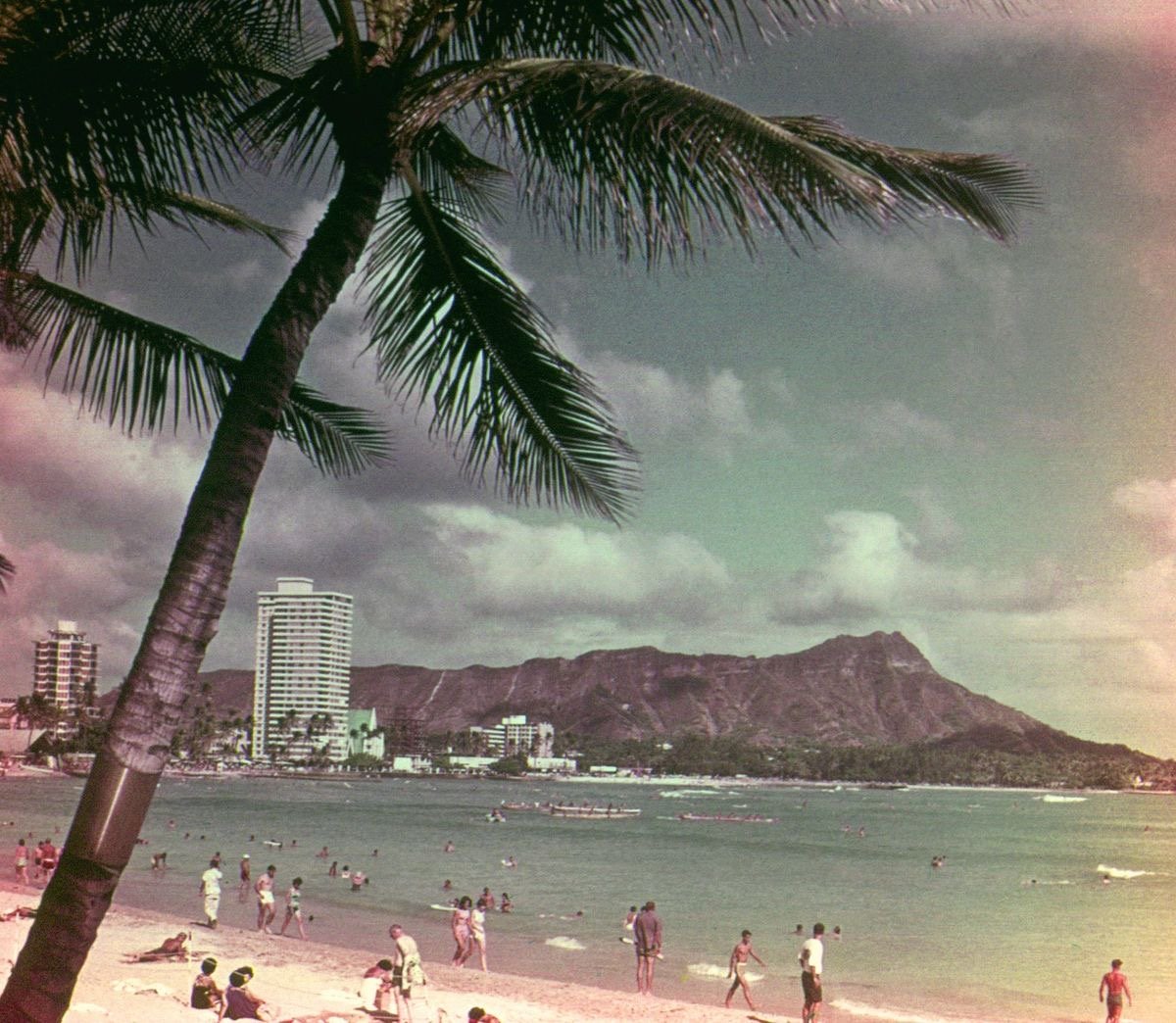
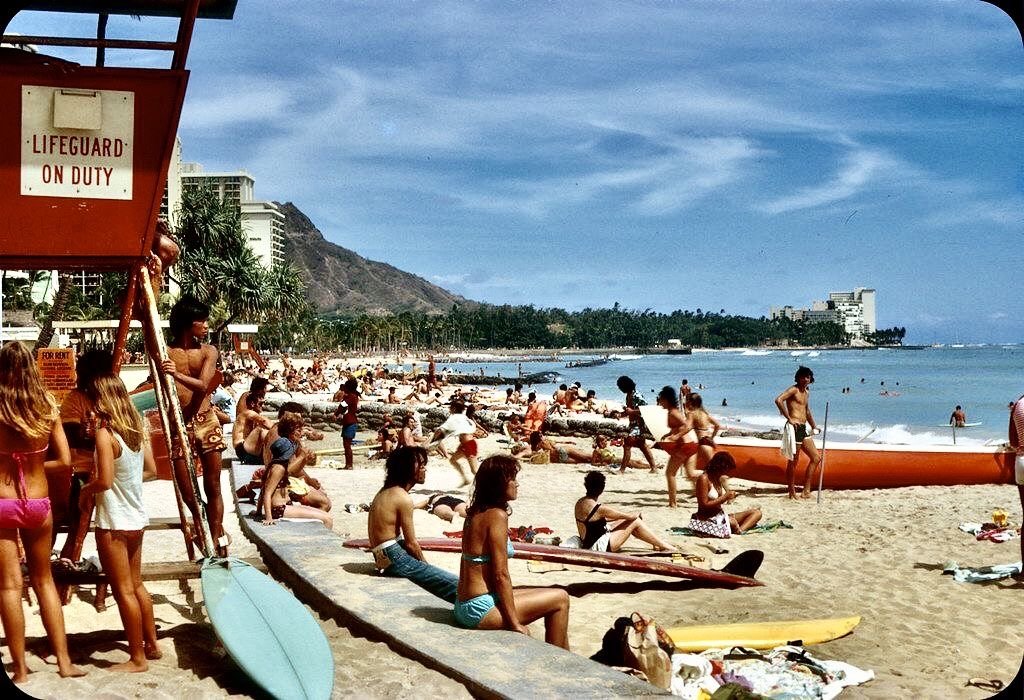
Tiki comes to Waikīkī
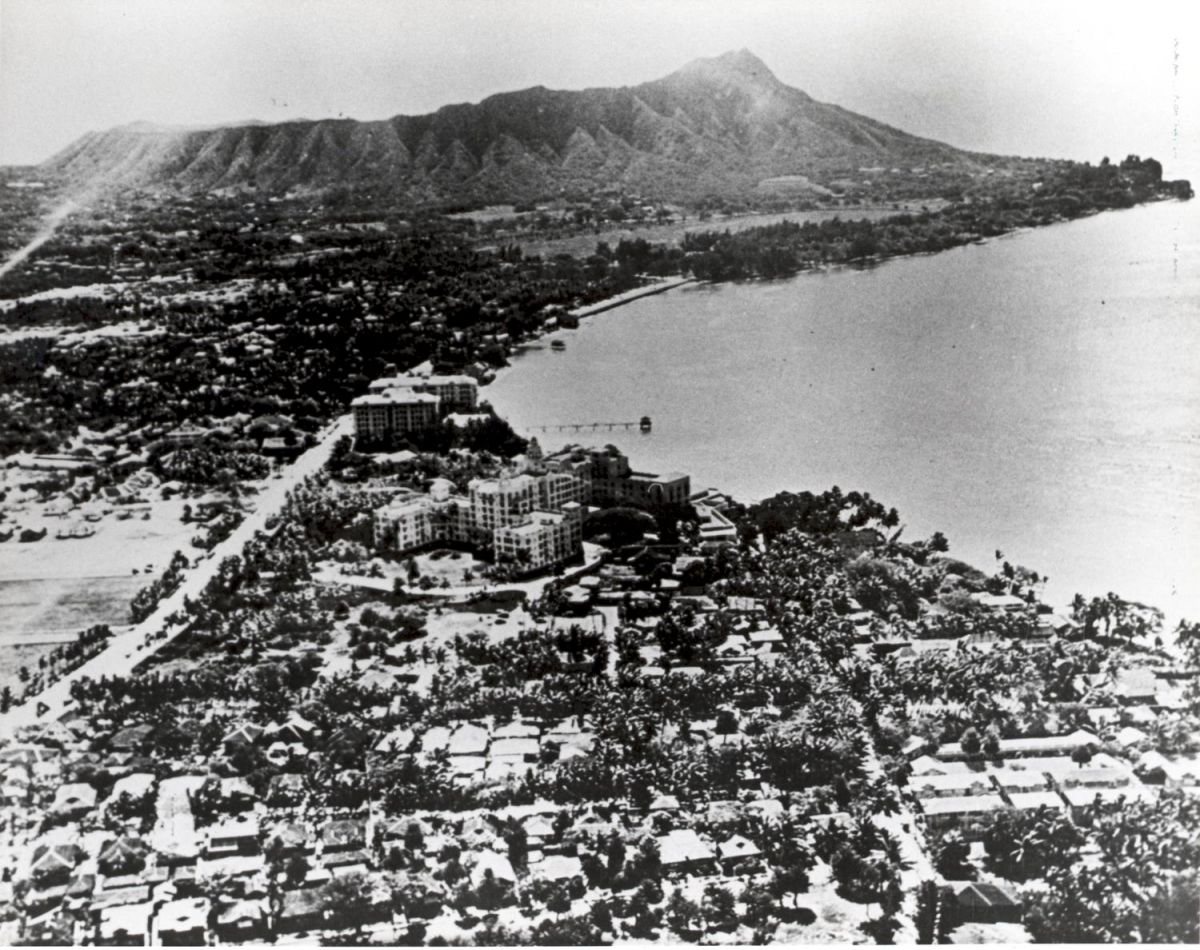
After the war Donn Beach moved to Hawaiʻi, and in 1956 he created the International Market Place on Kalākaua Avenue, on land leased from the Queen Emma Foundation. Built around a giant banyan, it held shops, nightclubs and restaurants, including a Don the Beachcomber, and Beach ran it from a treehouse in the branches (more in Waikīkī in the 1960s and 1970s).
The rum came too. In 1953 Trader Vic created a cocktail menu for Matson's hotels, the Royal Hawaiian and the Moana, and the Mai Tai became the drink of Waikīkī. Its name is said to come from the Tahitian word maitaʻi, meaning good, which says a lot about tiki: a Californian drink, with a Tahitian name, served as Hawaiian.
Kaiser's Hawaiian Village
The grandest tiki fantasy in Hawaiʻi was built by an industrialist. In 1955 Henry J. Kaiser, famous for his wartime shipyards, and the developer Fritz B. Burns opened the Hawaiian Village Hotel at the ʻewa end of Waikīkī. The site had a deep history: it was once the village of Kālia, with ancient fishponds, and later the childhood home of Duke Kahanamoku.
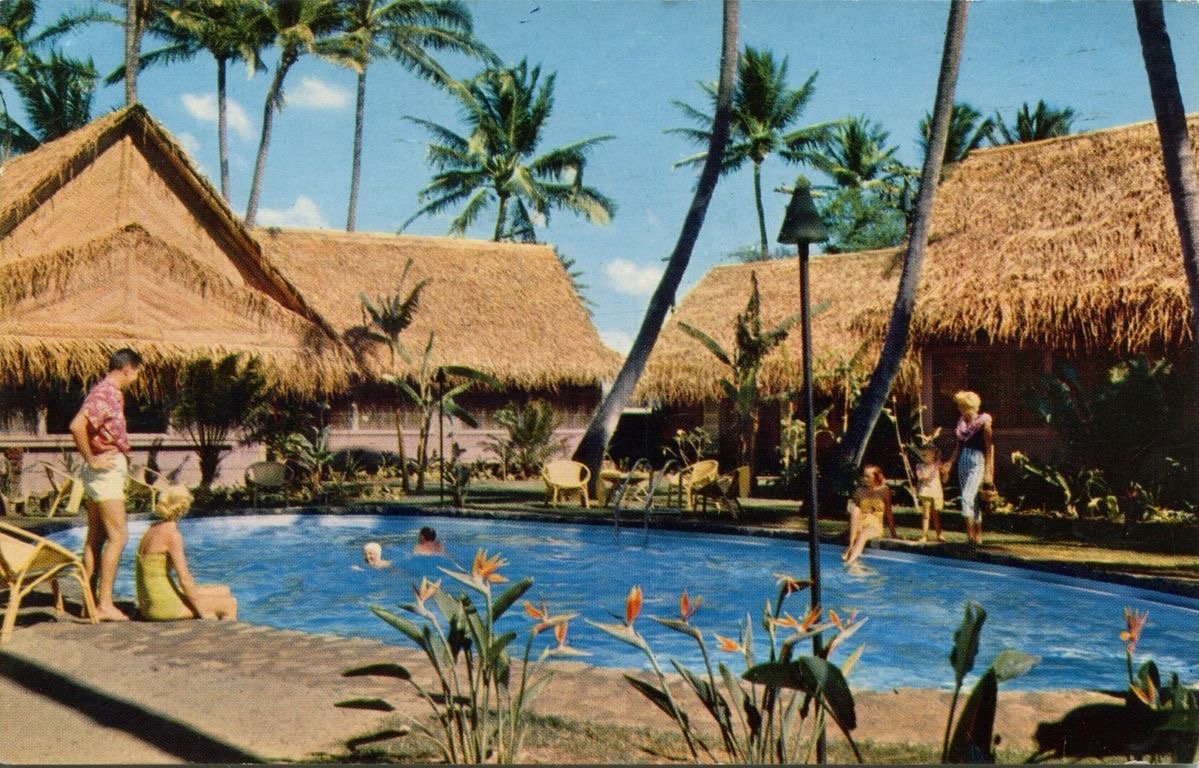
Kaiser filled it with thatched-roof cottages in a "Polynesian" style and dug a lagoon. In 1957 he added an aluminium geodesic dome that served as a concert hall, a space-age touch beside the thatch. In 1961 Conrad Hilton bought into the resort and renamed it the Hilton Hawaiian Village. The cottages gave way to towers, including the Rainbow Tower of 1968, and the resort grew into one of the largest hotels in the Hilton chain, with around 3,400 rooms. The dome was demolished in 1999.
Blue Hawaii and the fall of Coco Palms
Coco Palms got its biggest moment in 1961. Most of the final twenty minutes of Elvis Presley's film Blue Hawaii were shot on or near the grounds, including the wedding scene on the lagoon, and couples came for decades to marry in the same spot.
The grove has a far older history. In the mid-1800s it was home to Deborah Kapule, the last queen of Kauaʻi, and the land holds important archaeological sites. Wailua was among the most sacred districts on the island, a centre for aliʻi (chiefs) (see our island guides for Kauaʻi).
On 11 September 1992 Hurricane Iniki struck Kauaʻi with winds of about 230 km/h (145 mph) and wrecked the resort. It never reopened. For three decades its shattered buildings stood beside the Kūhiō Highway while plans came and went. A developer, Reef Capital Partners, took over the site through a foreclosure auction in 2022 and, as of mid-2026, plans a 351-room Kimpton hotel with financing announced in July 2026. Local groups such as I Ola Wailuanui oppose it and want the land preserved for its cultural value. The outcome is still uncertain.
Thatch, torches and the real hale
To most visitors in the 1950s, a thatched roof meant "Hawaiian". Real Hawaiian architecture was both similar and very different. A traditional hale (house) was a frame of native timber lashed with cord, most often made from olonā fibre, and thatched with pili grass, lauhala (pandanus leaves) or bundles of ti leaves.
A family did not live in one building but in a kauhale, a cluster of houses with separate purposes: a hale noa where everyone slept, a hale mua for men, a cooking house and others, all arranged according to rules of kapu. Doorways were low, floors were covered in mats and houses were dedicated with ceremony. The resort cottages, with their private bathrooms and picture windows, borrowed the roof and little else.
Tiki décor also mixed cultures freely: Māori carving, Tahitian names, Marquesan figures and Hawaiian words in one room. That was part of its playful appeal, but it blurred very different peoples into one exotic backdrop, a criticism that has grown louder since the Hawaiian Renaissance.
Where to find tiki history today
Tiki faded in the 1970s, then came roaring back in the 1990s with a new generation of collectors and bartenders. In Hawaiʻi you can still trace the original wave:
- International Market Place, Waikīkī: rebuilt in 2016, it kept the banyan and a plaque marking Donn Beach's treehouse.
- Hilton Hawaiian Village: stroll past the lagoon and the Rainbow Tower on the site of Kaiser's thatched village.
- The Royal Hawaiian and the Moana: order a Mai Tai where Trader Vic's 1953 menu introduced it.
- Coco Palms, Wailua, Kauaʻi: view the site from the road only; it is private land and a place of deep cultural importance.
- Bishop Museum, Honolulu: for the real thing, see the museum's traditional hale pili, assembled in 1902 with posts and rafters from an old house at Miloliʻi on Kauaʻi.
Our things to do on Kauaʻi guide covers the Wailua area, and visiting Hawaii respectfully explains how to enjoy places like these with care.
Quick answers
What is tiki culture?
A style of bars, restaurants and décor inspired by a romanticised idea of Polynesia. It began in 1933 with Don the Beachcomber in Hollywood, boomed in the 1950s and 1960s with rum drinks, carved figures and thatch, and revived in the 1990s.
Is tiki Hawaiian?
Not really. Tiki style was invented in California. The word comes from Māori and Marquesan; the Hawaiian equivalent, kiʻi, means an image, and carved kiʻi in old Hawaiʻi were sacred figures of gods in temples.
Where was Blue Hawaii filmed on Kauai?
Most of the last part of the 1961 Elvis Presley film, including the lagoon wedding, was filmed at or near the Coco Palms resort in Wailua, Kauaʻi.
What happened to the Coco Palms resort?
Hurricane Iniki wrecked it on 11 September 1992 and it never reopened. A developer took over the site in 2022 and plans a new hotel, but the project is opposed by local groups who want the land preserved.
Was the Mai Tai invented in Hawaii?
No. Trader Vic Bergeron said he created it in Oakland, California, in 1944, and Donn Beach claimed an earlier version. Trader Vic brought it to Matson's Waikīkī hotels in 1953.
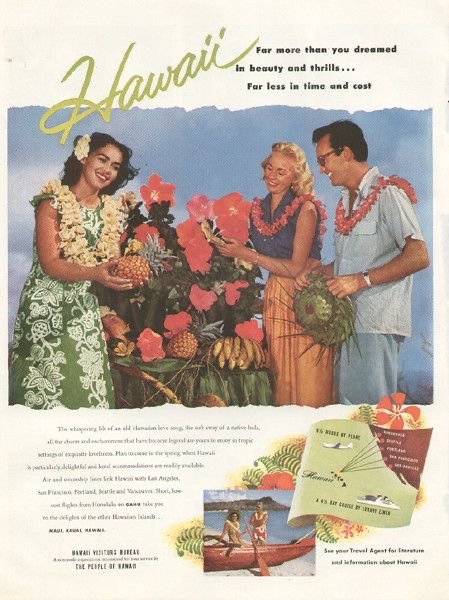
Facts checked October 2026 against the sources below and the research for our book The History of Hawaii. Vintage photos and adverts are shown as period illustrations; adverts are credited to their original advertisers.
- Honolulu Star-Advertiser: Return to splendor (Coco Palms, 2013)
- Honolulu Star-Advertiser: Plan to rebuild historic Coco Palms Resort gets financial backing (2026)
- Wikipedia: Donn Beach
- Wikipedia: Tiki bar
- Wikipedia: Mai Tai
- Wikipedia: Hilton Hawaiian Village
- Wikipedia: Tiki
- Hawaiʻi Alive (Bishop Museum): Hale pili