In twenty years Waikīkī went from cottages and coconut groves to a wall of towers, surf racks and red lifeguard stands. Here is how the boom years looked from the sand.
A red tower on a crowded beach
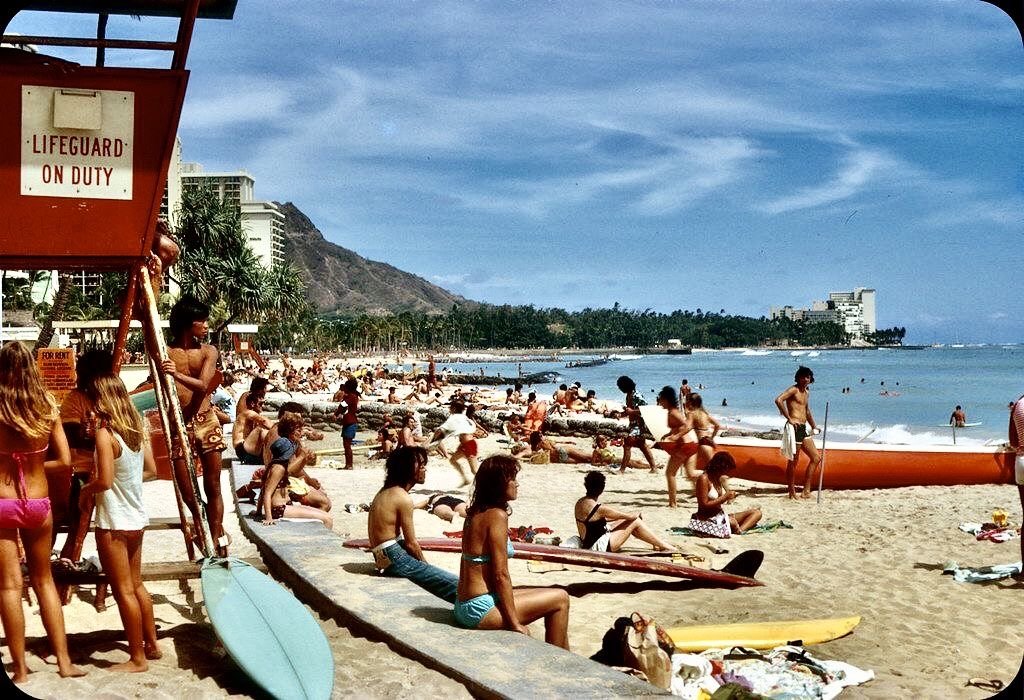
Look closely at a colour snapshot of Waikīkī from the 1970s. A red wooden lifeguard tower carries a sign reading "Lifeguard on duty". Teenagers in bikinis lean on the low sea wall, longboards and a pale blue shortboard lie in the sand, a long orange canoe waits at the water's edge and towels cover almost every metre of beach. Behind it all rise palms, white hotel towers and the familiar profile of Diamond Head.
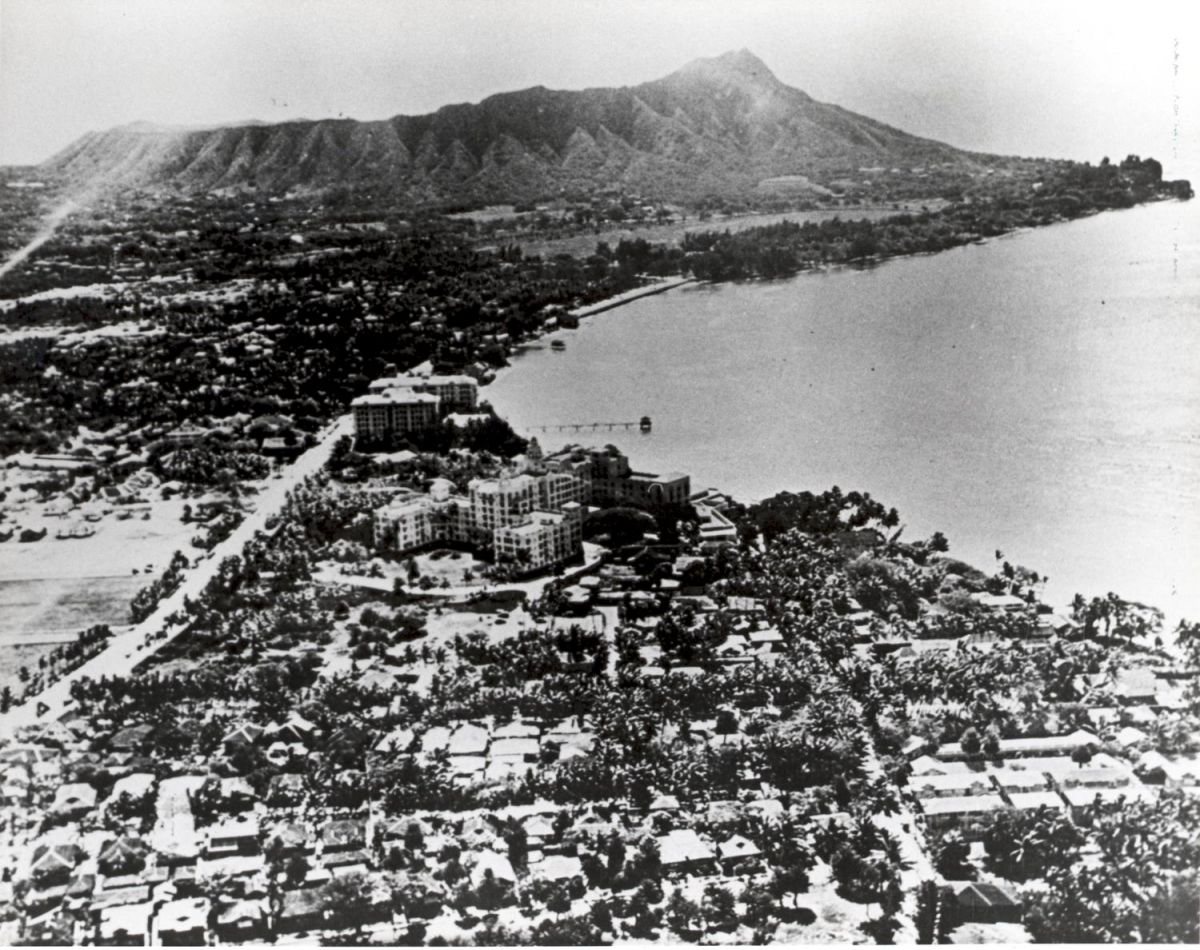
Twenty years earlier much of this shore had still been low cottages, gardens and a handful of grand hotels. Between statehood in 1959 and the end of the 1970s Waikīkī became one of the most crowded, photographed and argued-over strips of beach in the world. This is the story of those two decades. For the older history of the district, from royal retreat to the Ala Wai Canal, see our history of Waikīkī.
The towers go up
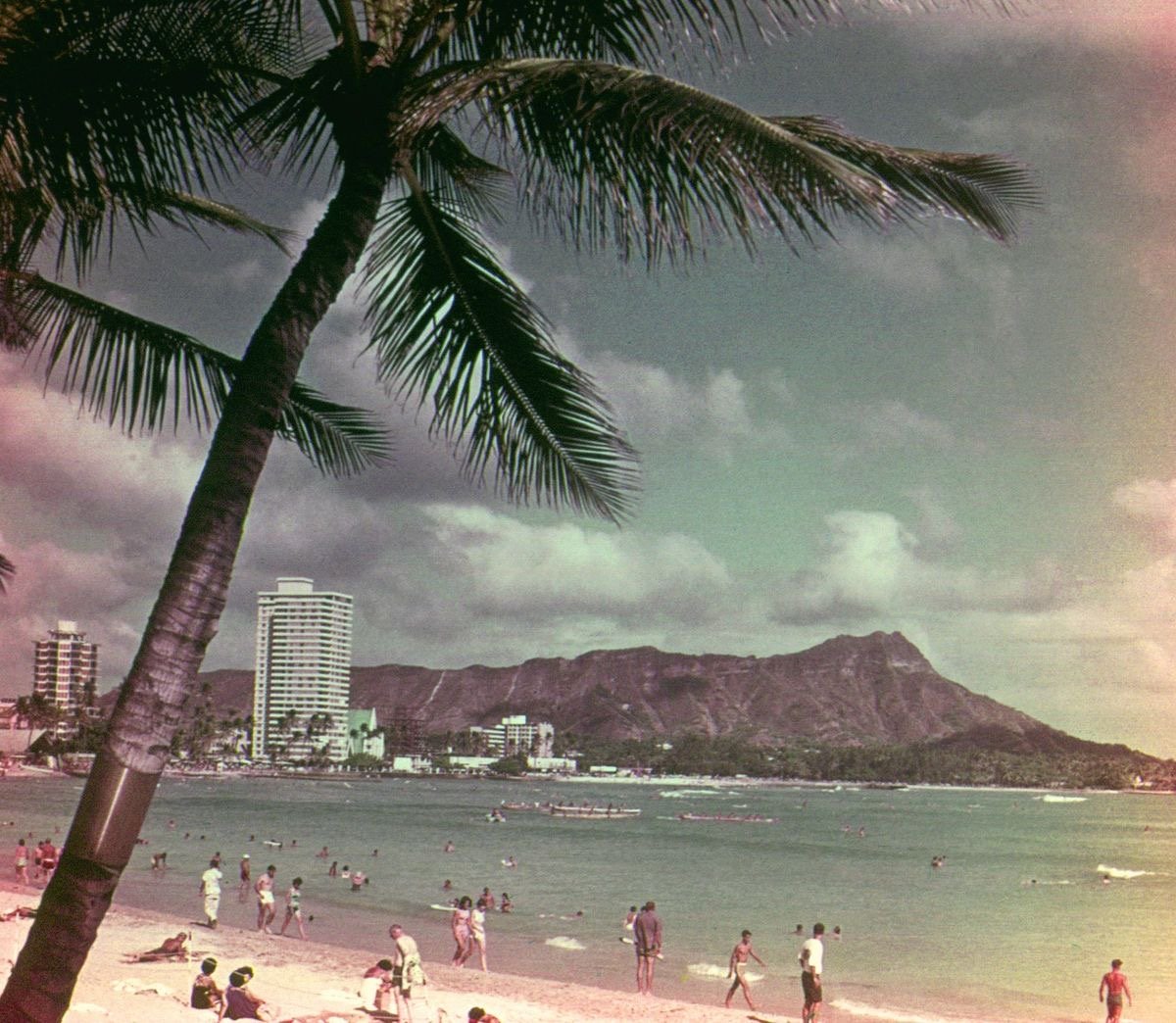
The first high-rise hotels appeared in the mid-1950s, but the real surge came with the jets (see Hawaii tourism's golden age). The building boom peaked in the late 1960s and early 1970s, as visitor numbers passed a million a year in 1967 and kept climbing.
The Ilikai, at the ʻewa (western) end of Waikīkī, set the tone. Developed by the stockbroker Chinn Ho, it rose in February 1964 and was hailed by the magazine Paradise of the Pacific as the largest condominium project in the world. Slow apartment sales led Ho to run part of it as a hotel, with a glass elevator and a rooftop restaurant to draw guests. From 1968 to 1980 it appeared in the opening credits of Hawaii Five-O, which beamed Waikīkī's new skyline into living rooms every week.
Next door, the Hilton Hawaiian Village opened its Rainbow Tower in 1968, its end walls covered in a vast ceramic-tile rainbow mosaic that is still a landmark. Further along the beach, towers of every height filled the gaps between the old hotels.
Kalākaua Avenue
The main street had been called Waikiki Road until 1908, when it was renamed for King Kalākaua (see Kalākaua, the Merrie Monarch). By the 1960s it was a busy boulevard of hotels, shops, convertibles and delivery vans, lined with palms and lit up late into the night.
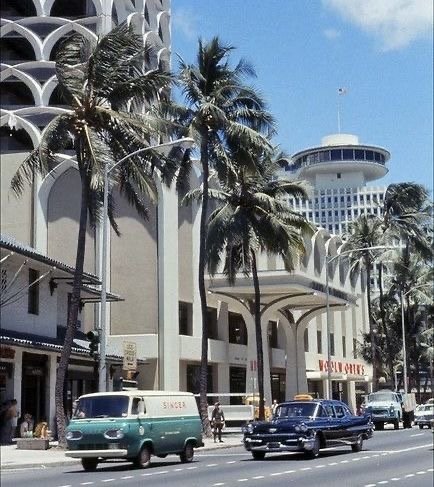
Its great attraction was the International Market Place, opened in 1956 by Donn Beach, the restaurateur behind Don the Beachcomber. Built around a huge banyan on land leased from the Queen Emma Foundation, it grew to some 50 shops, nightclubs and restaurants, and Beach watched over it from an office in a treehouse in the banyan's branches (more in tiki culture and Hawaii hotels).
At the Diamond Head end of the avenue, crowds gathered for the free Kodak Hula Show, founded in 1937 and staged for decades in Kapiʻolani Park and later at the Waikīkī Shell. Each performance, Kodak reckoned, used up around 300 rolls of film and 25,000 feet of colour movie film. Waikīkī was not just a place to visit. It was a place to be photographed.
Beach boys, board racks and lifeguards
On the sand, the beach boys were still kings. Watermen such as Albert "Rabbit" Kekai, Charles "Panama Dave" Baptiste, Sam "Steamboat" Mokuahi and William "Chick" Daniels had been teaching visitors to surf and paddle since before the war, carrying on a tradition shaped by Duke Kahanamoku's generation. In the 1950s Harry Robello opened a beach-boy stand, and in 1961 the big-wave surfer George Downing opened his own concession, Kūhiō Beach Center.
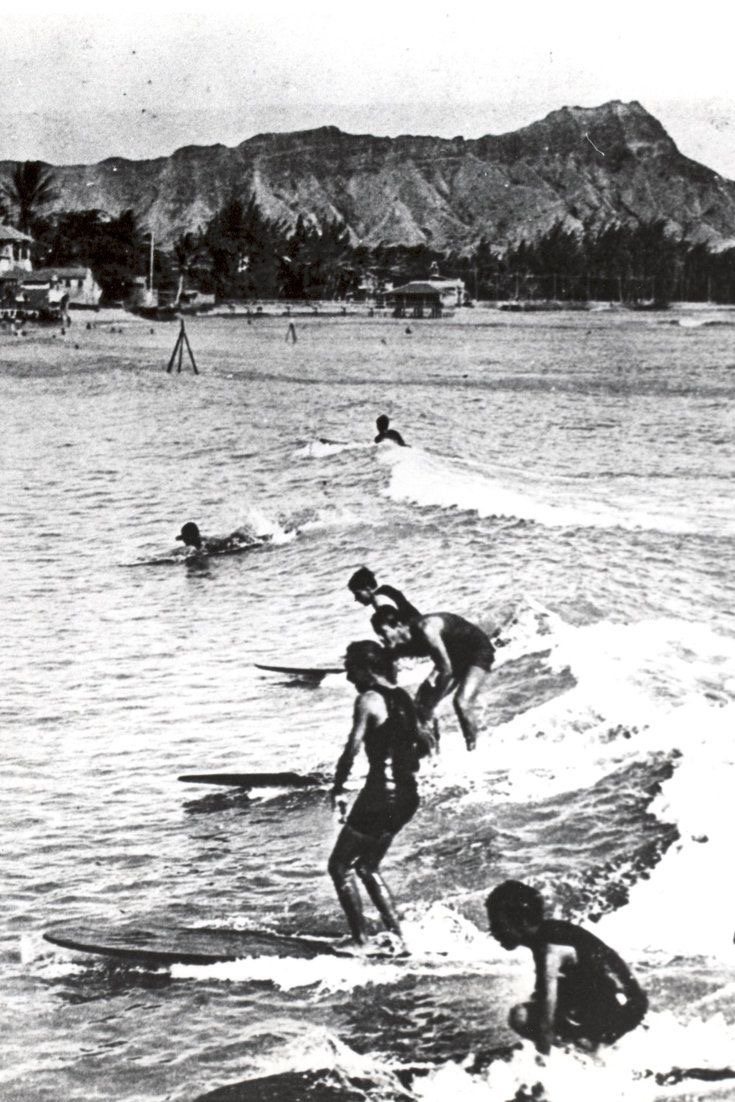
The 1960s surf craze changed the beach boys' world. Lighter foam boards replaced the old heavy wooden ones, rental racks spread along the sand, and young surfers from the mainland and from across the islands crowded the breaks that Hawaiians had ridden for centuries (see the history of surfing in Hawaii). The beach boys adapted by running concessions: board rentals, surf lessons and the outrigger canoe rides that were already a Waikīkī ritual.
Crowds also needed protecting. Waikīkī's paid lifeguard patrol dated back to 1917, when the territory hired two men at $75 a month. In 1950 William Melvin Smith Jr. became captain of what was then a service of six Waikīkī lifeguards; over the next 25 years he built it into a force of more than 200 across Oʻahu. In 1975 it became the city's Water Safety Division, and the red towers became a fixture of every busy beach.
Behind the beach
A few blocks inland, the Ala Wai Canal marked the back edge of the resort. Dug in the 1920s to drain the old wetlands, by the 1960s it was lined with low apartment blocks, home to many of the people who worked in the hotels. Outrigger canoe clubs trained on its flat water in the afternoons, a habit that continues today.
This was the Waikīkī most visitors never saw: the cooks, maids, bellmen and musicians who kept the hotels running, most of them local residents. For them the boom brought steady jobs, and also rising rents and traffic in a district that had once been a quiet suburb.
Too much of a good thing?
As early as January 1968 the Honolulu Star-Bulletin's review of the year asked whether tourism's growth needed controls or limits. By the 1970s critics were calling Waikīkī a "concrete wasteland", and the view of Diamond Head from many streets had vanished behind walls of hotels.
Honolulu responded with the Waikiki Special Design District ordinance in the mid-1970s (planners date it to 1974), which set limits on building heights and density. Much of the damage, many residents felt, had already been done. A grand plan called Waikiki 2000, proposed in 1981, was never carried out. Only in the 1990s and 2000s did the city spend more than $100 million on wider pavements, landscaping and plazas along Kalākaua Avenue, and on the Waikīkī Historic Trail.
The beach itself was squeezed too. Seawalls and buildings stopped the natural movement of sand, and much of the sand that 1970s sunbathers lay on had been brought in from elsewhere, an issue that still makes headlines as sea levels rise.
Retro Waikīkī today
The 1960s and 1970s are easy to find if you look up from the beach:
- The Ilikai: the Hawaii Five-O tower still stands by the Ala Wai Harbor at the ʻewa end of Waikīkī.
- Rainbow Tower, Hilton Hawaiian Village: the 1968 rainbow mosaic is still one of Waikīkī's best-known sights.
- International Market Place: rebuilt and reopened in 2016, it kept the great banyan, and a plaque recalls Donn Beach's treehouse.
- Kūhiō Beach: lifeguard towers, board racks and the Duke Kahanamoku statue sit where the snapshot above was taken. In January 2026 the Pacific Island Beach Boys won back a city concession here for board rentals, lessons and canoe rides.
To combine the old with the new, our things to do in Honolulu guide covers the best of today's Waikīkī, and where to surf in Hawaii explains which of these famous breaks suit beginners.
Quick answers
When were the high-rise hotels built in Waikiki?
The first high-rise hotels appeared in the mid-1950s. The big boom followed statehood and the first jets in 1959 and peaked in the late 1960s and early 1970s.
What hotel is in the opening of Hawaii Five-O?
The Ilikai, at the western end of Waikīkī. It opened in 1964 and appeared in the show's opening credits from 1968 to 1980.
When was the International Market Place built?
Donn Beach, the founder of Don the Beachcomber, opened it in 1956 around a giant banyan tree on Kalākaua Avenue. It was rebuilt and reopened as a shopping centre in 2016.
Are there height limits in Waikiki?
Yes. The Waikiki Special Design District rules of the 1970s limited building heights and density after the hotel boom, and Waikīkī is still governed by special zoning today.
Who are the Waikiki beach boys?
Hawaiian watermen who have taught visitors to surf, paddle and ride outrigger canoes since the early 1900s. Their concessions still operate on the beach today.
Facts checked October 2026 against the sources below and the research for our book The History of Hawaii. Vintage photos and adverts are shown as period illustrations; adverts are credited to their original advertisers.
- Honolulu Magazine: Waikīkī's Ilikai Hotel and Suites turns 50
- American Planning Association: Kalākaua Avenue, Honolulu
- Honolulu Ocean Safety Department: History
- Hawaii Magazine: How Waikīkī's legendary beach boys defined aloha
- Hawaii News Now: Beach boys return to prime Waikiki concession spot (2026)
- Wikipedia: International Market Place
- Honolulu Magazine: Fritz Herman and the Kodak Hawaiʻi Hula Show
- Ian Lind: Hawaii tourism at the beginning of 1968