In the 1970s a generation of Native Hawaiians set out to reclaim their canoes, their language, their land and their voice. The movement they started is still reshaping Hawaiʻi.
4 June 1976: a canoe comes home to Tahiti
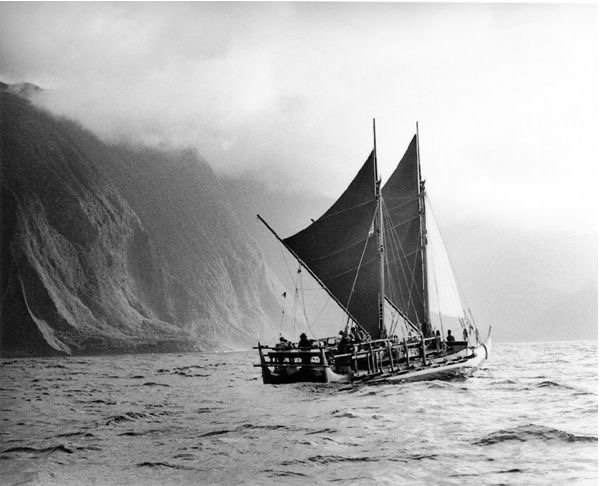
On 4 June 1976 a double-hulled voyaging canoe sailed into the harbour of Papeʻete, Tahiti. More than 17,000 people, by the Polynesian Voyaging Society's count, crowded the waterfront to greet her. Hōkūleʻa had left Honolua Bay on Maui on 1 May and crossed thousands of kilometres of open ocean guided only by the stars, the swells and the birds.
The voyage settled an old academic argument about whether Polynesians could have settled Hawaiʻi on purpose (our article on how Polynesians discovered Hawaii tells that story). But its deeper effect was at home. Hōkūleʻa became the emblem of a much wider awakening, now called the Hawaiian Renaissance.
A culture pushed to the margins
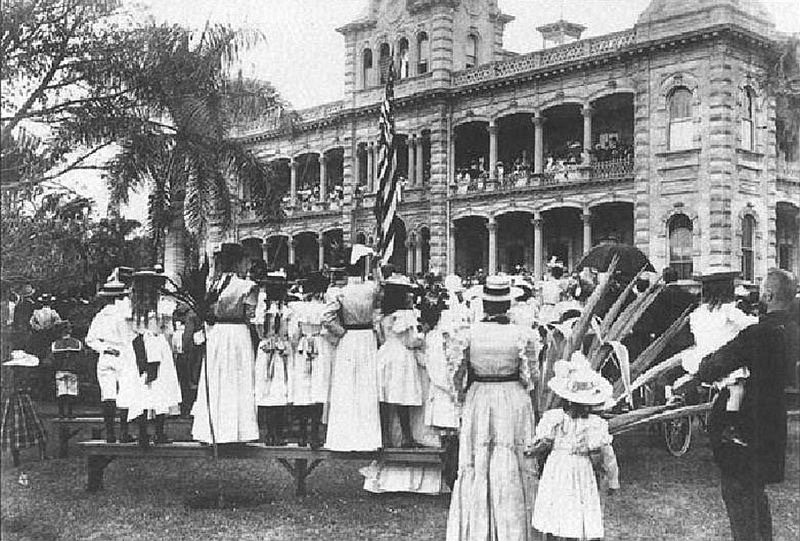
By the late 1960s, Hawaiian culture had been squeezed for generations. After the overthrow of 1893, the Republic of Hawaiʻi made English the medium of instruction in schools in 1896, and ʻōlelo Hawaiʻi (the Hawaiian language) retreated to homes and churches. By the 1970s there were only about 2,000 native speakers, most of them over sixty.
Statehood had brought jets, hotels and rising land values (see Hawaii statehood 1959), and many rural families found themselves in the path of development. In 1971 tenants in Kalama Valley, on Oʻahu's south-east shore, were evicted to make way for a new suburb, and dozens of protesters were arrested. The eviction went ahead, but it taught a new generation of activists how to organise.
Hōkūleʻa and the voyaging revival
In 1973 the anthropologist Ben Finney, the artist Herb Kawainui Kāne and the waterman Tommy Holmes founded the Polynesian Voyaging Society. Their canoe, built to a traditional design with modern materials, was launched at Kualoa on Oʻahu in March 1975 and named Hōkūleʻa, "star of gladness", the Hawaiian name for Arcturus.
No Hawaiian still held the ancient art of deep-sea navigation, so the society turned to Mau Piailug, a master navigator from Satawal in Micronesia. He guided the 1976 voyage and then agreed to teach. The revival nearly ended in tragedy in March 1978, when Hōkūleʻa capsized in a storm off Molokaʻi and the crew member Eddie Aikau, a celebrated lifeguard and big-wave surfer, paddled off on his surfboard for help and was never seen again.
Two years later, in 1980, Mau's student Nainoa Thompson navigated Hōkūleʻa to Tahiti and back without instruments: the first Hawaiian in centuries to do so. Since then the canoe has sailed throughout Polynesia and around the world.
Kahoʻolawe and aloha ʻāina
The same year the canoe reached Tahiti, a different landing made headlines. Kahoʻolawe, a small island off Maui, had been used by the US military as a bombing and gunnery range since the Second World War. On 4 January 1976 nine people crossed the channel and landed on it in protest, among them George Helm, Walter Ritte and Emmett Aluli.
From that landing grew the Protect Kahoʻolawe ʻOhana, which gave modern voice to aloha ʻāina, love of and duty to the land. The cost was heavy: in March 1977 George Helm, a gifted singer and leader, and Kimo Mitchell were lost at sea off the island and never found.
The landings continued. On 22 October 1990 President George H. W. Bush ordered the bombing to stop, and in 1994 the island was conveyed to the State of Hawaiʻi, to be held for a future Native Hawaiian sovereign entity. The Navy handed over control in 2003. Today Kahoʻolawe is a reserve where volunteers replant native vegetation and cultural ceremonies are held again.
Music, hula and a new constitution
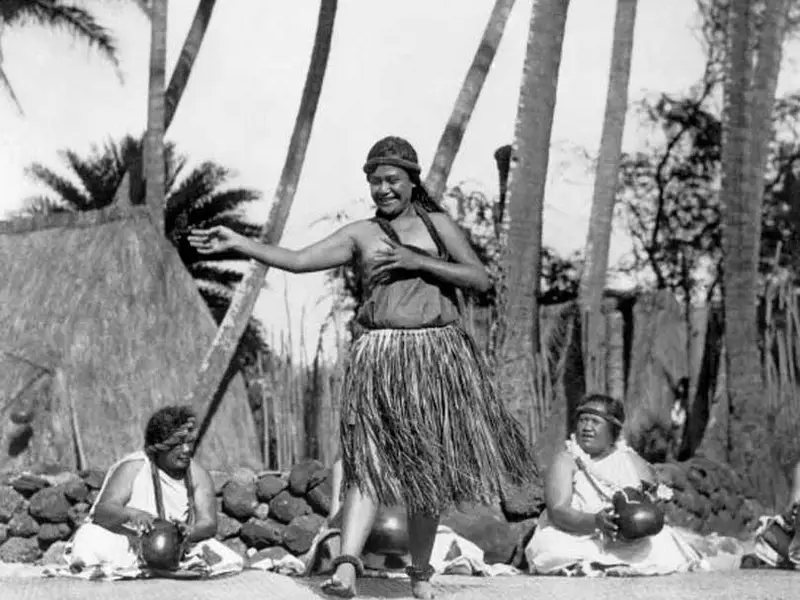
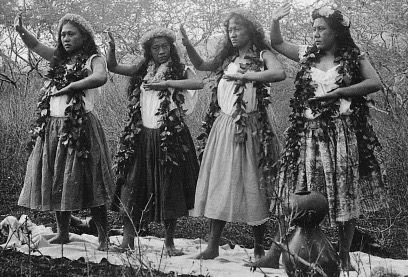
The Renaissance had a soundtrack. The slack-key guitarist Gabby Pahinui and groups such as the Sons of Hawaii filled the radio with Hawaiian music, and composers wrote new songs in Hawaiian about land and identity. Hula kahiko, the ancient style danced to chant and drum, moved centre stage at the Merrie Monarch Festival in Hilo (see our history of hula).
Political change followed. At the state constitutional convention of 1978, delegates including the future governor John Waiheʻe, with activists such as Frenchy DeSoto and Walter Ritte lobbying outside, won a package of amendments that voters approved that November. They created the Office of Hawaiian Affairs (OHA), made Hawaiian an official language of the state alongside English, required Hawaiian culture, history and language to be taught in public schools, and protected traditional and customary rights.
Bringing back ʻōlelo Hawaiʻi
The language revival began with very young children. In 1983 a group of Hawaiian-language educators founded the ʻAha Pūnana Leo, "language nest", and in 1984 opened its first preschool at Kekaha on Kauaʻi, where children spent the whole day in Hawaiian.
The organisation then lobbied the legislature for three years. In 1986 lawmakers lifted the 1896 ban on teaching in Hawaiian in public schools, and the next year the first public immersion classes opened. Today thousands of children are educated through Hawaiian, from preschool to high school, and the University of Hawaiʻi at Hilo offers degrees taught in the language. Hawaiian is heard again on radio and television and in daily life across the islands.
Sovereignty: an open question
The Renaissance also reopened the question of nationhood. On 23 November 1993, the centenary year of the overthrow, President Bill Clinton signed the Apology Resolution. Congress apologised for the US role in 1893 and acknowledged that the Native Hawaiian people "never directly relinquished their claims to their inherent sovereignty" to the United States. It settled no claims, but many Hawaiians regard it as a landmark admission.
There is no single sovereignty movement. Some Native Hawaiians seek federal recognition of a Hawaiian governing entity, similar to that of Native American tribes; others seek full independence; others argue that the Hawaiian Kingdom never legally ceased to exist. Since 2014 the protests on Maunakea against the Thirty Meter Telescope have become the movement's most visible stage, and in 2022 a new authority with seats for Native Hawaiian cultural practitioners was created to manage the summit.
Where to see the Renaissance today
- Hōkūleʻa: the canoe's current voyage, Moananuiākea, a planned circumnavigation of the Pacific, was paused in Aotearoa (New Zealand) in September 2026 because of weather. Follow her at hokulea.com; homecomings and departures are public celebrations.
- Bishop Museum, Honolulu: Hawaiian Hall and the Pacific collections give the deep background to voyaging, hula and ʻōlelo Hawaiʻi.
- Merrie Monarch Festival, Hilo: held every spring in the week after Easter; tickets for the hula competition are scarce, but the parade and craft fair are open to all. See things to do on the Big Island.
- Kualoa, Oʻahu: where Hōkūleʻa was launched in 1975, beneath the Koʻolau cliffs.
- Kahoʻolawe: there are no casual visits; access is limited to cultural, restoration and educational work under the Kahoʻolawe Island Reserve Commission.
Above all, listen. Learn a few words of Hawaiian, use them correctly and follow our advice on visiting Hawaii respectfully. The full story of the Renaissance and the sovereignty debate is told in The History of Hawaii.
Quick answers
What was the Hawaiian Renaissance?
A cultural and political revival that began in the early 1970s, when Native Hawaiians revived voyaging, hula, music and the Hawaiian language, and campaigned over land rights, Kahoʻolawe and sovereignty.
Why is Hōkūleʻa important?
In 1976 the canoe sailed from Maui to Tahiti without instruments, guided by the Micronesian navigator Mau Piailug. It proved that Polynesian navigation could cross the Pacific and became a symbol of Hawaiian cultural pride.
What happened on Kahoʻolawe?
The island was used by the US military for bombing practice from the Second World War. Protest landings from 1976 led to an end to bombing in 1990, and the island was conveyed to the State of Hawaiʻi in 1994 as a reserve.
Is Hawaiian an official language?
Yes. Since the 1978 constitutional amendments, Hawaiian and English have both been official languages of the State of Hawaiʻi.
Where is Hōkūleʻa now?
As of September 2026 Hōkūleʻa and her sister canoe Hikianalia were in Aotearoa (New Zealand), with the Moananuiākea Voyage paused because of weather. Check hokulea.com for the latest.
Facts checked October 2026 against the sources below and the research for our book The History of Hawaii. Dates and figures for early Hawaiian history are estimates and scholars still debate some of them.
- Polynesian Voyaging Society honors the 50th anniversary of Hōkūleʻa's 1976 maiden voyage (PVS)
- Nainoa Thompson and the 1980 voyage to Tahiti (PVS archive)
- Hōkūleʻa pauses Moananuiākea Voyage due to weather concerns (Hawaii News Now)
- Proclamation: Protect Kahoʻolawe ʻOhana 50th anniversary (Kahoʻolawe Island Reserve Commission)
- ʻAha Pūnana Leo: the preschool program that inspired a movement (Ka Wai Ola)
- Fragile aloha: why Hawaii's last constitutional convention was important (Civil Beat)
- Hawaiian Renaissance (Wikipedia)