A lei can mark a birth, a graduation, a farewell or a chief's rank. The story of Hawaiʻi's garland runs from sacred featherwork to the flower sellers of the Honolulu waterfront, and to a May Day festival invented by a poet and a newspaper columnist.
Boat day under Aloha Tower
Picture Honolulu Harbor on a steamer morning in the early 1930s. The Aloha Tower, finished in 1926 and then the tallest building in Hawaiʻi, rises over Piers 8 to 10. The Royal Hawaiian Band strikes up, hula dancers sway on the wharf and local swimmers dive for coins tossed from the rails of an incoming liner.
On the street below, dozens of women in muʻumuʻu sit behind tables heaped with garlands of ginger, carnation and maile. Every arriving passenger seems to leave the pier buried to the chin in flowers. When the ship sails again, departing visitors drop their lei into the sea as they pass Diamond Head, a gesture that promised a return to the islands.
Those boat days helped make the lei Hawaiʻi's best-known symbol of welcome. Yet the garland is far older than tourism, and its meaning runs deeper than "hello".
Before flowers: lei of rank and the gods
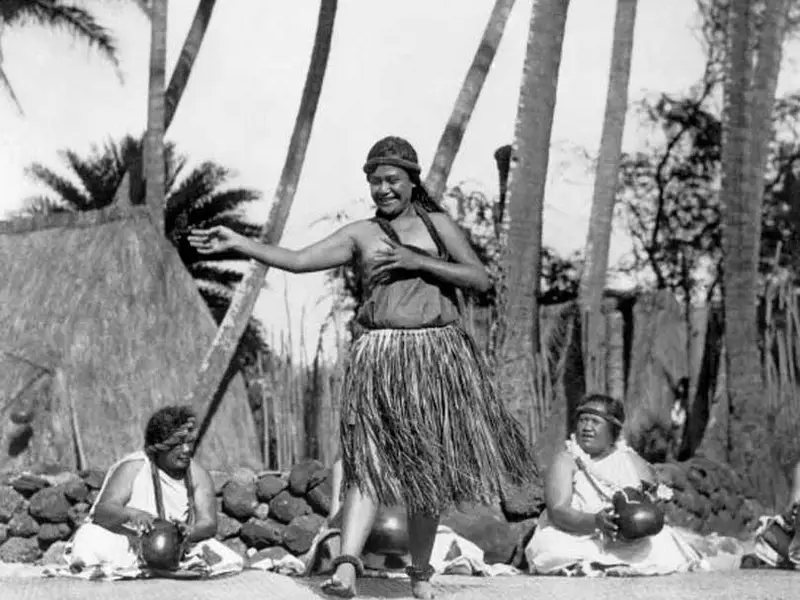
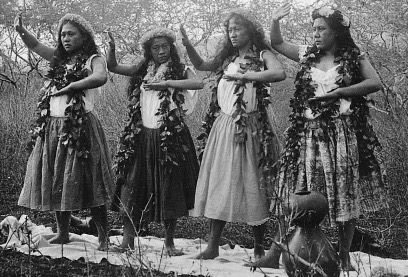
Polynesian voyagers carried the custom of the lei to Hawaiʻi, and early lei were made of almost anything precious: shells, kukui nuts, seeds, leaves, ferns and feathers. They honoured gods and people, marked rank and played a central part in religion and hula.
The most powerful was the lei niho palaoa, worn by chiefs of both sexes. By the nineteenth century it was a hook-shaped pendant of whale tooth hung on many fine plaits of human hair. Its meaning is not fully known: some scholars read the hook as a tongue that speaks the law, others as a vessel for mana, inherited spiritual power. Feather lei, lei hulu manu, also signalled royal status, and preserved examples show they were given to visiting ship captains, which may be one root of the lei as a greeting.
Leafy lei had their own sanctity. Hula dancers wove maile for their training and left lei on the altar of Laka, goddess of hula (see our history of hula). Even a song composed in someone's honour can be called a lei.
How a lei is made
Hawaiian lei makers use several distinct techniques, each suited to particular materials:
- Kui: threading flowers on a string with a needle, the style most visitors know.
- Haku: braiding flowers and foliage with long stems into a three-ply plait, popular for head lei.
- Hili: plaiting a single material, such as fern or vine.
- Wili: winding fibre around short pieces of foliage, sometimes onto a backing of hala leaf.
- Humu: sewing materials onto a backing in overlapping rows, the usual method for feather hat bands.
Some lei are not flowers at all. Islanders on Niʻihau string tiny shells into fine lei pūpū that are prized as heirlooms (see our history of Niʻihau).
The lei sellers of old Honolulu
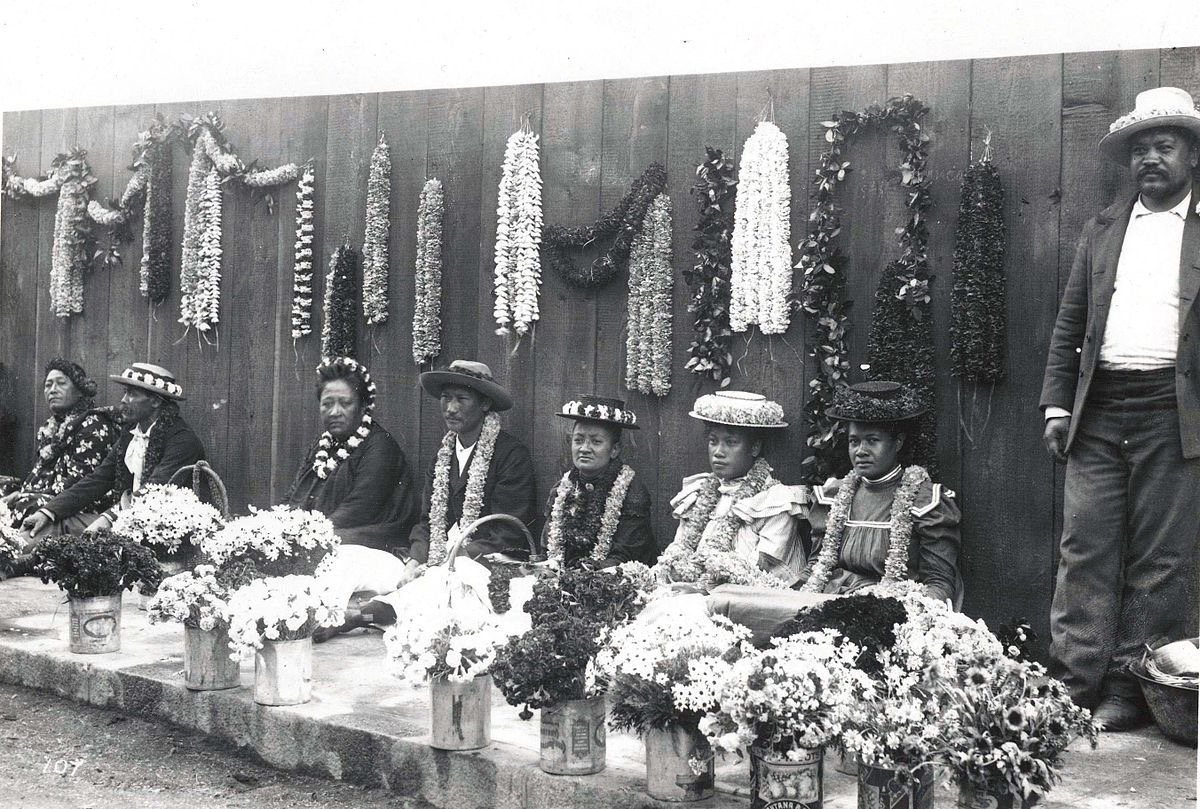
By the mid-1800s demand for lei made selling them worthwhile, and by 1900 the trade was well established downtown. Early sellers, most of them Hawaiian women, sat on mats beside their baskets along Hotel, Maunakea and Kekaulike streets; by the 1920s many used small tables.
The habit of draping departing friends in garlands seems to have taken hold in the 1870s: the almanac editor Thomas Thrum, writing in 1922, dated it to the early reign of King Kalākaua. Steamer days turned that custom into a living. Customers bought maile, white and yellow ginger, carnation, rose and haku lei, while crepe-paper and seed lei sold as souvenirs. When California banned most Hawaiian plants, paper lei became the safe choice for passengers bound for the mainland.
Business boomed with the cruise liners. Matson's luxury service began in November 1927, and by 1931 the Tourist Bureau counted around 200 lei sellers. Competition on the waterfront grew so fierce that in 1933 the police chief urged the sellers to organise. Their new association set rules, including a $5 fine for members who mobbed prospective customers.
During the Second World War many lei makers turned their skills to weaving camouflage netting. Afterwards the trade followed the travellers to the airport, first to converted trucks on Lagoon Drive, then in 1952 to thatched huts built by the territory, and in 1978 to the concrete building with twelve stands that greets passengers today. Street selling downtown was outlawed in the 1950s, and Matson ended passenger sailings to Honolulu in 1970.
May Day is Lei Day: 1928
The festival began with a poet. In 1927 Don Blanding, a writer working at the Honolulu Star-Bulletin, suggested that Hawaiʻi needed a day to celebrate giving and wearing lei. The columnist Grace Tower Warren took up the idea, proposed 1 May as the date and coined the phrase "May Day is Lei Day".
The first Lei Day, on 1 May 1928, was held at the Bank of Hawaiʻi in downtown Honolulu, and the crowds strained the building. Nina Bowman was crowned the first Lei Queen by Mayor Charles Arnold. Leonard "Red" and Ruth Hawk wrote the song "May Day Is Lei Day in Hawaiʻi", and in 1929 Governor Wallace Farrington proclaimed 1 May as Lei Day across the territory.
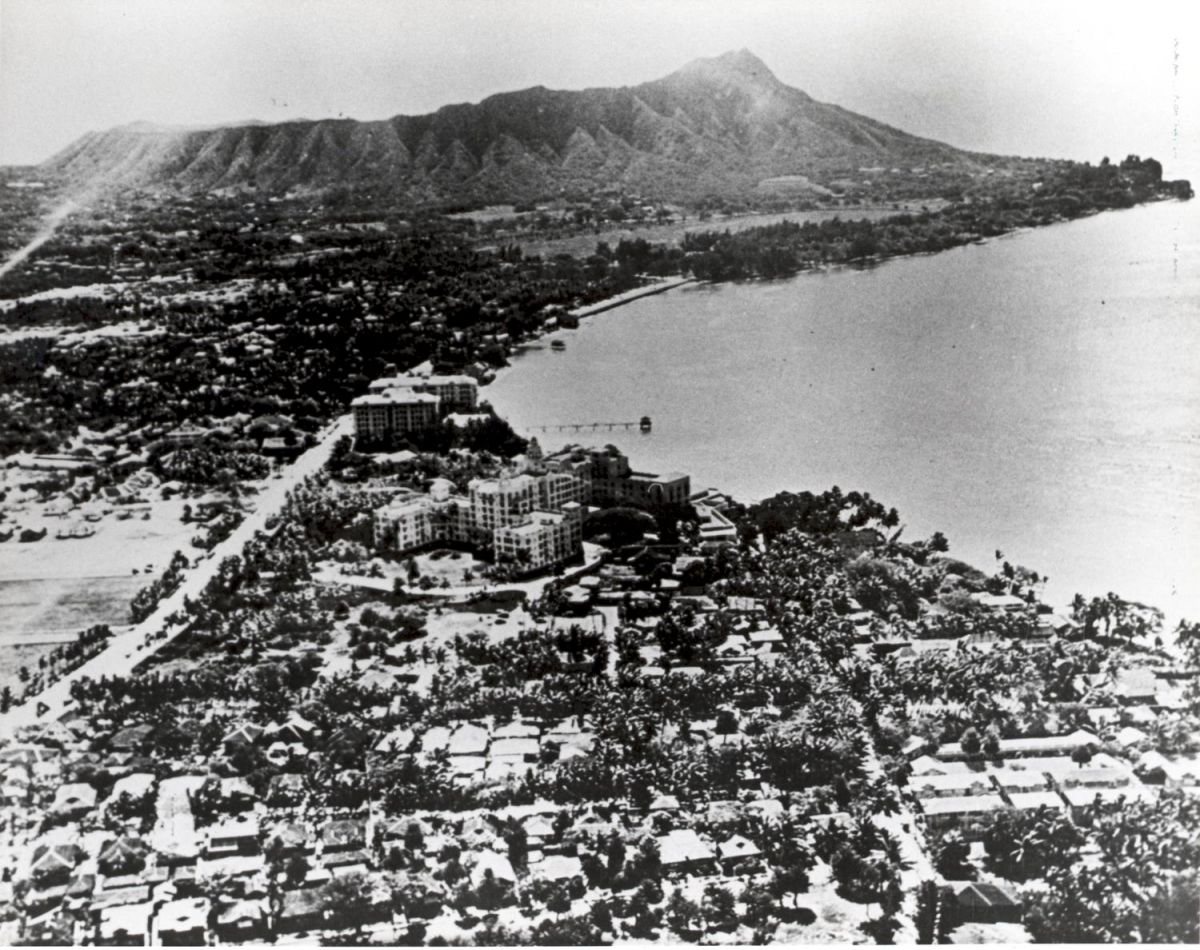
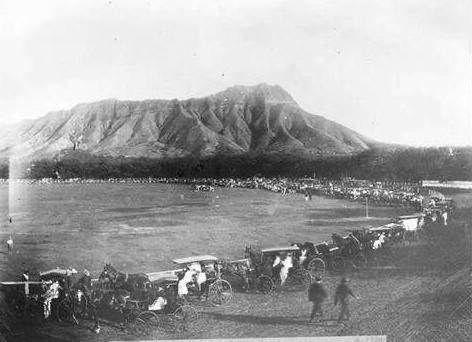
The celebration soon outgrew downtown and settled at Waikīkī's Kapiʻolani Park, where the City and County of Honolulu still runs it. Each island is represented by its own colour and lei:
| Island | Colour | Lei |
|---|---|---|
| Hawaiʻi | Red | ʻŌhiʻa lehua |
| Maui | Pink | Lokelani (rose) |
| Oʻahu | Yellow | ʻIlima |
| Kauaʻi | Purple | Mokihana |
| Molokaʻi | Green | Kukui |
| Lānaʻi | Orange | Kaunaʻoa |
| Kahoʻolawe | Silvery grey | Hinahina |
| Niʻihau | White | Pūpū (shell) |
Since 1978 the Lei Court has rotated between age groups, and that year Aunty Juliet Galuteria became the first kupuna (elder) Lei Queen.
Lei etiquette for visitors
A lei is a gift of aloha, and a few customs make giving and receiving one go smoothly:
- Accept graciously. Traditionally the giver offers the lei with a slight bow, raised to the level of the heart, rather than reaching over the recipient's head.
- Open lei for expectant mothers. By custom, pregnant and nursing women are given an open lei rather than a closed loop.
- Can't wear it? If allergies get in the way, display the lei somewhere honoured, as performers do on a microphone or music stand.
- Never bin it. Throwing a lei in the rubbish is seen as throwing away the giver's love. Return it to the earth instead: hang it on a tree, bury it, or let it dry at home.
- Leave nothing at sacred sites. Practitioners make offerings at places like Halemaʻumaʻu; visitors should look and listen rather than add lei of their own.
More on travelling with care is in our guide to visiting Hawaiʻi respectfully.
Where to see the lei tradition today
- Lei Day, 1 May, Kapiʻolani Park: the City and County of Honolulu's celebration, with the Lei Court, lei exhibits and contest entries.
- Maunakea Street, Chinatown: lei shops still cluster where sellers once sat on the pavement, a short walk from the stops in our things to do in Honolulu guide.
- Aloha Tower, Honolulu Harbor: the old boat-day landmark, which turned 100 in 2026.
- Kamehameha Day, 11 June: the statues of Kamehameha the Great are draped in lei many metres long.
- Bishop Museum, Honolulu: royal featherwork, the most precious lei of all, in the museum founded in memory of Bernice Pauahi Bishop.
- Daniel K. Inouye International Airport: the lei stands that descend from the 1950s huts on Lagoon Drive.
The lei appears again and again in Hawaiʻi's story, from chiefly regalia to the farewells of soldiers in 1943, and that wider history is told in The History of Hawaii.
Quick answers
When is Lei Day in Hawaii?
Lei Day is celebrated every year on 1 May. It was first held in 1928 in downtown Honolulu, and today the main celebration takes place at Kapiʻolani Park in Waikīkī.
Who started Lei Day?
The poet Don Blanding proposed a day to celebrate lei in 1927 while working at the Honolulu Star-Bulletin. Columnist Grace Tower Warren suggested 1 May and coined the phrase "May Day is Lei Day".
Is it rude to refuse a lei in Hawaii?
Refusing a lei is generally seen as impolite. If you cannot wear one because of allergies, accept it with thanks and display it somewhere honoured instead.
What do you do with a lei after wearing it?
Don't throw it in the rubbish. Traditionally a lei is returned to the earth: hang it on a tree, bury it or let it dry. Many people keep dried lei as a memento.
Why do pregnant women get an open lei?
By Hawaiian custom, expectant and nursing mothers are given an open lei rather than a closed loop.
Facts checked October 2026 against the sources below and the research for our book The History of Hawaii. Dates and figures for early Hawaiian history are estimates and scholars still debate some of them.
- Brief History of Lei Day (City and County of Honolulu)
- Lei Sellers (Images of Old Hawaiʻi)
- Unraveling Lei (Halekulani Living Archives)
- Lei (garland) (Wikipedia)
- Lei niho palaoa (Wikipedia)
- Aloha Tower has lived many lives in its 100 years (Civil Beat)
- Why you will see lei everywhere in Hawaii (Lonely Planet)