After Pearl Harbor, the largest community in the islands was suddenly under suspicion. How Hawaiʻi's Japanese Americans answered, with labour, war bonds and blood, changed the islands for good.
Farewell at ʻIolani Palace
On 28 March 1943 about 15,000 people packed the grounds of ʻIolani Palace in Honolulu. In front of them stood 2,686 young men of Japanese ancestry, chosen from more than 10,000 who had volunteered for a new Army unit, the 442nd Regimental Combat Team. At the front of the ranks stood the members of a labour battalion that had spent a year proving a point.
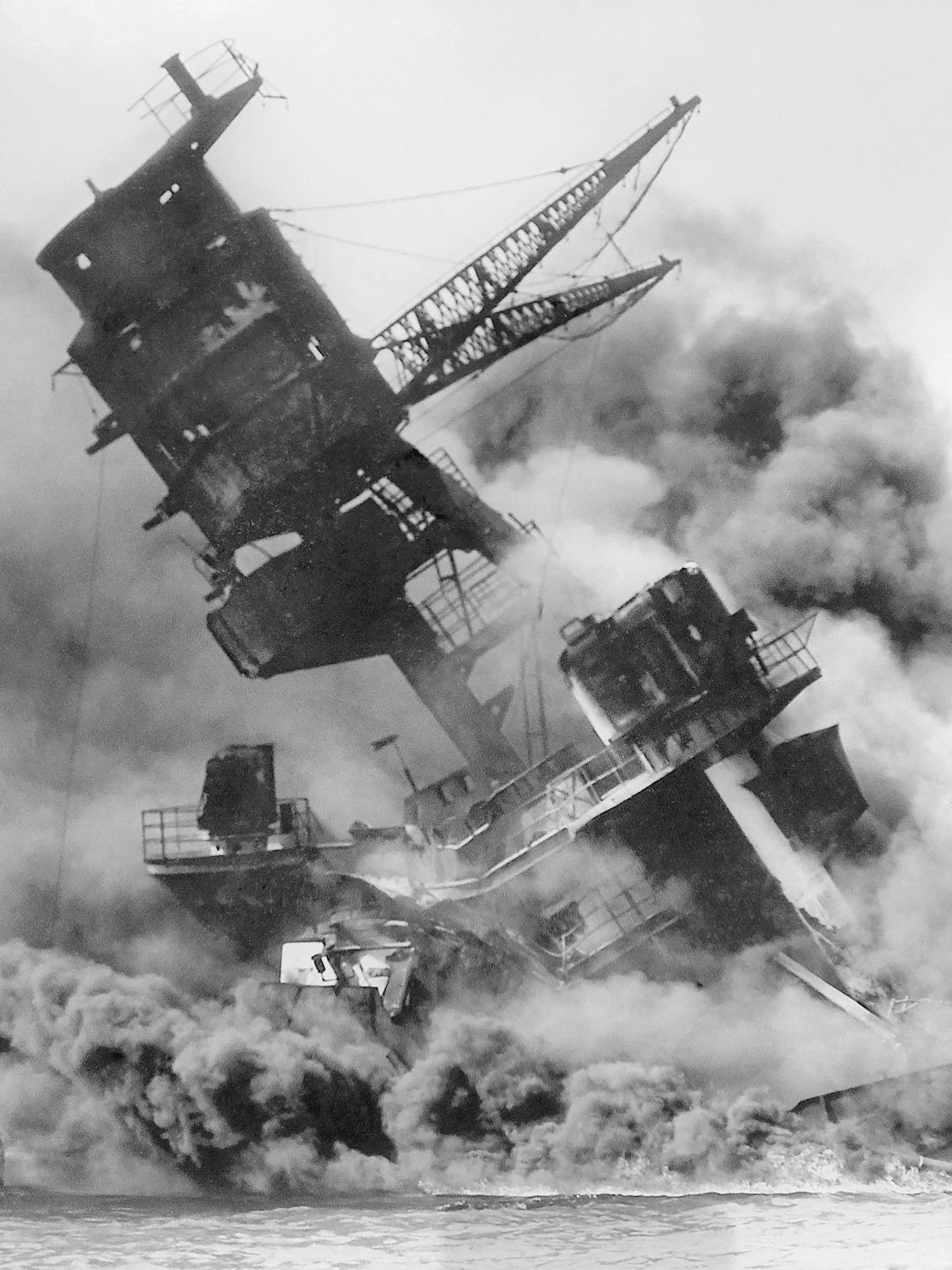
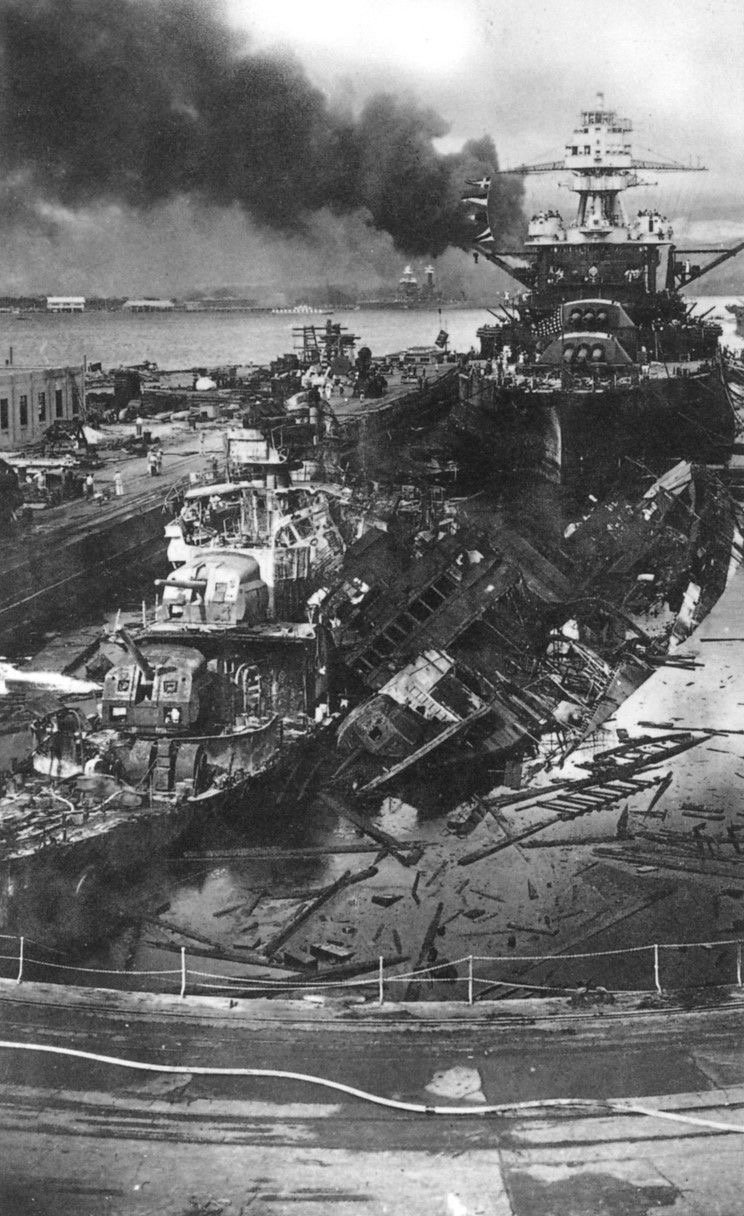
Fifteen months earlier, many of these men had been told that the country they were born in did not trust them with a rifle. The story of how they turned suspicion into service begins on the night of 7 December 1941.
Our Pearl Harbor history covers the attack, martial law and the 442nd's battles in Europe. This article follows the community at home and the less familiar units that came out of it.
The largest community in the islands
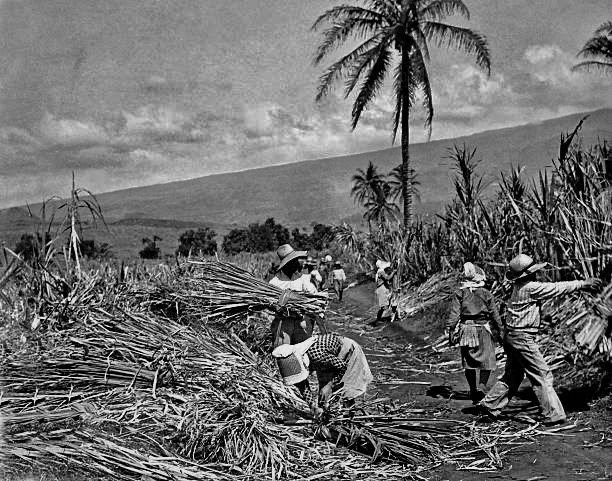
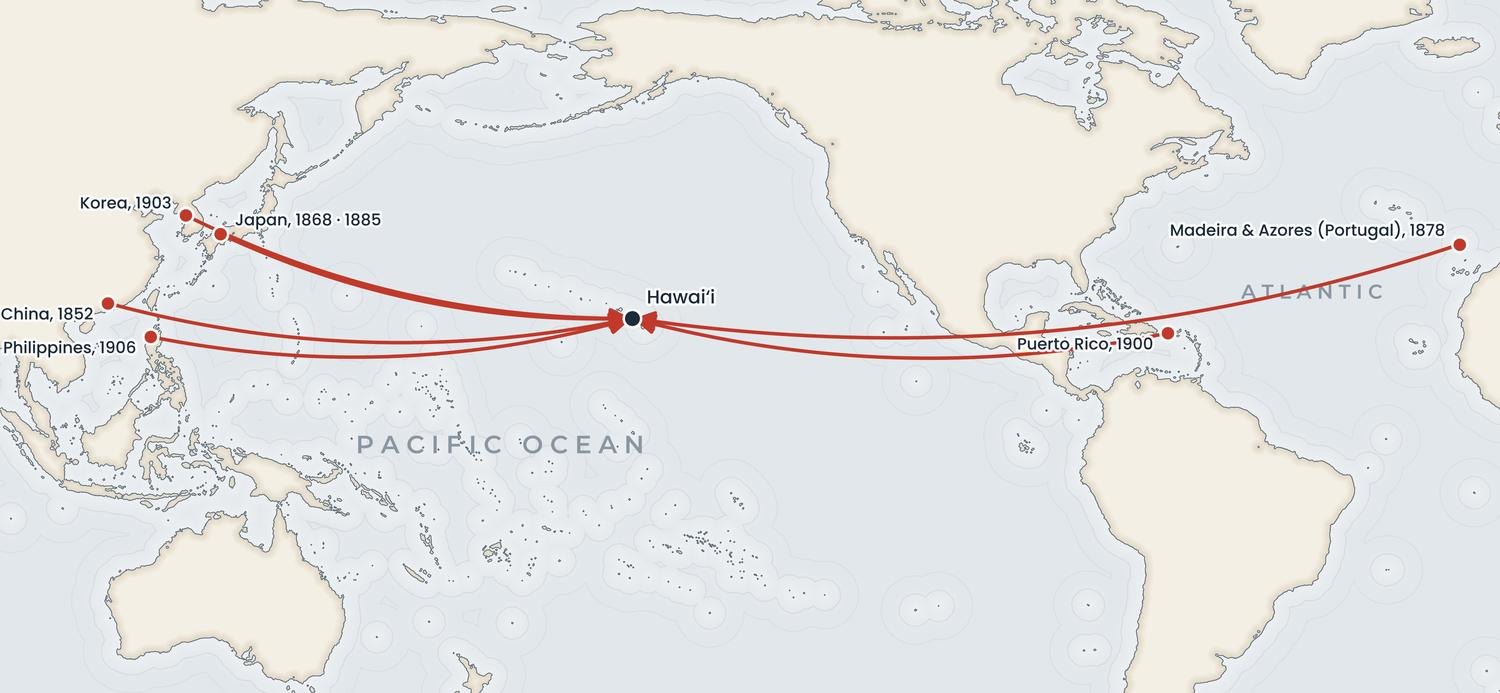
Japanese immigrants had been coming to Hawaiʻi since 1868, most of them to work on the sugar plantations. By 1940 people of Japanese ancestry made up about 37 per cent of the territory's population, the largest single group, and around three quarters of them were US-born Nisei (second generation).
Their parents, the Issei, could not become US citizens under the law of the time. Many kept close ties to Japan through Buddhist temples, Shinto shrines and after-school language classes: in 1920 a federal commission counted 163 Japanese language schools with nearly 20,000 pupils. In December 1941 about 2,000 Japanese Americans were already on Army active duty in Hawaiʻi, and hundreds more were university ROTC cadets.
Arrests and seventeen camps
Within hours of the attack, FBI agents, police and military officers began arresting people already marked as potential risks: Buddhist and Shinto priests, language-school teachers and community leaders. Most were processed at the US Immigration Station in Honolulu and taken to Sand Island in the harbour, which opened as a camp on 8 December. Nearly 500 people were held there within 48 hours, and about 600 passed through before it closed in 1943.
Sand Island was only one site. The National Park Service has identified 17 places of confinement across the islands, from a camp at Kīlauea inside today's national park, which held up to 100 people at a time, to small stockades on Kauaʻi and a jail cell on Lānaʻi. It counts about 1,330 Japanese Americans and Japanese nationals held in Hawaiʻi; other tallies of those arrested run past 1,500. Many detainees were later shipped to camps on the mainland.
From March 1943 those who remained were held at Honouliuli, the gulch near Waipahu that inmates called jigoku dani, hell valley. Unlike on the West Coast, though, there was no mass removal: the islands could not run without a third of their people.
Speak American
For the families left at home, life under martial law brought curfews, blackouts and a deep sense of being watched. Beaches were strung with barbed wire, and the Navy turned a whole island, Kahoʻolawe, into a bombing range (see our history of Kahoʻolawe). Japanese-language radio programmes and films disappeared. Language schools and Shinto shrines were dissolved, and many Buddhist temples closed because their priests had been taken away.
Community leaders chose to meet suspicion head on. Under the military government's Morale Section, a largely Nisei Emergency Service Committee ran a Speak American campaign, urging families to drop Japanese in public and to show their loyalty openly. In 1942 alone it held 209 meetings reaching some 10,000 people. It raised $147,408.75 for war bonds by letter and telephone, and in June 1943 members collected over $10,000 for a campaign called "Bombs on Tokyo".
The pressure to give up language and custom was real. Today the campaign is remembered as both a survival strategy and a painful loss for a community that had to prove it belonged.
The Varsity Victory Volunteers
Many young Nisei had rushed to serve on 7 December, including students of the University of Hawaiʻi ROTC who joined the Hawaii Territorial Guard. On 21 January 1942 the military governor, General Delos Emmons, disbanded the guard. It was re-formed the next day without its Japanese American members.
Hung Wai Ching, a Chinese American YMCA secretary, urged the dismissed students not to give up. About 130 of them signed a petition offering to serve in any capacity, declaring: "Hawaii is our home; the United States our country." On 25 February 1942, 155 of them were sworn in as the Varsity Victory Volunteers, attached to the Army's 34th Engineers at Schofield Barracks.
For eleven months the VVV, 169 men in all, quarried rock, built roads and put up military buildings. Allies such as the FBI's Robert Shivers and a police captain named John Burns, later the governor who led Hawaiʻi to statehood, supported them. In January 1943 the VVV disbanded so its members could volunteer for the new 442nd or serve as Japanese linguists.
Beyond the 442nd: the 100th, the MIS and the 1399th
The first Nisei to fight came from the Hawaii National Guard. In early June 1942 some 1,400 of them sailed secretly for the mainland as the Hawaii Provisional Infantry Battalion, soon renamed the 100th Infantry Battalion, with the motto "Remember Pearl Harbor". In the islands they were nicknamed One Puka Puka, from the Hawaiian word for a hole.
Less visible was the Military Intelligence Service. The National Park Service estimates that about 6,000 Japanese Americans served in it, roughly half of them from Hawaiʻi. Trained mainly at an Army language school in Minnesota, they translated captured documents, interrogated prisoners and fought alongside troops in every major campaign against Japan from Guadalcanal onward.
A third unit never left the islands. More than 1,000 Japanese Americans served in the 1399th Engineer Construction Battalion, which completed 54 major military projects in Hawaiʻi. The cost of all this service was heavy: people of Japanese ancestry were 37 per cent of the 1940 population but more than 62 per cent of the 806 Hawaiʻi residents killed in the war. In July 1946 President Harry Truman told the returning 442nd: "You fought not only the enemy, but you fought prejudice, and you have won."
Coming home to change Hawaiʻi
The veterans came home with medals, GI Bill education and no patience for second-class citizenship. Daniel Inouye of the 442nd, who lost his right arm in Italy, became a US senator. Spark Matsunaga of the 100th followed him to the Senate. George Ariyoshi, an MIS interpreter, became governor in 1974, the first Japanese American elected governor of any US state; he died in April 2026 at the age of 100.
Alongside labour unions and John Burns's rebuilt Democratic Party, the Nisei veterans helped win the political "revolution" of 1954 that ended decades of plantation-backed Republican rule. In 1988 the Civil Liberties Act apologised for wartime incarceration and paid $20,000 to each surviving detainee.
Where to remember this history today
- Japanese Cultural Center of Hawaiʻi: 2454 South Beretania Street, Honolulu. The permanent exhibit Okage Sama De traces Japanese life in Hawaiʻi from 1868, including the war years. Gallery open Wednesday to Saturday, 9 am to 3 pm; adults $10, kamaʻāina $7. Its resource centre, open by appointment, maintains the Hawaiʻi Internee Database.
- Honouliuli National Historic Site: about one guided tour a month by advance reservation since July 2026; check nps.gov/hono.
- ʻIolani Palace grounds: where the 442nd volunteers were sent off in March 1943.
- Pearl Harbor National Memorial: booking details are in our Pearl Harbor guide.
The fuller story, from plantation camps to the Senate, runs through The History of Hawaii. For the islands' other wartime drama, read about the 1941 Niʻihau Incident in our history of Niʻihau.
Quick answers
Were Japanese Americans in Hawaii interned during WW2?
Some were, but not en masse. Unlike on the West Coast, there was no mass removal in Hawaiʻi. The National Park Service counts about 1,330 Japanese Americans and Japanese nationals held at 17 sites in the islands, mainly community and religious leaders, and many were later sent to mainland camps.
What were the Varsity Victory Volunteers?
A labour unit of about 169 Nisei, mostly University of Hawaiʻi students, formed in February 1942 after Japanese Americans were dismissed from the Hawaii Territorial Guard. They worked for the Army's 34th Engineers until January 1943, when they disbanded to volunteer for the 442nd.
How many Japanese Americans from Hawaii volunteered for the 442nd?
More than 10,000 Nisei in Hawaiʻi volunteered in 1943, far above the Army's quota, and 2,686 were accepted. They were sent off at ʻIolani Palace on 28 March 1943.
What was the 100th Infantry Battalion?
An Army unit of about 1,400 Nisei from the Hawaii National Guard, formed in June 1942. It fought in Italy from September 1943, earned the nickname the Purple Heart Battalion and became part of the 442nd in 1944.
Where can I learn about Japanese American history in Honolulu?
Visit the Japanese Cultural Center of Hawaiʻi at 2454 South Beretania Street, whose Okage Sama De exhibit covers 1868 to today, and book a guided tour of Honouliuli National Historic Site.
Facts checked October 2026 against the sources below and the research for our book The History of Hawaii. Dates and figures for early Hawaiian history are estimates and scholars still debate some of them.
- Varsity Victory Volunteers (Densho Encyclopedia)
- Japanese Americans in military during World War II (Densho Encyclopedia)
- Emergency Service Committee (Densho Encyclopedia)
- Hawaiʻi's Other Internment Camps (NPS, Honouliuli)
- Japanese American Units of World War II (NPS, Pearl Harbor)
- Okage Sama De (Japanese Cultural Center of Hawaiʻi)
- George Ariyoshi, state's third governor, dies at age 100 (Civil Beat)
- Japanese language schools (Densho Encyclopedia)