A lifeguarded bay, a sandbar to a little islet, turtles in the shallows and, quite often, an endangered seal asleep on the sand. Here is how to enjoy Kauaʻi's sunny south shore and give its wildlife the space it needs.
Morning at Poʻipū
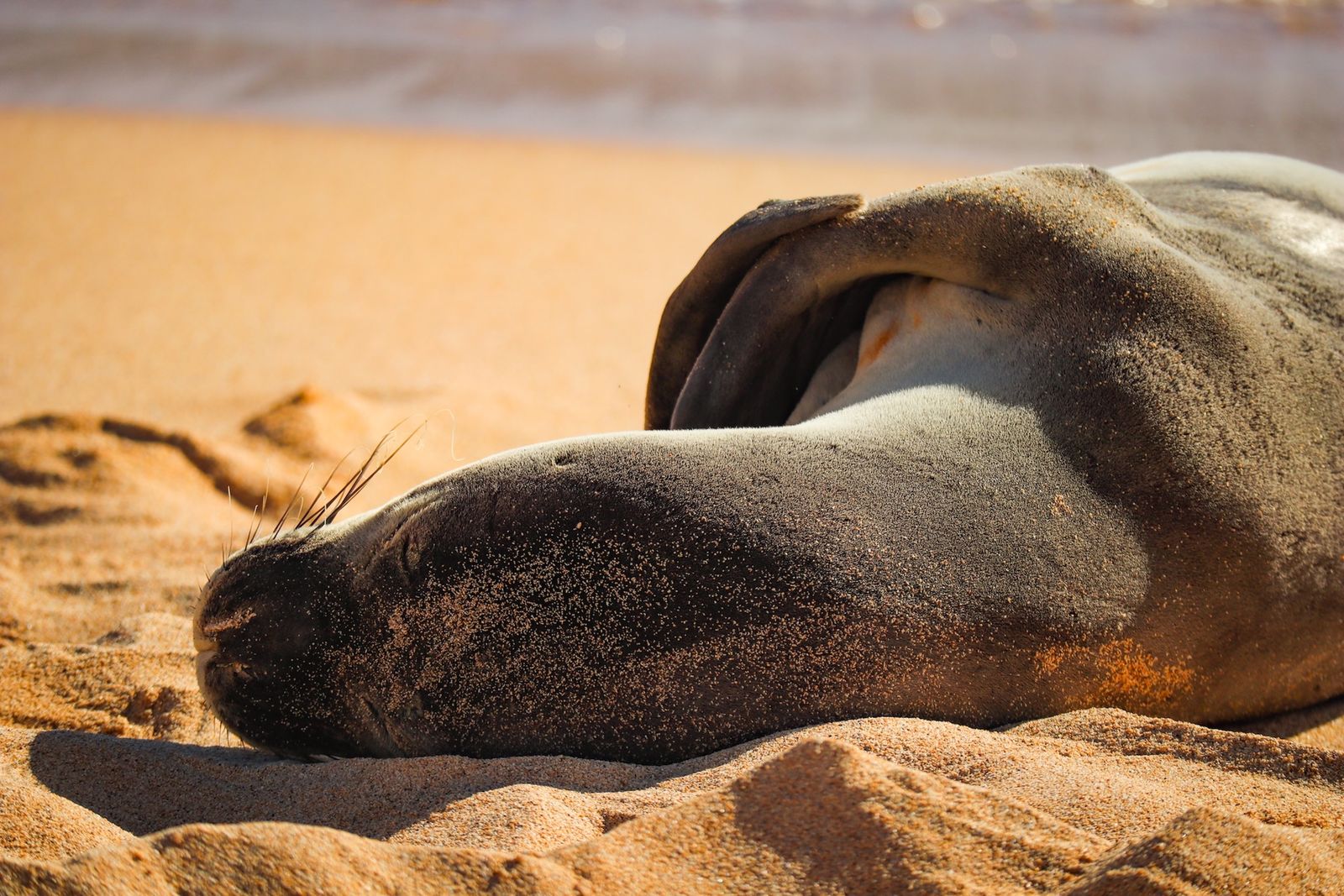
It is just after eight on a weekday morning, and the lifeguard tower at Poʻipū Beach Park has only just opened. Halfway along the sand, a grey shape the size of a small sofa lies perfectly still. A volunteer in a cap is setting out a ring of rope and signs around it, while early swimmers wade past into a pool of clear, glassy water.
The shape is a Hawaiian monk seal, one of the most endangered seals in the world and found nowhere else on earth. On Kauaʻi's south shore, seeing one asleep on a public beach is not unusual. It is one of the reasons Poʻipū is so loved, and one of the reasons it comes with a few rules worth knowing before you lay down your towel.
Why Poʻipū Beach is special
Poʻipū Beach Park sits on the sunny, drier side of Kauaʻi, about 25 minutes' drive from Līhuʻe Airport. Its shape is the secret. A sandbar (a tombolo) links the shore to a small rocky point, creating two crescents of sand. The western side is shallow and partly sheltered by rocks, which is why small children paddle there. The eastern side is more open, with reef where turtles graze.
The park has lifeguards provided by the County of Kauaʻi, restrooms, showers, picnic pavilions and a grassy lawn under the palms. In 2001 the coastal scientist Stephen Leatherman, known as Dr Beach, named it the best beach in America, and it has stayed a family favourite ever since.
Next door, Brennecke's Beach is the bodyboarding spot, with a powerful shorebreak that suits experienced locals rather than first-timers. If you are not sure, watch for a while and ask the lifeguards.
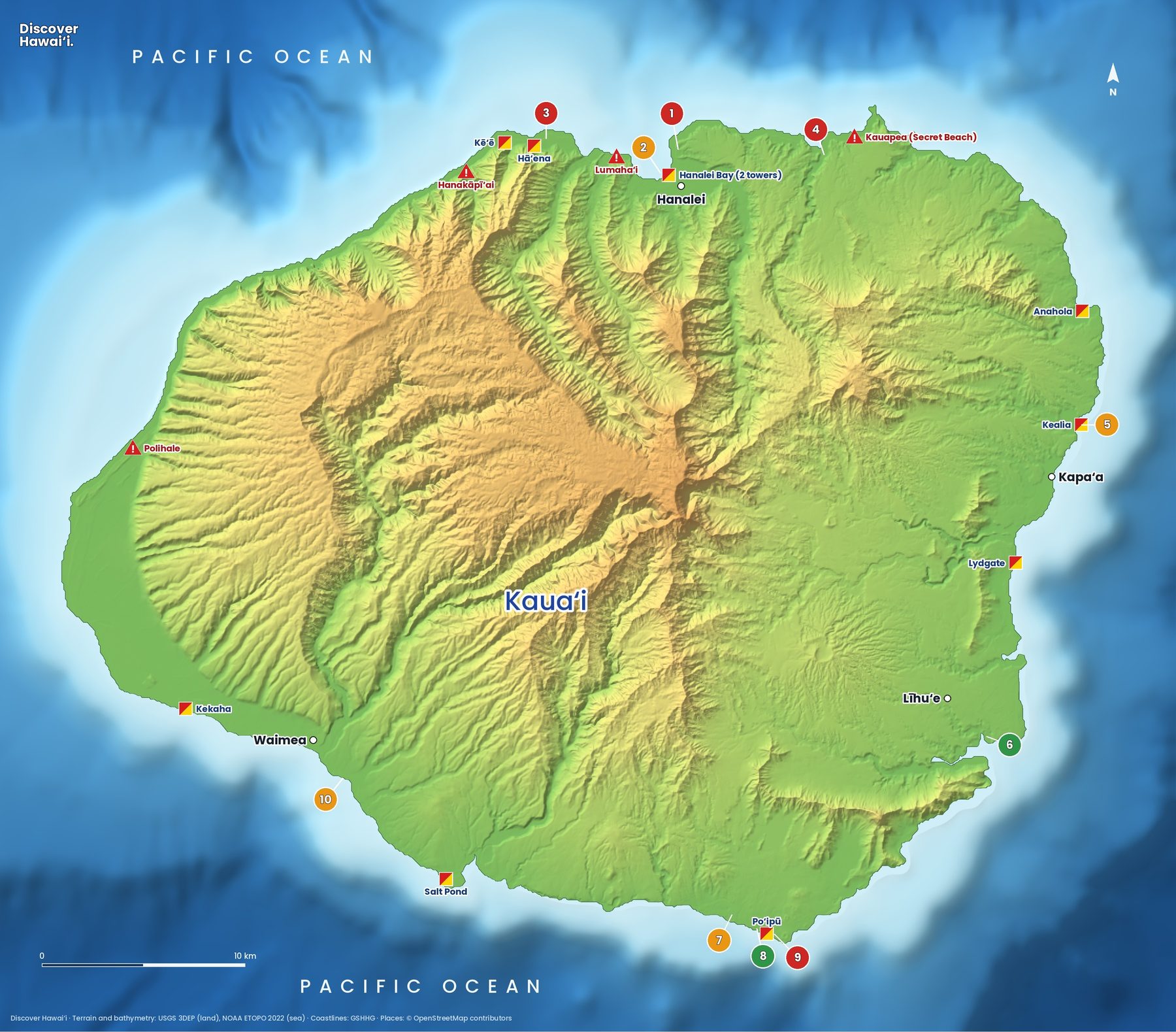
Hawaiian monk seals: the rules
Monk seals haul out on Poʻipū's sand to rest, sometimes for hours, and a sleeping seal is not sick or stranded. They are protected under state and federal law. NOAA Fisheries asks everyone to stay at least 15 metres (50 ft) away, on land and in the water, and at least 45 metres (150 ft) from a mother and her pup. Mothers can be fiercely protective, and spring is the peak pupping season.
- Respect the ropes: volunteers and officers often put up a temporary perimeter. Stay outside it, and never step over it for a photo.
- Use the thumb rule: where there are no signs, hold your thumb up at arm's length. If it covers the whole seal, you are probably far enough away.
- No feeding, touching or chasing: and keep dogs leashed and well away.
- Sea turtles too: green sea turtles (honu) also rest here. Give them at least 3 metres (10 ft).
- Report problems: call the DLNR hotline on (808) 643-DLNR (3567) if you see a seal being harassed or one that looks injured.
A telephoto lens or binoculars will give you a far better view than creeping closer. For more on where to see honu responsibly, see where to see sea turtles in Hawaii.
Snorkelling and swimming
On a calm day, Poʻipū is one of the easiest places on Kauaʻi to snorkel. Enter from the sand on the eastern side and float over the reef edge to see butterflyfish, surgeonfish, the odd moray and grazing turtles. Keep your fins off the coral and do not stand on the reef.
A short drive west, Lāwaʻi Beach (often called Beach House) is a roadside reef with dense tropical fish, best for confident swimmers. Kōloa Landing is the island's go-to shore dive. Our Kauaʻi snorkelling and diving map has the full line-up, including boat dives at Sheraton Caverns.
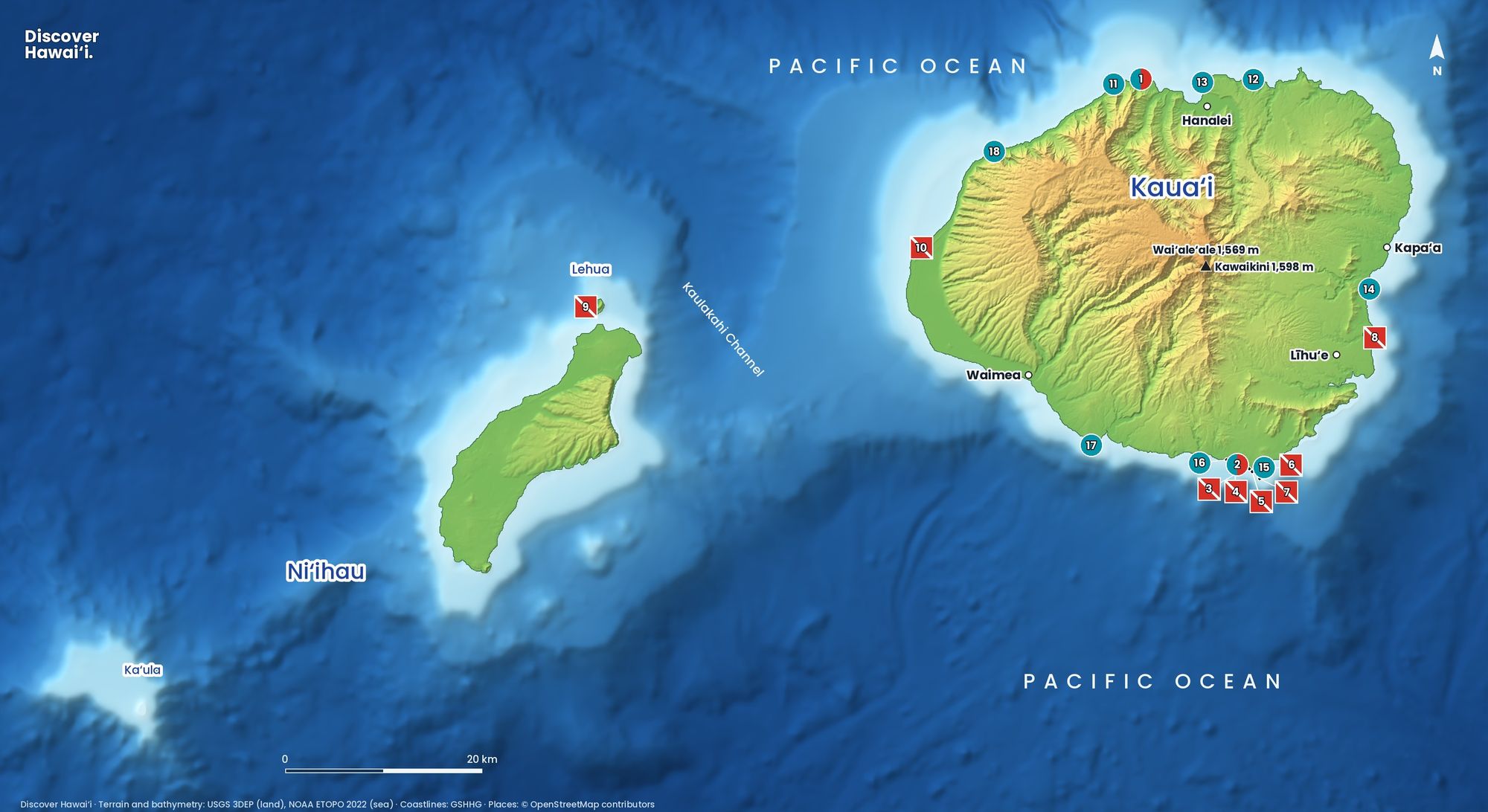
Conditions matter. The south shore is usually calmest from autumn to spring, while summer south swells can bring surf and stronger currents. Always swim near the lifeguard tower, check the warning flags and read our Hawaii ocean safety guide. Hawaii bans the sale of sunscreens containing oxybenzone and octinoxate, so pack a mineral, reef-friendly one.
Spouting Horn and the legend of Kaikapu
Ten minutes west of the beach, Spouting Horn Park is a free roadside lookout over a natural lava tube. When a wave rushes in, water is forced up through a hole in the lava shelf and bursts into the air, sometimes around 15 metres (50 ft) high, with a deep groan from a second opening.
Hawaiian tradition explains that groan. A giant moʻo (lizard) named Kaikapu once guarded this coast and attacked anyone who fished or swam there. A boy called Liko outwitted her, jamming a sharp stick into her mouth and escaping through a small hole under the lava. The moʻo chased him and became stuck, and her roar and breath are still heard and seen at the blowhole.
Stay behind the railings: the wet lava shelf is slippery and waves can surge without warning. From December to May, scan the horizon for humpback whales, and come at sunset for the best light. Nearby, Prince Kūhiō Park marks the birthplace of Prince Jonah Kūhiō Kalanianaʻole, Hawaiʻi's long-serving delegate to the US Congress.
Old Kōloa Town and the sugar story
Poʻipū's back door is Old Kōloa Town, a short street of wooden plantation-era buildings now home to shops, shave ice and casual places to eat. It is a good shady break from the beach, and it holds a big piece of Hawaiʻi's history.
In 1835 Ladd and Company started a sugar plantation at Kōloa, which the National Park Service describes as the first successful large-scale sugar enterprise in the islands. The stone ruins of its second mill, built in 1841, still stand in town, beside a sculpture honouring the many peoples who worked Kōloa's cane fields. The full story of the plantations and the migrations they set off is in our history of Hawaii's sugar plantations.
Drive in or out along Maluhia Road and you pass under the famous tunnel of eucalyptus trees, one of the prettiest few minutes of road on the island.
Getting there and a coastal walk
From Līhuʻe, take Highway 50 west, then turn south on Maluhia Road (Highway 520) through the Tree Tunnel to Kōloa and on to Poʻipū. The drive takes about 25 minutes without traffic. There is no practical public shuttle for visitors, so a hire car is the easy option; our guide to whether you need a car in Hawaii explains the alternatives.
If you want to stretch your legs, the coast east of the resorts is one of the few places on Kauaʻi where you can walk for an hour along wild shoreline. A well-used path heads east from Shipwreck Beach over weathered sandstone cliffs and lithified dunes towards Māhāʻulepu, with views of breaking surf and, in winter, spouting whales. Keep well back from the cliff edges, which are undercut and crumbly, and carry water: there is little shade.
Poʻipū is also one of the best bases on the island, with condos, resorts and holiday rentals within walking distance of the beach. Compare it with the North Shore and the east side in our guide on where to stay on Kauaʻi.
Best time, parking and respectful visiting
How to visit (as of October 2026): Poʻipū Beach Park is a county park with free entry and free parking, and no reservation is needed. The car parks fill by late morning, especially at weekends and in school holidays, so arrive early or late afternoon. Do not leave valuables in the car.
- Best time of day: early morning for calm water and an empty lawn, late afternoon for softer light and turtles resting on the sand.
- Best season: the south shore is often at its calmest from about October to April, when the big surf hits the North Shore instead.
- Leave it as you found it: take your rubbish home, do not stack rocks or take coral, and keep music low for the families around you.
- Combine with: the drive up to Waimea Canyon, about an hour west, or plan a full loop with our things to do on Kauaʻi.
For a wider view of Kauaʻi's rules and etiquette, our guide to visiting Hawaii respectfully covers the basics, from closed trails to private land.
Quick answers
Is Poipu Beach good for kids?
Yes. It is one of the best family beaches on Kauaʻi, with lifeguards, a shallow, partly sheltered area on the western side, restrooms, showers and a shady lawn. Always swim near the lifeguard tower and check the flags first.
Can you get close to the monk seals at Poipu Beach?
No. NOAA Fisheries asks people to stay at least 15 metres (50 ft) from monk seals and at least 45 metres (150 ft) from a mother and pup. They are endangered and protected by state and federal law.
Does Poipu Beach have a parking fee?
No. As of October 2026 parking and entry at Poʻipū Beach Park are free and no reservation is needed. The lots fill by late morning, so arrive early.
Is there good snorkelling at Poipu Beach?
Yes, on calm days. Snorkel the reef on the eastern side for reef fish and turtles. Lāwaʻi Beach and Kōloa Landing nearby are good alternatives for more confident swimmers.
Is Spouting Horn worth visiting?
Yes, it is a free, ten-minute stop west of Poʻipū with parking and a lookout. The spout is biggest when the surf is up, and the lookout is lovely at sunset and in whale season.
Facts checked October 2026. Reservations, fees, opening hours and trail or road closures change often in Hawaii, so confirm with the official source before you go.